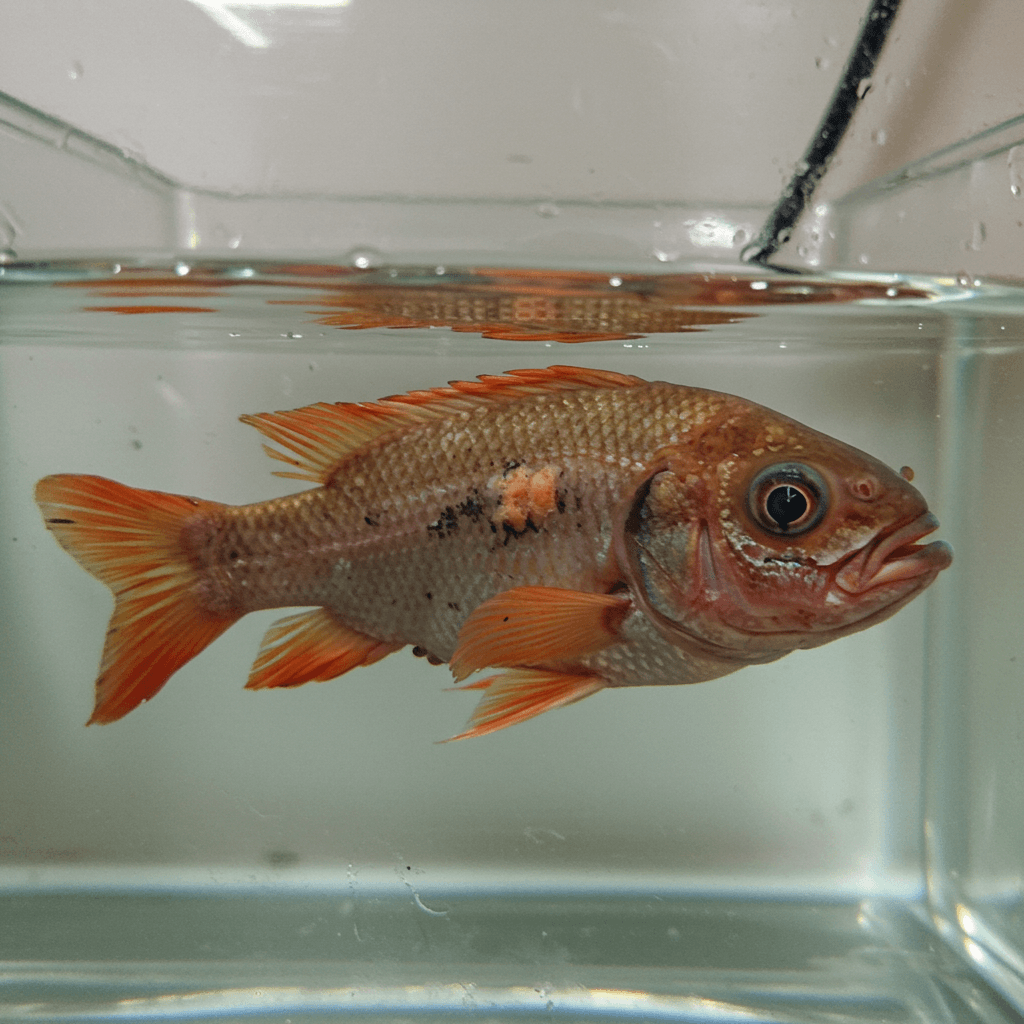
Quick answer: The main warning signs of a sick fish are clamped fins, loss of appetite, gasping at the surface or lethargy, white spots or color fading, and erratic or odd swimming. Any of these usually traces back to water quality, so test for ammonia and nitrite before reaching for medication. Treating the symptom while the water is the real problem just wastes meds and stresses the fish more.
Fish don’t cry out for help — so when something’s wrong, they rely on us to recognize the signs early. Catching illness in its early stages can mean the difference between a quick recovery and losing your entire tank. This guide walks you through how to spot trouble and what to do about it.
1. White Spots, Patches, or Fuzzy Growths
This is a classic sign of Ich (Ichthyophthirius multifiliis), columnaris, or fungal infections. Ich looks like grains of salt on your fish, while columnaris appears cottony or mold-like on fins, mouth, or body.
- Raise temperature to 82–86°F if treating Ich.
- Use aquarium salt (1 tablespoon per 5 gallons) for mild fungal outbreaks.
- Quarantine affected fish and dose with anti-parasitic or anti-fungal meds like API Super Ick Cure or Pimafix.
2. Gasping at the Surface or Hanging at the Top
This is a red flag that your fish is struggling to breathe — often due to low oxygen, high ammonia, or gill damage from toxins or parasites.
- Test water immediately for ammonia, nitrite, and nitrate.
- Increase surface agitation with air stones or raise filter output.
- Perform a 30–50% water change and add detoxifiers like Seachem Prime.
3. Clamped Fins or Erratic Swimming
Fins held tightly against the body indicate discomfort or stress. Fish may also dart, twitch, or rub themselves on decorations — a behavior known as flashing.
- Check if tankmates are bullying or nipping fins.
- Test for chlorine, pH swings, or contaminants like sprays or soaps.
- Try a full water change and run activated carbon.
4. Lethargy and Loss of Appetite
A healthy fish should respond eagerly at feeding time. If they’re hiding constantly or ignoring food, something is wrong.
- Check temperature — many fish slow down when it drops too low.
- Inspect for bloating, rapid gill movement, or white stringy poop.
- Consider internal parasites or bacterial infections — treat with medicated food or general cures like Seachem Metroplex.
5. Visible Wounds, Red Sores, or Ulcers
Open wounds or red streaks are often signs of bacterial infection, injury from decor, or poor water conditions.
- Quarantine the fish to prevent spread.
- Clean the tank and test for high nitrites or ammonia.
- Treat with antibiotics such as Maracyn 2 or Furan-2.
Bonus: 3 Early Warning Behaviors You Might Miss
- Fish isolating from the group (schooling species).
- Breathing fast but still active.
- Color fading or stress stripes in species like bettas or gouramis.
How to Quarantine and Medicate Properly
A separate hospital tank saves your display tank from unnecessary chemical exposure. Here’s how to do it right:
- Use a 5- to 10-gallon bare tank with sponge filter and heater.
- Match water parameters (pH, temp, hardness) from main tank.
- Observe new or sick fish for 2–4 weeks.
- Medicate with species-appropriate treatments at full dosage.
- After treatment, perform large water change and run carbon before reintroducing.
When to Treat the Whole Tank
If multiple fish show symptoms or the disease is clearly spreading, it’s often better to treat the main tank. Just remove sensitive invertebrates like shrimp or snails first, and aerate heavily.
How to Prevent Disease in the First Place
- Quarantine all new fish for 2–4 weeks.
- Never buy fish from tanks with dead or dying individuals.
- Disinfect nets, plants, and tools between tanks.
- Feed high-quality varied diets — avoid overfeeding.
- Test water weekly and perform regular maintenance.
- Add live plants — they reduce stress and improve water quality.
Useful Products for Diagnosis and Treatment
- Test Kits: API Master Kit, Seachem MultiTest
- Conditioners: Seachem Prime, API Stress Coat
- Antibiotics: Maracyn, Furan-2, Kanaplex
- Parasite Control: PraziPro, Metroplex, Ich-X
- Salt: Aquarium salt for gill function and osmoregulation
Final Thoughts
Your fish rely on you to notice when something’s off. The sooner you act, the better the chances of full recovery — and the more peaceful your aquarium will be. Learn your fish’s normal behavior, run water tests weekly, and don’t wait when something seems wrong.
Read more at Fish Health Checklist and Quarantine Setup Guide.
Continue Your Diagnosis
Fish Symptoms Checker Aquarium Rescue Hub Why Fish Die When Water Tests Fine Aquarium Rescue Blueprint →Frequently asked questions
How do I know if my fish is sick?
Watch for clamped fins, loss of appetite, gasping at the surface, lethargy, white spots or fuzzy patches, and erratic swimming or flashing against decor. Learn what normal looks like for your fish so changes stand out. The moment you spot something off, test the water for ammonia and nitrite before assuming it’s a disease.
Why is my fish lying at the bottom?
Sitting on the bottom usually means lethargy from a water problem or a temperature that’s dropped too low. Test ammonia and nitrite first, since both spike when a tank is uncycled or overstocked. Also check the heater and look for bloating, rapid gill movement, or white stringy poop, which point to internal infection or parasites.
What do clamped fins mean?
Clamped fins, held tight against the body, signal discomfort or stress rather than one specific disease. Test for ammonia, nitrite, pH swings, chlorine, or contaminants like aerosol sprays or soap residue near the tank. A full water change and running activated carbon often clears it once you remove the irritant.
My fish stopped eating, what now?
A healthy fish responds eagerly at feeding time, so ignoring food or constant hiding means something is wrong. Test ammonia and nitrite, then check the temperature, because many fish slow down and stop eating when it drops too low. If the water is clean and warm, inspect for bloating or white stringy poop and consider internal parasites or a bacterial infection treated with medicated food.
Is my fish dying or just stressed?
Stress and early illness look similar, which is why water testing comes first. A stressed fish with clean water and corrected parameters usually perks back up within a day or two after a water change and carbon. If symptoms keep getting worse, you see open sores or red streaks, or multiple fish are affected, you’re past stress and into active disease that needs treatment.
What should I do first when a fish looks sick?
Test the water for ammonia, nitrite, and nitrate before doing anything else. Bad water causes or worsens most of what looks like disease, and medicating won’t fix it. If readings are off, do a 30 to 50 percent water change and dose a detoxifier like Seachem Prime, then watch the fish before deciding whether it actually needs medication.
Author and editorial note
Written and maintained by Benjamin Thoden, founder of DBC Aquatics. This shrimp guide is reviewed through DBC Aquatics’ stability-first lens: cycle maturity, mineral consistency, molt safety, copper risk, grazing surfaces, and slow acclimation matter more than quick fixes. See our editorial standards for how guides are created, reviewed, and updated.
Leave a Reply