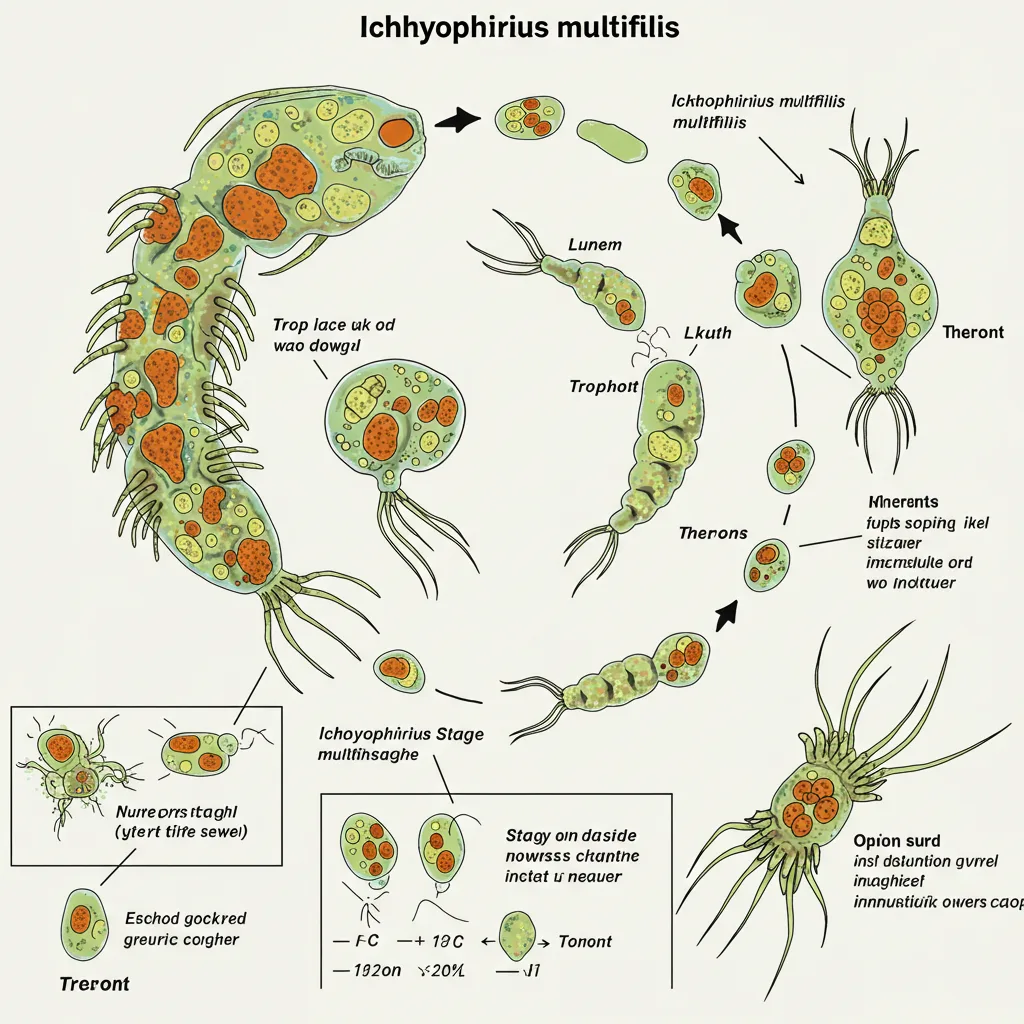
Quick answer: Ich (Ichthyophthirius multifiliis, or white spot disease) is a common parasite that shows up as tiny white dots on a fish’s body, fins, and gills, often with scratching, rapid breathing, and lethargy. To treat it, gradually raise the tank temperature to 82-86F to speed up the parasite’s life cycle, then treat the whole tank with medication like Ich-X or copper, or with aquarium salt. Continue treatment for the full life cycle, typically 7-14 days, since the parasite is only vulnerable in its free-swimming stage.
What Is Ich (White Spot Disease)?
Ichthyophthirius multifiliis — more commonly known as “Ich” or “white spot disease” — is one of the most common parasites in the aquarium hobby. If you see tiny white dots on your fish that look like grains of salt, chances are, you’re dealing with Ich.
Ich affects both freshwater and saltwater fish, weakening their immune systems, stressing them out, and if left untreated, killing them. But with early detection and the right treatment, Ich is completely curable.
Symptoms of Ich in Aquarium Fish
- Small white spots on body, fins, or gills (like salt or sugar)
- Scratching or “flashing” against decor
- Rapid breathing or gill movement
- Lethargy and loss of appetite
- Clamped fins or hovering in one spot
If you see these symptoms, immediate action is crucial. Learn the basics of aquarium fish health to catch problems early.
What Causes Ich?
Ich is usually introduced via new fish, plants, or contaminated equipment. It can also lie dormant in your tank and activate when fish are stressed.
- Introducing new fish without quarantine
- Sudden changes in temperature or water chemistry
- Overcrowding or poor water quality
Be sure to follow best practices for first-time aquarists to reduce risk from the start.
How to Treat Ich: Step-by-Step
Treating Ich means attacking the parasite in its free-swimming stage — not when it’s embedded in the fish’s skin. That’s why treatment usually lasts 7–14 days.
Step 1: Quarantine If Possible
Move infected fish to a hospital tank if you have one. This prevents reinfection and lets you treat aggressively without affecting plants or invertebrates.
Step 2: Raise the Temperature Gradually
Increase temperature to 82–86°F (28–30°C) to speed up the parasite’s life cycle, making treatment more effective. Raise by 1°F every 6–8 hours to avoid shocking your fish.
Step 3: Begin Treatment
- Medications: Malachite green, formalin, copper, or Ich-X are effective.
- Salt Treatment: Use non-iodized aquarium salt at 1 tablespoon per 3 gallons.
- Remove Carbon: Take out activated carbon from filters before treating.
Step 4: Maintain Clean Water
Perform daily or every-other-day water changes (25–50%) during treatment. Test water regularly using a reliable test kit to ensure optimal parameters.
How Long Does Treatment Take?
Typical Ich treatment lasts 7–14 days, depending on temperature and severity. Continue treatment for at least 2–3 days after the last visible white spot is gone.
How to Prevent Ich Outbreaks
- Always quarantine new fish for 2–4 weeks
- Keep temperature and parameters stable
- Avoid sudden stocking or equipment changes
- Sanitize nets and tools between tanks
- Feed high-quality, varied foods to boost immunity
Prevention is key. Learn more in our upcoming post: “Fish Disease Prevention: A Practical Guide”.
Final Thoughts
Ich is scary, but it doesn’t have to be deadly. With early detection, the right tools, and some patience, your fish can make a full recovery. Bookmark this guide for emergencies and share it with fellow fishkeepers — you never know when Ich will strike.
Next up: Learn how to spot fin rot before it spreads in our next guide, or return to the Aquarium Fish Health Hub.
Continue Your Diagnosis
Fish Symptoms Checker Aquarium Rescue Hub Why Fish Die When Water Tests Fine Aquarium Rescue Blueprint →Frequently asked questions
What is ich and what do the white spots mean?
Ich is the parasite Ichthyophthirius multifiliis, also called white spot disease. The white dots that look like grains of salt or sugar are the parasite embedded in the fish’s skin, fins, and gills. It affects both freshwater and saltwater fish, and beyond the spots you may see scratching against decor, rapid gill movement, clamped fins, and loss of appetite.
How do I treat ich?
Raise the temperature gradually to 82-86F, increasing about 1F every 6-8 hours so you don’t shock the fish. Remove activated carbon from the filter, then dose a medication such as malachite green, formalin, copper, or Ich-X, or use non-iodized aquarium salt at about 1 tablespoon per 3 gallons. Do 25-50% water changes daily or every other day during treatment, and treat the entire tank, not just visibly infected fish.
How long does ich take to cure?
Treatment usually takes 7-14 days depending on temperature and severity. The parasite is only killed in its free-swimming stage, so you have to treat through the full life cycle rather than stopping when spots disappear. Keep treating for at least 2-3 days after the last visible white spot is gone to catch any remaining parasites.
Can ich kill my fish?
Yes. Ich weakens the immune system, stresses fish, and damages the gills, and left untreated it can be fatal. The gill damage is often what kills fish, since it interferes with breathing. With early detection and proper treatment through the full life cycle, ich is curable and most fish recover fully.
Is ich contagious to other fish?
Yes, ich spreads to other fish in the same tank. Once the parasite releases free-swimming stages into the water, it can infect every fish present, which is why you treat the whole tank rather than individual fish. Moving infected fish to a hospital tank can help, but assume the main tank is contaminated and may still hold parasites.
How do I prevent ich?
Quarantine all new fish for 2-4 weeks before adding them to your display tank, since new fish are the most common source. Keep temperature and water parameters stable, avoid overcrowding, and sanitize nets and tools between tanks. Feeding high-quality, varied food supports the immune system and makes a dormant outbreak less likely.
Author and editorial note
Written and maintained by Benjamin Thoden, founder of DBC Aquatics. This plant guide is reviewed for low-tech practicality: correct placement, light level, substrate or rhizome needs, melt risk, algae pressure, and what a beginner can maintain consistently. See our editorial standards for how guides are created, reviewed, and updated.
Leave a Reply