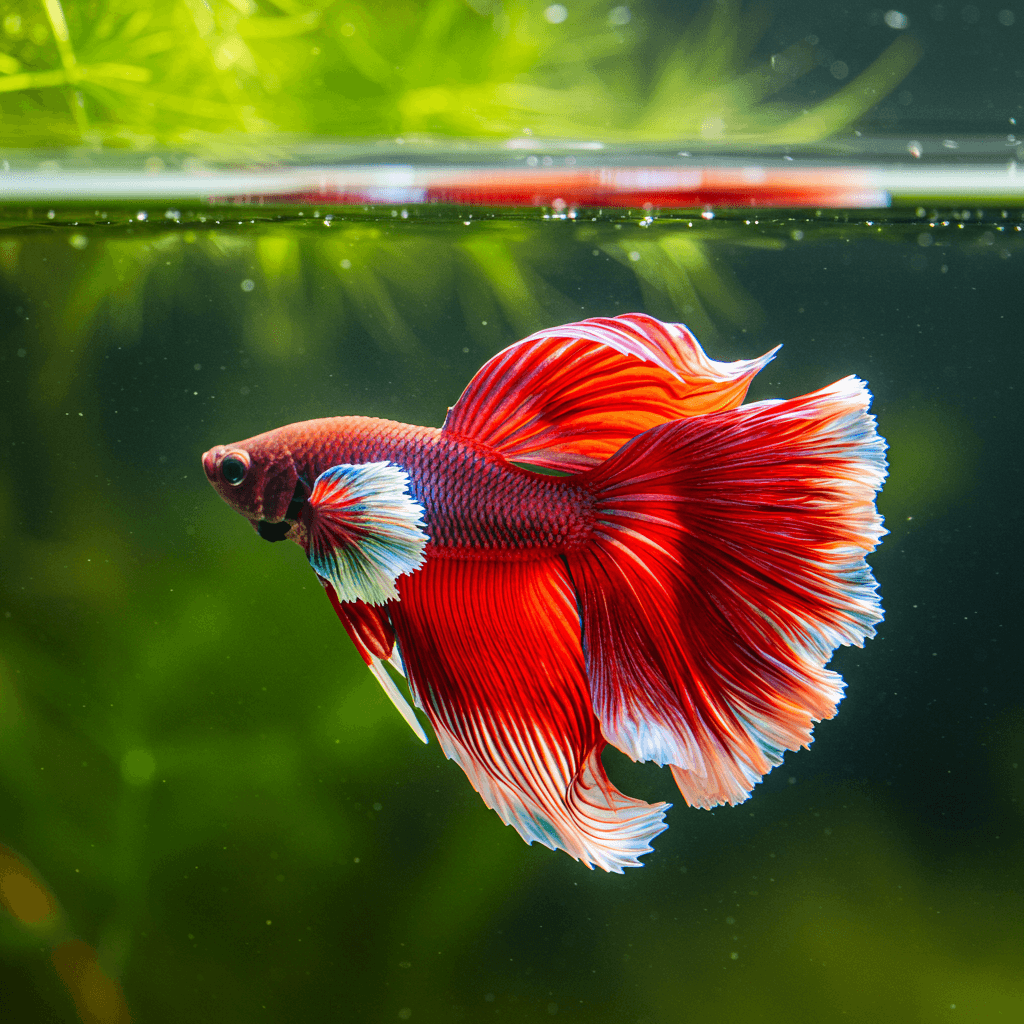
Quick answer: A betta needs a heated, filtered tank of at least 5 gallons, not a bowl, with water held steady around 78-80F. Feed a varied protein diet in small amounts once or twice a day, and keep them alone or with calm, non-nippy tankmates. Most betta deaths trace back to cold, dirty, or undersized tanks.
Overview
Scientific Name: Betta splendens
Common Names: Betta, Siamese Fighting Fish
Origin: Thailand, Cambodia, Laos, Vietnam
Habitat: Slow-moving rice paddies, floodplains, and shallow ponds
The Betta Fish is one of the most popular and recognizable freshwater aquarium species in the world. Known for their striking colors and flowing fins, Bettas are often chosen by beginners but are best suited for those who understand their specific care needs and territorial nature.
Appearance and Size
Bettas are small fish, typically growing to about 2.5 to 3 inches in length. Males display vibrant colors and long, ornate fins, while females are generally smaller, less colorful, and have shorter fins. Selective breeding has resulted in a wide variety of color morphs and tail types such as veil tail, crown tail, halfmoon, and double tail.
Temperament and Behavior
Bettas are famously territorial, especially the males. Keeping two males in the same tank almost always results in aggression and often death. Female Bettas can coexist in carefully planned sorority tanks, though this setup requires experience.
They are intelligent and responsive, often recognizing their caretakers and reacting to movement outside the tank. Bettas can also be trained to perform simple tricks like jumping or swimming through hoops.
Ideal Tank Setup
- Minimum Tank Size: 5 gallons (10+ gallons recommended for advanced setups)
- Substrate: Sand or fine gravel
- Plants & Décor: Live plants (Anubias, Java Fern, Floating plants), hiding spots, caves, driftwood
- Filtration: Low flow filter (sponge filter ideal)
- Lighting: Moderate, natural day/night cycle
Betta tanks should have a secure lid, as they are excellent jumpers. Avoid sharp décor that could tear their delicate fins.
Water Parameters
- Temperature: 76–82°F (24–28°C)
- pH: 6.5–7.5
- Hardness: Soft to moderately hard water (3–12 dGH)
- Ammonia/Nitrites: 0 ppm
- Nitrates: < 20 ppm
They thrive in stable, warm conditions. Temperature swings or poor water quality are a common cause of illness in Bettas.
Diet and Feeding
Bettas are carnivores and require a protein-rich diet. A high-quality pellet formulated for Bettas should be the staple, supplemented with:
- Frozen bloodworms
- Brine shrimp
- Daphnia
- Occasional live food
Feed small portions 1–2 times daily, and avoid overfeeding as it can lead to bloating and constipation.
Breeding Information
Bettas breed via bubble nesting. The male builds a nest of bubbles at the water’s surface and courts the female through a dramatic display. Once the female releases her eggs, the male collects them and guards the nest.
Breeding Setup:
- 10-gallon tank
- Sponge filter
- Live plants
- Indian almond leaves to encourage nesting
Post-spawning, the female should be removed immediately to prevent aggression. The male cares for the eggs and fry until they are free-swimming.
Health and Disease
Common Issues:
- Fin rot
- Ich (white spot disease)
- Swim bladder disorder
- Velvet
Preventative Care:
- Maintain clean, stable water conditions
- Avoid overfeeding
- Quarantine new fish and plants
- Keep temperature consistent
Tankmates & Compatibility
Male Bettas should be housed alone or with peaceful, non-nippy species that won’t provoke aggression or damage their fins. Avoid other brightly colored or long-finned fish.
Good Tankmates:
- Ember tetras
- Kuhli loaches
- Corydoras
- Snails (Nerite, Mystery)
- Shrimp (with caution)
Avoid:
- Guppies
- Barbs
- Other Bettas
- Gouramis
Fun Facts
- Bettas breathe air using a labyrinth organ and can survive in low-oxygen environments.
- Wild Bettas are typically dull brown/green and far less colorful than aquarium strains.
- They are capable of jumping several inches out of the tank—keep a lid on!
FAQs
Are Bettas good for beginners?
Yes, but only if the keeper is willing to meet their specific care needs.
How long do Betta Fish live?
With proper care, 3–5 years. Some have lived up to 7 years in optimal conditions.
Can I keep my Betta in a bowl?
No. Bowls are too small, lack filtration, and quickly lead to poor water quality.
Do Bettas get lonely?
No, they are solitary by nature. Most males prefer to be alone.
How can I tell if my Betta is happy?
Active swimming, bubble nesting, eating well, and vivid colors are signs of a healthy, content Betta.
Related Posts
Keep reading
Frequently asked questions
What size tank does a betta need?
At least 5 gallons, and 10 gallons or more is better. Bowls and tiny tanks are too small to hold stable temperature and water quality, which is what kills most bettas. A bigger volume gives you room for a heater, filter, plants, and hiding spots. Keep a secure lid on the tank because bettas are strong jumpers.
Can bettas live with other fish?
Sometimes, but two male bettas together almost always fight to the death, so house males alone or with peaceful, non-nippy species. Good tankmates include ember tetras, kuhli loaches, corydoras, nerite or mystery snails, and shrimp with caution. Avoid guppies, barbs, gouramis, and other brightly colored or long-finned fish that provoke aggression. Female sorority tanks are possible but only with experience.
What water temperature do bettas need?
Keep the tank between 76 and 82F, with around 78-80F being a good target. Bettas are tropical fish and need stable warmth, so a heater is required in most homes. Temperature swings and cold water are a common cause of illness. Aim for a pH of 6.5 to 7.5 with zero ammonia and nitrites.
How often and how much should I feed a betta?
Feed small portions one to two times a day. Use a high-quality betta pellet as the staple and supplement with frozen bloodworms, brine shrimp, daphnia, or occasional live food. Bettas are carnivores and need a protein-rich diet. Do not overfeed, since it leads to bloating, constipation, and fouled water.
Do bettas need a filter and heater?
Yes to both. A low-flow filter such as a sponge filter keeps the water clean without pushing your betta around, and a heater holds the warm, stable temperature they need. Without filtration, ammonia and nitrites build up fast and poison the fish. Without a heater, cold water stresses them and invites disease.
Why is my betta lethargic or has clamped fins?
Lethargy and clamped fins usually point to cold water or poor water quality, so check the temperature and test for ammonia, nitrites, and nitrates first. Water that is too cold or full of waste stresses the fish and opens the door to fin rot, ich, and velvet. Confirm the heater holds 76-82F and that ammonia and nitrites read zero with nitrates under 20 ppm. Quarantine any new fish or plants so you are not introducing disease.
Author and editorial note
Written and maintained by Benjamin Thoden, founder of DBC Aquatics. This shrimp guide is reviewed through DBC Aquatics’ stability-first lens: cycle maturity, mineral consistency, molt safety, copper risk, grazing surfaces, and slow acclimation matter more than quick fixes. See our editorial standards for how guides are created, reviewed, and updated.
Leave a Reply