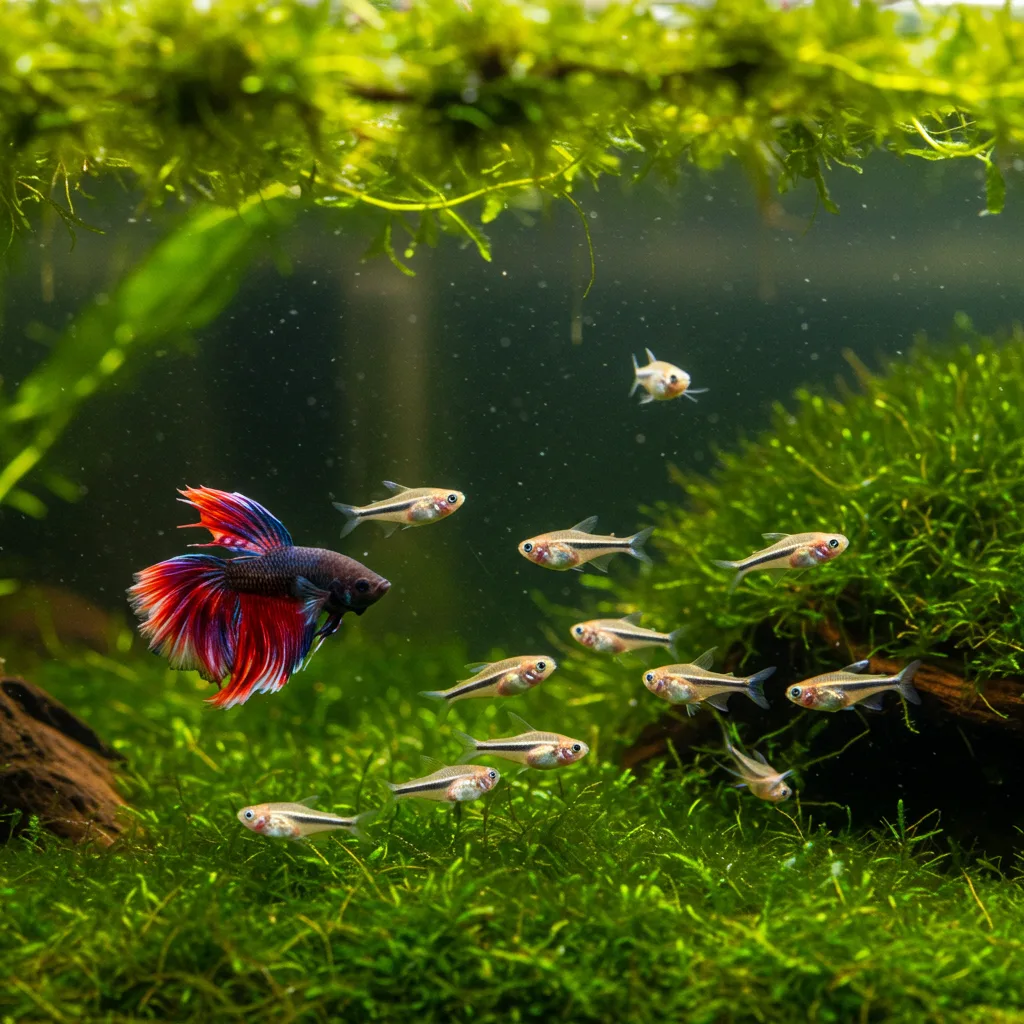
Quick answer: The best small-tank picks are chili rasboras, ember tetras, male endler’s livebearers, pygmy corydoras, and celestial pearl danios, with a betta or pea puffer as a solo option. For shrimp tanks, stick to small peaceful species like chili rasboras, ember tetras, and pygmy cories, which leave adult neocaridina and amano shrimp alone. Avoid pea puffers, scarlet badis, and any larger or predatory fish if you want a shrimp colony to survive.
Best Fish for Small Tanks – Nano-Friendly Freshwater Species Guide
Setting up a small aquarium can be incredibly rewarding — but stocking it responsibly is critical. In nano tanks, everything is magnified: aggression, waste, and space limitations. Choosing the right fish species will make the difference between a thriving underwater community and a stressful crash waiting to happen.
In this guide, you’ll find a breakdown of the best freshwater fish for small tanks, organized by tank size (5g, 10g, 20g), personality traits, bioload, and compatibility. Whether you’re building a solo betta paradise or a peaceful nano community, this article gives you expert-level insight with a beginner-friendly tone.
What Counts as a “Small” Tank?
In the aquarium hobby, any tank under 30 gallons is considered “small,” but for this guide we’ll focus on:
- 5 Gallons (19 liters): Ideal for solo species or shrimp/snail colonies
- 10 Gallons (38 liters): Good for nano schools or one peaceful centerpiece fish + inverts
- 20 Gallons (75 liters): Versatile small community tank that allows for multiple schools
Top 15 Fish for Small Tanks (Ranked by Ease & Beauty)
- Betta Fish (Betta splendens): Perfect for 5+ gallons. Colorful, interactive, and prefers being alone.
- Endler’s Livebearers: Hardy, non-aggressive, great for 5–10g. All-male groups avoid fry overload.
- Chili Rasboras (Boraras brigittae): Brilliant red nano schoolers. Ideal in planted tanks, 6+ group in 5–10g.
- Ember Tetras: Fiery orange schooling fish. Very peaceful. Best in groups of 8–10.
- Pygmy Corydoras: Tiny bottom-dwellers. Keep 6–8 in soft sand. Pair well with rasboras or shrimp.
- Honey Gourami: One per 10 gallons. Gentle, shy, and plant-loving centerpiece fish.
- Scarlet Badis: Micro predator. Best in species-only tanks or with snails. Eats live food.
- Otocinclus Catfish: Great algae eaters. Need to be kept in groups (4–6). Only in mature 10g+ tanks.
- Clown Killifish: Top-dwelling, bright striped nano fish. Peaceful in trios or pairs with floating plants.
- Celestial Pearl Danio (Galaxy Rasbora): Mini galaxy-patterned fish. Active and peaceful, likes to hide in plants.
- Neocaridina Shrimp: Great with nano fish. Come in red, blue, yellow, and more. Adds movement and cleanup power.
- Amano Shrimp: Algae eaters and hardy. Too big to be eaten by most nano fish. No breeding in freshwater.
- Nerite Snails: Beautiful patterns, don’t reproduce in freshwater, and help clean algae.
- White Cloud Mountain Minnows: Cooler water, no heater needed. Schooling and peaceful.
- Pea Puffer (Carinotetraodon travancoricus): The smallest freshwater puffer. Best solo in 5g tanks. Very intelligent!
5-Gallon Tank Stocking Ideas
A 5-gallon aquarium may seem small — but it’s still large enough for a well-maintained solo setup or a micro community.
- ✅ 1 Betta Fish + 1–2 snails
- ✅ 6 Chili Rasboras + 4 Shrimp
- ✅ 5 Male Endler’s Livebearers
- ✅ 1 Pea Puffer (species-only)
- ✅ Shrimp-only colony (10–20 Neocaridina + moss wall)
10-Gallon Tank Stocking Options
10 gallons gives you more flexibility. You can have small schools of nano fish, peaceful shrimp, and even a single centerpiece species.
- ✅ 8 Ember Tetras + 6 Pygmy Corydoras
- ✅ 6 Celestial Pearl Danios + 1 Honey Gourami
- ✅ 10 White Cloud Minnows (unheated tank) + floating plants
- ✅ 1 Scarlet Badis + Shrimp colony
- ✅ 6 Clown Killifish + 2 Nerite Snails
20-Gallon Tank Stocking Layouts
At 20 gallons, you can design a real freshwater nano community. Here’s where multiple species and more advanced aquascaping can really shine.
- ✅ 10 Chili Rasboras + 6 Pygmy Corys + 4 Amano Shrimp
- ✅ 1 Honey Gourami + 10 Ember Tetras + 2 Nerite Snails
- ✅ 12 CPDs (Celestial Pearl Danios) + 6 Otocinclus + Floating Plants
- ✅ 1 Bolivian Ram + 6 Harlequin Rasboras + 5 Corydoras
Water Parameters & Filtration for Small Tanks
In small tanks, even a tiny ammonia spike can be lethal. Cycle your tank fully before adding fish, and use gentle filtration. Most nano fish prefer:
- Temperature: 72–78°F (except White Clouds: 65–75°F)
- pH: 6.5–7.5 for most nano species
- Hardness: 3–10 dGH (moderately soft to medium)
- Filter: Sponge filters or low-flow HOB filters recommended
Fish to Avoid in Small Tanks
Even if your local pet store sells them as “starter fish,” these species are inappropriate for small aquariums due to their adult size or aggression:
- 🚫 Goldfish: Need 30g minimum. Produce heavy waste and outgrow nano tanks.
- 🚫 Common Pleco: Easily reaches 12–24 inches. Unsuitable for anything under 75 gallons.
- 🚫 Angelfish: Get large and aggressive in tight spaces.
- 🚫 Tiger Barbs: Nippy and need larger schools in tanks 30g+.
- 🚫 Gouramis (other than Honey): Most get aggressive or territorial in nano tanks.
Aquascaping Tips for Nano Tanks
- 🌿 Use tall background plants to give depth and provide hiding spaces
- 🍃 Use moss walls or Anubias on driftwood to soften line of sight
- 🧱 Hardscape with small stones to define territories in tanks with multiple species
- 💧 Include floating plants to help shy fish feel secure and diffuse lighting
Related Beginner Guides & Tools
- Stocking Guide by Gallon (5g, 10g, 20g)
- Best Beginner Aquarium Plants
- How to Cycle Your Tank Without Fish
- Top Nano Fish by Size & Behavior
Final Thoughts – Small Tanks, Big Possibilities
A small tank doesn’t have to limit your creativity or your enjoyment. With the right fish and proper planning, you can build a thriving, active, low-maintenance aquatic world. Stick to peaceful nano species, research their care, and never overstock — your fish (and your future self) will thank you.
Still not sure what to stock your small tank with? Drop your tank size, filter, and plant layout in the comments — I’ll help you build a smart, species-safe plan to get started.
Frequently asked questions
What are the best fish for a 5 or 10 gallon tank?
For a 5 gallon, a single betta, a school of 6 chili rasboras, or 5 male endler’s livebearers all work, plus a shrimp-only colony if you skip fish entirely. A 10 gallon opens up small schools: 8 ember tetras with 6 pygmy corydoras, or 6 celestial pearl danios with a single honey gourami as a centerpiece. White cloud mountain minnows are a good unheated 10 gallon option. Keep stocking conservative since waste and aggression are magnified in small volumes.
Which small fish are safe with shrimp?
Chili rasboras, ember tetras, pygmy corydoras, and celestial pearl danios are the safest choices because their mouths are too small to eat adult neocaridina or amano shrimp. They may pick off newborn shrimplets, so heavy plant cover and moss give the babies places to hide. Endler’s livebearers and otocinclus are also low-risk. Avoid anything with a big mouth or a hunting instinct if you want the colony to breed.
How many fish can I keep in a small tank?
Go by bioload and fish size, not a strict inch-per-gallon rule. A 5 gallon handles one betta or a single nano school of about 6 fish; a 10 gallon can take one small school plus a centerpiece or a school plus pygmy cories; a 20 gallon supports two schools or a school with a peaceful centerpiece like a bolivian ram. Always cycle the tank fully before stocking and add fish in small batches so the filter can keep up.
Do small tanks need a heater?
Most nano fish are tropical and need a stable 72 to 78 degrees Fahrenheit, so a small adjustable heater is required for bettas, rasboras, tetras, corydoras, and gouramis. The main exception is white cloud mountain minnows, which prefer cooler 65 to 75 degree water and do fine unheated in a typical room. Even a few degrees of swing stresses fish, so a heater plus a thermometer prevents temperature crashes in low-volume tanks.
What fish should I avoid in a nano tank?
Skip common fish sold as nano fish that actually outgrow small tanks, like goldfish, common plecos, and most barbs and danios beyond the smallest species. Pea puffers and scarlet badis are nano-sized but are micro predators that will hunt shrimp and harass tankmates, so keep them species-only. Fin-nippers and aggressive fish do extra damage in tight quarters where targets cannot escape.
Do nano schooling fish need to be in groups?
Yes. Chili rasboras, ember tetras, celestial pearl danios, and pygmy corydoras are shoaling species that get stressed and show washed-out color when kept in small numbers. Keep them in groups of at least 6, and 8 to 10 gives bolder behavior and better coloration. A proper group also spreads out any aggression so no single fish gets picked on.
Author and editorial note
Written and maintained by Benjamin Thoden, founder of DBC Aquatics. This shrimp guide is reviewed through DBC Aquatics’ stability-first lens: cycle maturity, mineral consistency, molt safety, copper risk, grazing surfaces, and slow acclimation matter more than quick fixes. See our editorial standards for how guides are created, reviewed, and updated.
Small tank stocking matrix: choose by tank size and behavior
The safest small-tank stocking plan starts with adult size, group behavior, and waste load. A fish that fits physically can still be wrong if it needs a school, constant swimming room, cooler water, or more oxygen than a nano tank can provide.
| Tank size | Best direction | Good candidates | Avoid | DBC note |
|---|---|---|---|---|
| 5 gallons | Shrimp, snails, or one calm centerpiece | Neocaridina shrimp, nerite snail, single betta if heated and filtered | Schooling fish, plecos, goldfish, ?baby? versions of larger fish | Five gallons leaves very little margin. Keep stocking simple and maintenance consistent. |
| 10 gallons | One nano school or one centerpiece plus cleanup crew | Chili rasboras, ember tetras, pygmy corys, endlers, honey gourami in the right setup | Tiger barbs, common plecos, most livebearer colonies without a plan | Pick one main idea instead of mixing several half-sized groups. |
| 20 gallons | A real community with zones | Small rasbora or tetra school, pygmy/habrosus corys, honey gourami, shrimp-safe snails | Large cichlids, goldfish, bala sharks, silver dollars | Twenty gallons gives room for behavior, not just bodies. Build top, middle, and bottom zones. |
Shrimp-safe stocking check
If shrimp matter, avoid fish with large mouths, constant hunting behavior, or strong curiosity around the substrate. Even ?peaceful? nano fish may eat shrimplets. Dense moss, floating roots, leaf litter, and hardscape gaps improve survival, but no community fish is truly baby-shrimp-proof.
Small-tank mistake to avoid
Do not stock by the old ?inch per gallon? shortcut. It ignores adult body shape, oxygen demand, aggression, schooling needs, and waste. Instead, ask: does the fish stay small as an adult, need a group, have enough swimming space, and match the tank?s temperature and maintenance routine?
Leave a Reply