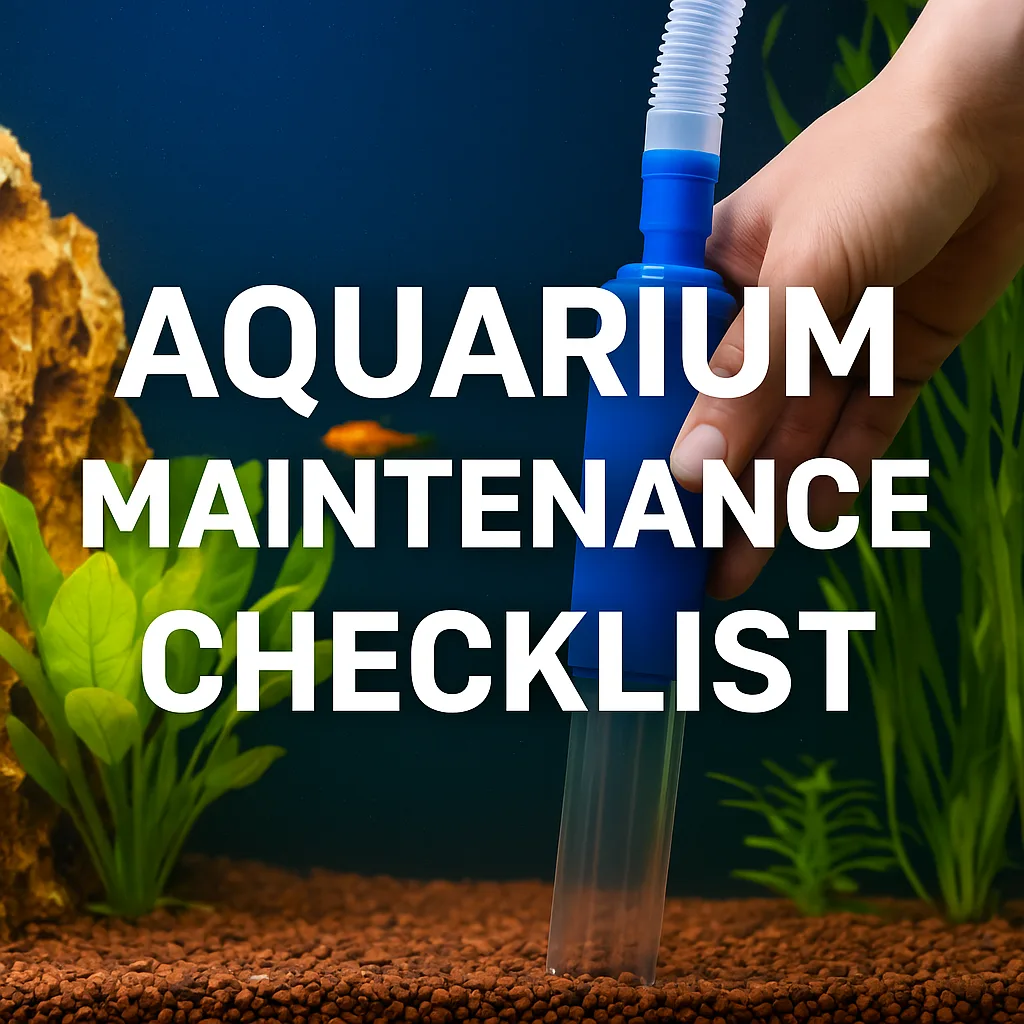
Quick answer: Do a quick daily check on your fish, temperature, and feeding. Each week, test water parameters, change 20-30% of the volume with dechlorinated water, top off evaporation, and scrape the glass. Every 2-4 weeks, vacuum the substrate and rinse filter media in old tank water, and every 3-4 months run deeper checks on your heater, lighting timers, air pumps, and hardscape.
Ultimate Aquarium Maintenance Checklist (Weekly, Monthly & Yearly)
If you’re wondering how often you should clean your aquarium — or what exactly you should be checking — you’re not alone. Whether you’re caring for a planted freshwater tank or a high-tech setup, regular aquarium maintenance is key to healthy fish and a stable system. This complete checklist breaks down exactly what to do weekly, monthly, and seasonally to keep your tank crystal-clear and thriving.
Think of it like a routine oil change for your car. Staying on schedule keeps everything running smoothly — and helps prevent costly disasters.
Weekly Maintenance Tasks
These quick checks and changes should be done once a week. They’re your first line of defense against algae blooms, cloudy water, and health issues in your fish.
- Test water parameters: Ammonia, nitrite, nitrate, pH, KH, GH, temperature
- Top off water: Use dechlorinated water to replace evaporation loss
- Clean aquarium glass: Use algae magnet or scraper for viewing panels
- Wipe down equipment: Remove dust and salt creep from lights, lids, filter exterior
- Feed inspection: Remove uneaten food and inspect feeding habits
👉 Tip: Keep a notepad or log of your test results. Changes over time will tell you more than a single snapshot.
Biweekly to Monthly Maintenance
Every 2–4 weeks, go a bit deeper. These tasks help reset the system and ensure your filtration and water chemistry stay balanced.
- Water change: 20–30% of tank volume with conditioned water
- Vacuum substrate: Especially in high-waste zones or under decorations
- Clean filter media: Rinse sponges or ceramic rings in tank water, not tap water
- Trim plants: Remove decaying leaves, propagate stem plants
- Clean intake/output pipes: Remove gunk buildup with filter brushes
⚠️ Never clean all your filter media at once — you want to preserve beneficial bacteria to avoid mini-cycles.
Seasonal or Quarterly Maintenance
Every 3–4 months, take a broader look at your tank. These tasks help with long-term health and system optimization.
- Deep clean hardscape: Remove decor if needed and spot-clean with a soft brush
- Replace filter media: If degraded, replace one section at a time to preserve bacteria
- Test your heater: Use a thermometer to confirm it’s holding steady
- Check lighting timers: Make sure light duration hasn’t drifted over time
- Check air pumps: Clean air stones and tubing if airflow is reduced
🧠 Consider backing up your system if you use automatic feeders, CO₂ controllers, or inline heaters. Battery backups or surge protectors help prevent disaster during outages.
How to Know If Your Tank Needs Extra Attention
Even with a schedule, things can pop up. Here are signs your tank may need additional cleaning or troubleshooting:
- Cloudy water, especially if white or green
- Sudden algae outbreaks
- Fish gasping at the surface or hiding abnormally
- Rotting plant leaves or foul smells
- Filter output reduced or making noise
Don’t panic. Step one is always checking your water parameters and oxygenation. From there, you can adjust lighting, reduce feeding, or change water more frequently.
Bonus: Maintenance Tips for Planted Tanks
Live plants change the game. While they add stability, they also require a few extra steps:
- Regularly trim stem plants to avoid shading lower leaves
- Check CO₂ diffusers for clogs
- Dose liquid fertilizer after water changes
- Clean algae off leaves gently (use toothbrush or fingers)
- Inspect for melting leaves or pest snails
🧪 Bonus tip: Use root tabs monthly for root-feeding plants like Crypts, Swords, and Vallisneria.
Downloadable Aquarium Maintenance Schedule
Want to print this out and check tasks off weekly? Grab our free aquarium maintenance calendar to track your routine and water parameters over time. Great for beginners and essential for busy hobbyists!
What to Read Next
🎥 Subscribe to DBC Aquatics on YouTube for maintenance walkthroughs, fish care videos, and gear reviews every week!
Frequently asked questions
How often should I do a water change?
Change 20-30% of the tank volume every 2-4 weeks using dechlorinated, conditioned water. Heavily stocked or fed tanks lean toward the more frequent end. If your nitrate readings climb between changes, increase the frequency rather than the volume.
What daily, weekly, and monthly tasks actually matter?
Daily, glance at your fish, the temperature, and remove any uneaten food. Weekly, test your parameters, top off evaporation, scrape algae off the glass, and wipe down equipment. Every 2-4 weeks, vacuum the substrate, rinse filter media, trim plants, and clean the intake and output pipes.
How often should I clean the filter?
Rinse the filter media every 2-4 weeks, and always rinse it in old tank water, not tap water, because chlorine kills the beneficial bacteria living on it. Never clean all the media at once. Doing so wipes out too much bacteria and can trigger a mini-cycle with an ammonia spike.
Do I really need to test the water every week?
Yes. A weekly test of ammonia, nitrite, nitrate, pH, KH, GH, and temperature catches problems before your fish show symptoms. Log the results so you can see trends over time, since a single reading tells you far less than the direction the numbers are moving.
What happens if I skip maintenance?
Nitrate and waste build up, which leads to algae blooms, cloudy water, and stressed or sick fish. A neglected filter loses flow and bacteria capacity, so the tank’s ability to process waste drops right when the load is highest. Skipping enough cycles can crash the system and kill fish.
How long does weekly upkeep take?
For a typical tank, the weekly routine of testing, a water change, glass cleaning, and wiping equipment runs about 20-40 minutes. Larger or planted tanks take longer because of trimming and vacuuming. Staying on schedule keeps each session short instead of turning into a long cleanup later.
Author and editorial note
Written and maintained by Benjamin Thoden, founder of DBC Aquatics. This plant guide is reviewed for low-tech practicality: correct placement, light level, substrate or rhizome needs, melt risk, algae pressure, and what a beginner can maintain consistently. See our editorial standards for how guides are created, reviewed, and updated.
Leave a Reply