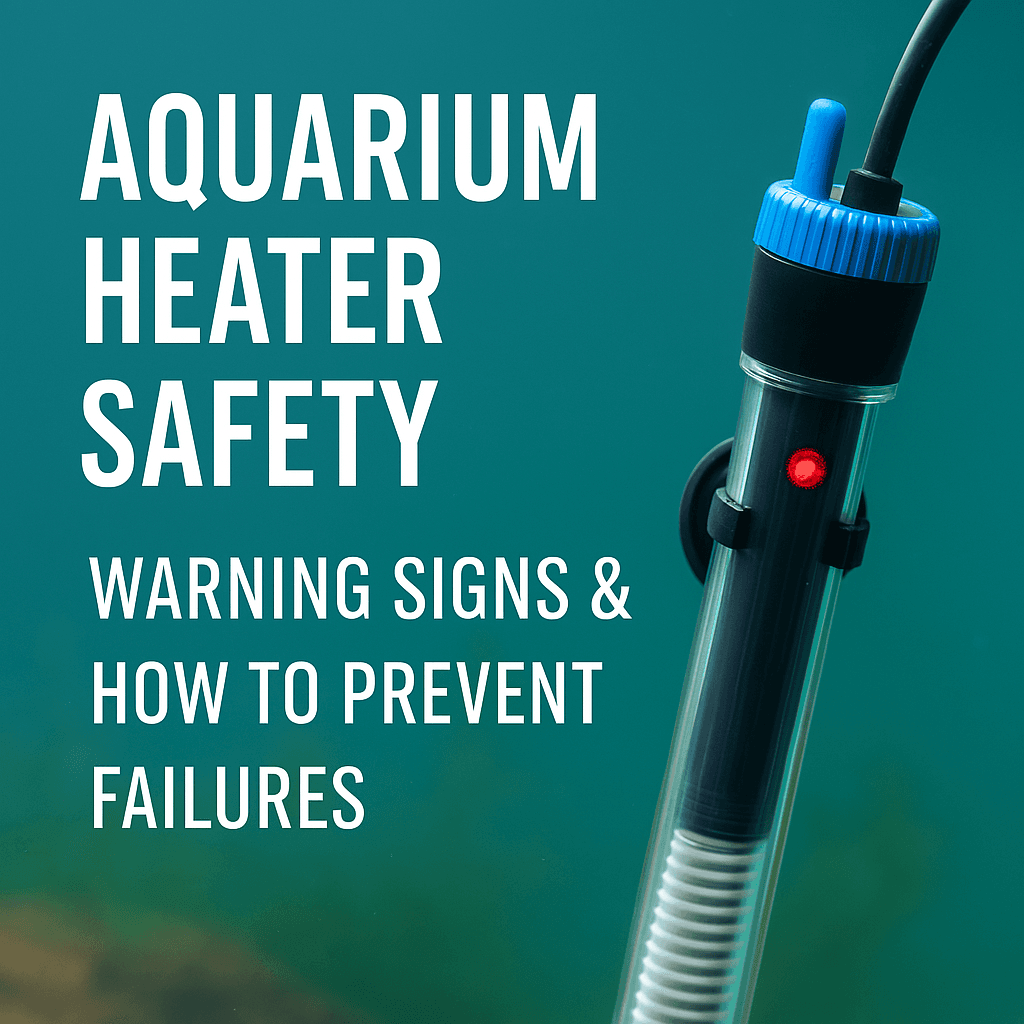

Heater failure is one of the most common — and dangerous — problems in the hobby. A malfunctioning heater can overheat your tank or leave your shrimp and fish freezing overnight. Here’s how to spot early warning signs, prevent disaster, and build a backup plan.
Common Heater Failure Warning Signs
- ✅ Heater light stays on 24/7 — could be stuck in ON mode (risk of cooking your tank)
- ✅ Heater never turns on — no light, no heat, check plug and socket first
- ✅ Fluctuating temperature — heater can’t hold stable temp, often a sign of internal fault
- ✅ Burn marks or cracks — unplug immediately and discard
- ✅ Condensation inside heater glass — seal is compromised, can short out
Safe Operating Range for Shrimp & Fish
Most tropical fish and shrimp thrive at 74°F–78°F. Caridina shrimp often prefer 70–74°F. If your heater can’t hold this range consistently, it’s time to replace it.
Tips to Prevent Heater-Related Crashes
- 🧯 Always have a backup heater on hand (same wattage)
- 🔌 Use a temperature controller or alert system (like Inkbird or sensor alarms)
- 🌡️ Check temp with a digital thermometer every few days
- ⚠️ Don’t let water level drop below the heater head
- 🚫 Never turn on a dry heater — it can shatter
Best Practices for Heater Placement
- Position near filter output to evenly distribute heat
- Use a horizontal mount for better heat coverage in shallow tanks
- Ensure the heater is fully submerged if it requires it
- Consider using 2 smaller heaters instead of 1 large one for redundancy
Related Guides
Already dealt with a heater failure? Share your experience in the comments — what brand failed, how did you recover, and what do you recommend?
Heater safety checks that prevent emergencies
Most heater problems are caught early if you compare the heater setting to the real tank temperature. Never trust the dial by itself.
- Use a separate thermometer on every heated tank.
- Check temperature at the same time each day for a week after installing a heater.
- Keep the heater submerged to the recommended line and away from dry starts.
- Replace heaters that stick on, stick off, crack, fog internally, or swing several degrees.
Stable temperature is more important than a perfect number. A predictable tank is easier for fish to handle than one that swings.
When to replace an aquarium heater
A heater should be replaced when it becomes unpredictable, even if it still turns on. Warning signs include temperature swings of several degrees, condensation inside the glass, cracks, a stuck indicator light, a tank that runs warmer than the dial, or livestock gathering near the heater because the rest of the tank is too cold.
Heater size also matters. An undersized heater may stay on constantly and still fail to hold temperature in a cool room. An oversized heater can overheat a small tank quickly if it sticks on. For important tanks, especially shrimp tanks or tanks with sensitive fish, a separate temperature controller adds a layer of protection.
After installing any heater, test it like a new piece of life-support equipment. Check the tank with a separate thermometer morning and evening for several days. Once you know how it behaves, keep a habit of glancing at the thermometer during feeding. That one-second check catches many heater problems before they become emergencies.
Quick answer: Aquarium heater safety comes from using a separate thermometer, checking temperature daily, and replacing heaters that no longer hold a steady range.
Frequently asked questions
How do I know if my aquarium heater is failing?
Watch for temperature swings, condensation inside the heater, cracks, a stuck light, or a tank that does not match the heater setting.
Should I trust the temperature dial on the heater?
No. Always verify with a separate thermometer because many heater dials are approximate and can drift over time.
Is a temperature controller worth it?
For valuable livestock, shrimp tanks, or sensitive fish, a controller adds useful protection against a heater sticking on.
Extra prevention note
Heater safety also depends on placement. Put the heater where water moves past it, keep it fully submerged, and unplug it before large water changes if the water level might drop below the safe line. A heater exposed to air can overheat and crack. Pair that habit with a quick thermometer glance during feeding, and you turn heater failure from a hidden risk into something you are likely to catch early.
Author and editorial note
Written and maintained by Benjamin Thoden, founder of DBC Aquatics. This shrimp guide is reviewed through DBC Aquatics’ stability-first lens: cycle maturity, mineral consistency, molt safety, copper risk, grazing surfaces, and slow acclimation matter more than quick fixes. See our editorial standards for how guides are created, reviewed, and updated.
Leave a Reply