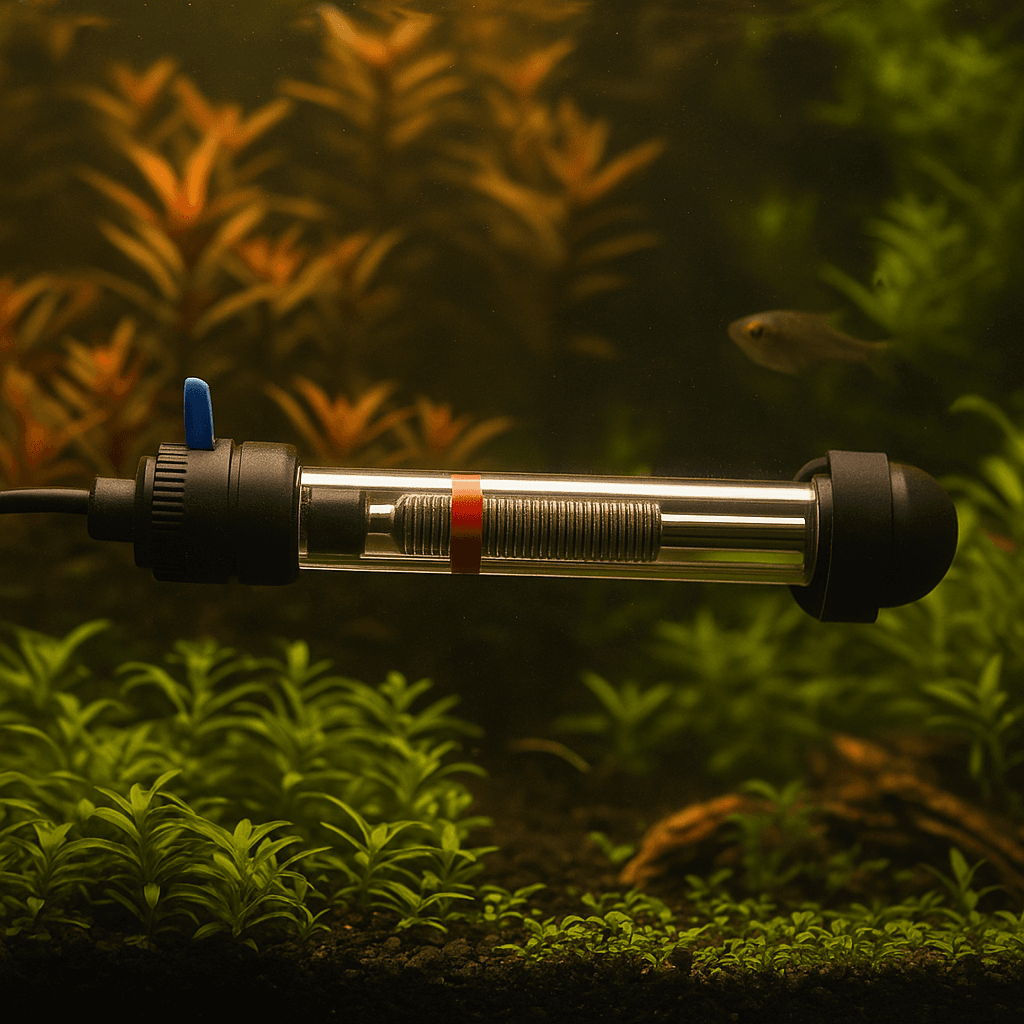
Quick answer: Aquarium heaters fail in two ways: stuck on, which cooks the tank, or stuck off, which lets it go cold. The cheapest protection is an external temperature controller wired to cut power plus a separate thermometer you read daily, since the heater’s own dial will lie to you once the thermostat sticks. In the case below, a 200-watt heater stuck on, pushed a 40-gallon tank to 87F overnight, and killed three fish before the owner caught it.
Aquarium Heater Failure Case Study: How One Malfunction Nearly Crashed a Tank (and What You Can Learn)
Aquarium heaters are one of the most critical — and often underestimated — components of any tropical fish setup. A reliable heater keeps water temperatures within the narrow range most aquarium fish need to survive. But when a heater fails, it can spell disaster. Whether it overheats the tank or stops working altogether, the effects can be lethal in a matter of hours.
In this case study, we examine a real-world incident of heater failure in a planted community tank, break down exactly what went wrong, and provide actionable tips to protect your own aquarium from the same fate. If you’ve never considered backup heaters, temperature monitoring, or heater calibration, this story will show you why they matter — and how you can prevent a complete wipeout.
The Incident: Sudden Heater Malfunction in a 40-Gallon Planted Tank
The tank in question was a 40-gallon breeder planted aquarium housing 20+ fish: neon tetras, cherry barbs, otocinclus, and a pair of German blue rams. It had been running stable for over a year with no major issues. The heater was a name-brand 200-watt submersible unit with a built-in thermostat. It had been installed for about 14 months.
One morning, the tank owner noticed something strange: the fish were clustered near the surface, breathing rapidly. The water felt warm — too warm. When they checked the thermometer, the water temperature had climbed to 87°F — well above the 78°F target. Some of the more sensitive species (like the rams and otos) were already showing signs of stress.
They quickly unplugged the heater and performed a partial water change with cooler water to slowly reduce the temperature. Unfortunately, two otocinclus didn’t survive the night. One of the German blue rams became lethargic and died two days later despite stable water parameters and added aeration.
What Went Wrong?
This was a classic case of a heater thermostat failure. The heater’s internal thermostat likely got stuck in the “on” position, continuing to heat the water beyond the set temperature. There was no external controller to shut it down or alert the owner — only the aquarium thermometer caught the rising temperature in time to save most of the fish.
- Cause: Internal thermostat stuck in active mode
- Detection: Observed fish behavior and external thermometer
- Resolution: Immediate unplugging and emergency cooling
Lessons Learned
Here are the critical takeaways from this heater failure incident:
- Always use an external thermometer — never trust the heater’s dial alone
- Observe your fish — unusual behavior is often the first sign of a hidden problem
- Heaters can fail silently — both in the “on” and “off” position
- Be ready for emergencies — water change buckets and treated water should always be on standby
How to Protect Your Tank from Heater Failure
You can’t eliminate risk completely, but you can reduce it significantly by adding redundancy and safeguards. Here’s how:
- Use a temperature controller: Devices like the Inkbird ITC-306A monitor water temperature and cut power to the heater if it exceeds your set limit
- Install dual heaters: Two smaller heaters running at half capacity reduce the chance of overheating if one fails
- Set your heater slightly below the controller threshold: This way, the controller acts as the final failsafe
- Place the heater near flow output: Ensures heat is evenly distributed and doesn’t trigger cycling errors
- Test your heater every 6 months: Check for temp creep or calibration issues
What Temperature Swings Do to Your Fish
Fish are cold-blooded animals, meaning they can’t regulate their own body temperature. Sudden swings in water temperature — either up or down — can shock their systems, suppress immune function, and cause death in severe cases. Some symptoms of heat stress include:
- Rapid gill movement or surface breathing
- Lethargy or darting
- Loss of color or erratic swimming
- Increased aggression or panic
Overheating is especially dangerous because warm water holds less oxygen. That’s why aeration (via air stones or surface agitation) can help during a heating crisis.
Emergency Response Checklist
- Unplug heater immediately if overheating is detected
- Float a bag of ice or cold water bottles in the tank (don’t add ice directly)
- Perform small water changes with slightly cooler dechlorinated water
- Increase surface agitation or run an air pump to improve oxygen levels
- Monitor temperature every 15 minutes until stable
- Rehome sensitive species if necessary
How to Test Your Heater
- Place heater in a bucket of water with thermometer
- Set desired temp and monitor when it turns off/on
- Compare actual water temp to dial setting
- Repeat in a controlled environment every 6–12 months
Choosing a Reliable Heater
Not all heaters are created equal. Look for models with high-quality components, good reviews, and safety certifications. Avoid generic imports with poor temperature regulation or no warranty.
- Top-rated brands: Eheim, Fluval, Hygger, Aqueon Pro
- Avoid glass casing if you have large fish or turtles — opt for shatterproof or titanium
- Consider integrated heater/controller systems for plug-and-play safety
Final Thoughts
Heaters are one of those devices we set and forget — until something goes wrong. But as this case study shows, even a single failure can be costly in terms of fish loss, stress, and emotional toll. With proper setup, monitoring, and planning, you can keep your tank safe, stable, and protected from unexpected temperature swings.
What to Read Next
🎥 Watch real-life tank crisis stories and recovery guides on DBC Aquatics YouTube — and don’t forget to subscribe for weekly care tips and equipment reviews.
Frequently asked questions
How do aquarium heaters fail?
The internal thermostat sticks in one position. Stuck on, the element keeps heating past the set point and overheats the water, which is what happened in this case study when the tank hit 87F against a 78F target. Stuck off, the heater quietly stops and the tank drifts down to room temperature. Both modes happen silently with no alarm, so nothing tells you until the fish react.
What are the signs of a failing heater?
Fish behavior is usually the first clue. In the incident, the fish clustered near the surface and breathed rapidly before anyone noticed the water felt warm. Watch for lethargy, darting, loss of color, or sudden aggression, and compare a separate thermometer against the heater’s set temperature. A gap between the two means the heater is reading wrong or has already failed.
How do I prevent a heater disaster?
Never trust the heater’s built-in dial. Run a separate thermometer and check it daily, and add an external controller that cuts power if the water exceeds your limit. Keep treated water and a bucket on standby so you can do an emergency cooling water change fast. Test the heater every six months for temperature creep or calibration drift.
Should I use a heater controller or a backup heater?
Use a controller. A backup heater protects you only against a stuck-off failure, but a controller like the Inkbird ITC-306A monitors the actual water temperature and cuts power to the heater if it overheats, which covers the more dangerous stuck-on failure. Set the heater slightly below the controller’s threshold so the controller acts as the final failsafe. For the best coverage, run a controller and split the load across two heaters.
What temperature swing is dangerous to fish?
Fish are cold-blooded and cannot regulate their own body temperature, so any fast swing shocks their system, suppresses immune function, and can kill them. The case-study tank climbed about 9 degrees, from a 78F target to 87F, and that was enough to kill two otocinclus and a German blue ram. Sensitive species like rams and otos show stress first. Keep changes gradual and aim to hold your target within a degree or two.
Is it better to run one large heater or two smaller ones?
Two smaller heaters running at half capacity is safer. If one sticks on, a half-power unit can only push the temperature so high before you catch it, instead of one full-power heater cooking the tank fast. If one fails off, the other holds part of the load while you replace it. Place each near a flow output so heat spreads evenly and the units do not short-cycle.
Author and editorial note
Written and maintained by Benjamin Thoden, founder of DBC Aquatics. This plant guide is reviewed for low-tech practicality: correct placement, light level, substrate or rhizome needs, melt risk, algae pressure, and what a beginner can maintain consistently. See our editorial standards for how guides are created, reviewed, and updated.
Leave a Reply