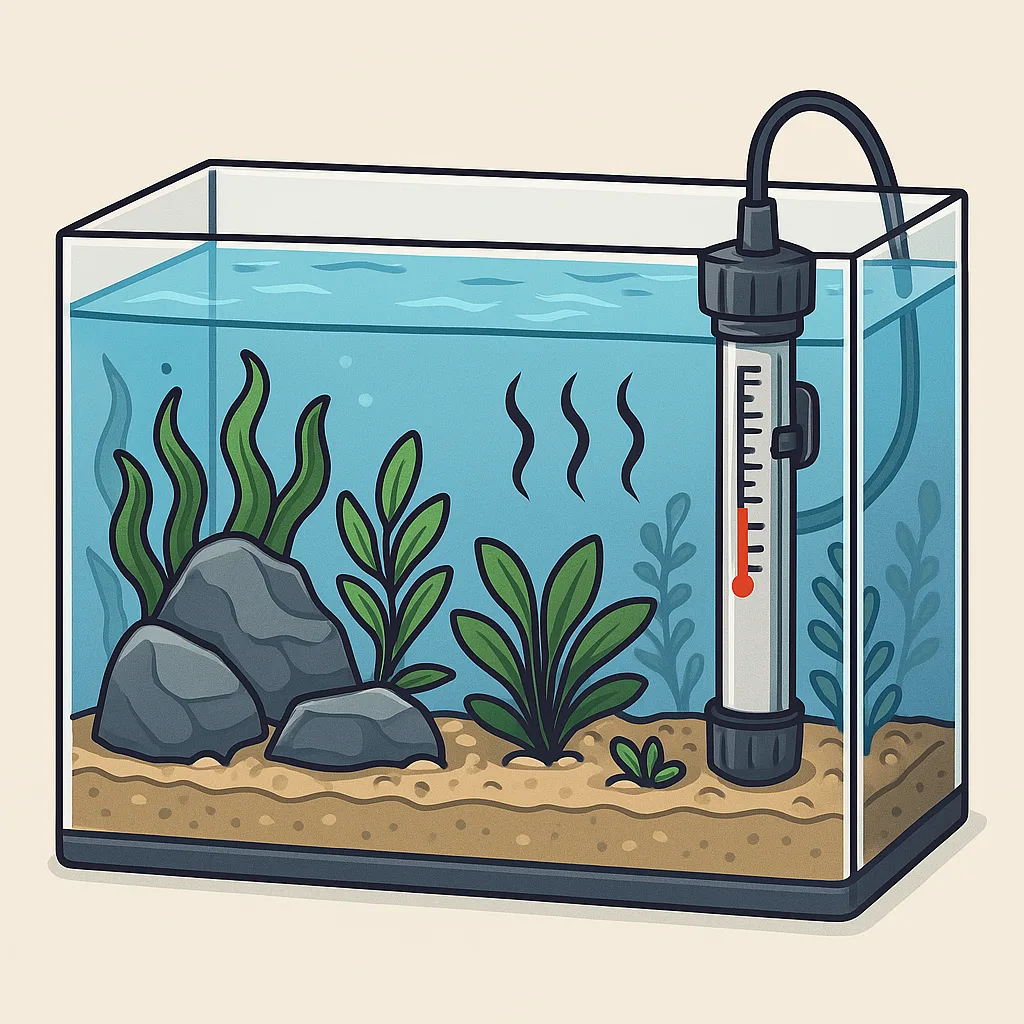
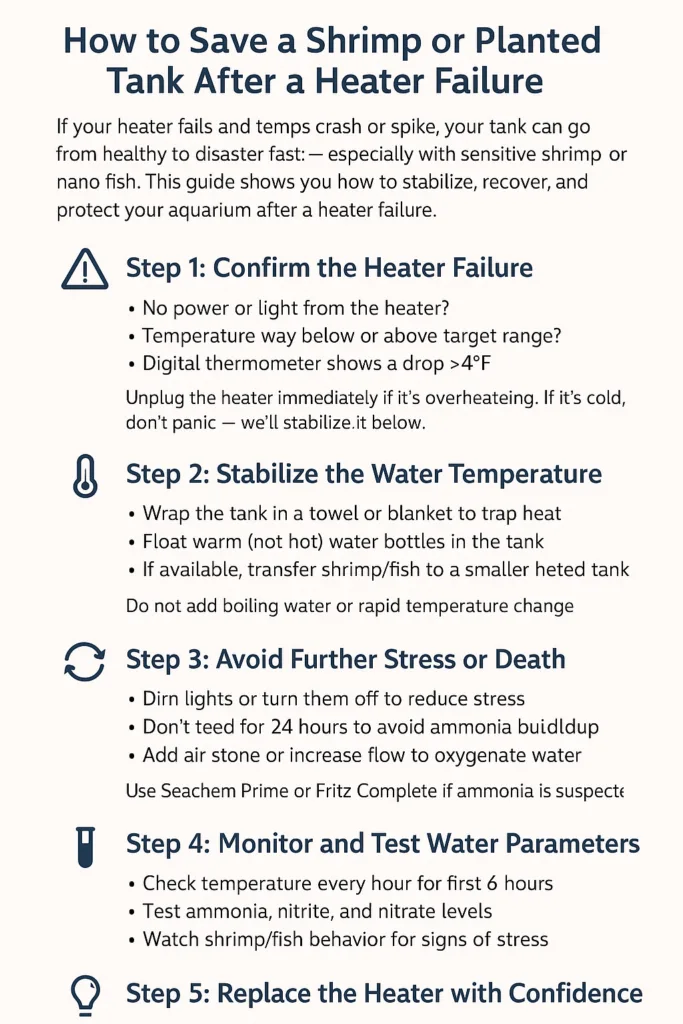
If your heater fails and temps crash or spike, your tank can go from healthy to disaster fast — especially with sensitive shrimp or nano fish. This guide shows you how to stabilize, recover, and protect your aquarium after a heater failure.
Step 1: Confirm the Heater Failure
- No power or light from the heater?
- Temperature way below or above target range?
- Digital thermometer shows a drop >4°F?
Unplug the heater immediately if it’s overheating. If it’s cold, don’t panic — we’ll stabilize it below.
Step 2: Stabilize the Water Temperature
- Wrap the tank in a towel or blanket to trap heat
- Float warm (not hot) water bottles in the tank
- If available, transfer shrimp/fish to a smaller heated tank
- Do not add boiling water or rapid temperature change
Step 3: Avoid Further Stress or Death
- Dim lights or turn them off to reduce stress
- Don’t feed for 24 hours to avoid ammonia buildup
- Add air stone or increase flow to oxygenate water
- Use Seachem Prime or Fritz Complete if ammonia is suspected
Step 4: Monitor and Test Water Parameters
- Check temperature every hour for first 6 hours
- Test ammonia, nitrite, and nitrate levels
- Watch shrimp/fish behavior for signs of stress
Step 5: Replace the Heater with Confidence
- Use same wattage replacement
- Pre-test in a bucket if possible
- Consider adding an external temp controller for safety
- Store a backup heater in your disaster kit
Related Recovery Tools & Guides
Have you ever saved a tank from heater failure? Share your story and what tools helped — it could save someone else’s colony.
What to do after a heater failure
A heater failure is dangerous because temperature changes affect oxygen, metabolism, and stress all at once. The right response is gradual correction, not panic.
- Confirm the actual water temperature with a separate thermometer before changing anything.
- If the tank is cold, warm it slowly. Fast swings can be worse than the original drop.
- If the tank overheated, increase aeration because warm water holds less oxygen.
- Watch livestock for delayed stress over the next 24 to 48 hours, especially shrimp and sensitive fish.
Replace unreliable heaters and consider using a temperature controller on tanks with valuable livestock.
Recovery after the temperature is stable
Once the tank is back in range, the emergency is not automatically over. Temperature stress can weaken fish and shrimp for a day or two, and a failed heater often happens alongside lower oxygen, reduced feeding response, or bacterial imbalance. Keep the tank quiet and avoid adding new livestock, new medication, or major aquascaping changes during recovery.
Feed lightly for the next 24 hours. Cold-stressed fish may digest slowly, and overheated tanks may already be low on oxygen. Extra food can decay and make water quality worse right when the livestock is least able to handle it. If fish are active and water tests stay safe, return to normal feeding gradually.
Use the failure as a maintenance reminder. Check whether the heater was old, undersized, buried behind decor, exposed during water changes, or plugged into a loose outlet. Replacing the heater is only part of the fix; changing the habit that allowed the failure to go unnoticed is what prevents the next one.
Quick answer: After a heater failure, correct temperature slowly, increase aeration if the tank overheated, and watch livestock for delayed stress over the next day or two.
Frequently asked questions
Should I warm a cold tank quickly?
No. Warm it gradually. Fast temperature swings can shock fish and shrimp even when the final temperature is correct.
What should I do if the tank overheated?
Increase aeration, confirm the real temperature, and lower it slowly. Warm water holds less oxygen, so gasping is a serious warning sign.
Can fish recover after a heater failure?
Many can recover if water quality and oxygen stay safe, but watch closely for delayed stress, disease signs, or weak feeding response.
Extra recovery note
After a heater failure, keep the tank routine simple for several days. Avoid rearranging decor, changing foods, adding new animals, or cleaning the filter unless flow is blocked. The livestock has already handled a temperature stress, so the best recovery plan is stable water, strong oxygen, light feeding, and close observation. If symptoms appear later, use the timeline of the failure to decide whether stress, oxygen, or water quality is the likely cause.
Author and editorial note
Written and maintained by Benjamin Thoden, founder of DBC Aquatics. This shrimp guide is reviewed through DBC Aquatics’ stability-first lens: cycle maturity, mineral consistency, molt safety, copper risk, grazing surfaces, and slow acclimation matter more than quick fixes. See our editorial standards for how guides are created, reviewed, and updated.
Leave a Reply