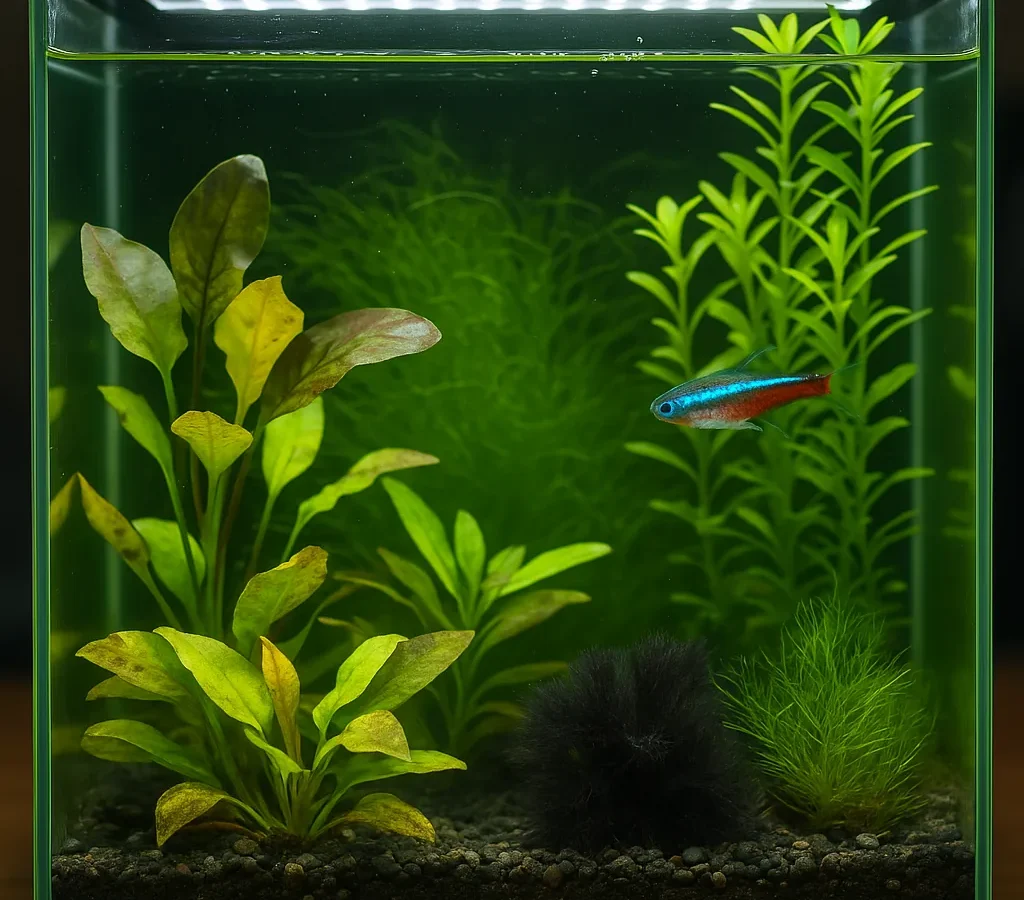
Quick answer: Most aquarium plant problems — melting, yellowing, holes, or stunted growth — come down to three things: too little light, missing nutrients, or unstable CO2. Match the plant to your light level, dose a basic all-in-one fertilizer, and give new plants two to three weeks to adjust before assuming they are failing.
Aquarium Plant Growth Problems – Troubleshooting Guide for Beginners
Your plants looked lush and healthy when you planted them — but now they’re melting, turning yellow, or covered in holes. If this sounds familiar, you’re not alone. Plant growth problems are incredibly common in freshwater aquariums, especially in low-tech or beginner setups. The good news? Most of these issues are fixable with the right adjustments.
Watch: How to Fix Aquarium Plant Melting Problem
This in-depth guide covers the **most common symptoms of plant problems**, what causes them, and exactly how to fix each one. Whether you’re growing Java Fern or Monte Carlo, you’ll learn what healthy growth looks like — and how to get back on track.
Quick Diagnosis: What Do Unhealthy Plants Look Like?
Here’s a quick visual symptom chart. Match what you’re seeing in your tank to these signs:
- 🍂 Yellowing leaves → Nitrogen, potassium, or iron deficiency
- 🕳️ Holes in leaves → Potassium or CO₂ deficiency
- 🧊 Transparent/melting leaves → Poor light or drastic change in water conditions
- 🟤 Brown fuzz or black patches → Diatoms or algae from excess nutrients/light imbalance
- 📉 Stunted growth or no new leaves → Low light or lack of micronutrients
- 🌿 Roots not developing → Poor substrate or no root fertilizers
Problem #1: Leaves Turning Yellow (Chlorosis)
If your plant leaves are turning yellow — either partially or completely — it’s likely a nutrient issue. But which one?
- Older leaves yellow first: Nitrogen or potassium deficiency
- New leaves are pale or white: Iron deficiency
- Yellow with crispy edges: Potassium deficiency
Fix: Use a comprehensive all-in-one liquid fertilizer with micronutrients. If you’re using root feeders like Crypts or Swords, add root tabs near their base. Test nitrate and iron levels to confirm deficiencies if possible.
Problem #2: Melting or Transparent Leaves
Melting leaves are one of the most common plant problems — especially after planting. This is called “transition melt.”
- 🧊 Transparent, mushy leaves → Emersed-to-submersed transition
- 🪫 New plants from store deteriorate after a few days
- 🚿 Water is too soft, cold, or lacking nutrients
Fix: Trim damaged leaves and wait for new submersed growth. Increase water temperature slightly (75–78°F), ensure potassium and micronutrients are present, and avoid planting too deep into substrate. Melting is normal — the key is healthy regrowth.
Problem #3: Stunted Growth or No New Growth
If your plants seem frozen in time — no new leaves, no runners, just sitting there — you may have a **light or CO₂ issue**. Even hardy low-light plants need consistent conditions to grow.
- Lights too weak: Plant leaves grow tall and spindly but thin
- Not enough CO₂: Growth stalls, especially with carpeting plants like Monte Carlo or Dwarf Hairgrass
- Substrate is inert: No nutrients reaching roots
Fix: Upgrade your aquarium light to a full-spectrum LED rated for planted tanks. Consider adding liquid carbon or pressurized CO₂. Use root tabs for root feeders, and check photoperiod (6–8 hours is ideal).
Problem #4: Holes in Leaves
Holes that appear in the center or edges of leaves often indicate **potassium deficiency**, but can also be caused by aggressive fish or snails.
- Holes + yellow edges: Potassium deficiency
- Holes on Anubias, Java Fern: Nutrient deficiency + poor flow
- Large chunks missing: Check for nibbling fish or mystery snails
Fix: Add potassium supplements or an all-in-one fertilizer that includes K+. Improve circulation so nutrients reach all corners of the tank. Isolate nibblers if needed.
Problem #5: Algae on Leaves
Plants covered in algae may still be “growing” — but they’re also competing for light and nutrients. Algae smothers leaves and blocks photosynthesis.
- Brown algae: Diatoms common in new tanks, excess silicates
- Black algae: Low CO₂, inconsistent fertilization, poor flow
- Green fuzz/hair algae: Too much light, not enough nutrients
Fix: Reduce light intensity or photoperiod. Manually remove algae. Add algae eaters like Amano Shrimp, Nerite Snails, or Otocinclus. Dose CO₂ or liquid carbon and balance your nutrient schedule.
Bonus: Hidden Factors Affecting Plant Health
- 💡 Cheap LED lights: Many generic LEDs lack red/blue spectrum plants need
- 💧 Tap water quality: Low GH/KH can lead to nutrient lockout — test your water!
- 🪨 Inert substrates: Sand and gravel don’t feed root feeders unless supplemented
- ♻️ Filter flow: Stagnant zones prevent nutrients from circulating
Fix: Test GH/KH and add Seachem Equilibrium or crushed coral for buffering if needed. Upgrade to a planted-specific LED like Nicrew, Chihiros, or Fluval Plant 3.0. Use sponge filters or spray bars to improve flow.
Pro Tips for Long-Term Plant Growth
- 🌿 Always research the plant species before buying — know its light and substrate needs
- 🧪 Test water weekly, especially nitrate, GH, and phosphate
- 📅 Use a weekly maintenance schedule for trimming, replanting, and fertilizing
- 🔁 Dose fertilizers consistently — sporadic feeding leads to algae and poor growth
- 📉 If in doubt, reduce light first — excess light is the fastest way to grow algae
Related Guides to Boost Plant Health
- Aquarium Plants for Beginners
- Top Low Light Aquarium Plants
- Fast-Growing Plants That Outcompete Algae
- Plant Zones: Foreground, Midground, Background, Epiphytes
Final Thoughts
Aquarium plants are living indicators of your tank’s health. If they’re growing well, your water is likely balanced. If they’re struggling, it’s a sign something needs adjusting — but don’t give up. Most plant problems come down to a few core issues: poor lighting, inconsistent nutrients, or unstable parameters.
With the tips in this guide, you can diagnose and correct most growth problems. Stay consistent, be patient, and your plants will reward you with lush, vibrant growth over time.
Still unsure what’s wrong in your tank? Drop a photo or description in the comments — I’ll help you identify the issue and give you a personalized fix!
Frequently asked questions
Why are my aquarium plants melting?
Most melting happens right after planting and is called transition melt. Nursery plants are usually grown emersed (above water), so the old leaves die off as the plant switches to submersed growth. Trim the mushy, transparent leaves, keep the temperature around 75 to 78F, and make sure potassium and micronutrients are present. As long as the crown and roots are firm and you see new growth coming in, the plant is fine.
What nutrient deficiency causes yellow leaves or holes in leaves?
Where the damage shows up tells you which nutrient is short. Older leaves yellowing first points to nitrogen or potassium, while new leaves that come in pale or white point to iron. Holes in the leaves, often with yellow crispy edges, are the classic sign of a potassium deficiency. Dose a comprehensive all-in-one fertilizer with micronutrients, and add a potassium supplement if holes keep forming after the tank stabilizes.
Is my plant problem a light issue or a nutrient issue?
Look at the shape of the growth, not just the color. Light problems make plants stretch tall, thin, and spindly as they reach for more light, or stall out entirely with no new leaves. Nutrient problems show up as discoloration on otherwise normal-shaped leaves: yellowing, pale new growth, or holes. If growth is leggy and leaning toward the light, fix the light first; if the plant is growing but discolored, fix the fertilizer.
Do I need CO2 to fix poor growth?
Not for most plants. Hardy species like Java Fern, Anubias, and Crypts grow without injected CO2 as long as the light and nutrients are right. CO2 matters most for carpeting plants like Monte Carlo and Dwarf Hairgrass, which often stall in a low-tech tank. If you are not running pressurized CO2, stick to low-light plants, or try liquid carbon as a milder boost before investing in a CO2 system.
How long before new plants recover?
Give new plants two to three weeks before judging them. The first batch of leaves you bought may melt or yellow as the plant transitions from emersed to submersed growth, and that is normal. What you are watching for is healthy new submersed leaves, not the survival of the original ones. Keep your light, fertilizer, and temperature steady during this window, since constant changes only slow recovery.
How do I stop algae from growing on my plants?
Algae on leaves means light and nutrients are out of balance, usually too much light for how little the plants are actually using. Cut your photoperiod to 6 to 8 hours on a timer and keep the tank out of direct sunlight. Get your plants growing well with proper fertilizer, because healthy plants outcompete algae for the same nutrients. Add cleanup crew like Amano shrimp, nerite snails, or Otocinclus to graze down what is already there.
Author and editorial note
Written and maintained by Benjamin Thoden, founder of DBC Aquatics. This shrimp guide is reviewed through DBC Aquatics’ stability-first lens: cycle maturity, mineral consistency, molt safety, copper risk, grazing surfaces, and slow acclimation matter more than quick fixes. See our editorial standards for how guides are created, reviewed, and updated.
Leave a Reply