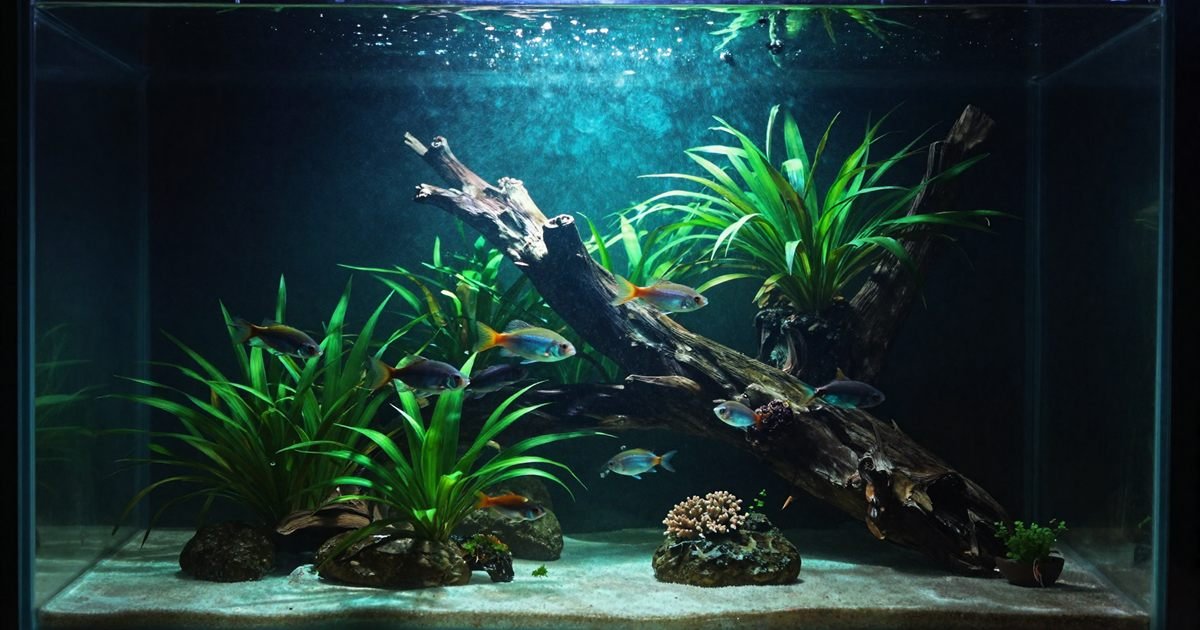
Quick answer: When fish keep dying but the water tests clean, the cause is usually something a basic kit misses: low oxygen, a temperature swing, depleted minerals (low GH/KH), or a slow disease. Test GH and KH, check your heater, add surface agitation, and review recent changes — the killer is almost always one of these hidden factors.
When the Numbers Look Good But Fish Keep Dying
You test your water. Ammonia zero. Nitrite zero. Nitrate low. By every measure the tank looks healthy — yet fish are still dying, and you have no idea why. This is one of the most frustrating situations in the hobby, and it happens more often than most beginner guides admit.
The hard truth is that a standard liquid test kit checks four parameters. A healthy aquarium has dozens of variables. When the big four look clean, it is time to look at what the kit cannot see. This page walks you through the most common hidden killers, in order of how quickly they can act.
Low Oxygen: The Invisible Emergency
A fish can experience oxygen stress even when ammonia and nitrite test zero. Dissolved oxygen (DO) is almost never included in a basic test kit, yet it is the one parameter fish cannot survive without for more than a few minutes at critically low levels.
Key insight: Water holds less dissolved oxygen as temperature rises. A tank running at 82 °F (28 °C) holds roughly 30 % less oxygen than the same tank at 72 °F (22 °C) — even with identical surface movement. In summer, a heater stuck slightly high can quietly push a stocked tank past its oxygen threshold overnight, when plants stop producing O₂ and fish metabolism is still running fast.
Watch for gasping at the surface, fish hanging near the filter outlet, or unusually rapid gill movement. If you see any of these signs, your first move is to increase surface agitation immediately — aim a powerhead or airline at the surface, do a shallow 20–25 % water change with cooler dechlorinated water, and re-check temperature. Do not add random chemicals before ruling out low oxygen.
Temperature: Slower to Kill, Easy to Miss
Most beginners check that their heater is set correctly and leave it there. What they miss is stability. A tank that swings from 74 °F in the morning to 82 °F in the afternoon (common near a sunny window) is far more stressful than a steady 78 °F. Tropical fish do not adapt to swings of 6–8 °F within hours — that kind of fluctuation suppresses immune function within 24–48 hours, leaving fish vulnerable to infections that would not normally take hold.
Check your thermometer at different times of day, not just once. A cheap stick-on thermometer can read 2–3 °F low. A digital probe thermometer costs under $10 and is far more reliable. Move the tank away from windows, air-conditioning vents, and external walls if fluctuation is the problem.
pH Swings vs. pH Level
Most guides tell you to keep pH between 6.8 and 7.6 for community fish — good advice, but incomplete. A steady pH of 7.8 is almost always safer than a pH that bounces between 7.0 at night and 7.8 in the morning. That 0.8-unit swing happens routinely in planted tanks and heavily stocked tanks because CO₂ levels change with the light cycle and bioload.
A pH drop of just one full unit represents a tenfold increase in acidity (pH is a logarithmic scale). Fish experiencing that swing nightly are under chronic chemical stress even though your midday test looks fine. Test pH at lights-out and again first thing in the morning. A gap larger than 0.3–0.4 units signals a buffering problem worth addressing with stable, low-dose carbonate hardness adjustments — not a bottle of pH-Up poured in at random.
Disease and Parasites That Hide Until It Is Too Late
Many fish diseases are well established before any visible symptom appears. Ich (white spot), velvet, and gill flukes all have free-swimming or gill-attached stages that cause internal stress — laboured breathing, lethargy, reduced feeding — days before you see spots or lesions. By the time fish are dying, the pathogen load is already high.
Quarantine is the single most under-used practice in beginner fishkeeping. A separate 10-gallon tank with a cycled sponge filter is enough. New fish should spend at least two weeks there before entering your display tank. This one habit eliminates the majority of disease introductions. If you suspect disease in your main tank, use a reputable aquarium rescue resource before reaching for medication — misdiagnosis is extremely common, and incorrect treatment can crash your beneficial bacteria and make things worse. Note: nothing on this page constitutes veterinary advice. Always consult a qualified aquatic vet for persistent or severe health problems.
Supersaturated Gas and New-Water Issues
This one surprises even experienced hobbyists. Tap water straight from the mains can be supersaturated with dissolved nitrogen or oxygen gas — particularly in cold weather when cold water holds gas under pressure. When this water enters your warm tank, those gases can come out of solution inside a fish’s bloodstream, causing gas bubble disease. You will see tiny bubbles on the skin, fins, or eyes, and fish that seem fine at a water change then deteriorate hours later.
The fix is simple: let tap water sit in a bucket for 15–30 minutes before adding it, or run it through a dechlorinator and aerate it briefly. This is especially important in winter.
What Else to Check Beyond the Kit
- TDS (total dissolved solids): A TDS meter under $15 can flag mineral imbalances and contamination that liquid kits miss entirely.
- Old tank syndrome: In tanks that rarely get water changes, pH can crash silently as buffering capacity exhausts itself — nitrate can read low while organic acids accumulate.
- Chloramine vs. chlorine: Some municipal supplies use chloramine, which standard dechlorinators do not neutralise. Check your local water report and use a dechlorinator rated for chloramine.
- Substrate and decor off-gassing: Certain rocks and substrates raise hardness or leach compounds over time. Test your water before and 48 hours after adding new decor.
A Smarter Rescue Routine
When fish are dying and tests look normal, work through this order: rule out low oxygen first (it acts fastest), then check temperature stability over 24 hours, then test pH at two different times of day, then examine fish closely under a torch for early disease signs, then review your water change process for gas or dechlorinator issues.
If you want a structured walkthrough, the DBC Aquatics survival checklist covers every step in a logical sequence. You can also test your water more thoroughly with a wider parameter kit — checking GH, KH, and DO alongside the standard four gives you a much clearer picture before you make any changes.
Most dying-fish situations are solvable. The key is ruling out causes systematically rather than guessing — and never adding anything to the tank until you understand what you are treating.
Stop Guessing When Your Fish Are Struggling
The Aquarium Rescue Blueprint gives you the exact step-by-step system — emergency protocols, the symptom-to-solution table, and six rescue flowcharts — so you always know what to do next.
Watch: Clear Water Doesn’t Mean Your Fish Are Safe
Frequently asked questions
Why do my fish keep dying when the water tests fine?
Because a basic test kit only measures four parameters out of dozens, and the killer is almost always one of the variables it cannot see. The most common ones are low dissolved oxygen, an unstable temperature, depleted carbonate and general hardness, and a disease in its hidden stage. Work through those in order of how fast they act: oxygen first, then temperature, then mineral and pH stability, then parasites.
What does a basic test kit miss?
A standard liquid kit reads ammonia, nitrite, nitrate, and pH. It does not measure dissolved oxygen, GH, KH, temperature stability, or the swing in pH between night and morning. It also tells you nothing about parasites or early infection. A healthy aquarium has dozens of moving variables, so four clean numbers only rule out four problems.
Could low oxygen be killing my fish?
Yes, and it acts fastest of all the hidden causes. Fish can suffer oxygen stress with ammonia and nitrite both reading zero, because dissolved oxygen is never on a basic kit. Warm water holds less oxygen, so a tank at 82 F holds roughly 30 percent less than the same tank at 72 F, and a heater stuck slightly high can push a stocked tank past its limit overnight when plants stop producing oxygen. Watch for gasping at the surface, fish hanging by the filter outlet, or rapid gill movement, and increase surface agitation immediately if you see them.
How do temperature swings kill fish?
It is the swing, not the set number, that does the damage. A tank that runs 74 F in the morning and 82 F by afternoon, common near a sunny window, is far more stressful than a steady 78 F. Tropical fish do not adapt to a 6 to 8 degree shift within hours, and that fluctuation suppresses their immune function within 24 to 48 hours, leaving them open to infections that would not normally take hold. Check the temperature at different times of day with a digital probe, since a cheap stick-on thermometer can read 2 to 3 degrees low.
Can old water with depleted minerals cause deaths?
Yes. Over time, infrequent or small water changes let GH and KH drift down as fish and biology consume the minerals, and a basic kit shows none of it. Low KH removes the buffer that holds pH steady, so the tank starts swinging between night and morning as CO2 rises and falls, and a single full pH unit is a tenfold change in acidity. Fish living through that nightly swing are under constant chemical stress even though your midday test looks fine. Test GH and KH directly and rebuild stability with low-dose carbonate adjustments, not a random pour of pH-Up.
How do I stop ongoing losses?
Start with the fastest killer and work down. Add surface agitation and check temperature to rule out low oxygen, then confirm the heater holds a steady reading across the day. Test GH and KH and correct any buffering problem slowly. Then look hard for early disease, since ich, velvet, and gill flukes cause labored breathing and lethargy days before visible spots appear, and review anything that changed recently, such as new fish, a new heater, or a missed water change.
Author and editorial note
Written and maintained by Benjamin Thoden, founder of DBC Aquatics. This plant guide is reviewed for low-tech practicality: correct placement, light level, substrate or rhizome needs, melt risk, algae pressure, and what a beginner can maintain consistently. See our editorial standards for how guides are created, reviewed, and updated.
Related Rescue Guides
Aquarium Rescue Hub
Aquarium Rescue Hub Fix a Failing Fish Tank Without Guessing Fish dying, gasping, flashing, hiding, or…
Fish Symptoms Checker
Aquarium Rescue · Symptom Checker Not sure what's wrong? Tap the symptom you're seeing and get…
Why Are My Fish Gasping at the Surface?
Rescue Pathway · Fish Gasping Fish gulping at the top almost always means one thing: they…
Leave a Reply