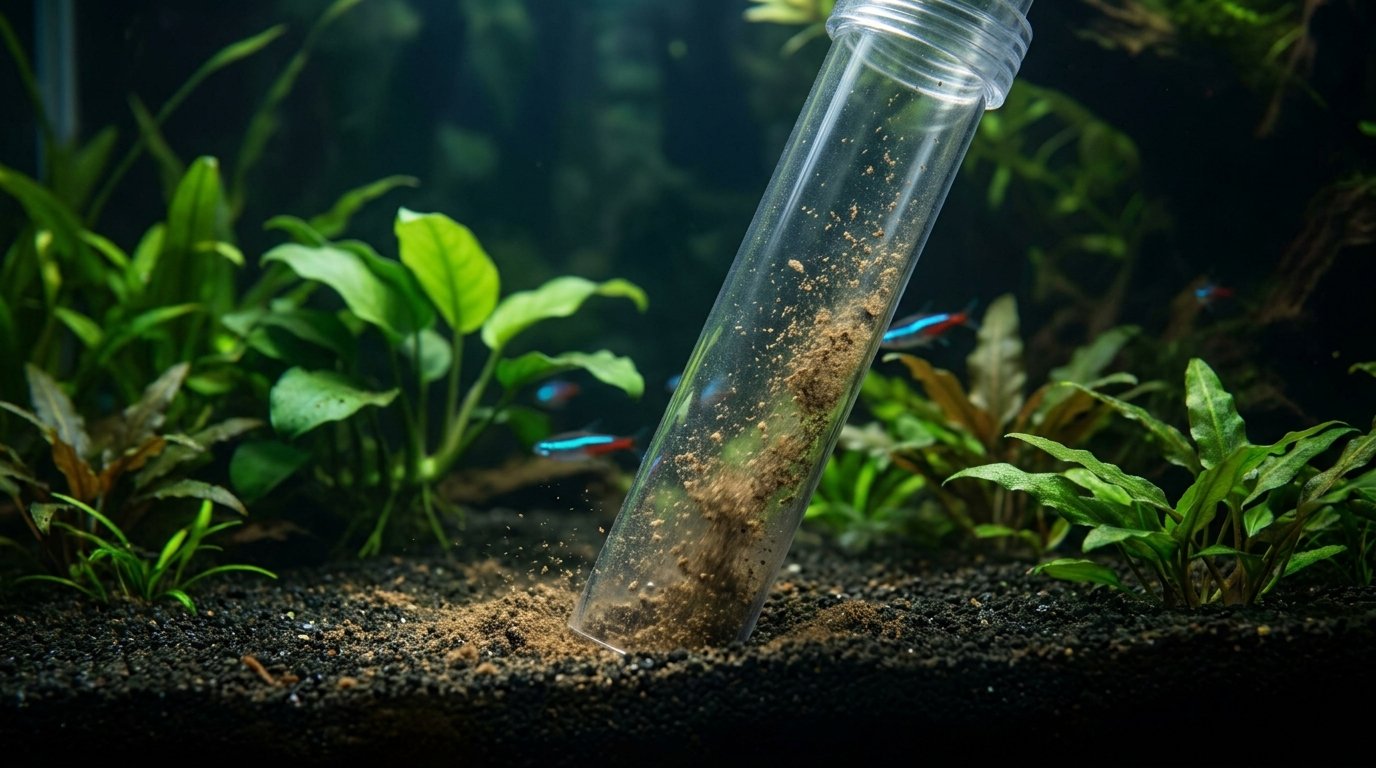
Quick answer: Most tanks start with a 10-25% water change once a week, with a gravel vacuum every week or two, but that is a starting point, not a universal rule. Stocking, feeding, tank size, filter capacity, plant load, waste buildup, water test results, species needs, and fish behavior decide the real schedule. Clear water is not clean water — only a test kit tells you the truth.
I run a freshwater rescue, so most of the sick tanks I get called to look spotless. The glass is clear, the water is sparkling, and the fish are dying anyway. That alone should tell you something: cleaning an aquarium is not about how it looks. It’s about what’s dissolved in the water that you can’t see.
Watch: The Truth About Aquarium Cleaning – Are You Overdoing It?
The question I get asked most is some version of “how often to clean an aquarium.” People want a number. I’ll give you honest numbers below, but the real answer is that your fish, your filter, and a test kit decide the schedule, not the calendar on your wall. Let me walk you through how I actually think about it.
How often to clean an aquarium, honestly
There is no universal cleaning schedule, and anyone who hands you one without asking about your tank is guessing. As a starting point, most tanks do best with a 10-25% fish tank water change every week. Heavily stocked tanks, bare-bottom setups, and tanks with big messy eaters like goldfish or cichlids often need more, in the 25-50% range, and sometimes twice a week.
But that weekly figure is just a default to start from. The real measure of whether you’re cleaning enough is your nitrate reading. Nitrate is the end product of the nitrogen cycle, and it only leaves the tank when you physically remove water. It builds up between changes, invisibly, and high nitrate stresses fish, stunts growth, and feeds algae.
Here’s the rule I actually use. Test your water right before your next scheduled change. If nitrate has climbed past roughly 20-40 ppm, you’re cleaning too little, so either change more water or change it more often. If ammonia or nitrite appears, stop treating the problem like a normal schedule question and diagnose water quality first. If it’s sitting comfortably low, your current rhythm is fine. That’s the whole game. Stop asking “how often water change” and start asking “what does my nitrate say.” Grab a good liquid test kit and this stops being guesswork.
The full-clean myth that kills fish in clean water
This is the section I most want you to read, because the mistake here is the one I see crash tanks again and again. The instinct, especially from people used to cleaning a kitchen, is that if a little cleaning is good, a total scrub-down must be better. In an aquarium, the opposite is true. A full clean is one of the fastest ways to kill everything in the tank.
Your tank is not sterile, and it isn’t supposed to be. The most important thing living in it isn’t your fish, it’s the colony of beneficial bacteria coating your filter media, gravel, and surfaces. That bacteria converts toxic ammonia into nitrite and then into far less harmful nitrate. That whole conversion is the nitrogen cycle, and it took weeks to establish.
Tear the tank down, replace all the water, and rinse the filter media under the tap, and you can wipe out a huge share of that bacteria in minutes. Chlorine in tap water finishes off whatever the scrubbing missed. Now you have a beautiful, clear, “clean” tank with reduced biofilter processing capacity. Within a day or two, ammonia or nitrite can accumulate because the remaining bacteria cannot keep up with the waste load. That is why over-cleaning can kill fish in a tank that looks cleaner than it ever has.
The guilt-clean is just as bad
The other version of this mistake is the rescue change. You let maintenance slide for a month, feel guilty, then do one giant 80% change to make up for it. The problem is that a sudden massive swing in water chemistry shocks fish that had adjusted to the gradual buildup. Consistency beats heroics. Small weekly changes keep parameters stable. One big monthly change yo-yos them, and fish hate that more than they hate slightly stale water.
Clear water is not clean water
If you take one idea from this whole post, take this one. Crystal-clear water can be loaded with nitrate and even ammonia. Clarity tells you the mechanical filtration is catching particles. It tells you nothing about the dissolved chemistry that actually harms fish. I’ve tested gin-clear tanks reading 80 ppm nitrate and traces of ammonia. The only way to know what’s really in your water is to test it. Your eyes will lie to you every time.
What changes how often you clean
Two tanks sitting side by side can need wildly different schedules. Here’s what actually moves the dial, so you can judge your own setup instead of copying someone else’s routine.
- Stocking density. More fish means more waste means more frequent changes. A lightly stocked tank can coast on a small weekly change. A packed one needs more water out, more often.
- Tank size. Volume is your buffer. A 5-gallon swings far faster than a 40-gallon because there’s less water to dilute the waste. Small tanks swing fastest and punish a missed change hard, which is why I’m cautious about recommending nanos to total beginners. More on that in the small tank stocking guide.
- How much you feed. Overfeeding is the number one cause of fouled water I see. Every flake that isn’t eaten rots into ammonia and nitrate. Feed less and your tank stays cleaner on its own.
- Live plants. Plants absorb nitrate directly as fertilizer. A heavily planted tank can genuinely stretch the time between changes because the plants are doing part of your cleaning for free.
- Filter capacity. An undersized filter can’t process the bioload, so waste builds faster. A filter rated well above your tank size gives you a much bigger margin.
- Species needs and behavior. Sensitive fish, messy fish, shrimp, fry, and planted tanks can all need different rhythms. If fish clamp, gasp, hide, or act worse after cleaning, the next step is diagnosis, not more cleaning.
A realistic aquarium maintenance schedule
Here’s the aquarium maintenance schedule I give people to start with, then adjust based on what their test kit says. Treat the frequencies as defaults, not commandments. A heavily planted, lightly stocked tank will drift toward the lighter end. A goldfish tank will need the heavier end.
| Task | How often | Why |
|---|---|---|
| Visual check + remove uneaten food | Daily | Catch problems early; stop food rotting into ammonia |
| Test water (nitrate, ammonia, nitrite) | Weekly | The only honest read on whether you’re cleaning enough |
| Water change 10-25% | Weekly starting point | Removes nitrate, replenishes minerals, keeps parameters stable |
| Gravel vacuum | Every 1-2 weeks | Pulls trapped waste out of the substrate before it breaks down |
| Rinse filter media in tank water | Monthly | Clears gunk without killing the beneficial bacteria |
| Trim plants | Monthly / as needed | Removes decaying leaves; keeps growth dense and useful |
| Deep-clean decor | Rarely / only if needed | Disturbs bacteria; do only for serious algae or debris |
Step-by-step weekly water change
Once you’ve done a few of these, a weekly change on an average tank takes about fifteen minutes. Here’s the order I do it in.
- Test first. Check nitrate before you touch anything so you know whether to do a light or heavy change this week.
- Scrape the glass. Knock the algae off the inside walls while the water level is still high, so the debris gets siphoned out next.
- Turn off the heater and filter. Running a heater dry can crack it; running a filter dry can burn out the motor. Switch both off before the water drops.
- Vacuum and drain together. Run a gravel vacuum through about a third of the substrate while you drain 10-25% of the water. Hit a different third each week so the whole bed gets cleaned over a month without ever disturbing it all at once.
- Refill with treated water. Match the temperature to the tank and add dechlorinator to neutralize chlorine and chloramine before the new water goes in. This protects your bacteria and your fish.
- Restart equipment. Turn the filter and heater back on only once the water covers them again.
- Wipe the glass. A quick pass on the outside and you’re done.
One rule that overrides everything here: never clean filter media in tap water. Rinse it in a bucket of the old tank water you just drained, gently, about once a month, keep biological media wet, and never replace all the media at once. Do not deep-clean the tank and filter simultaneously unless a specific measured problem requires it. For the full filter-media routine, use the related filter-cleaning guide below instead of adding another cleaning pass. If you want a printable run-through of the whole cycle, the aquarium maintenance checklist lays it out task by task.
Plants cut how often you clean
If you want to clean less, plant more. Live plants pull nitrate straight out of the water as food, which is the same thing your water changes are trying to remove. Fast growers do this best. Hornwort, water sprite, and hygrophila are nitrate sponges, and they’re forgiving enough for a first attempt. A densely planted tank can genuinely run on lighter, less frequent changes because the plants handle part of the load. If you’re new to it, start with the beginner-friendly plants that are hard to kill.
Common cleaning mistakes I see most
- Replacing all the filter media at once. You remove too much beneficial bacterial surface in one move. If media is falling apart, swap one piece at a time, weeks apart.
- Over-vacuuming a planted tank. Digging the vacuum deep into rooted areas rips up roots and uproots plants. In planted zones, hover over the surface instead of burrowing in.
- Cleaning too infrequently. Skipping changes lets nitrate climb and climb until it’s chronically stressing the fish. The damage is slow and quiet, which is why people miss it.
- Household cleaners anywhere near the tank. Glass cleaner, soap, bleach residue on a bucket. Any of it can wipe out a tank. Keep dedicated, soap-free tools.
- Skipping water tests. Without testing you’re flying blind, trusting clear water that may be poisoning your fish. The test kit is the cheapest insurance in the hobby.
When Cleaning Your Aquarium Makes Fish Worse
Normal cleaning should leave fish steadier, not gasping, clamped, hiding, lethargic, or suddenly worse. If several fish look stressed after a water change, gravel vacuum, or filter cleaning, the water turns cloudy with stressed fish, filter media was heavily disturbed or replaced, or ammonia or nitrite appears, stop extra cleaning for the moment. Observe the fish, test ammonia and nitrite, restore oxygen and filter flow, and protect any biological media you still have.
- Fish worsened right after maintenance? Use the related rescue guide below instead of doing another big cleaning pass.
- Filter media was replaced, rinsed under tap water, or dried out? Treat it as possible biofilter disruption and protect the remaining bacteria.
- Ammonia or nitrite appears? Switch from schedule advice to water-quality diagnosis before adding medication or changing more things.
Gear that makes maintenance painless
Biggest time-saver Gravel Vacuum / Water Changer
A gravel vacuum pulls trapped waste out of the substrate while you drain — the single tool that makes weekly water changes fast. A Python-style hose attachment skips the bucket entirely on bigger tanks.
Check price Affiliate linkTells the truth Liquid Water Test Kit
Nitrate is invisible. A liquid test kit is the only way to know whether your cleaning schedule is actually keeping up — strips are not accurate enough.
Check price Affiliate linkNo wet sleeves Magnetic Algae Cleaner
Scrubs algae off the glass from outside the tank. Quick weekly pass keeps light getting to your plants and the view clear.
Check price Affiliate link
As an Amazon Associate I earn from qualifying purchases.
Aquarium cleaning FAQ
How often should you clean a fish tank?
Most tanks do best with a 10-25% water change once a week and a gravel vacuum every one to two weeks. Heavily stocked tanks may need 25-50% weekly. The real test is your nitrate reading, not the calendar: if nitrate climbs past 20-40 ppm before your next change, clean more often.
Should you ever do a full water change?
Almost never. A 100% change and scrubbing the filter media wipes out the beneficial bacteria that keep ammonia in check, which triggers new tank syndrome and can kill fish in a tank that looks spotless. Stick to consistent partial changes instead.
How do I know if I’m cleaning my tank enough?
Test your nitrate right before your next scheduled change. If it has climbed past roughly 20-40 ppm, you’re cleaning too little, so change more water or change it more often. Clear water tells you nothing; only a liquid test kit gives you the truth.
Can you clean an aquarium too often?
Yes. Over-cleaning, especially rinsing filter media in tap water, replacing all media, or scrubbing every surface at once, can remove too much beneficial bacteria and temporarily reduce biofilter processing capacity. Steady, moderate maintenance beats aggressive cleaning every time.
Do you have to remove the fish to clean the tank?
No, and you shouldn’t. Netting fish out stresses them and serves no purpose for a normal water change or gravel vacuum. Leave them in and work around them; they handle routine maintenance fine.
How often should you clean the aquarium filter?
Rinse the filter media about once a month, and only in a bucket of old tank water, never under the tap. Keep biological media wet and never replace all the media at once, since that removes too much of the bacteria colony. Swap worn pieces one at a time, weeks apart.
Cleaning Schedule and Rescue Guides
- Aquarium Water Change Routine — use this when the schedule is clear but you need the safest water-change steps.
- Aquarium Filter Cleaning Instructions — use this before rinsing media, cartridges, sponges, or canister baskets.
- Fish Dying After Cleaning The Tank Or Filter? — use this if fish got worse after a cleaning session.
- Filter Bacteria Crash Rescue Guide — use this if biological media was heavily disturbed, replaced, or dried out.
- Water Quality Rescue Hub — use this when ammonia, nitrite, oxygen, or recent maintenance could be hurting fish now.
Author and editorial note
Written and maintained by Benjamin Thoden, founder of DBC Aquatics. This aquarium-maintenance guide is reviewed through DBC Aquatics’ stability-first lens: water-test evidence, stocking and feeding load, filter-bacteria protection, plant load, species needs, and steady maintenance instead of aggressive over-cleaning. See our editorial standards for how guides are created, reviewed, and updated.
Related Rescue Guides
Aquarium Startup Checklist (Step-by-Step Tank Setup)
Starting your first tank? Whether it’s for shrimp, plants, or nano fish, getting things right from…
Common Aquarium Maintenance Mistakes (and How to Avoid Them)
Quick answer: The most damaging maintenance mistakes are over-cleaning, changing too much water at once, and…
Leave a Reply