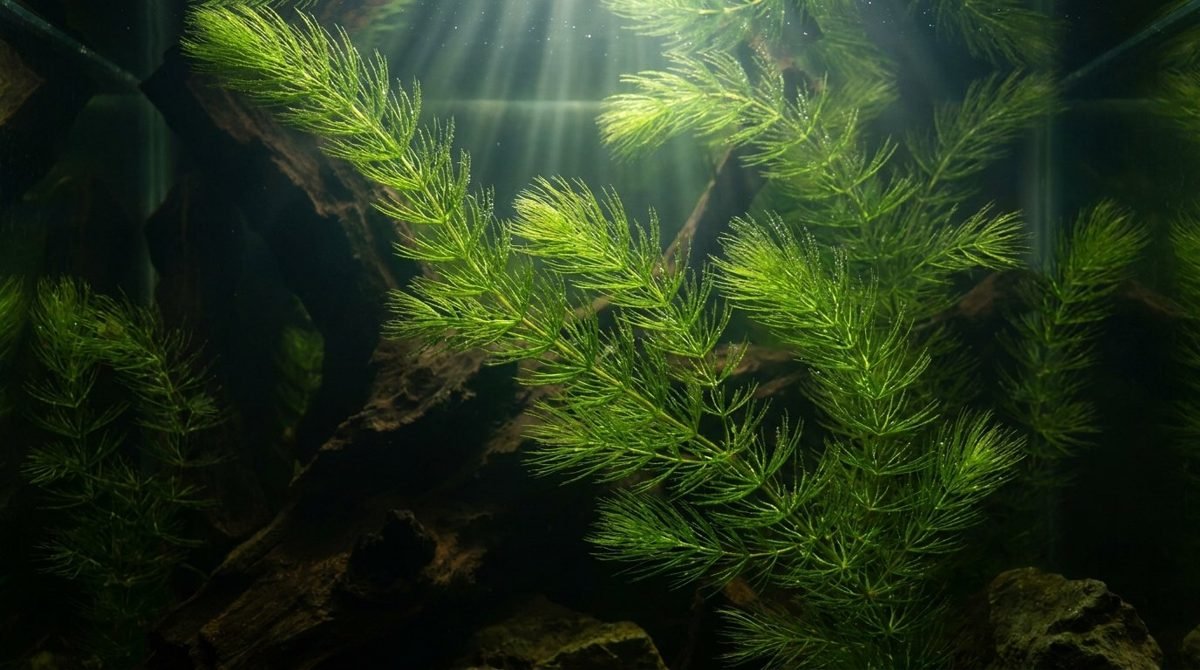
Quick answer: Hornwort is one of the fastest, hardiest stem plants you can buy. It needs no CO2 and only low-to-moderate light. It has no true roots, so you can float it or anchor the base — never bury it deep. It soaks up ammonia and nitrate fast and starves algae of the nutrients algae needs, which makes it my go-to plant for a brand-new tank or one that’s fighting an algae bloom.
I keep hornwort in almost every rescue tank that lands on my bench, and it’s usually the first plant I add to a fresh setup. When someone hands me a cloudy tank with stressed fish and an ammonia reading, I’m not reaching for a fancy carpeting plant — I’m reaching for a bunch of hornwort, because it does the unglamorous work of pulling nutrients out of the water while everything else stabilizes. This guide is how I actually grow it, including the one thing that scares new keepers half to death (the needle drop) but is completely normal.
Watch: 8 Expert Secrets to Growing Lush Hornwort
What hornwort is
Hornwort (Ceratophyllum demersum) is a fast-growing stem plant found in slow-moving fresh water across most of the world. The thing that throws people off is that it has no true roots. Those wispy threads you sometimes see at the base aren’t real roots — they’re modified leaves doing a loose grip job. Everything the plant needs it pulls straight out of the water column through its needle-like foliage, which is exactly why it works as a nutrient sponge.
Because it feeds from the water instead of the substrate, hornwort doesn’t care whether you have gravel, sand, or a bare bottom. It’ll grow floating at the surface, wedged into decor, or weighted down near the bottom. That flexibility is a big part of why I recommend it to beginners over almost any other stem plant.
Hornwort care at a glance
Hornwort is about as forgiving as aquarium plants get. It tolerates a wide temperature band, doesn’t need CO2 injection, and grows under basic lighting. Here’s what it actually wants.
| Requirement | Hornwort needs |
|---|---|
| Light | Low to moderate — a basic LED is plenty; intense light just means faster growth and more trimming |
| CO2 | None required; it does fine on the carbon already in your water |
| Temperature | 59–86°F (15–30°C); happy in unheated and tropical tanks alike |
| pH | Roughly 6.0–7.5, though it shrugs off a wider range |
| Substrate | None needed — no true roots, so it feeds from the water column |
| Fertilizer | A modest dose of liquid fert in lean tanks; often unnecessary in stocked tanks |
| Placement | Float it or anchor the base; never bury the stem deep |
The only parameter I’d flag is light direction more than intensity. Hornwort grows toward the light, so a floating mat will get dense up top and leggy underneath. That’s not a problem — it’s just a trimming cue, which I’ll cover below.
How to plant or float hornwort
You have two honest options, and neither involves burying the stem deep.
- Float it. The lazy, effective method. Drop the bunch in and let it drift at the surface. It grows the fastest this way because it sits right under the light, and it makes superb cover for fry and shy fish. The downside is it will eventually shade the tank below, so I thin floating mats every week or two.
- Anchor the base. If you want it standing upright in the back of the tank, push the bottom inch of stem just barely into the substrate, or wrap a plant weight around the base, or wedge it between two rocks. The goal is to hold it in place, not to “plant” it. Bury it deep and the buried portion rots, the stem releases, and it floats up anyway — usually with a mess of dropped needles.
One practical note: hornwort is brittle. Handle it gently when you anchor it, because crushed stems shed harder during the adjustment period.
Why hornwort sheds its needles (and what to do)
This is the part that makes people panic and email me. You buy a healthy bunch, drop it in, and within a few days it’s dropping needles all over the tank like a dying Christmas tree. Your first thought is that you killed it. You almost certainly didn’t.
Needle shedding is hornwort’s normal response to a change in conditions. It happens most often when the plant moves from one tank to another — different light, different water chemistry, a shipping bag — and it adjusts by ditching its old growth and pushing new growth suited to its new home. It also sheds in genuinely low light, where the lower portions can’t earn their keep. The shed itself is messy but harmless; the new tips will be a brighter, healthier green.
- Don’t throw it out. As long as the growing tips look alive, the plant is fine. Give it two to three weeks.
- Scoop the debris. Net out the loose needles so they don’t clog your filter or rot in the substrate.
- Check your light. If shedding never stops and growth is leggy, the plant wants more light — raise it toward the surface or float it.
- Keep it stable. Avoid moving it around. Every relocation restarts the shedding clock.
How to propagate and trim hornwort
Propagation is almost insultingly easy. Hornwort grows from the tips, so every cutting is a new plant. To make more, just snip a healthy length off the top, and that piece keeps growing on its own — float it or anchor it like any other bunch. There’s no rooting hormone, no waiting, no special technique.
Trimming follows the same logic, and here’s the rule I live by: keep the tops, discard the bottoms. The lower stems on an old plant go bare and brown over time. Instead of fighting to revive them, I cut the lush green top section, replant or float that, and throw the leggy bottom in the compost. After a few months your whole patch is fresh top growth and you’ve never bought another bunch.
Plan on trimming weekly if your tank is well-lit and stocked. Hornwort can put on several inches a week, so it’s not a plant you set and forget — it’s a plant you manage. If you skip trims, it’ll mat the surface and shade out everything below it.
Is hornwort right for your tank
For most people the answer is yes, and three jobs in particular are where it shines.
- Nutrient control. Hornwort is a heavy feeder that pulls ammonia and nitrate straight from the water. In a new tank it helps soak up the early ammonia; in an established tank it keeps nitrate from creeping up between water changes. That same appetite is why it starves algae — the two compete for the same nutrients, and hornwort almost always wins.
- Fry and shy-fish cover. A floating tangle of hornwort is the best cheap fry cover I know. Livebearer babies hide in it and survive long enough to grow out, and nervous fish use it as a security blanket.
- Fast growth, with a catch. The speed that makes it useful also means frequent trimming. If you want a slow, hands-off plant, hornwort isn’t it. If you’re happy doing a five-minute trim each week, it pays you back with cleaner water.
One last thing, and I mean this seriously: hornwort is invasive in the wild and has choked out waterways where it doesn’t belong. Never dump trimmings or unwanted plants into a pond, lake, or storm drain. Bag it and bin it, compost it, or pass it to another hobbyist. Responsible disposal is part of keeping it.
Hornwort Care FAQ
Does hornwort need CO2 or root tabs?
No to both. Hornwort grows fine without injected CO2, using the carbon already dissolved in your water. And because it has no true roots and feeds from the water column, root tabs do nothing for it. In a lean tank a little liquid fertilizer helps, but in a stocked tank it usually feeds itself.
Why is my hornwort shedding or dropping needles?
That’s almost always normal adjustment, not death. Hornwort sheds its old needles when it moves to a new tank with different light and water, then pushes fresh growth suited to its new home. It also sheds in low light. As long as the growing tips are alive, leave it alone, scoop the loose needles, and give it two to three weeks.
How fast does hornwort grow?
Very fast — several inches a week in a well-lit, stocked tank, and faster still floating right under the light. That speed is what makes it such a strong nutrient sponge and algae fighter, but it also means you’ll be trimming roughly once a week to keep it from matting the surface.
Can hornwort float, or does it need planting?
It can float, and floating is the easiest and fastest way to grow it. You can also anchor the base in the substrate or with a plant weight if you want it upright in the back of the tank. What you should never do is bury the stem deep — the buried portion rots and the plant releases and floats up anyway.
Does hornwort reduce algae and nitrate?
Yes, and that’s its best trick. Hornwort is a heavy feeder that absorbs ammonia and nitrate directly from the water, which keeps nitrate down between water changes. Because algae needs those same nutrients, a fast-growing patch of hornwort outcompetes algae and starves a bloom of its fuel — which is why I add it to new and problem tanks.
How do I trim and propagate hornwort?
They’re the same job. Snip a healthy length off the top; that cutting is a new plant you can float or anchor right away — no rooting needed. When you trim, keep the lush green tops and discard the bare, leggy bottoms. Over a few months your whole patch becomes fresh top growth.
Keep reading
Educational guidance from a freshwater keeper — not a substitute for testing your own water.
Author and editorial note
Written and maintained by Benjamin Thoden, founder of DBC Aquatics. This plant guide is reviewed for low-tech practicality: correct placement, light level, substrate or rhizome needs, melt risk, algae pressure, and what a beginner can maintain consistently. See our editorial standards for how guides are created, reviewed, and updated.
Awsome site! I am loving it!! Will be back later to read some more. I am bookmarking your feeds also.