Quick answer: Pick aquarium plants by your tank’s light and CO2 level, not just looks. Low-light, no-CO2 tanks do best with hardy species like java fern, anubias, and cryptocoryne; brighter, CO2-injected tanks open up carpets and stem plants. Match the plant to the conditions and it will actually take off.
Aquarium Plant Library – Explore 25+ Species by Zone, Light, and CO₂ Needs
Looking to build a lush, natural freshwater aquarium? Choosing the right plants for your tank layout is just as important as selecting the right fish. But with hundreds of species to choose from, where do you start?
Watch: Aquatic Plants That Don’t Need Substrate
This DBC Aquatics Plant Library is designed for beginners and hobbyists alike — a **reference hub of easy-to-grow, visually stunning freshwater plants**, organized by tank zone, light requirements, and care level. Whether you’re creating a no-CO₂ setup or planning a high-tech aquascape, this guide helps you find the perfect plants for your aquarium’s foreground, midground, background, floating layer, or hardscape.
How to Use This Library
- Placement Zones: Organized by foreground, midground, background, floating, and epiphytes
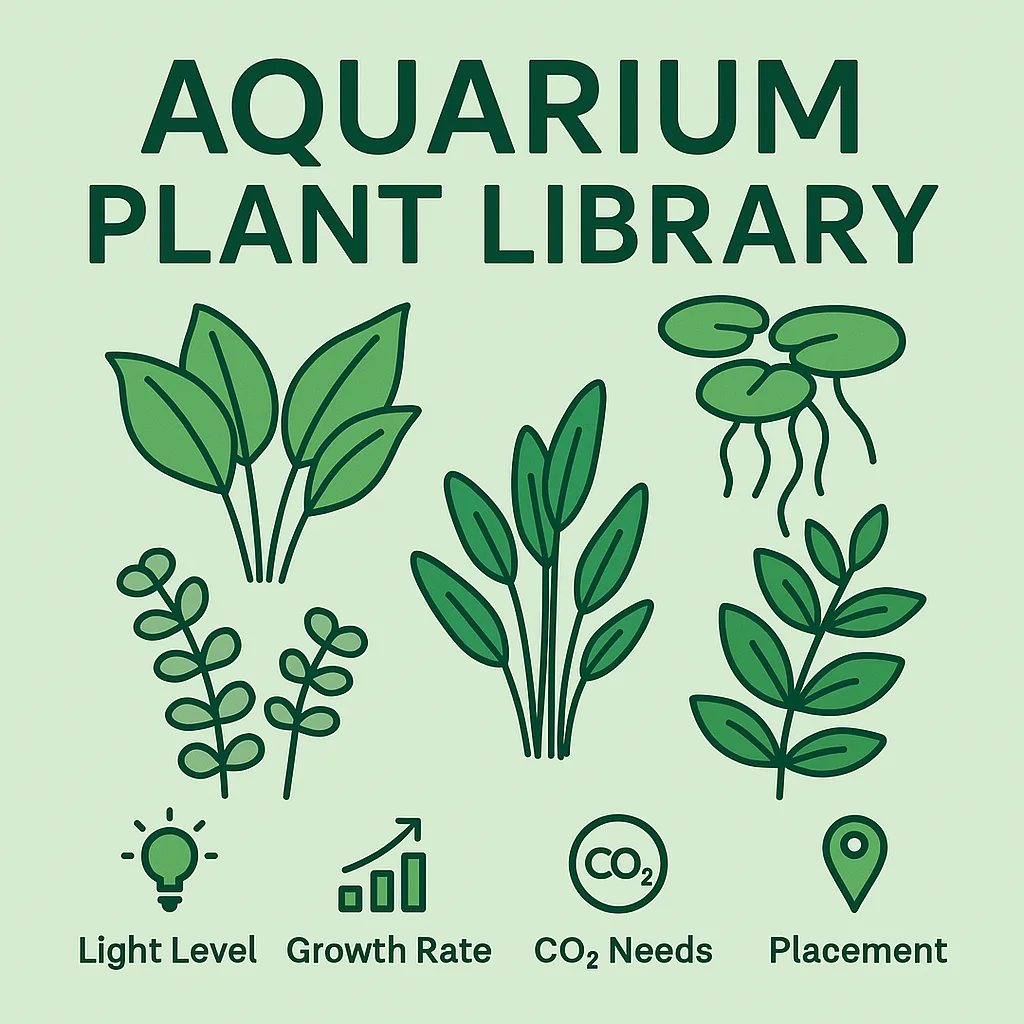
- Icons: Show light needs, growth rate, CO₂ requirements, and placement
- Links: Explore detailed guides for specific plants and care tips
Foreground Plants (Carpeting & Ground Cover)
Foreground plants stay low to the substrate and help define the front of your aquascape. These species are perfect for carpeting or adding small patches of green in nano tanks or front zones of larger aquariums.
- Dwarf Sagittaria – Easy, low light carpeting plant. Grows via runners.
- Cryptocoryne parva – The smallest crypt. Slow growing, low-tech compatible.
- Monte Carlo – Great carpet under medium-high light. CO₂ helps, but not required.
- Dwarf Hairgrass (Eleocharis parvula) – Classic carpeting grass. Benefits from CO₂ but grows slowly without.
- Marsilea hirsuta – Clover-like leaves. Hardy and good for low-tech tanks.
Midground Plants (Focal Points & Bushes)
Midground plants fill the space between your front and back zones. These species provide texture, height transition, and shelter for fish or shrimp. Most are root feeders that enjoy a nutrient-rich substrate or root tabs.
- Cryptocoryne wendtii – Comes in green, bronze, and red. Slow growing and great for low-tech tanks.
- Anubias barteri – Thick-leaved rhizome plant. Attaches to hardscape. Low light.
- Lobelia cardinalis – Bright green and red underside. Moderate growth and light.
- Barclaya longifolia – Unique lily with textured leaves. Moderate light and space needed.
- Staurogyne repens – Compact, bushy plant ideal for midground or dense scapes.
Background Plants (Tall & Structural)
Background plants provide height and structure. They form the visual wall of your tank and are ideal for hiding equipment, framing hardscape, or filling in behind driftwood and rocks.
- Amazon Sword (Echinodorus bleheri) – Large, dramatic leaf structure. Needs space and nutrients.
- Vallisneria spiralis – Grasslike with tall spiral leaves. Spreads quickly by runners.
- Water Wisteria – Fast-growing stem plant that adapts to most conditions. Can be floated or planted.
- Ludwigia repens – Reddish tones under good light. Easy to trim and replant.
- Bacopa caroliniana – Thick stems, round leaves. Pleasant lemon scent. Great for propagation.
Floating Plants (Surface Coverage & Shade)
Floating plants absorb nutrients directly from the water column and help diffuse harsh light. They’re ideal for betta tanks, shrimp setups, and natural blackwater scapes.
- Amazon Frogbit – Large, round leaves with dangling roots. Watch for blocked light.
- Salvinia minima – Small floating fern. Reproduces quickly. Easy to control with surface rings.
- Duckweed – Extremely small. Good nutrient uptake but difficult to remove once established.
- Red Root Floater – Beautiful reddish hue under high light. Great for soft water setups.
- Hornwort – Can be floated or planted. Fast-growing nitrate sponge.
Epiphyte Plants (Attach to Rock or Wood)
Epiphytes don’t root into the substrate — they attach to wood, rocks, or mesh. They’re perfect for aquascapes, shrimp tanks, and nano tanks where root space is limited.
- Anubias nana – Small-leaf version of Anubias. Very low light and durable.
- Java Fern – Multiple varieties (Windelov, Narrow, Trident). Attaches to hardscape. No CO₂ needed.
- Bucephalandra – Dozens of micro-leaf varieties. Grows slowly and beautifully in low-to-medium light.
- Bolbitis heudelotii (African Water Fern) – Fern-like appearance. Loves flow and shaded areas.
- Mosses (Java, Christmas, Flame) – Attach to mesh or wood. Provide cover and breeding grounds for shrimp.
Plant Profile Icons
Use the following icons to quickly reference care needs throughout the library:
- 💡 Light Needs: Low / Medium / High
- 🚫 CO₂ Required: No / Optional / Recommended
- 📈 Growth Rate: Slow / Moderate / Fast
- 📍 Placement: Foreground / Midground / Background / Floating / Epiphyte
Substrate & Fertilizer Considerations
Some plants feed from the water column (floating, epiphytes), while others are heavy root feeders (Swords, Crypts). Here’s what you’ll need:
- 🪨 Inert Gravel: Add root tabs for Crypts, Swords, Val
- 🌱 Planted Soil (Fluval Stratum, Aqua Soil): Ideal for long-term nutrient support
- 💧 Liquid Fertilizer: Easy Green, Flourish — weekly dosing for column feeders
- 💊 Root Tabs: Place near roots every 4–6 weeks
Maintenance Tips for Live Plants
- ✂️ Trim stem plants regularly to prevent blocking light
- 🪴 Replant cuttings to thicken carpets and bushes
- 🧪 Test nitrate levels to ensure proper nutrient balance
- 🚿 Gently rinse or trim melting leaves to reduce ammonia spikes
- 📅 Monitor growth weekly and adjust light or ferts accordingly
Related Plant Guides
- Beginner’s Guide to Aquarium Plants
- Diagnose Common Plant Growth Issues
- Top Low Light Plants
- Easy Plants That Don’t Need CO₂
- Fast-Growing Plants for Algae Control
Final Thoughts – Build Your Layout with Confidence
A healthy planted tank starts with informed plant choices. Use this library to match species to your tank’s layout, light, and goals — and you’ll enjoy a beautiful, low-maintenance aquascape that supports your livestock and grows with you over time.
Still unsure what plants fit your tank size or lighting setup? Drop your details in the comments — I’ll recommend a tailored plant pack that fits your experience level and aquascaping goals.
Frequently asked questions
How do I choose the right plants for my tank?
Start with your two limiting factors: light intensity and whether you run CO2. A low-light tank with no CO2 should stick to hardy species like java fern, anubias, and cryptocoryne; a bright, CO2-injected tank opens up carpets and fast stem plants. After that, pick by zone, foreground, midground, background, floating, or epiphyte, so each plant fills a spot in the layout. Use the icons in this library to filter species by light, growth rate, and CO2 before you buy.
What plants work for low light versus high light?
Low-light tanks do best with java fern, anubias, cryptocoryne, dwarf sagittaria, and Marsilea hirsuta, all of which grow slowly without CO2. High-light tanks let you run carpeting plants like Monte Carlo and dwarf hairgrass, plus colored stems like Ludwigia repens and red root floater that only show their reds under strong light. Carpets and most red plants need the extra light to stay compact and pigmented; in dim tanks they stretch, go green, or stall. If you’re not sure of your light level, assume low and choose accordingly.
How do I know a plant’s light and CO2 needs?
Every entry in this library is tagged with light requirement, growth rate, CO2 need, and placement zone, so you can read the needs before adding it. As a rule, rhizome plants (anubias, java fern) and most crypts are low-light, no-CO2 species, while carpets and bright stem plants want medium-to-high light and benefit from CO2. “CO2 helps but not required” means the plant grows slower without it, not that it dies. Check the tag against your own tank’s lighting before deciding.
Which plants are best for absolute beginners?
Anubias barteri, java fern, and Cryptocoryne wendtii are the most forgiving because they tolerate low light, skip CO2, and grow slowly enough that mistakes aren’t fatal. For background, water wisteria and hornwort grow fast and adapt to almost any condition. Anubias and java fern also attach to rock or driftwood instead of needing to be planted in substrate, which makes them hard to kill. Start with a few of these, get them growing, then move to fussier species.
What is the difference between foreground, midground, and background plants?
Foreground plants stay low and carpet the front of the tank, like Monte Carlo, dwarf hairgrass, and dwarf sagittaria. Midground plants are medium-height focal pieces that fill the space between front and back, such as Cryptocoryne wendtii, anubias, and Staurogyne repens. Background plants are tall and structural, used to hide equipment and frame the scape, including Amazon sword, Vallisneria, and stem plants like Ludwigia and Bacopa. Matching a plant’s mature size to its zone is what keeps the layout from looking flat or overgrown.
Can I mix plants with different needs in one tank?
Yes, as long as you build around the lowest common denominator, your light and CO2. A low-tech tank can run anubias, crypts, java fern, and floating hornwort together because they all tolerate the same conditions. Problems start when you mix a demanding carpet that wants high light and CO2 with shade-loving anubias in the same tank, since one will struggle. The easiest mixes pair plants with similar light needs but different zones and growth rates, so they fill the layout without competing.
Plant care guides by species
In-depth, beginner-friendly care guides for the hardy aquarium plants I recommend most — each with a step-by-step video.
Author and editorial note
Written and maintained by Benjamin Thoden, founder of DBC Aquatics. This shrimp guide is reviewed through DBC Aquatics’ stability-first lens: cycle maturity, mineral consistency, molt safety, copper risk, grazing surfaces, and slow acclimation matter more than quick fixes. See our editorial standards for how guides are created, reviewed, and updated.
Leave a Reply