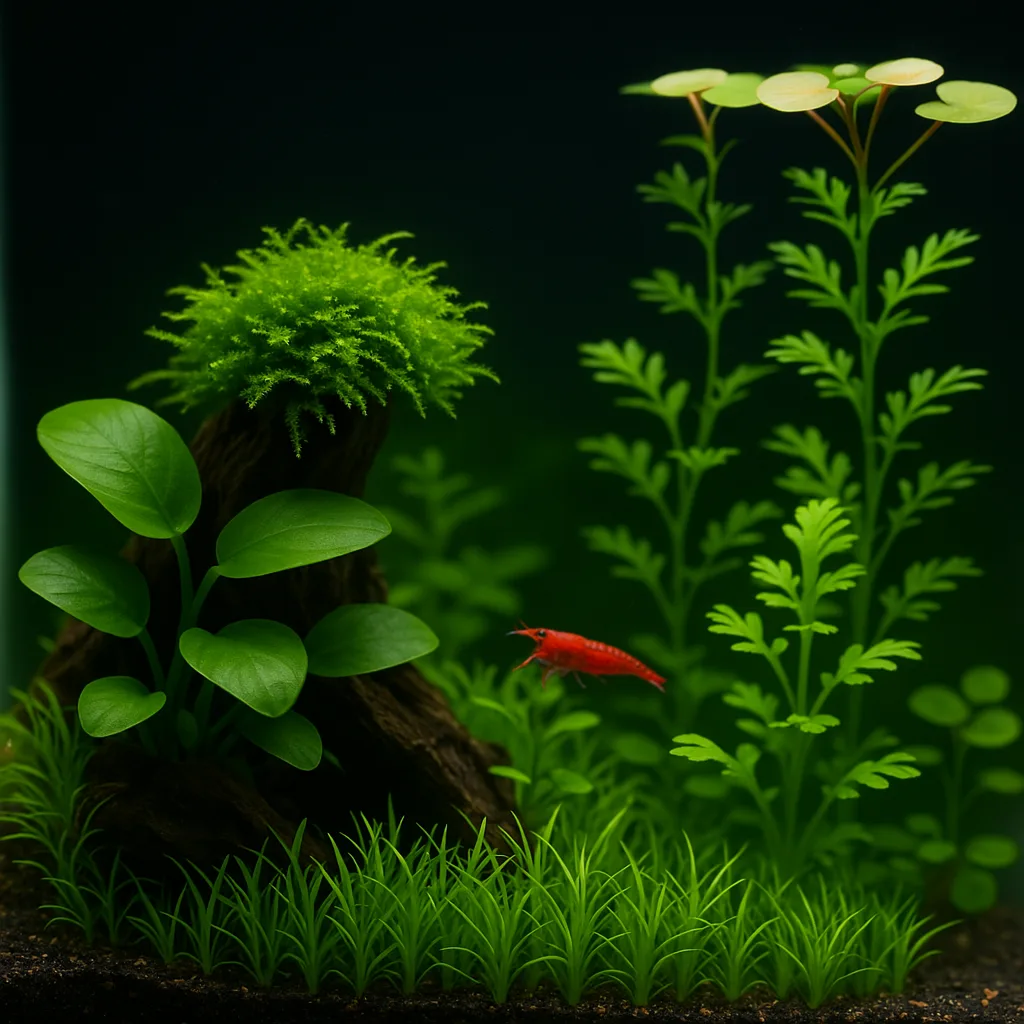
Quick answer: Plenty of hardy plants thrive with no injected CO2 and only modest light, including java fern, anubias, cryptocoryne, java moss, hornwort, and vallisneria. They grow slower than high-tech setups, but they are nearly foolproof for beginners. Pick the right species and a low-tech tank stays easy to manage.
Easy Aquarium Plants (No CO₂ Required) – Beginner’s Guide to Low-Tech Success
Dreaming of a lush planted tank but not ready to dive into CO₂ injection systems? Good news: you can absolutely grow beautiful, thriving aquarium plants without adding CO₂ — as long as you choose the right species.
Watch: 3 Aquatic Plants That Thrive on Neglect – Low Maintenance Magic
Low-tech planted tanks (no injected CO₂, moderate light, and low-maintenance dosing) are not only easier to manage, they’re perfect for beginners, shrimp tanks, or anyone who wants nature without all the gadgets. In this guide, we’ll break down the best aquarium plants that don’t require CO₂, along with lighting and care tips to help them thrive.
Do Aquarium Plants Really Need CO₂?
All plants need carbon to grow — but not all of them need pressurized CO₂ systems. Many species do perfectly well in tanks with atmospheric CO₂ and fish respiration alone. These are called “low-tech” or “no-CO₂” plants.
- Low-tech tanks: Use natural CO₂ from fish waste and surface exchange
- CO₂ injection: Needed only for high-demand plants or carpeting species
- Liquid carbon (like Excel): Optional, but not required for easy plants
Best Easy Aquarium Plants That Don’t Need CO₂
Below are beginner-proof plant species that grow slowly, tolerate low to medium light, and don’t need added CO₂. They’re ideal for small tanks, betta setups, shrimp habitats, or low-maintenance community aquariums.
1. Anubias (Anubias nana, barteri, etc.)
One of the hardiest aquarium plants on the planet. Anubias has thick, waxy leaves and thrives in low light without CO₂. It’s a rhizome plant, meaning you attach it to driftwood or rock instead of burying it.
- 🌡️ Temp: 72–82°F
- 💡 Light: Low to medium
- 📍 Placement: Midground or background
2. Java Fern (Microsorum pteropus)
Another epiphyte plant, Java Fern is virtually indestructible. It grows slowly and works well in shrimp tanks, betta tanks, and community aquariums alike. Avoid planting the rhizome in substrate.
3. Java Moss
This fuzzy, low-maintenance plant is ideal for shrimp tanks, fry tanks, and hiding spots. Attach it to wood or rocks, or let it form a moss wall with mesh. Grows well even in low light.
4. Cryptocoryne wendtii (Crypts)
Great for midground planting. Crypts come in green, bronze, and red varieties. They root deeply and benefit from root tabs, but they don’t need CO₂. Expect initial “crypt melt” after planting — this is normal and temporary.
5. Amazon Sword
A large, classic background plant for community tanks. Swords are heavy root feeders and need a deep substrate or root tabs. They’ll thrive in medium light without CO₂ — just watch their size in smaller tanks.
6. Water Wisteria (Hygrophila difformis)
Fast-growing and versatile, Wisteria helps control nitrates and can be floated or planted. No CO₂ needed, and it works great in beginner tanks with moderate light.
7. Hornwort
This classic floating plant or stem plant helps absorb waste and outcompete algae. It doesn’t root and doesn’t need substrate, making it perfect for low-tech, low-maintenance tanks.
8. Vallisneria (Val)
A grassy, runner-spreading plant that creates natural walls and backdrops. No CO₂ required, though it benefits from medium light and nutrient-rich substrate.
9. Dwarf Sagittaria
This carpeting plant doesn’t need high light or CO₂ to grow — although it will spread more slowly in low-tech setups. Great for the foreground in 10g+ tanks.
10. Bucephalandra (Buce)
Another rhizome plant like Anubias or Java Fern. Grows slowly, tolerates low light, and adds vibrant texture. Perfect for nano tanks and shrimp habitats.
Lighting for No-CO₂ Aquariums
CO₂-free tanks should never use high-intensity light — that’s a fast track to algae. Aim for low-to-moderate lighting with a 6–8 hour photoperiod.
- 💡 Budget Option: Nicrew ClassicLED Plus
- 💡 Mid-Range: Fluval Plant 3.0 (dimmable via app)
- 💡 Premium: Chihiros WRGB II (set intensity manually)
Pro Tip: Use a timer to maintain a consistent light schedule and reduce algae risks.
Do You Need Fertilizer Without CO₂?
Even without CO₂ injection, plants still need macronutrients (NPK) and micronutrients (Fe, Mg, etc.). Most low-tech tanks benefit from:
- 💧 Liquid Fertilizer: Easy Green, Seachem Flourish (1–2x/week)
- 🪴 Root Tabs: Needed for root-feeders like Swords, Crypts
- 📈 Dosing Schedule: Start small and observe plant response
Common Mistakes in No-CO₂ Planted Tanks
- 🚫 Using high light with no CO₂ (causes algae)
- 🚫 Skipping fertilizer completely (leads to yellowing/melting)
- 🚫 Burying rhizome plants (Java Fern, Anubias)
- 🚫 Running light for 10+ hours (fueling algae blooms)
- 🚫 Ignoring plant-specific needs (crypts vs floaters vs epiphytes)
Maintenance Tips for CO₂-Free Tanks
- 🔁 Weekly 25–30% water changes
- 🧪 Test nitrates, pH, and GH/KH monthly
- ✂️ Trim overgrowth or melting leaves
- 🧽 Clean algae from glass with a sponge or scraper
- 🧪 Observe plants: yellow = nutrient issue, brown = melt, holes = potassium
Related Beginner Plant Guides
- Aquarium Plants for Beginners
- Diagnosing Plant Growth Issues
- Top 10 Low Light Plants
- Fast-Growing Plants That Outcompete Algae
Final Thoughts – Yes, You Can Grow Plants Without CO₂
You don’t need expensive gear to grow aquarium plants. With the right plant species, gentle lighting, and a little routine care, your tank can be lush and natural — even without pressurized CO₂. Start with hardy, low-tech favorites like Anubias, Java Fern, and Crypts. Add root tabs and dose liquid ferts weekly, and you’ll have a planted tank that looks great, supports your fish, and stays algae-free.
Still unsure which plants are right for your tank? Drop your size, light brand, and goals in the comments — and I’ll help you design a no-CO₂ layout that thrives.
Frequently asked questions
What are the easiest aquarium plants that don’t need CO2?
Anubias, java fern, java moss, and bucephalandra are the toughest because they are rhizome or epiphyte plants you tie to wood or rock instead of burying. Cryptocoryne wendtii, hornwort, water wisteria, vallisneria, amazon sword, and dwarf sagittaria also grow without injected CO2. All of these tolerate low to medium light and survive beginner mistakes that would kill demanding carpet plants.
Do low-tech plants grow slower without CO2?
Yes. Plants pull carbon from fish respiration and surface gas exchange instead of pressurized CO2, so growth is noticeably slower. That is actually an advantage for beginners: less pruning, less algae pressure, and more time to react if something goes wrong. Anubias and java fern in particular can take weeks to push a single new leaf.
Do no-CO2 plants still need fertilizer?
They still need nutrients, just less than a high-tech tank. Root feeders like amazon sword, crypts, and vallisneria do best with root tabs pushed into the substrate. Column feeders and floaters like hornwort and wisteria appreciate a light dose of all-in-one liquid fertilizer. A lightly stocked tank with regular feeding may supply enough on its own, but most low-tech tanks grow better with some dosing.
How much light do no-CO2 plants need?
Low to moderate light only. Without CO2 to match high-intensity lighting, bright lights just feed algae instead of plants. Run a 6 to 8 hour photoperiod on a timer and keep intensity modest. A dimmable light like the Fluval Plant 3.0 or a manual setup like the Chihiros WRGB II lets you dial it back if algae appears.
Can I add CO2 later?
Yes. Starting low-tech does not lock you in. You can add pressurized CO2 or liquid carbon down the road, and your existing plants will simply grow faster and often fuller. If you do, increase light and fertilizer to match so the plants can use the extra carbon. Just add changes gradually to avoid an algae bloom.
Why are my low-tech plants melting?
Melting is usually the plant adjusting to your tank, not dying. Cryptocoryne is famous for crypt melt, where leaves dissolve after planting before new growth appears from the roots, so leave the rhizome in place. Amazon swords and other plants grown emersed at the farm also drop their old leaves when switching to underwater growth. If the rhizome or roots stay firm, the plant will recover; persistent rot across a firm rhizome points to poor water quality or too little light.
Related species guides
Author and editorial note
Written and maintained by Benjamin Thoden, founder of DBC Aquatics. This shrimp guide is reviewed through DBC Aquatics’ stability-first lens: cycle maturity, mineral consistency, molt safety, copper risk, grazing surfaces, and slow acclimation matter more than quick fixes. See our editorial standards for how guides are created, reviewed, and updated.
Leave a Reply