Quick answer: Amazon frogbit is one of the easiest floating plants you can keep — no CO2, no special substrate, just decent overhead light and a calm water surface. The one rule that matters most: keep water off the tops of its leaves. Splashing, strong filter flow, or condensation dripping from the lid will rot and melt the leaves fast. It grows quickly and strips nitrate, ammonia, and phosphate out of the water, which makes it a strong algae fighter, and its long trailing roots give fry and shrimp cover. Because it spreads so fast, thin it weekly so it doesn’t blanket the surface and shade everything below.
The first time I grew Amazon frogbit I nearly threw it out. I’d had it two weeks and half the leaves had gone soft, yellow, and translucent, and I assumed I’d bought a weak batch. The plant wasn’t the problem — my filter outlet was. It was pushing a steady ripple across the surface and wetting the tops of every leaf, and frogbit hates that more than almost anything. I dropped the water level so the outlet ran below the surface, and within a week the new leaves came in firm, round, and bright green. Since then it’s been one of the most useful plants in my fish room. Here’s how I keep it happy.
Watch: Amazon Frogbit: Mastering the Green Diva
What amazon frogbit is
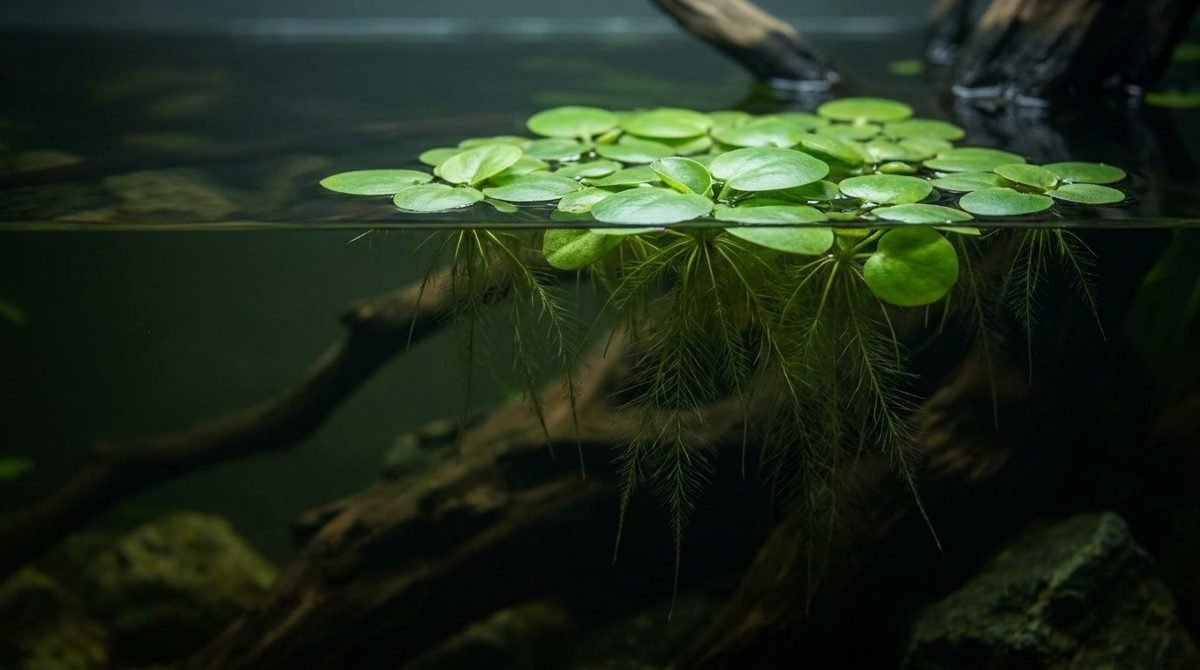
Amazon frogbit is the common name for Limnobium laevigatum, a floating plant from Central and South America. It floats on the surface with round to heart-shaped leaves, usually about the size of a coin to a thumbnail, sitting in little rosettes. Underneath, it sends down long, feathery roots that trail straight into the water column — sometimes several inches of them on a settled plant.
Those two features are the whole story. The leaves sit up at the surface where they catch air and light, so the plant pulls CO2 from the atmosphere instead of needing it injected. The dangling roots are where it feeds, pulling nutrients straight out of the water, and they double as a hanging jungle that fry and shrimp love to disappear into. It’s a low-tech plant in the truest sense — it asks for very little and gives back a lot. If you want more options in that same easy lane, I keep a running list on my easy aquarium plants with no CO2 guide.
Amazon frogbit care at a glance
| Requirement | Amazon frogbit needs |
|---|---|
| Difficulty | Easy — great low-tech floater |
| Lighting | Decent overhead light; avoid intense light right on the leaves |
| CO2 | Not required (pulls CO2 from the air) |
| Surface flow | Low and calm — keep water off the leaf tops |
| Temperature | About 64–84°F |
| Placement | Floating only |
| Growth rate | Fast |
| Feeds via | Trailing roots in the water column |
| Best for | Nutrient export, algae control, fry and shrimp cover |
The lighting line needs a word of caution. Frogbit wants good light from above to grow well, but because the leaves sit right up at the top of the tank, a very strong light close to the surface can actually scorch them — you’ll see pale, bleached, or crispy patches on the leaf tops. Decent is the target, not blinding. If you’re working with a modest kit light, frogbit will usually be perfectly content; for more plants that share that forgiving need, see my low-light aquarium plants roundup.
Why you must keep frogbit leaves dry
This is the single most important thing to understand about frogbit, and it’s the reason most people fail with it. The tops of the leaves are meant to stay dry. They’re built to sit above the waterline and breathe air. When water sits on top of them — from splashing, surface agitation, or drips off the lid — the leaves rot and melt. It’s not slow, either; a leaf that gets repeatedly wetted will yellow and go to mush within days.
Three things cause it. The first is filter flow: a spray bar or outlet that ripples the surface throws a fine mist of water across the leaves. The second is splashing — a strong hang-on-back return falling onto the surface, or an air stone breaking the top. The third, and the one people miss most, is condensation. With a tight glass lid, droplets collect on the underside, and when they fall they land squarely on the frogbit. I’ve watched a perfectly healthy patch melt out under a lid for exactly this reason.
The fixes are simple. Keep the surface as calm as you can: angle the filter outlet downward or sideways so it stirs the water below rather than the top, drop the water level so the return runs under the surface, or fit a surface skimmer to pull the film without churning it. If you run a lid, leave a small gap for airflow so condensation has somewhere to go, or wipe it down. Get the surface calm and dry, and frogbit goes from your most temperamental plant to your most reliable one.
How to control and thin frogbit
Frogbit grows fast — that’s its best feature and its biggest nuisance. A few starter rosettes will daughter off new plants on runners and, left alone, carpet the entire surface in a few weeks. Once it forms a solid mat it shades everything below, and the plants on your substrate start to struggle for light. So thinning isn’t optional; it’s part of the routine.
I thin mine weekly, usually at water-change time. I scoop out handfuls until roughly a third to a half of the surface is open again, letting light reach the plants below. The plants you pull come out cleanly — they’re just floating — so it’s a thirty-second job. Friends, local clubs, and fish stores are always happy to take the excess, and it composts fine too.
You can also trim the trailing roots if they get long enough to tangle in equipment or you simply want a tidier look. Snip them back with scissors; it doesn’t hurt the plant, which regrows them quickly. A floating ring — even a length of airline tied in a loop, or a suction-cupped feeding ring — is a trick I lean on to corral frogbit into one part of the tank and keep the rest of the surface open and dry.
Common frogbit problems and fixes
Frogbit is easy once it’s settled, but it has three failure modes I see again and again. Each points to a specific cause.
Melting or rotting leaves. This is almost always water sitting on top of the leaves — filter flow, splashing, or condensation dripping from the lid, as covered above. The leaves go soft, yellow, and translucent before turning to mush. Calm the surface, lower the water under the outlet, or add a skimmer, and protect it from lid drips. Pull the melted leaves so they don’t foul the water, and the new growth will come in healthy.
Yellowing leaves. If leaves pale or yellow without going mushy, that’s usually a nutrient gap rather than a water-on-leaves problem. Frogbit is a fast, hungry feeder, and in a lightly stocked or brand-new tank it can outrun the available nutrients — iron and nitrogen shortfalls show up first. A basic liquid all-in-one fertilizer dosed to the water clears it up, since this plant feeds through those trailing roots.
Stunted, tiny leaves. When frogbit stalls out and the new leaves come in small and stay small, it’s usually either too little light or not enough nutrients — sometimes both. Make sure it’s getting decent overhead light without being scorched, and feed the water if your tank runs lean. Crowding does it too: a packed mat shades its own new growth, so thinning often kick-starts bigger leaves again.
Is amazon frogbit right for your tank?
For most low-tech and community tanks, frogbit is an easy yes — but there are a couple of things to check before you commit.
Lid and light clearance. Frogbit needs a calm, fairly dry surface and a bit of air space above it. If your lid sits tight against the water and drips condensation, or your light is mounted low and intense right on the surface, you’ll fight melting and scorching. A small gap between water and lid, and a light that isn’t searing the leaves, solves both. Open-top tanks suit it especially well.
Nutrient export and algae. This is where frogbit earns its keep. It pulls nitrate, ammonia, and phosphate straight out of the water through its roots, and because it grows so fast it exports a lot of them. That starves algae of the nutrients they’d otherwise feed on, and it can genuinely stretch out the time between water changes. In a new tank fighting algae or an over-fed one, a fast floater like this is one of the most effective tools you have.
Fry and shrimp cover. Those long trailing roots make a dense hanging jungle right under the surface. Live-bearer fry and baby shrimp dart up into it and vanish, and the roots collect the film of microorganisms they graze on, so the plant feeds them as well as hides them. If you’re breeding anything, frogbit is one of the first plants I’d add. For more floating and easy options to pair with it, my water sprite care guide covers another favorite, and the full plant library has the rest.
FAQ
Does amazon frogbit need CO2 or fertilizer?
No CO2 — frogbit floats at the surface and pulls CO2 straight from the air, which is a big part of why it’s so easy. Fertilizer isn’t strictly required either, but because it’s a fast, hungry feeder it can outrun the nutrients in a lightly stocked or new tank. If the leaves start to pale or yellow, a basic liquid all-in-one fertilizer dosed to the water fixes it, since the plant feeds through its trailing roots.
Why is my frogbit melting or rotting?
Almost always because water is sitting on top of the leaves. Frogbit leaves are meant to stay dry, and splashing, strong filter flow, or condensation dripping off the lid will rot them within days. Calm the surface — angle or lower the filter outlet so it stirs the water below rather than the top, add a surface skimmer, and leave a gap under the lid so condensation doesn’t drip onto the plant. Remove the melted leaves and the new growth comes back healthy.
Why are my frogbit leaves turning yellow?
If the leaves yellow but don’t go soft and mushy, it’s usually a nutrient gap rather than a water problem — iron and nitrogen shortages show up first because frogbit feeds so fast. Dose a liquid all-in-one fertilizer to the water and it should green back up. If the yellowing comes with softening and rot, that’s a water-on-the-leaves issue instead, so check your surface flow and lid condensation.
How do I stop frogbit taking over the surface?
Thin it weekly. Frogbit spreads fast and will blanket the whole surface, shading the plants below, so scoop out handfuls until a third to a half of the surface is open again. It pulls out cleanly since it’s just floating. A floating ring — even a loop of airline or a feeding ring — corrals it into one area and keeps the rest of the surface open. You can trim the long roots too if they get in the way.
Is frogbit good for fry and shrimp?
It’s one of the best floating plants for both. The long trailing roots form a dense hanging jungle right under the surface where live-bearer fry and baby shrimp can hide from bigger tankmates, and those roots collect the microorganisms that fry and shrimplets graze on. So it shelters and feeds them at the same time, which makes it a top pick for any breeding or shrimp tank.
Does frogbit reduce nitrates and algae?
Yes, and it’s one of its best traits. Frogbit is a fast grower and a powerful nutrient exporter, pulling nitrate, ammonia, and phosphate out of the water through its roots. That starves algae of the nutrients they’d otherwise use, so a healthy patch helps keep algae down and can stretch the time between water changes. The faster it grows, the more it exports — which is also why you’ll need to thin it regularly.
Keep reading
- Plant Library — browse every species guide
- Easy Aquarium Plants With No CO2
- Low-Light Aquarium Plants
- Water Sprite Care — another easy floater
Educational guidance, not veterinary advice.
Author and editorial note
Written and maintained by Benjamin Thoden, founder of DBC Aquatics. This shrimp guide is reviewed through DBC Aquatics’ stability-first lens: cycle maturity, mineral consistency, molt safety, copper risk, grazing surfaces, and slow acclimation matter more than quick fixes. See our editorial standards for how guides are created, reviewed, and updated.
Leave a Reply