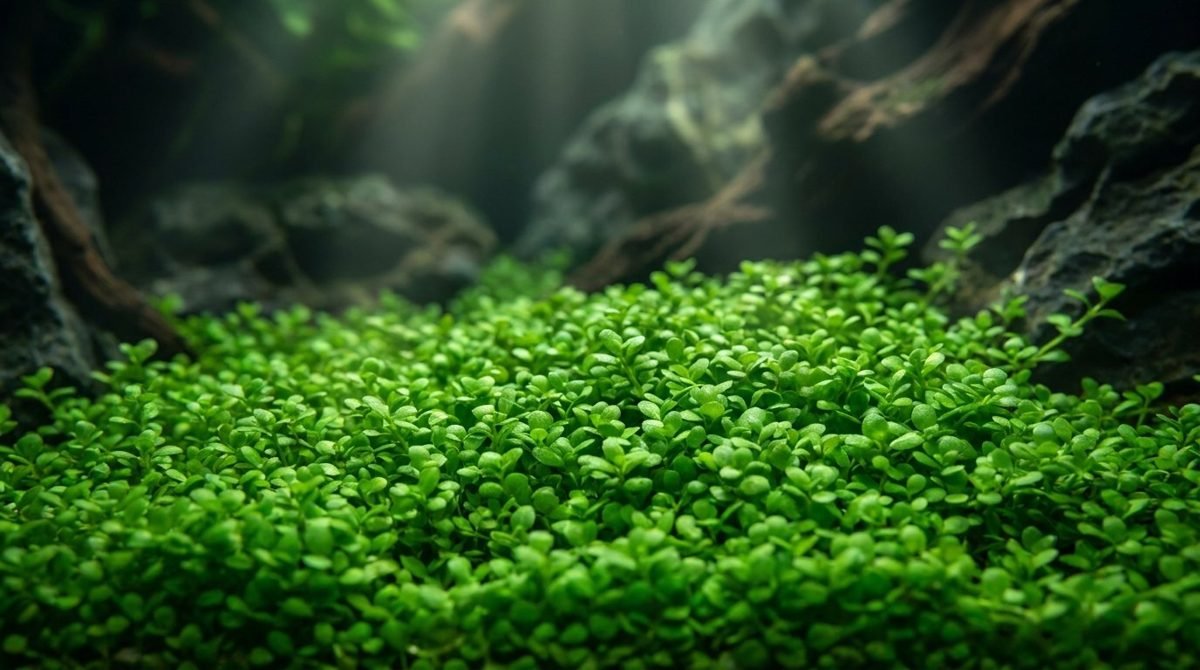
Quick answer: Pearl weed (Micranthemum/Hemianthus micranthemoides) is a small-leaved, fast-growing stem plant that does double duty: trim it low and it spreads into a foreground carpet, or leave it tall and it bushes out as a background plant. Low to moderate light works, and it needs no CO2 — though CO2 plus higher light gives you a tighter, denser carpet. Plant it in a nutrient-rich substrate, dose a bit of liquid fertilizer, and trim it regularly so it stays dense instead of going leggy and floating up.
Pearl weed is one of those plants I reach for when I want flexibility. I’ve used the same plant as a low carpet in a shrimp tank and as a tall green backdrop in a low-tech community tank, and both worked — the only thing that changed was how often I trimmed it and how much light it got. For a beginner who wants to try carpeting without buying a CO2 setup, it’s the most honest first step I can point them at. It will carpet for you on a budget; it just asks for the scissors in return.
Watch: Pearl Weed Wonders: Transform Your Tank
This guide comes from tanks I actually run, not a spec sheet. I’ll walk through what the plant is, how to push it into a carpet, how to make more of it for free, and how to read it when it starts climbing toward the light instead of spreading across the floor — because that’s the one habit that trips people up.
What pearl weed is (and carpet vs background)
Pearl weed is a small-leaved stem plant sold under a couple of Latin names — Micranthemum micranthemoides and Hemianthus micranthemoides — that refer to the same versatile, easy plant. It grows as bright green stems lined with tiny paired leaves, and it grows fast. What makes it interesting is that the plant doesn’t have one fixed form. The way you treat it decides what it becomes.
Treat it as a carpet and you keep it short. Under brighter light, the stems grow sideways and hug the substrate, and frequent trimming forces them to branch and knit together into a low green mat across the foreground. CO2 isn’t required for this, but it tightens the carpet and speeds it up.
Treat it as a background or midground plant and you let it climb. Under lower light and with less trimming, the stems grow tall and bushy, reaching upward, and you get a soft green thicket instead of a lawn. This is the low-tech, low-effort way to run it. Same plant, same care basics — you’re just choosing whether to fight its tendency to grow up, or go along with it.
Pearl weed care at a glance
| Requirement | Pearl weed needs |
|---|---|
| Difficulty | Easy to moderate (easy as a background plant, more work as a carpet) |
| Lighting | Low to moderate for a background; moderate to high for a tight carpet |
| CO2 | Not required; CO2 plus higher light gives a denser, faster carpet |
| Temperature | About 68–82°F |
| pH | About 5.0–7.5 |
| Placement | Foreground carpet or background/midground bush |
| Substrate | Nutrient-rich substrate preferred; feeds from roots and the water column |
| Fertilizer | Benefits from liquid ferts; root tabs help in inert substrate |
| Growth rate | Fast — expect regular trimming |
| Propagation | Stem cuttings, replanted |
The short version: pearl weed sits comfortably in the normal tropical community range and isn’t fussy about hardness or pH. The single biggest decision you make is light, because light is what tells the plant whether to spread or to climb.
How to grow a pearl weed carpet
Carpeting is where people either fall in love with this plant or get frustrated, and the difference usually comes down to three things: light, trimming, and patience. Here’s how I do it.
Plant it spread out. Don’t plant one big clump. Take small portions — a few stems each — and push them into the substrate in a grid across the foreground, an inch or so apart. A nutrient-rich substrate matters here because the carpet feeds heavily from its roots as well as the water column. Each little planting becomes a spreading point, and the goal is for them to grow toward each other and fill the gaps.
Give it more light than you think. A carpet needs more light than a background bush. Low light makes pearl weed reach upward instead of outward, which is the opposite of what you want on the floor. Moderate to high light keeps the stems short and tells them to creep sideways. This is also where CO2 earns its keep — it isn’t required, but CO2 with higher light gives you a noticeably tighter, denser, faster carpet. Without CO2 you can still get there; it just grows looser and takes longer.
- Trim early and trim often. This is the real secret. Cut the carpet down every week or two before it gets tall. Each cut forces the plant to branch, and branching is what thickens a thin carpet into a dense mat.
- Trim flat, like mowing. Run your scissors across the top to keep an even height; the trimmings can be replanted into bare spots.
- Dose liquid fertilizer. A fast carpet burns through nutrients, so a regular comprehensive liquid fertilizer keeps the lower growth from thinning out.
The mistake I see most often is people planting it, leaving it alone for a month, and then wondering why they have a tall mess instead of a lawn. A carpet is made by the scissors, not by waiting. If you trim it relentlessly in the early weeks, it fills in.
How to propagate pearl weed
Propagation is the easy, rewarding part, and it’s the same motion as trimming — so you make more plants every time you tidy up. Take a sharp pair of scissors, cut a healthy section of stem a couple of inches long, and push the cut end into the substrate. That’s it. The cutting roots and grows into a new plant, and the stem you cut from branches out new shoots below the cut, so the parent gets bushier too.
When I’m building a carpet, I treat every trim as free plants: instead of throwing the trimmings away, I replant the good ones into the thin spots. One small portion of pearl weed, trimmed and replanted a few times, can carpet a whole foreground in a couple of months without buying any more. Keep the cuttings short while they root so they don’t float off before they grab.
Common pearl weed problems and fixes
Pearl weed is forgiving, but it’s expressive — it tells you what it needs by how it grows. Here’s how to read it.
Leggy, stringy growth. Tall, stretched stems with sparse leaves mean the plant is reaching for light. This is the number one carpet-killer. The fix is more light and more trimming — brighter light tells it to stay low and spread, and cutting it back forces it to branch instead of climbing. If you want a carpet under low light, you’ll lose that fight; bump the light up or accept it as a background plant.
Carpet detaching and floating up. If patches of your carpet lift off the substrate, it usually means the mat grew thick and tall before the roots had a solid grip, so it loses anchorage and buoys up. Trim it shorter and lighter so it isn’t top-heavy, replant any floated chunks, and in the early stages pin loose portions down until the roots take hold. Trimming regularly from the start prevents most of this.
Lower leaves dying or thinning. When the bottom of the carpet goes brown and bare while the top stays green, the dense canopy is shading its own base and the lower growth is starving. The cure is to keep it trimmed short so light reaches the bottom, and to dose liquid fertilizer (plus root tabs in inert substrate) so the whole mat is fed. A thick, untrimmed carpet rots from the bottom up — short and well-fed is what keeps it healthy.
Is pearl weed right for your tank
It’s right for you if you want one plant that can do two jobs and you don’t mind trimming. As a low-tech background bush it’s nearly foolproof — low light, no CO2, and it just grows. As a carpet it’s one of the most accessible options out there because it’ll spread without CO2, which makes it a great first carpeting plant for someone not ready to commit to a pressurized setup. Shrimp keepers love it for the same reason.
It’s a worse fit if you want a tidy, set-and-forget tank. The same speed that makes it easy also means it needs regular trimming, and a neglected carpet will go leggy and lift off the substrate. If you know you won’t pick up the scissors every week or two, run it as a background plant where its climbing habit is a feature instead of a problem, or pick a slower foreground option.
If you’re still planning your planted tank, browse the rest of my plant library, and if this is your first one, start with my beginner’s guide to aquarium plants.
Pearl weed FAQ
Does pearl weed need CO2?
No. Pearl weed grows fine with no added CO2, and it’ll even carpet without it — that’s a big part of why it’s such a popular budget carpeting plant. CO2 paired with higher light gives you a tighter, denser, faster-filling carpet, but it’s a bonus, not a requirement. As a background plant it asks for even less.
Can pearl weed grow as a carpet without high light?
It can spread without high light, but the carpet will be looser and slower, and under genuinely low light the stems tend to reach upward instead of creeping sideways. For a tight, dense carpet you want moderate to high light plus frequent trimming. If you only have low light, pearl weed makes a better background bush than a carpet.
Why is my pearl weed growing tall and leggy instead of carpeting?
Almost always too little light, not enough trimming, or both. Low light makes the stems stretch upward toward the surface, and without regular cuts they never branch out sideways to fill in. Increase the light and trim the plant short every week or two — cutting it back is what forces the branching that turns stringy stems into a dense carpet.
How do I propagate pearl weed?
Cut a healthy stem section a couple of inches long with sharp scissors and push the cut end into the substrate, where it roots into a new plant. The stem you cut from branches out new shoots too, so the parent gets bushier. It’s the same motion as trimming, so you make new plants every time you tidy up — replant the trimmings into bare spots to grow a carpet for free.
Does pearl weed need root tabs or liquid ferts?
Pearl weed feeds from both its roots and the water column, so it benefits from both. In a nutrient-rich substrate the roots are well supplied, but a fast-growing carpet still appreciates regular liquid fertilizer to keep the lower growth full. In plain inert gravel or sand, add root tabs as well so the roots aren’t starved.
Why is my pearl weed melting or floating up?
Melting after planting is usually transition shock from a new tank or changed conditions; trim off the mushy bits, keep your parameters steady, and the stems should push new growth. Floating up usually means the carpet grew tall and top-heavy before the roots had a grip — trim it shorter and lighter, replant floated chunks, and pin loose portions until they anchor.
Keep reading
Educational guidance, not veterinary advice.
Author and editorial note
Written and maintained by Benjamin Thoden, founder of DBC Aquatics. This shrimp guide is reviewed through DBC Aquatics’ stability-first lens: cycle maturity, mineral consistency, molt safety, copper risk, grazing surfaces, and slow acclimation matter more than quick fixes. See our editorial standards for how guides are created, reviewed, and updated.
Leave a Reply