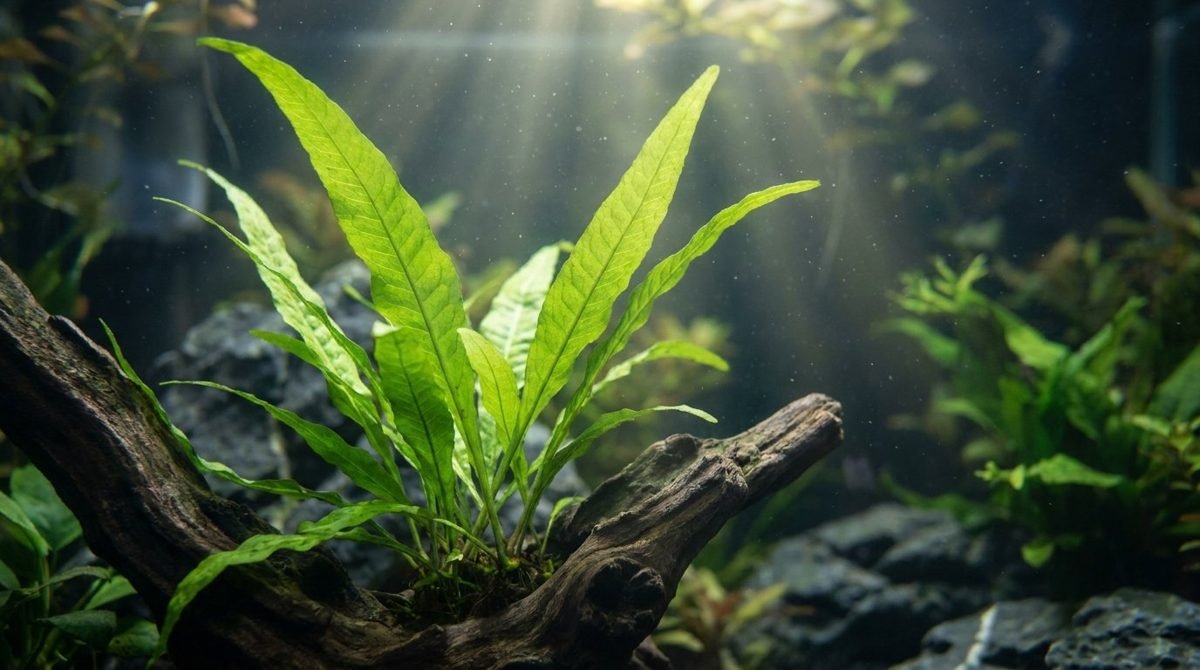
Quick answer: Java fern (Microsorum pteropus) is one of the hardiest beginner plants you can buy. It’s a rhizome epiphyte, so you attach it to driftwood or rock with thread or glue — you never bury the rhizome in substrate or it rots, and only the roots may touch the substrate. Low light is plenty and no CO2 is needed. It makes baby plants right on its own leaves, which you snap off and reattach. It’s close to beginner-proof.
Java fern is the plant I’ve handed to more new fishkeepers than any other, and for good reason: I have genuinely never managed to kill one, and I’ve tried some careless things to it over the years. I’ve had a piece float around loose in a bucket for a month and still attach and grow once I finally tied it down. It survives low light, no fertilizer, hard water, and fish that nibble everything else in the tank. If you want one plant that almost guarantees a win on your first planted tank, this is it.
This is the guide I give people who just bought a java fern and aren’t sure what to do with the floppy clump of leaves and black roots in the bag. It covers what the plant is, the care numbers, how to attach it without killing the rhizome, the black spots that confuse everyone, how it makes its own baby plants, and how to fix the handful of problems that do come up.
What java fern is (and the varieties)
Java fern (Microsorum pteropus) is a slow-growing fern from Southeast Asia that grows attached to rocks and wood along streams and rivers, often half in and half out of the water. That’s the key fact for keeping it: it’s an epiphyte. It grows from a horizontal green rhizome with leaves coming up off the top and thin, hairy black roots coming off the bottom. It pulls its nutrients from the water column through its leaves, not from substrate through roots, which is why it doesn’t need — and doesn’t want — to be planted in the ground.
The standard plant has broad, slightly ruffled green blades, but there are several varieties worth knowing because their leaf shapes are quite different:
- Narrow leaf. Thinner, more upright blades than the standard form. Grows a little faster and looks tidier in a planted scape. My usual recommendation for most tanks.
- Needle leaf. The thinnest of the bunch, almost grassy. Stays compact and works well in smaller tanks where the broad form would swallow everything.
- Trident. Each leaf splits into multiple finger-like lobes, giving a feathery, branched look. Faster-growing than the standard and one of the more popular varieties right now.
- Windelov (lace). The leaf tips fan out into a frilly, crested lace pattern. Distinctive and a bit slower, but a favorite for foreground and midground texture.
All of them are kept exactly the same way. Pick whichever leaf shape you like — the care doesn’t change between varieties.
Java fern care at a glance
Java fern tolerates a wide range of conditions. The numbers below are where it’s happiest, but honestly it does fine well outside these — this is one of the few plants where “good enough” really is good enough.
| Requirement | Java fern needs |
|---|---|
| Light | Low. Low light is ideal — strong light over this slow plant mostly just grows algae on the leaves and can trigger melt. It’s a true shade plant. |
| CO2 | None. It grows fine in any low-tech tank. CO2 speeds it up a little but is completely optional and never required. |
| Temperature | 68–82°F. Comfortable across the normal tropical range and tolerates cooler temps than most, so it suits almost any community tank. |
| pH | Roughly 6.0–7.5. Adapts to soft or moderately hard water and most tap supplies without fuss. |
| Placement | Attached to driftwood or rock, rhizome above the substrate. Never buried. The roots can touch substrate, but the rhizome cannot. |
| Fertilizer | Optional. A light all-in-one liquid fert keeps growth steady and color good. In a stocked, fed tank it usually finds enough on its own. |
| Difficulty | Beginner-proof. The only ways to fail are burying the rhizome or hitting it with too much light. |
If there’s a single takeaway from that table, it’s that java fern wants less, not more. People kill it by trying too hard — big lights, rich substrate, the rhizome shoved into the ground. Leave it shaded, attached, and alone, and it’ll just grow.
How to attach java fern
This is the one mistake that actually kills java fern, so I’ll be blunt: do not bury the rhizome in your substrate. The rhizome is the thick green horizontal stem that the leaves and roots grow from. If you push it down into gravel or soil it suffocates and rots, and the whole plant follows it. The thin black roots can go into substrate if you want — they’re only there to anchor it — but the rhizome has to stay above the substrate and exposed to water. Java fern grows attached to a surface, not planted in the ground.
- Pick your hardscape. Driftwood and rough rock are ideal. The roots grip texture over time, and the rhizome sits up in the flow where it’s happy. Java fern looks especially good draped over a piece of wood.
- Keep the rhizome on top. Lay the plant so the rhizome rests against the surface with the leaves up and the roots facing down. The rhizome must stay exposed — never sandwiched under glue or pressed into substrate.
- Tie it with thread. Cotton thread or fishing line wrapped over the rhizome and around the wood or rock holds it while the roots take hold. Cotton dissolves in a few weeks, by which point it has anchored itself. This is my default method.
- Or use gel super glue. Cyanoacrylate gel — the coral-fragging stuff — bonds the plant to hardscape in seconds and is aquarium-safe once cured. Dab a small spot on the underside of the rhizome, not over the top, press it down, and hold for a moment.
- Give it time. New roots grip the surface over the following weeks, and new leaves push up off the rhizome. It’s slow, so don’t expect a flush of growth — expect it to quietly take hold and settle in.
You can also just wedge it into a crevice between rocks and let the roots do the work with no thread or glue at all. As long as the rhizome stays above the substrate and in the water, it’ll attach on its own eventually. There’s no rush.
Black spots on java fern: sporangia vs melt
This is the most common java fern panic I get, and it comes down to two completely different things that both involve dark marks on the leaves. One is normal and good. The other means something’s wrong. Here’s how to tell them apart.
- Small black or brown bumps and spots — usually sporangia. If the marks are raised little dots or fuzzy patches clustered on the undersides and tips of healthy, firm leaves, those are sporangia. That’s how the fern reproduces by spores, and it’s a sign of a settled, happy plant, not a problem. Leave them be. Often the tips will go on to sprout actual baby plants, which is the next section.
- Translucent, mushy, blackening leaves — that’s melt. If the leaf itself is going clear, soft, brown, and falling apart rather than carrying neat raised dots, that’s java fern melt. It’s a leaf failing, usually from too much light or a nutrient problem. The fix is to dial the light back and feed the tank a little, covered in the problems section below.
The quick test: are the spots on an otherwise healthy leaf, raised, and on the underside? That’s reproduction, relax. Is the leaf itself dissolving and turning see-through? That’s melt, act on it. New keepers throw out perfectly healthy ferns every day because they mistake sporangia for disease.
How to propagate java fern
Java fern is one of the most satisfying plants to propagate because it mostly does it for you. You’ll get free plants whether you ask for them or not.
- Plantlets on the leaves (the main method). Java fern grows tiny baby plants right on the tips and edges of its older leaves. They start as little bumps and develop their own miniature leaves and a tuft of roots while still attached to the parent. Once a plantlet has a few leaves and visible roots, gently snap or twist it off — or just wait for the old leaf to die back and release it — and tie or glue it onto its own piece of wood or rock like any other java fern. It grows into a full plant from there.
- Rhizome division. You can also split an established plant by cutting the rhizome into sections with clean, sharp scissors. Make sure each section has at least a few leaves and some roots of its own, then attach each piece to hardscape exactly like the parent. This is the faster way to make several good-sized plants at once.
Between the two, plantlets are the no-effort route — leave a healthy java fern alone long enough and it’ll quietly populate your tank by itself. Division is what I use when I want to deliberately bulk up a scape or share a plant with someone.
Common java fern problems and fixes
For a plant this tough, the complaint list is short. Almost everything comes down to too much light, a nutrient gap, or a buried rhizome. Here’s what’s actually happening with each.
- Melt — translucent, mushy leaves. Leaves going clear and soft is the classic java fern melt. The two usual causes are too much light and a nutrient shortage, especially nitrogen and potassium. Move the plant into more shade or lower the light, add a little all-in-one liquid fertilizer, and trim off the worst leaves. As long as the rhizome stays firm and green, it’ll push out new, healthier leaves.
- Browning leaves with see-through patches. Brown, translucent blotches usually point to a potassium or general nutrient deficiency, sometimes paired with light that’s a touch too strong. A regular dose of liquid fert almost always clears it up. Cut away leaves that are mostly gone so the plant stops spending energy on them.
- Not growing at all. Java fern is slow, so first make sure you’re not just being impatient — a new leaf every few weeks is normal. If it’s genuinely stalled, check that the rhizome isn’t buried (lift it above the substrate if it is), add a little fertilizer, and give it some flow. It rarely needs more light, since strong light causes more problems than it solves here.
- Rhizome gone soft and brown. A mushy, brown rhizome is rot, and the cause is nearly always burying it in substrate. Lift it out, cut back to firm green tissue, and reattach the healthy part above the substrate where water can reach the rhizome.
The thread through all of it: keep the light low, keep the rhizome exposed, and dose a little fertilizer if leaves start failing. Do that and java fern is about as close to unkillable as an aquarium plant gets.
Is java fern right for your tank
For most tanks, java fern is a yes — it’s the default beginner plant for a reason. Here’s where it really shines and the one place I’d think twice.
- Low-tech tanks — yes. No CO2, low light, forgiving on parameters, and it pulls food straight from the water column. It’s one of the easiest good-looking plants you can keep in a simple setup.
- Cichlid tanks — yes. This is the big one. Most plants get shredded or dug up by cichlids, but java fern is tough enough that the majority of fish won’t eat it, and because it’s attached to hardscape rather than rooted, they can’t uproot it. It’s one of the few reliable plants for an African or American cichlid tank.
- Shrimp tanks — yes. Undemanding, the leaves and roots host biofilm for shrimp to graze, and it never needs the kind of heavy trimming that disturbs a shrimp colony.
- Goldfish and other plant-munchers — usually yes. Its tougher leaves survive a lot of mouths that would mow down softer plants. Not bombproof, but a much better bet than most.
- High-tech aquascapers chasing fast carpets — maybe not. If you want quick growth and constant change, java fern’s slow pace will feel sluggish. It’s a workhorse, not a showstopper, though the varieties give you real texture to work with.
If you’re stocking a low-tech tank around it, my low light plant guide covers the companions that pair well with java fern.
Java fern FAQ
Can I plant java fern in the substrate?
No — this is the one mistake that actually kills it. Java fern grows from a rhizome, the thick green horizontal stem the leaves come off, and if you bury that rhizome in gravel or soil it suffocates and rots. Instead, attach the plant to driftwood or rock with cotton thread, fishing line, or a dab of aquarium-safe gel super glue, keeping the rhizome above the substrate. The thin black roots can touch or even go into substrate, but the rhizome never can.
Does java fern need CO2 or special light?
No to both. Java fern is a true low-light, low-tech plant — it grows fine with no CO2 and only modest lighting, which is exactly why it’s the go-to beginner plant. In fact, strong light usually does more harm than good here, growing algae on the slow leaves and helping trigger melt. CO2 will speed growth slightly if you happen to run it, but it’s never required.
What are the black spots on my java fern leaves?
Almost always sporangia, which are completely normal. If the marks are small raised black or brown bumps clustered on the undersides and tips of firm, healthy leaves, that’s the fern reproducing by spores — a sign of a happy plant, not a disease. Those tips often go on to sprout baby plants. The only time dark marks are bad is when the leaf itself goes translucent, soft, and mushy, which is melt rather than spots.
Why is my java fern melting or turning brown?
Melt — leaves going clear, soft, and brown — is usually caused by too much light or a nutrient shortage, especially nitrogen and potassium. Move the plant into more shade, dose a little all-in-one liquid fertilizer, and trim off the worst leaves. As long as the rhizome stays firm and green, the plant survives and pushes out new healthy leaves. Brown see-through patches specifically often point to a potassium or general nutrient gap that fertilizer fixes.
How do I propagate java fern?
Two ways, and the first is automatic. Java fern grows baby plants, called plantlets, right on the tips and edges of its older leaves; once a plantlet has its own little leaves and roots, snap it off and tie or glue it to its own piece of wood or rock. You can also divide an established plant by cutting the rhizome into sections with clean scissors, making sure each piece has a few leaves and some roots, then attaching each one like the parent.
How fast does java fern grow?
Slowly — expect a new leaf every few weeks rather than visible spread day to day. That slow pace is part of why it’s so low-maintenance: it rarely needs trimming and won’t take over a tank. A little fertilizer and steady flow help it along, but more light mostly just causes algae and melt rather than faster growth. Patience is the main thing it asks of you, and plantlets appear on their own over time.
Keep reading
Author and editorial note
Written and maintained by Benjamin Thoden, founder of DBC Aquatics. This shrimp guide is reviewed through DBC Aquatics’ stability-first lens: cycle maturity, mineral consistency, molt safety, copper risk, grazing surfaces, and slow acclimation matter more than quick fixes. See our editorial standards for how guides are created, reviewed, and updated.
Leave a Reply