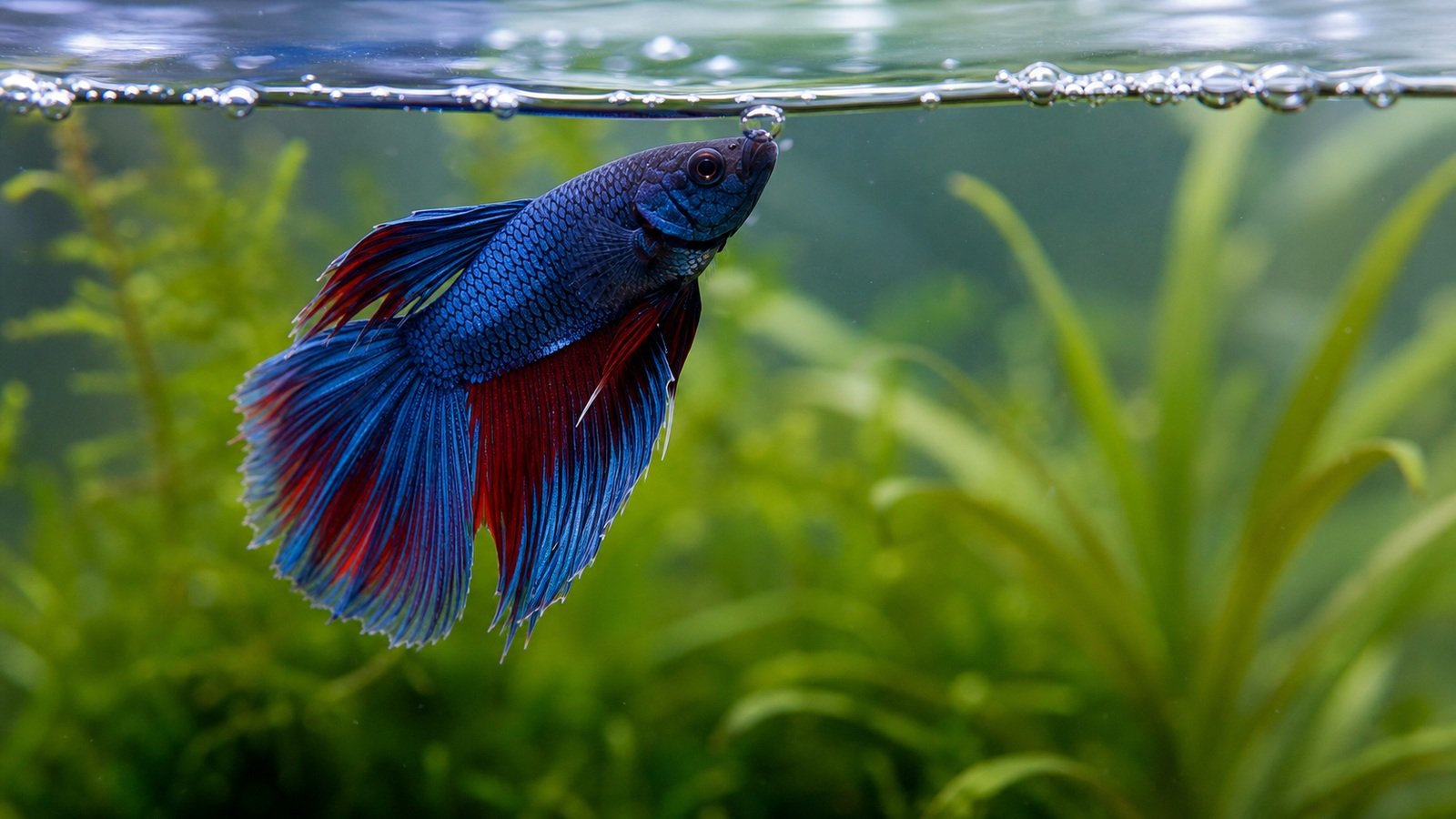
Betta Fish Gasping At The Surface? What To Check First
If your betta is stuck at the surface gasping for air, every minute feels like you are running out of time.
The good news is this does not always mean your fish is dying.
But it does mean you should stop guessing and start checking the right things.
A quick surface gulp can be normal for a betta.
A betta stuck at the top, gulping over and over, breathing fast, not eating, clamping its fins, or acting weak is different.
That is when I would check the tank in a calm order.
Quick Answer
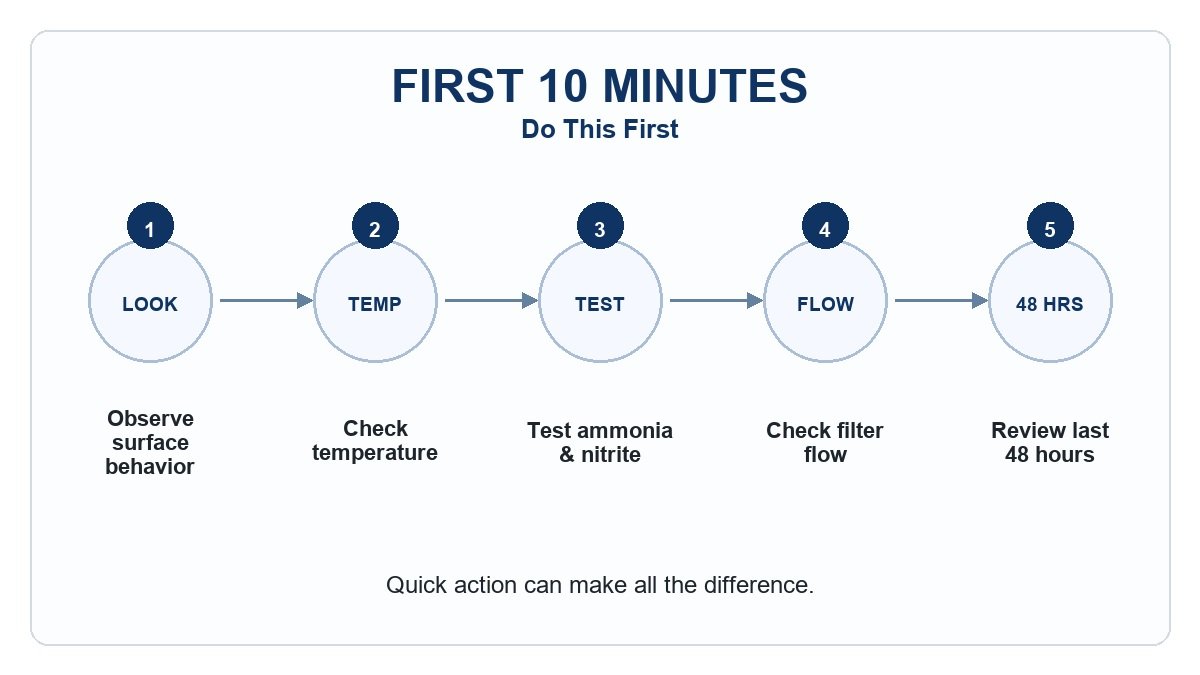
If your betta fish is gasping at the surface, do this first:
- Add gentle surface movement.
- Check the temperature with a thermometer.
- Test ammonia and nitrite if you can.
- Make sure the filter is running without blasting the betta.
- Think through what changed in the last 48 hours.
Do not start with medication.
Do not deep-clean the filter.
Do not feed more because the fish looks weak.
The first goal is simple: help the betta breathe while you figure out why it is struggling.
THE DBC RESCUE RULE
Water first.
Diagnosis second.
Medication last.
The fastest way to lose time is treating the symptom before checking the tank. If the water, oxygen, temperature, or filter is the real problem, medication can make you feel busy while the fish keeps struggling.
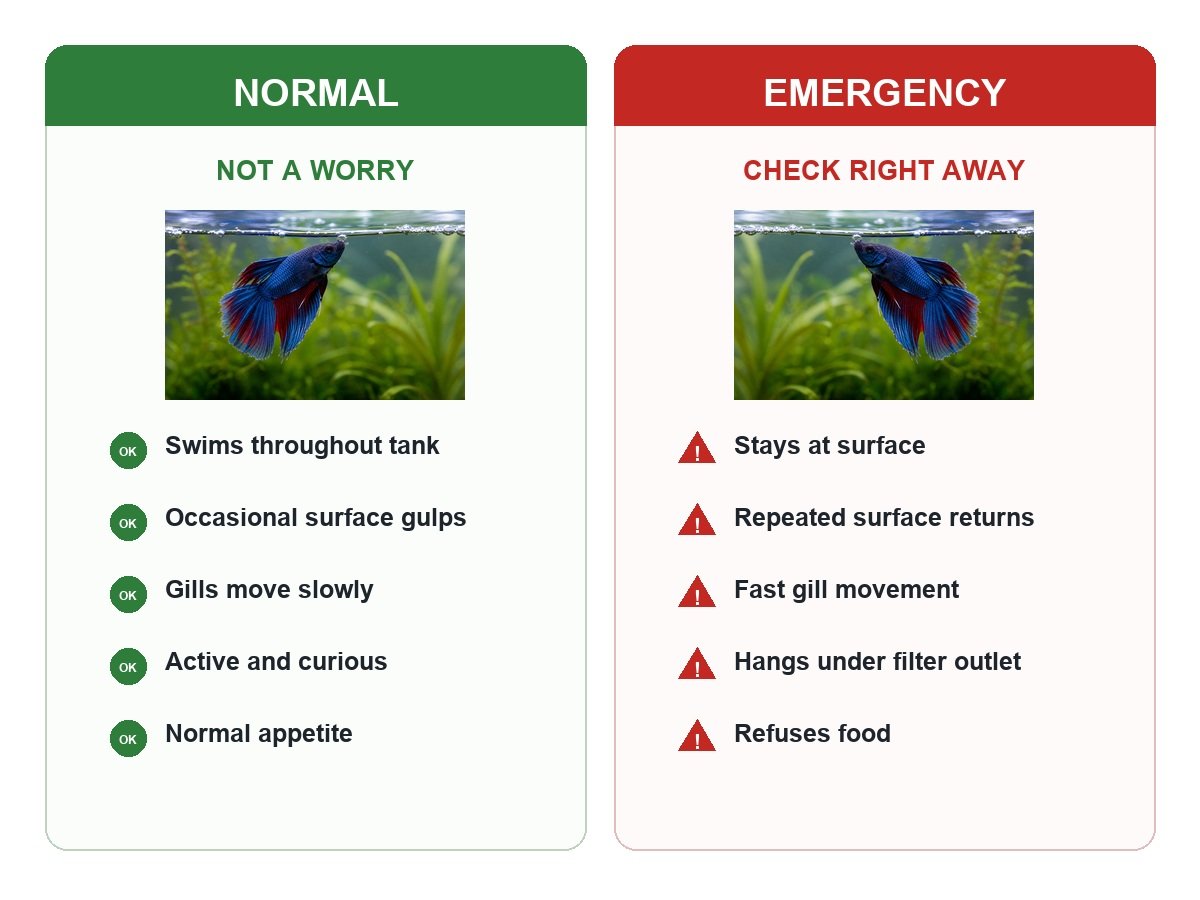
Normal Betta Breathing Vs Emergency Gasping
Bettas are different from many aquarium fish because they have a labyrinth organ. That means they can breathe air from the surface.
So yes, a healthy betta may swim up, take a gulp, and go back to exploring.
But constant surface gasping is not something I would ignore.
You may notice the gills pumping much faster than normal, the fish returning to the surface every few seconds, or the betta hanging under the filter outlet without exploring the tank.
Those are the moments where I would stop treating it like normal betta breathing.
| What You See | Usually Normal | More Concerning |
|---|---|---|
| Quick surface gulp | Common betta behavior | Watch only if it becomes constant |
| Betta resting near the top | Can be normal near plants, leaves, or a betta log | Concerning if the fish is weak, clamped, or breathing fast |
| Betta keeps returning to the surface | Could be habit if it acts normal otherwise | Check oxygen, temperature, ammonia, and nitrite |
| Betta stays at the top gulping air | Not normal if constant | Treat as possible breathing distress |
| Betta gasping and not eating | Not normal | Check water first, then disease signs |
| Betta gasping after a water change | Not normal | Check conditioner, temperature match, chlorine/chloramine, ammonia, and nitrite |
| Betta gasping and lying on its side | Emergency sign | Stabilize water and use a symptom diagnosis path |
The question is not, “Can bettas breathe air?”
They can.
The better question is:
Can this betta leave the surface and act normal, or does it seem trapped there because something is wrong?
Common Myth: Bettas Breathe Air, So Gasping Is Normal
Bettas can breathe from the surface.
That part is true.
But that does not mean every betta at the surface is fine.
A quick gulp and then back to swimming is normal betta behavior. A betta hanging at the top, breathing fast, clamping its fins, acting weak, refusing food, or returning to the surface every few seconds is a different story.
That is not the moment to say, “Well, bettas breathe air.”
That is the moment to check the water.
First 10 Minutes: What I Would Do
Start with the safest moves.
1. Add Gentle Surface Movement
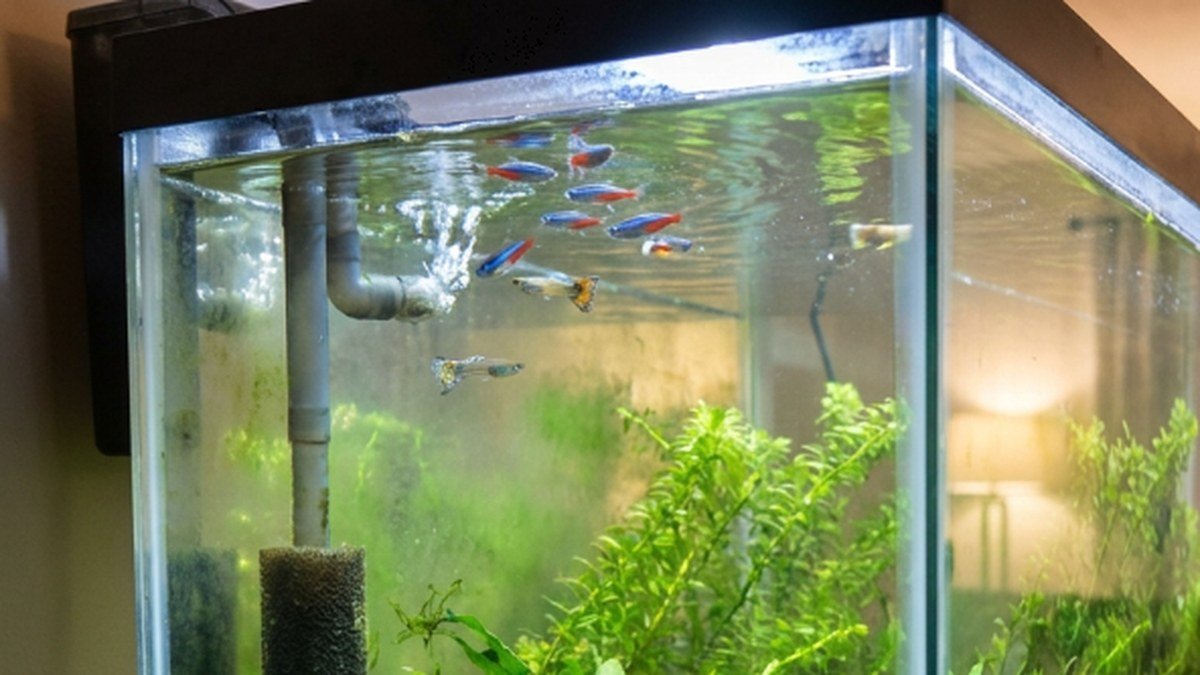
Bettas do not like being thrown around by strong current, but completely still water can become a problem.
You want ripples across the surface.
Not a washing machine.
Good first moves:
- turn the filter back on if it was off
- aim the filter output slightly toward the surface
- add a gentle air stone if you have one
- lower the water level slightly if the filter return needs to splash
- keep the surface easy for the betta to reach
If the betta is exhausted, a broad plant leaf, floating betta log, or shallow hospital setup can help it rest near the surface while you work through the cause.
2. Check The Temperature
Do not trust only the heater dial.
Use a thermometer.
Most bettas do best around 78 to 80 degrees F. Water that is too cold can weaken the fish. Water that is too warm can hold less oxygen.
If the temperature is wrong, correct it slowly. A fast swing can make a stressed fish worse.
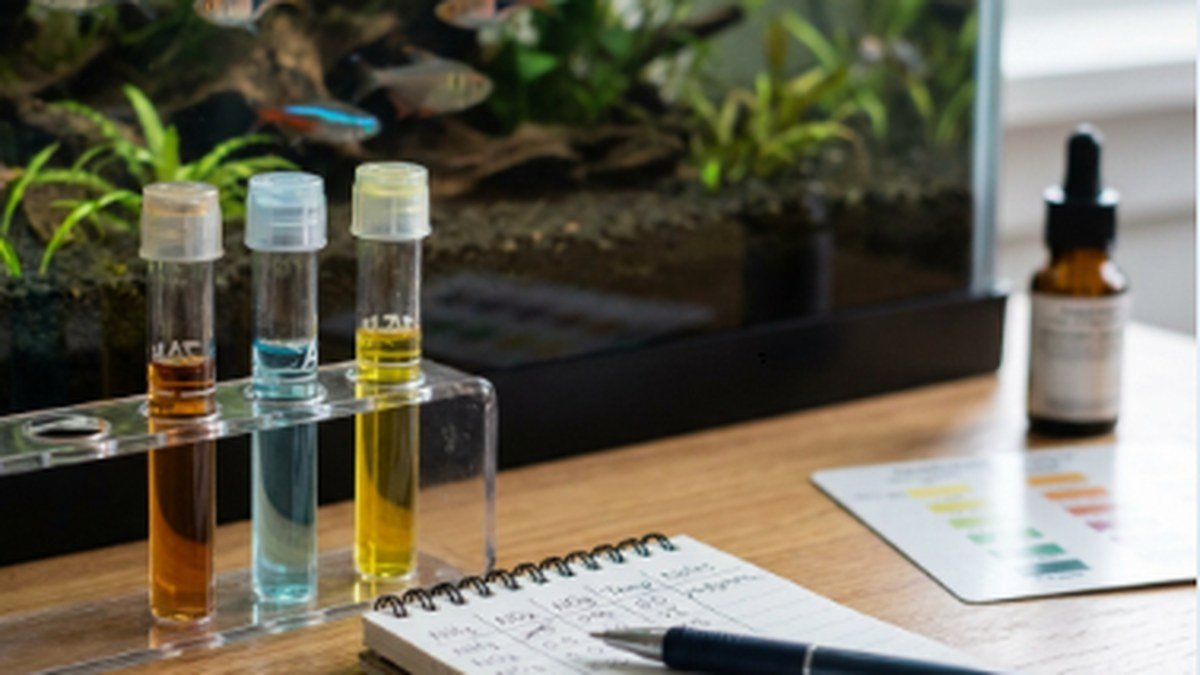
3. Test Ammonia And Nitrite
Ammonia and nitrite should be 0 ppm.
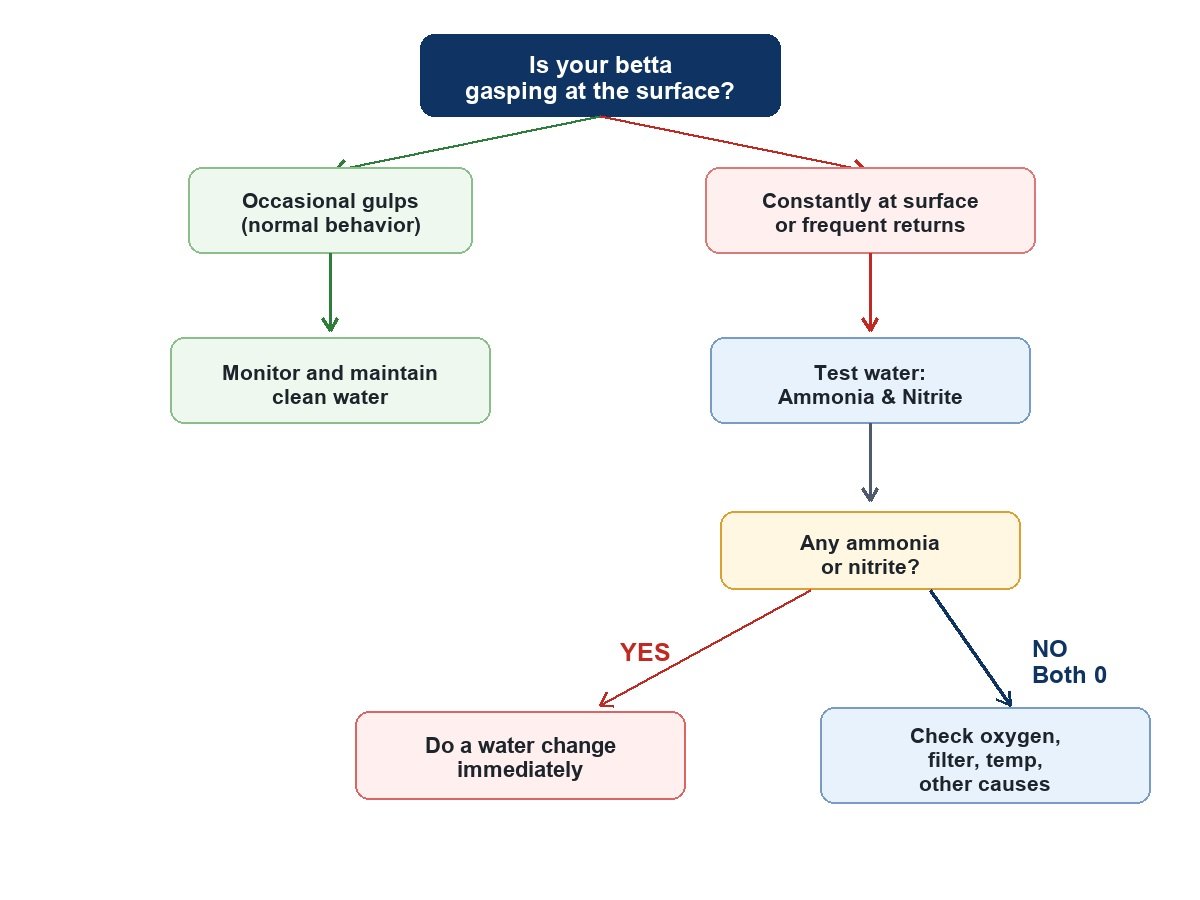
If either one is above 0 ppm, treat this as a water emergency.
Ammonia can irritate the gills. Nitrite can make a fish act oxygen-starved even when the tank has oxygen.
This is why an air stone alone does not always fix the problem.
I had a fishkeeper tell me their betta kept sitting at the top, and the first thought was to grab medication because the fish looked sick.
The tank looked clean.
The betta was still alive.
But the test kit told the story: ammonia was not 0 ppm.
That fish was not asking for a stronger medicine. It was reacting to unsafe water. Once oxygen was moving and the water was corrected carefully, the betta had a real chance to recover.
That is why I would rather see a test kit come out before a medication bottle.
If ammonia or nitrite is above 0 ppm, use the ammonia spike emergency guide and keep oxygen moving while you correct the water.
4. Check The Filter Without Deep-Cleaning It
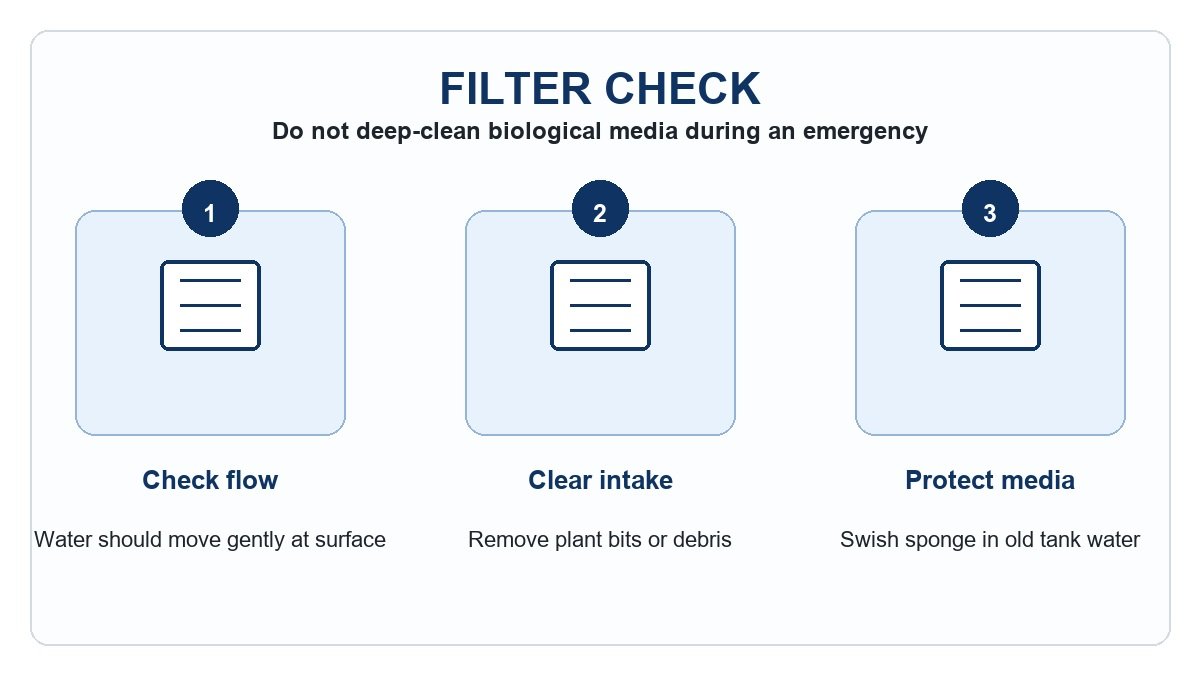
A weak filter can reduce flow and oxygen exchange.
But deep-cleaning the filter during an emergency can make things worse if it damages the beneficial bacteria.
Check for:
- clogged intake
- stopped impeller
- weak flow
- filter media that dried out
- filter media replaced recently
- current that is too strong for the betta
If the filter needs cleaning, swish sponge or media gently in old tank water. Do not rinse biological media under tap water. Do not replace all media at once.
If this started after filter work, read how to clean aquarium filter media without killing beneficial bacteria.
5. Ask What Changed In The Last 48 Hours
Recent changes usually tell the story.
Check for:
- water change
- missed conditioner
- too much conditioner
- temperature mismatch
- filter cleaning
- new food
- overfeeding
- medication
- new decoration or plant
- power outage
- strong light
- shared net, siphon, or bucket from another tank
Do not make five changes at once. Write down what changed, then work through the safest checks first.
What The Cause Usually Looks Like
| Likely Cause | Betta Clues | What To Check First | First Move |
|---|---|---|---|
| Normal air gulping | Quick gulp, active fish, normal appetite | Behavior between gulps | Watch and keep water stable |
| Low oxygen | Constant top hanging, worse in warm or still water | Surface movement, filter flow, temperature | Add gentle surface movement |
| Ammonia | Gasping, red gills, lethargy, new tank, recent filter cleaning | Ammonia test | Water change if above 0 ppm |
| Nitrite | Heavy breathing, weakness, hanging near the top | Nitrite test | Water change if above 0 ppm |
| Chlorine or chloramine | Gasping soon after water change | Conditioner and source water | Condition water and increase aeration |
| Temperature stress | Lethargy, fast breathing, staying near heater or top | Thermometer reading | Correct temperature slowly |
| Strong filter flow | Betta being pushed around or hiding | Filter output | Baffle the flow |
| Overfeeding | Bloated fish, uneaten food, cloudy water | Food amount, ammonia, nitrite | Stop feeding briefly and test water |
| Disease or gill problem | Still gasping with safe water, spots, fungus, fin rot, swelling | Full symptom check | Diagnose after water is ruled out |
If Your Betta Is Gasping After A Water Change
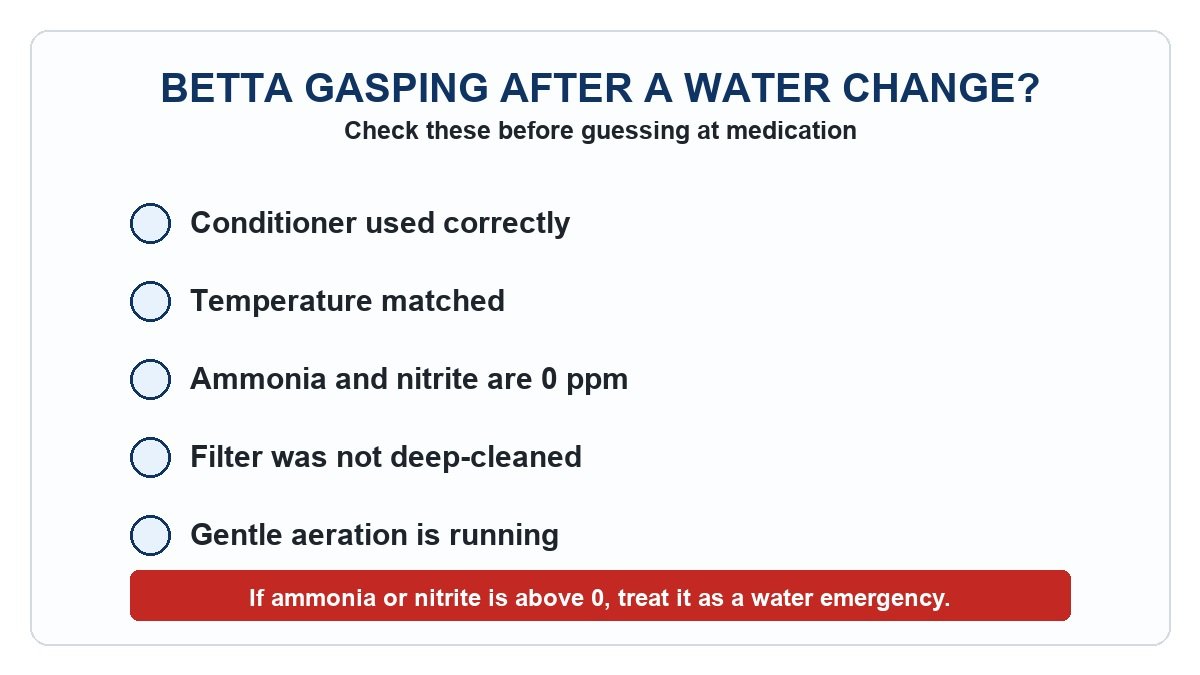
A betta gasping after a water change is not normal surface breathing.
The most common things I would check are:
- Was the new water conditioned?
- Was the temperature close to the tank temperature?
- Did you change a very large amount of water?
- Did you stir up the substrate hard?
- Did you clean the filter at the same time?
- Did the source water have low oxygen?
- Are ammonia and nitrite both 0 ppm?
First, add gentle aeration and check temperature.
Then test ammonia and nitrite.
If you forgot conditioner, condition the tank immediately according to the product label.
For sensitive bettas, it can help to prepare replacement water in a clean bucket with conditioner, temperature matching, and aeration before the water goes into the tank.
If Your Betta Is Gasping And Not Eating
Gasping plus not eating is more serious than surface gulping by itself.
Check water first:
- ammonia
- nitrite
- temperature
- conditioner
- recent water change
- filter flow
Then look for disease or stress signs:
- clamped fins
- bloating
- pineconing scales
- white spots
- fuzzy patches
- fin rot
- red gills
- trouble swimming
- lying on the bottom or side
If water tests are unsafe, fix the water before guessing at medication.
If water tests are safe and the betta is still gasping, use the DBC Aquatics Symptoms Checker to match the visible signs to the next safest path.
If Ammonia And Nitrite Are 0 But The Betta Still Gasps
Do not stop investigating just because ammonia and nitrite are 0.
Next checks:
- Is the tank actually around 78 to 80 degrees F?
- Is the surface moving?
- Did this happen after a water change?
- Was conditioner missed, changed, or heavily overdosed?
- Is the filter flow too strong?
- Is the betta stressed by bright light, no cover, tankmates, or poor resting spots?
- Are there disease signs like spots, fuzzy patches, swelling, fin damage, or abnormal gill movement?
This is where a lot of people get stuck. The water can be safer than it was and the fish can still need help.
Safe ammonia and nitrite are important. They do not rule out every oxygen, temperature, source-water, stress, or disease problem.
Should You Add An Air Stone?
Yes, if the tank has weak surface movement or the water is warm.
Use gentle air.
Bettas can become stressed if bubbles or current throw them around the tank.
An air stone supports breathing. It does not fix ammonia, nitrite, chlorine, or disease by itself.
Should You Do A Water Change?
Do a partial water change if ammonia or nitrite is above 0 ppm, conditioner was missed, or the water is clearly unsafe.
Use conditioned water close to the tank temperature.
Be careful if every water change makes the betta worse. That can point to temperature mismatch, conditioner problems, source-water issues, or very different water chemistry.
Should You Medicate A Gasping Betta?
Not first.
Before medication, check oxygen, temperature, ammonia, nitrite, conditioner, filter flow, and recent changes.
Medication may help if the real problem is infection, parasites, fungus, fin rot, or another disease issue.
But medication does not fix bad water.
If the real cause is ammonia, nitrite, chlorine, temperature stress, or low oxygen, the tank needs rescue first.
Which DBC Rescue Path To Use Next
Use the next resource based on what you actually find, not based on panic.
- Ammonia or nitrite is above 0 ppm: start with the ammonia spike emergency guide and keep oxygen moving while you correct the water.
- Water tests are safe but the betta still looks wrong: use the DBC Aquatics Symptoms Checker and match the visible signs before choosing treatment.
- More than one fish is affected, the water is cloudy, or the whole tank feels off: go to the Aquarium Rescue Hub and follow the broader tank rescue path.
- This keeps happening: use the Aquarium Rescue Blueprint so you are not trying random fixes every time the tank gets unstable.
When To Use DBC Aquarium Tools
Use DBC Aquarium Tools if you want to save the tank numbers instead of trying to remember them.
The useful numbers are:
- tank size
- temperature
- ammonia
- nitrite
- nitrate
- date of last water change
- filter cleaning date
- what changed recently
- what the betta is doing right now
When To Use The Rescue Hub
Use the Aquarium Rescue Hub if more than one fish is struggling, the tank smells bad, the water is cloudy, or you are not sure which emergency guide fits.
If this is not just a betta surface-breathing question anymore, start with the bigger rescue path.
Bottom Line
A quick surface gulp can be normal for a betta.
A betta stuck at the surface, breathing fast, not eating, clamping fins, or acting weak needs a real check.
Here is the order I would trust:
- Add gentle oxygen and surface movement.
- Check temperature.
- Test ammonia and nitrite.
- Protect the filter bacteria.
- Review the last 48 hours.
- Use symptoms to decide whether disease or stress is next.
The biggest mistake is treating symptoms before checking the water. Most rescue stories start with the water test, not the medication bottle.
If your tank keeps bouncing from one emergency to the next, the Aquarium Rescue Blueprint gives you the full rescue path so you are not trying random fixes while the fish are already stressed.
Most people reach for the medication bottle first because it feels like action.
The fish that make it usually have someone who reaches for the test kit first.
That is the habit I want you to build.
FAQ
Is it normal for betta fish to breathe at the surface?
Yes. Bettas naturally take air from the surface. It becomes concerning when the betta stays at the top, gulps constantly, breathes fast, stops eating, clamps fins, acts weak, or does it after a water change.
Why is my betta fish gasping at the surface?
A betta gasping at the surface may be reacting to low oxygen, ammonia, nitrite, temperature stress, chlorine/chloramine exposure, strong filter flow, stress, or disease. Check surface movement, temperature, ammonia, and nitrite first.
Why is my betta staying at the top of the tank and gulping air?
If the betta can leave the surface and acts normal, it may be normal air breathing. If it seems stuck at the top or is gulping constantly, check oxygen exchange, temperature, ammonia, nitrite, and recent water changes.
Why is my betta gasping after a water change?
Common causes include chlorine/chloramine exposure, temperature mismatch, low-oxygen source water, pH or mineral swings, stirred-up waste, or disturbed filter bacteria. Add gentle aeration, confirm conditioner, check temperature, and test ammonia and nitrite.
Why is my betta gasping and not eating?
Gasping plus not eating can mean breathing distress, water stress, temperature stress, or disease. Test ammonia and nitrite, check temperature, increase gentle surface movement, and look for other symptoms like clamped fins, bloating, spots, fin rot, or abnormal swimming.
Can ammonia make a betta gasp?
Yes. Ammonia can irritate or burn the gills and make a betta look like it cannot breathe. Any ammonia above 0 ppm needs attention.
Can nitrite make a betta breathe fast?
Yes. Nitrite can interfere with oxygen transport and cause heavy breathing, weakness, and surface hanging. Nitrite should read 0 ppm.
Should I add an air stone for a gasping betta?
Gentle air can help, especially in warm or still water. Keep the flow soft so the betta is not thrown around. An air stone supports breathing but does not fix ammonia, nitrite, chlorine, or disease.
Should I medicate a betta that is breathing hard?
Not before checking water. Test ammonia, nitrite, and temperature first. Consider medication only after water and oxygen problems are ruled out or if there are clear disease signs.
Leave a Reply