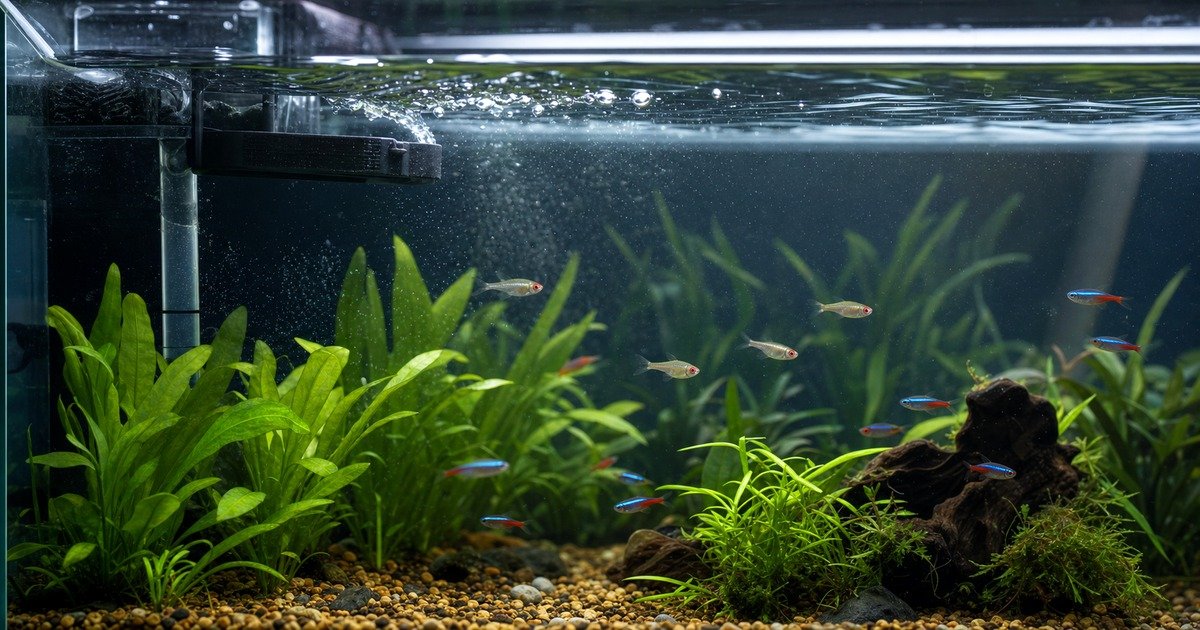
If your fish started dying after you cleaned the tank or filter, stop for a minute before you touch anything else.
I know that sounds strange. You were trying to help the aquarium, and now it feels like the cleaning made everything worse.
That can happen.
The good news is that this does not always mean the tank is ruined. But it does mean you need to stabilize the fish first and figure out whether the cleaning disturbed oxygen, ammonia, nitrite, chlorine, temperature, or the bacteria living in your filter.
DBC Aquatics helps fishkeepers work through aquarium emergencies by checking visible symptoms, water quality, oxygen, filter bacteria, and recent changes before guessing at disease.
Quick Answer
Fish often die after cleaning a tank or filter because the cleaning removed beneficial bacteria, exposed fish to chlorine or chloramine, changed temperature too fast, stirred up waste, reduced oxygen, or triggered an ammonia or nitrite spike.
Here is what I would do first:
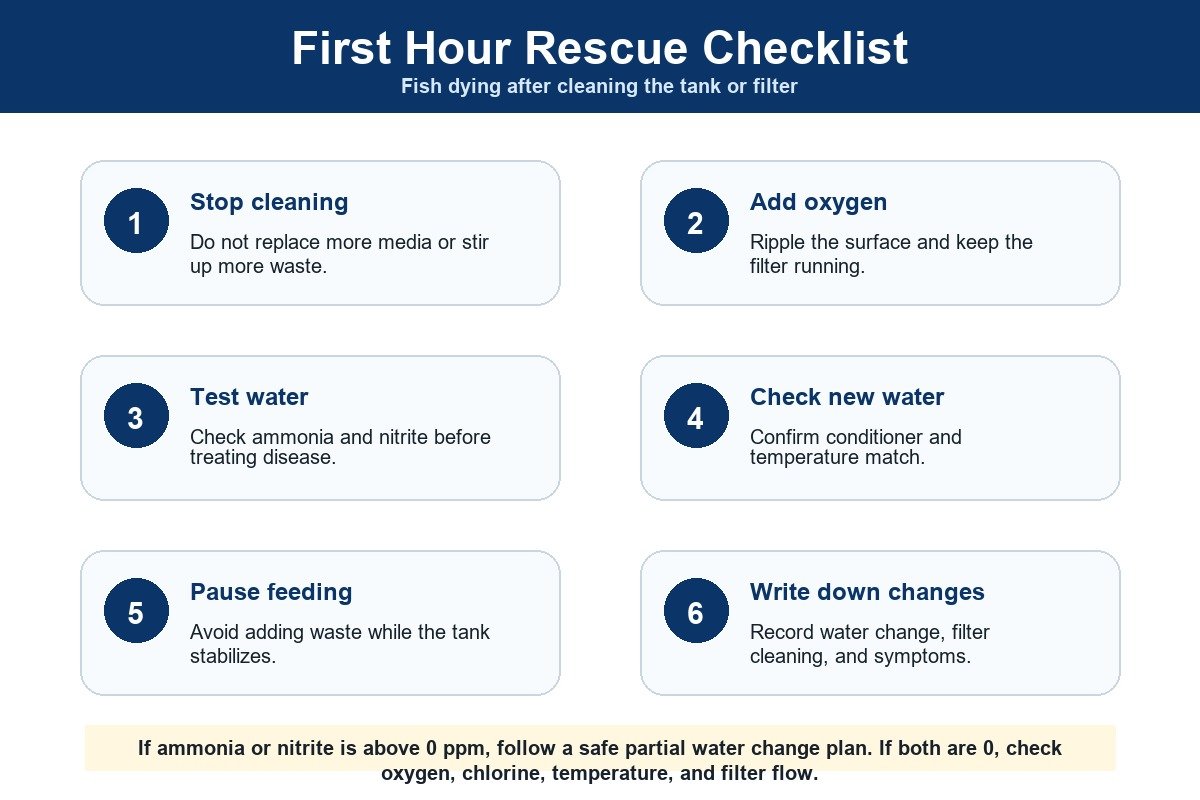
- Stop cleaning.
- Add oxygen and surface movement.
- Keep the filter running.
- Do not replace more filter media.
- Test ammonia and nitrite.
- Check temperature.
- Confirm the new water was conditioned.
- Stop feeding for the moment.
- Write down what changed in the last 48 hours.
Video support: If you are about to change more water, watch Ben walk through the controlled rescue order: Fish Dying? Do This Before You Change More Water.
Do not start with medication unless you already see clear disease signs after the water and oxygen checks. Most cleaning-related fish deaths start as a water or filter problem, not a medication problem.
First Hour Rescue Order
If fish are gasping, lying on the bottom, hiding, losing balance, or dying after cleaning, work in this order.
1. Add Oxygen First
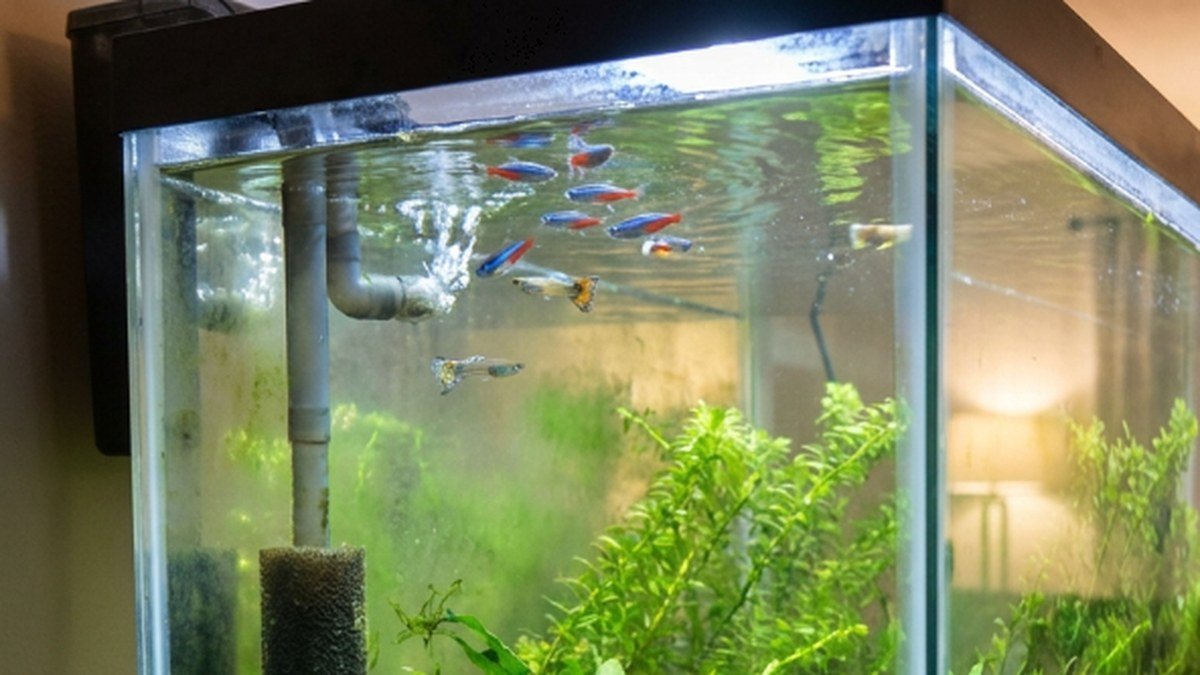
Point the filter output so it ripples the surface.
If you have an air stone, turn it on.
If the fish are gasping near the top, oxygen is one of the safest first moves. It will not fix ammonia by itself, but it can buy the fish time while you test.
You should see more surface movement, not a tank that looks like a washing machine. The goal is oxygen, not blasting stressed fish around the aquarium.
2. Keep The Filter Running
Do not shut the filter off because you are scared it caused the problem.
The filter is where a lot of your beneficial bacteria live. Those bacteria help turn dangerous fish waste into less dangerous forms.
If the filter is running, keep it running. If the flow is weak, check for an obvious clog, but do not deep-clean all the media during the emergency.
3. Test Ammonia And Nitrite
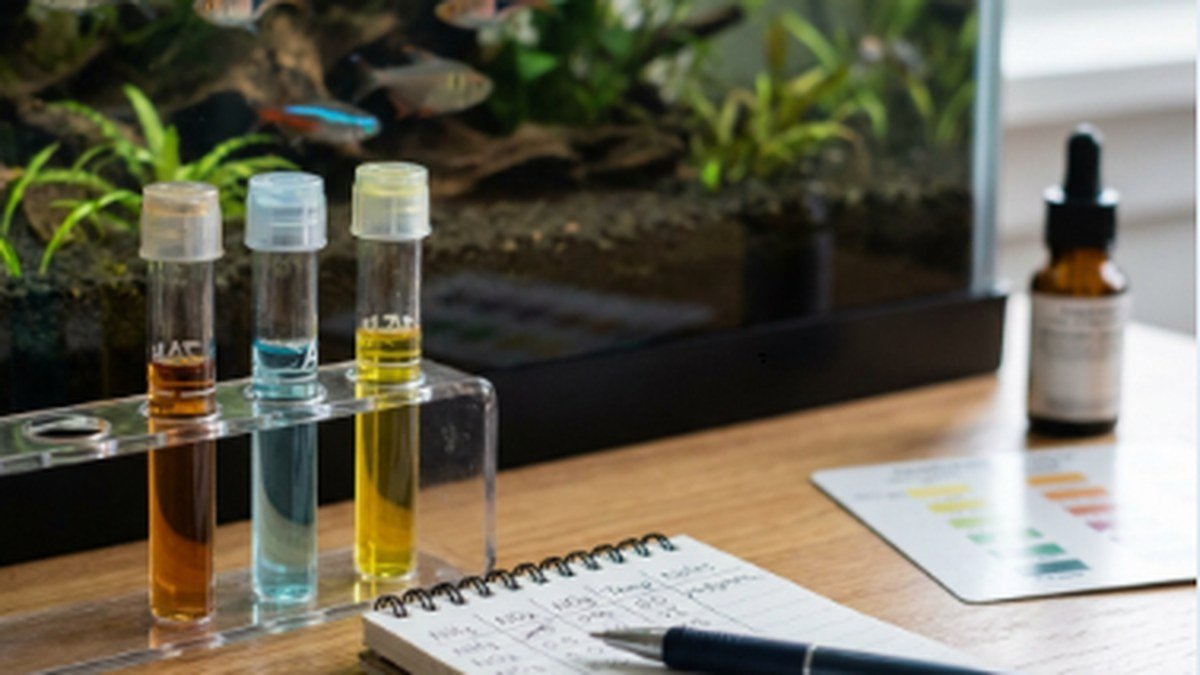
Test ammonia and nitrite as soon as you can.
If either one is above 0 ppm, treat this like a water emergency.
| Test Result | What It Means | First Move |
|---|---|---|
| Ammonia above 0 ppm | Fish gills may be irritated or damaged | Add oxygen, use conditioner if appropriate, and prepare a safe partial water change |
| Nitrite above 0 ppm | Fish may struggle to use oxygen properly | Add oxygen and follow a nitrite emergency plan |
| Both are 0 ppm | Look harder at oxygen, chlorine/chloramine, temperature, pH swing, source water, and disease signs | Keep observing and check recent changes |
If you need the emergency ammonia sequence, use the ammonia spike emergency guide.
4. Check Conditioner And Temperature
Ask yourself two simple questions:
- Was every drop of new water treated with conditioner?
- Was the new water close to the same temperature as the tank?
Chlorine or chloramine can hurt fish fast. A temperature swing can also shock fish, especially if a large water change happened at the same time as filter cleaning.
If you are not sure the water was conditioned, dose conditioner according to the label for the tank volume. Do not wildly overdose random products. Keep it calm and controlled.
5. Stop Feeding Temporarily
Do not feed while fish are dying after cleaning.
Food adds more waste. More waste can become more ammonia. If the tank is already struggling, feeding can make the problem harder to read.
Most healthy aquarium fish can skip food for a short period while you stabilize the water.
What Probably Went Wrong
Cleaning a tank can go wrong in a few different ways.
The exact cause depends on what you cleaned, how much water you changed, whether the filter media was rinsed or replaced, and what the fish are doing now.
| What Happened | What It Can Cause | What To Check First |
|---|---|---|
| Rinsed filter media under tap water | Beneficial bacteria damage | Ammonia and nitrite |
| Replaced all filter cartridges or media | Mini-cycle or filter bacteria crash | Ammonia, nitrite, fish gasping |
| Changed a large amount of water | Temperature, pH, oxygen, or chlorine stress | Temperature and conditioner |
| Cleaned gravel deeply | Stirred-up waste or unstable water | Ammonia, nitrite, cloudy water, smell |
| Turned off filter too long | Low oxygen and bacteria stress | Filter flow and surface movement |
| Cleaned everything at once | Tank lost too much stability | All water tests and recent changes |
In my experience, the biggest danger is not that the tank is “too clean.” The danger is that the cleaning removed or damaged the living bacteria that were protecting the fish.
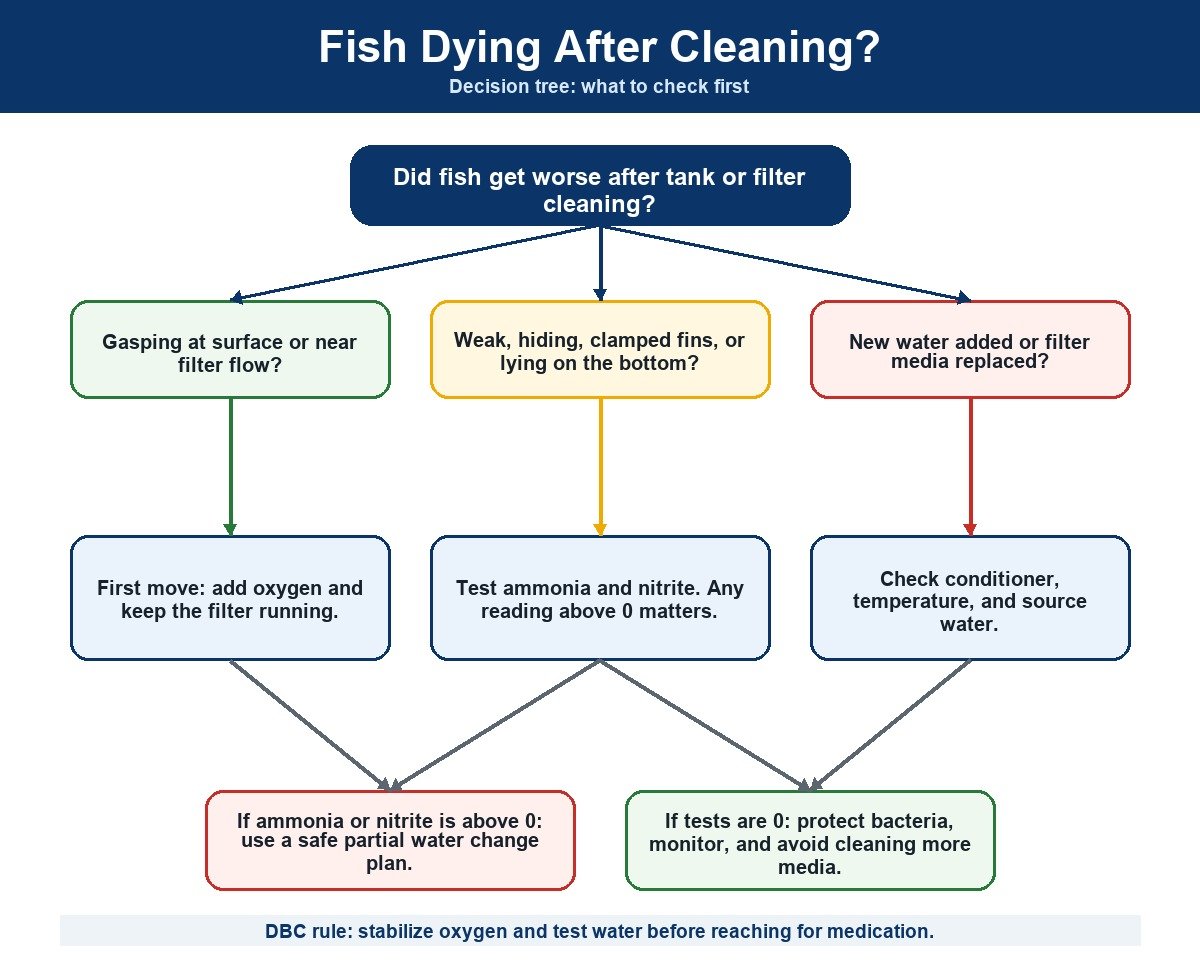
The Filter Bacteria Problem
Deep filter cleaning can damage beneficial bacteria.
That matters because beneficial bacteria help process ammonia and nitrite. When too much bacteria is removed at once, the tank can act like a newer, less stable aquarium again.
This is why fish can look fine before cleaning and then struggle afterward.
The fish were not harmed by cleanliness. They were harmed by the tank losing stability.
Here is the safer filter rule:
- Rinse filter media in old tank water, not untreated tap water.
- Do not replace all media at once.
- Do not deep-clean the filter and gravel on the same day unless there is a specific emergency reason.
- Keep some established media in the filter whenever possible.
- Clean for flow, not for perfect-looking media.
If you need a safer maintenance guide, use DBC’s guide to clean your aquarium filter without killing beneficial bacteria.
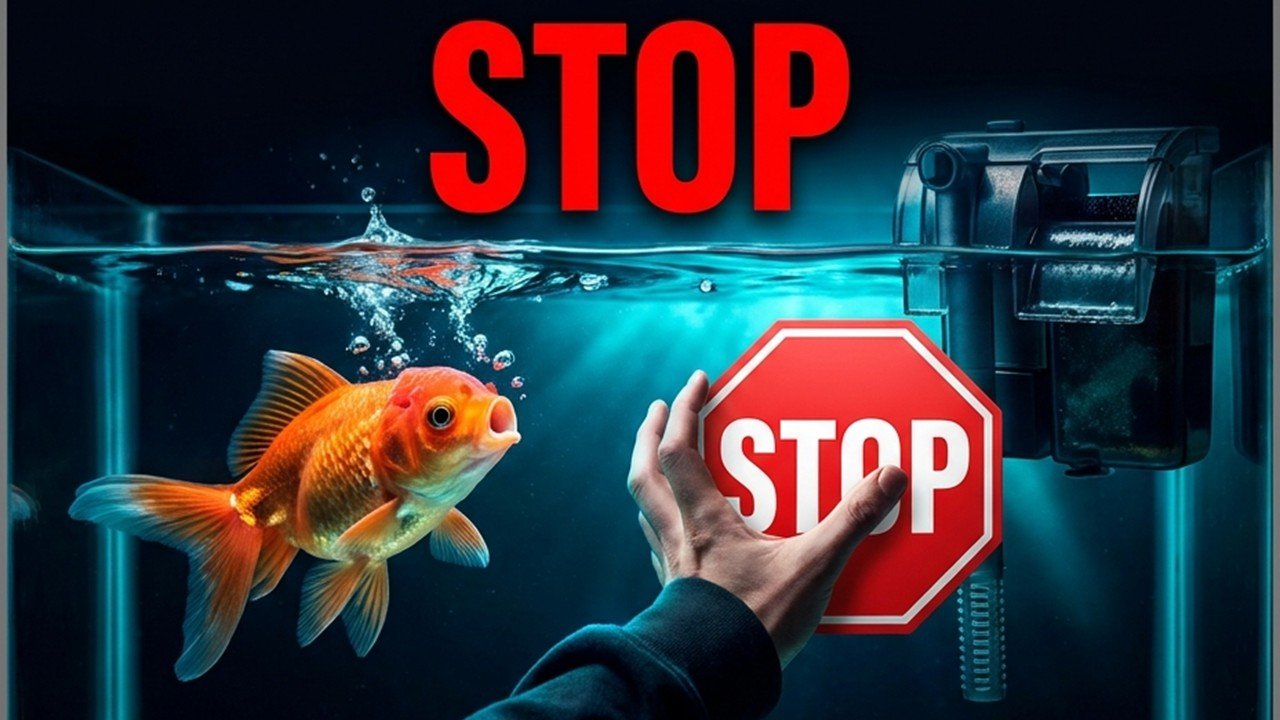
If Fish Are Gasping After Cleaning
Fish gasping after cleaning usually means oxygen, ammonia, nitrite, chlorine/chloramine, or temperature needs to be checked right away.
You may see fish:
- hanging at the surface
- breathing faster than normal
- returning to the filter output over and over
- gathering near bubbles or surface flow
- acting weak between trips to the surface
If that is happening, add oxygen first, then test ammonia and nitrite.
Do not assume it is only low oxygen. Gasping can also happen when ammonia irritates gills or nitrite interferes with oxygen use.
For the broader gasping sequence, use the fish gasping rescue guide.
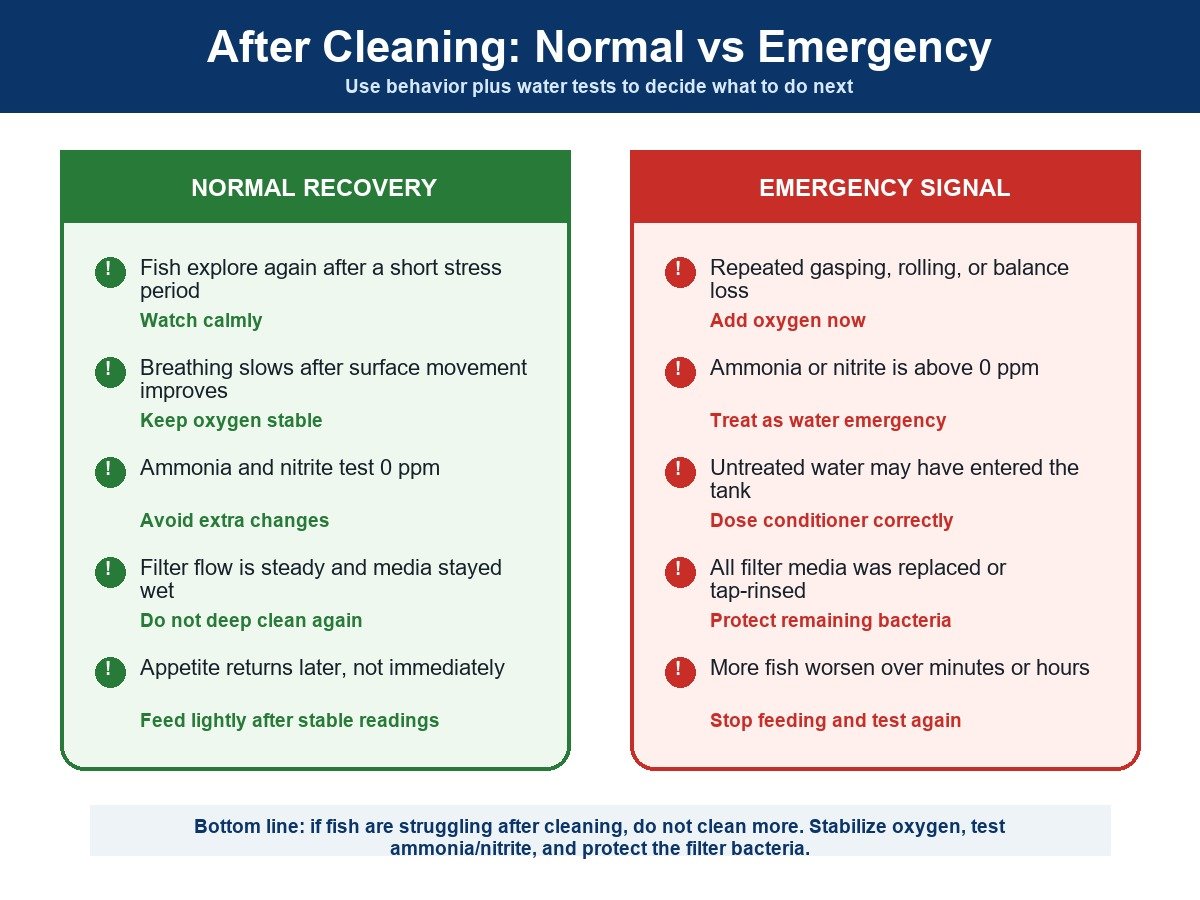
If This Happened After A Water Change
If the fish died after a water change, look at the water change itself.
Check:
- Was the water conditioned?
- Was the temperature matched?
- Was the change very large?
- Did you clean the filter at the same time?
- Did you stir up old debris from the gravel?
- Did the tap water source change?
A water change is usually helpful when done safely. But a big, fast, untreated, or temperature-shifted water change can stress fish badly.
The fix is not to panic-change all the water again. The fix is to test, oxygenate, condition if needed, and make controlled partial changes only when the numbers or symptoms call for it.
What Not To Do Next
These are the moves I would avoid during the first emergency window:
- Do not deep-clean the filter again.
- Do not replace more filter media.
- Do not dump in medication before testing water.
- Do not feed to “cheer them up.”
- Do not tear the tank down unless there is contamination or a clear emergency reason.
- Do not keep changing variables every 10 minutes.
The tank needs oxygen, stability, and accurate numbers.
The more random changes you make, the harder it becomes to know what helped and what made things worse.
When To Use DBC Tools
If you have ammonia, nitrite, nitrate, temperature, water-change notes, and filter-cleaning notes, save them in DBC Aquarium Tools.
If the fish are also showing clamped fins, red gills, white spots, bloating, flashing, lying on the bottom, or not eating, use the DBC Fish Symptoms Checker after you stabilize oxygen and water quality.
If more than one thing is going wrong and you need a broader rescue path, start at the Aquarium Rescue Hub.
How To Prevent This Next Time
The safer way to clean an aquarium is to avoid cleaning everything at once.
Use this rhythm:
| Maintenance Task | Safer Approach |
|---|---|
| Water change | Match temperature and condition the new water |
| Filter media | Rinse gently in old tank water when flow is reduced |
| Gravel cleaning | Clean sections instead of tearing through everything |
| Decorations | Clean only what needs cleaning |
| Feeding | Feed lightly after a water-quality scare |
| Testing | Test before and after major maintenance until the tank is stable |
Think of the aquarium as a living system.
You are not just cleaning glass and gravel. You are protecting fish, bacteria, oxygen, and water stability at the same time.
Bottom Line
If fish are dying after cleaning the tank or filter, stop making more changes and stabilize the aquarium.
Add oxygen. Keep the filter running. Test ammonia and nitrite. Check conditioner and temperature. Protect the filter bacteria.
The biggest mistake is treating symptoms before checking the water. Most rescue stories start with the water test, not the medication bottle.
If your tank keeps bouncing from one emergency to the next, the Aquarium Rescue Blueprint gives you the full step-by-step recovery path after you get through the immediate emergency.
FAQ
Why are my fish dying after I cleaned the tank?
Fish can die after cleaning if the tank lost beneficial bacteria, the water was not conditioned, temperature changed too fast, oxygen dropped, waste was stirred up, or ammonia/nitrite spiked. Start with oxygen, ammonia, nitrite, temperature, conditioner, and filter flow.
Did I clean my aquarium filter too much?
Possibly. If you rinsed media under tap water, replaced all cartridges, or cleaned every part of the filter at once, you may have damaged beneficial bacteria. Test ammonia and nitrite and avoid replacing more media during the emergency.
Should I do another water change if fish are dying after cleaning?
Only after checking the likely cause. If ammonia or nitrite is above 0 ppm, a safe partial water change may help. If the issue was untreated water or temperature shock, another rushed water change can make things worse.
Should I add medication after fish die from tank cleaning?
Not first. Cleaning-related deaths are often water-quality, oxygen, temperature, chlorine, or filter-bacteria problems. Stabilize the water and oxygen before deciding whether disease treatment is needed.
Can replacing filter media kill fish?
Replacing all filter media at once can remove too much beneficial bacteria and trigger ammonia or nitrite problems. Replace media gradually when possible and keep established media in the filter.
How long after cleaning can an ammonia spike happen?
It can show up quickly or over the next few days, depending on how much bacteria was disturbed and how much waste is in the tank. Test now, then test again over the next 24 to 72 hours.
What should I write down after a cleaning emergency?
Write down tank size, temperature, ammonia, nitrite, nitrate, how much water changed, whether conditioner was used, what filter media was cleaned or replaced, and what the fish did first.
Leave a Reply