Forgot Dechlorinator? What To Do If Tap Water Reached Your Fish
That stomach-drop moment comes after the water change.
You put the bucket away and see the conditioner bottle still sitting on the shelf.
No conditioner.
Now the fish are breathing hard, darting, clamping their fins, or hanging near the surface.
The good news is that you still have a clear rescue order. Here is what I would check first.
Do not start adding random chemicals. Do not replace the filter. Do not perform another rushed change with more untreated tap water.
Stop. Treat the water correctly. Add oxygen. Then test what the exposure may have disturbed.
Quick Answer
If you forgot dechlorinator and untreated municipal water reached the aquarium:
- Stop adding untreated water.
- Add an aquarium water conditioner that handles chlorine and chloramine, following the current label for the actual volume being treated.
- Increase surface movement and add an air stone if one is available.
- Confirm that the filter is moving water, but do not clean or replace its media.
- Test free and total chlorine if you have the correct test.
- Test ammonia and nitrite.
- Watch the fish closely and retest.
If fish are collapsing, unable to stay upright, showing severe breathing distress, or continuing to die after the water is corrected, contact an aquatic veterinarian.
Use the free Aquarium Survival Checklist to keep the rescue order in front of you while you work.
30-Second Rescue
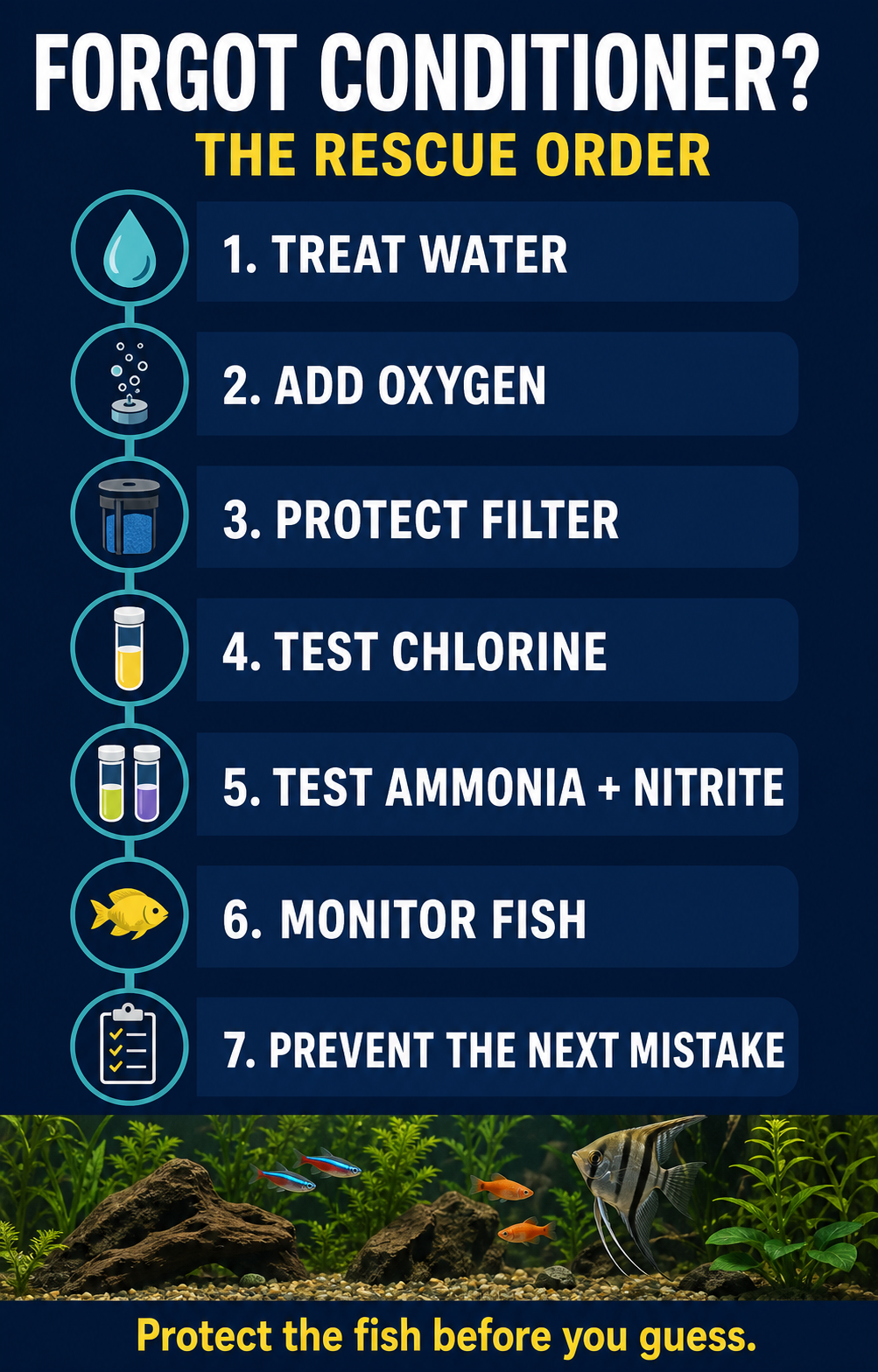
If you only have time for the rescue order, use this:
- Stop adding untreated water.
- Add the correct conditioner for chlorine and chloramine.
- Increase oxygen and surface movement.
- Protect the filter and keep established media wet.
- Test free and total chlorine when available, then test ammonia and nitrite.
- Monitor breathing, balance, and water-test results.
Do not add medication while the shared water problem is still being investigated.
THE DBC RULE
Treat the source.
Protect the fish.
Protect the filter.
Then test the result.
The goal is not to pour in the most product. The goal is to use the correct conditioner for the correct volume, restore oxygen support, and find out whether the exposure also created an ammonia or nitrite problem.
First 10 Minutes
1. Stop The Untreated Water
Turn off the hose or faucet. Do not add more source water until you know it has been conditioned correctly.
If untreated water is still in a bucket, condition it before it reaches the aquarium.
2. Use The Correct Conditioner
Read the label.
Use a product intended for aquarium water that treats the disinfectant in your supply. If your municipal water uses chloramine, the product must say that it handles chloramine.
Follow the product label for the actual volume being treated. Conditioner strengths differ, so a dose copied from another bottle or a social-media comment may be wrong.
Do not mix several conditioners or keep adding product because the fish do not recover instantly.
3. Add Oxygen
Aim the filter return toward the surface. Add an air stone if one is available. Make sure water is moving through the filter.
Chlorine and chloramine can injure gills. Extra aeration does not neutralize chloramine, but it supports stressed fish while the correct conditioner does its job.
4. Protect The Filter
Do not replace the cartridge. Do not rinse biological media under untreated tap water. Do not disinfect the filter.
Municipal disinfectants can affect the bacteria that process fish waste. The filter needs protection and observation, not another cleaning.
If flow is blocked, clear only the obstruction and keep reusable media wet.
5. Test The Water
If you have the appropriate test, check both free chlorine and total chlorine.
That distinction matters because a free-chlorine result can miss chloramine. Total chlorine includes free chlorine plus chlorine bound in chloramine.
Then test:
- ammonia
- nitrite
- temperature
Test ammonia again later if chloramine exposure is possible or the biofilter may have been damaged.
Why This Happens
Chlorine is used to disinfect municipal water. In an aquarium it can irritate or damage fish gills, which is why several fish may begin breathing hard soon after untreated tap water reaches the tank.
Chloramine is more persistent than chlorine. Surface movement supports stressed fish, but aeration alone does not remove chloramine. The replacement water needs a conditioner specifically labeled to handle it.
The same exposure can also affect the biological filter. When chloramine is treated, the aquarium may still need to process an ammonia load. That is why the rescue includes conditioner, oxygen, filter protection, and follow-up ammonia and nitrite tests.
Chlorine And Chloramine Are Not The Same Problem
Both can harm fish and the bacteria the aquarium depends on.
| Source-Water Disinfectant | What Matters In An Aquarium Emergency |
|---|---|
| Chlorine | Must be neutralized before new water reaches fish. It may dissipate under some conditions, but waiting is not the rescue plan after exposure. |
| Chloramine | More persistent. Aeration alone does not remove it. Use a conditioner specifically labeled for chloramine. |
| Unknown | Check your utility’s water-quality information and use a conditioner that clearly covers both when appropriate. |
When chloramine is treated, ammonia can be released. A mature biological filter may process it, but a new or damaged filter may not keep up.
That is why the rescue does not end when conditioner goes in. You still test ammonia and nitrite.
Signs That Fit A Water-Disinfectant Exposure
Possible signs include:
- sudden gasping after a refill
- fast or labored gill movement
- darting or irritation
- clamped fins
- lethargy
- excess mucus
- cloudy eyes
- several fish changing behavior at the same time
- sudden losses after a water change
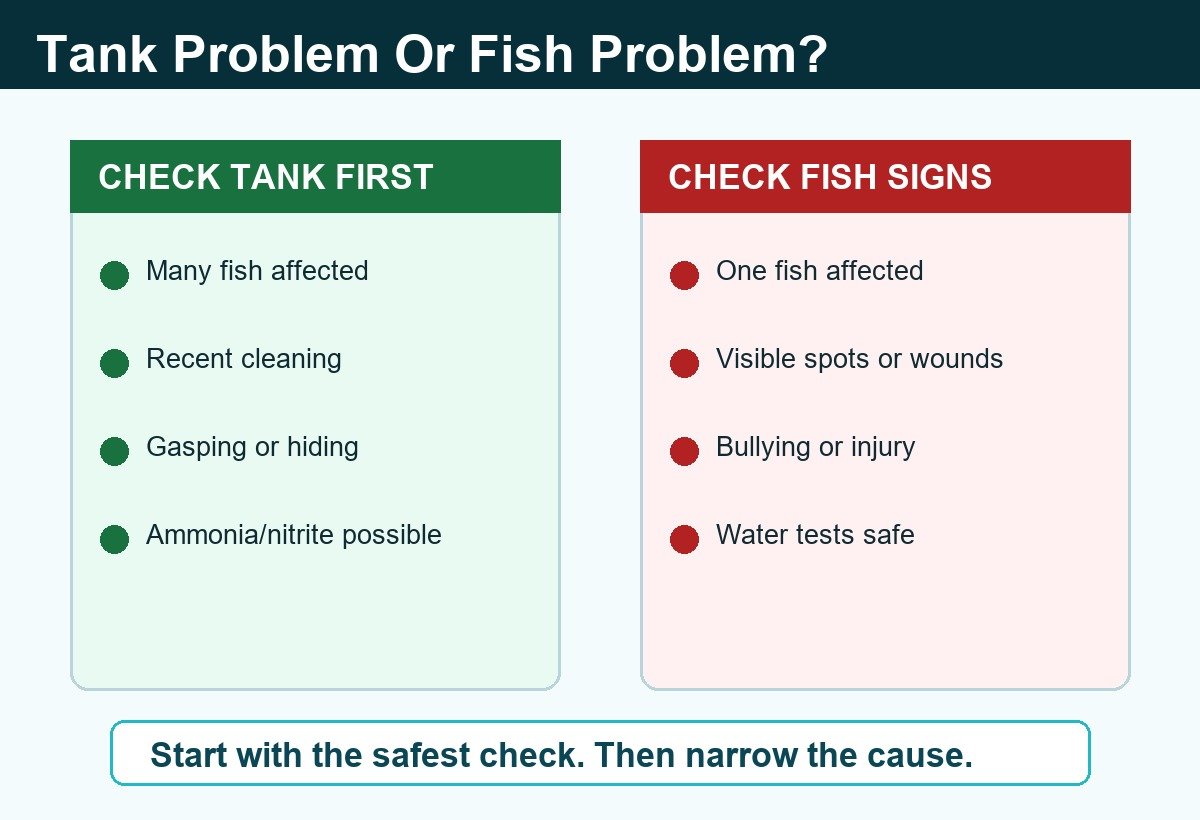
These signs do not prove one cause. Temperature shock, low oxygen, ammonia, nitrite, pH movement, and stirred waste can look similar.
Use timing and test results together.
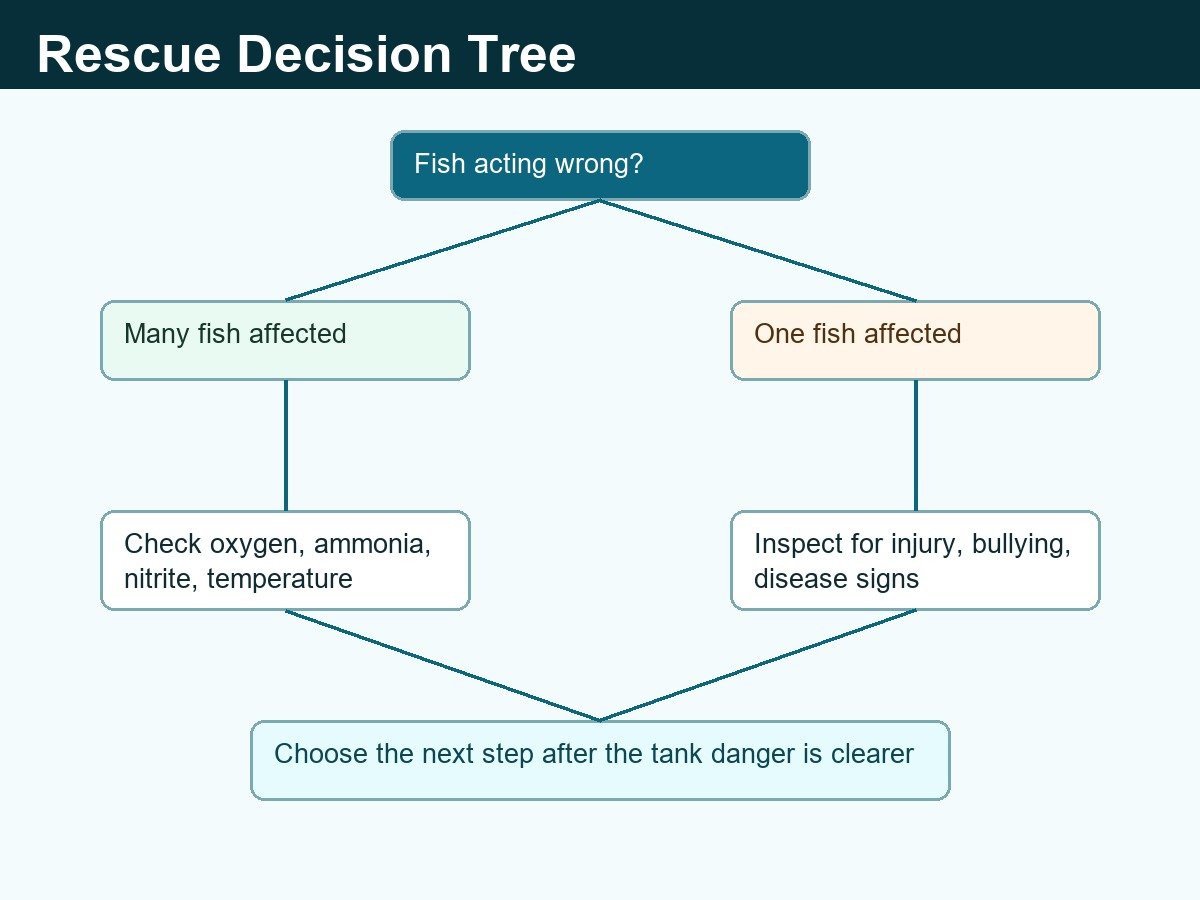
If the problem began right after a water change, start with the water-change process. If several fish are affected together, investigate the shared environment before treating one fish for disease.
Ask what changed in the last 48 hours. A refill, conditioner mistake, filter cleaning, temperature swing, or source-water change can narrow the investigation quickly.
Not sure this is actually chlorine or chloramine? Start with the Aquarium Rescue Portal to identify the closest symptom and follow the most relevant rescue path before making more changes.
Decision Table
| What You Find | What It Suggests | Next Step |
|---|---|---|
| Free or total chlorine detected | Source-water disinfectant remains | Verify product coverage, label dose, and treated volume; maintain aeration and retest |
| Chlorine reads 0, ammonia is detected | Chloramine byproduct or biofilter stress may be involved | Follow the Ammonia Spike Emergency guide |
| Nitrite is detected | The nitrogen cycle may be unstable | Protect the filter, use controlled corrections, and monitor daily |
| Tests look safe but fish still gasp | Oxygen, temperature, pH movement, gill injury, or disease remains possible | Use the Fish Gasping guide |
| Filter flow fell after the event | The system may have lost oxygen support or biological capacity | Clear the obstruction without replacing media |
If you need to dilute another measured contaminant, use the Emergency Aquarium Water Change guide and make sure every drop of replacement water is conditioned.
A Real Rescue Example
Imagine a 20-gallon aquarium after a large water change.
The fish begin gasping within minutes. The water looks clear, so the owner first thinks the filter stopped working. Then the unopened conditioner bottle is found beside the bucket.
The best response is not to tear the filter apart.
Stop the source water. Treat the aquarium according to the conditioner’s label. Increase aeration. Confirm flow. Test free and total chlorine, then ammonia and nitrite. Keep the filter media wet and in service.
That sequence removes the likely danger while preserving the aquarium’s ability to recover.
What Not To Do
Do Not Medicate First
Medication does not neutralize chlorine or chloramine. It can add stress while the actual environmental problem continues.
Do Not Replace Filter Media
Fresh media does not rescue fish from untreated tap water. Removing mature media can make the next ammonia or nitrite problem worse.
Do Not Assume Clear Water Is Safe
Chlorine, chloramine, ammonia, and nitrite can all be present in water that looks clean.
Do Not Trust Aeration To Remove Chloramine
Surface movement supports fish. It is not a substitute for a conditioner labeled for chloramine.
Do Not Repeat Large Water Changes With Untreated Water
Every replacement gallon needs to be conditioned and temperature-matched. Otherwise, the correction can repeat the exposure.
Monitor The Next 24 Hours
Record:
- breathing rate
- balance and swimming control
- whether several fish are affected
- free and total chlorine results, when available
- ammonia
- nitrite
- temperature
- filter flow
- conditioner product and amount used
Retest after the water has circulated. Test ammonia and nitrite again later the same day and the next day if fish were distressed, chloramine was possible, or the filter may have been exposed.
If ammonia or nitrite appears, move into the Water Quality Rescue Hub and follow the result-specific path.
If symptoms remain unclear after the environmental checks, use the Fish Symptoms Checker.
Prevent This Next Time
- Keep conditioner beside the water-change equipment.
- Treat replacement water before it reaches the fish whenever your method allows.
- Mark the bucket or container volume.
- Read the label before the first use.
- Confirm whether your utility uses chlorine, chloramine, or can switch between them.
- Keep a chlorine test that measures free and total chlorine if source-water changes are a recurring concern.
- Never clean biological filter media in untreated tap water.
For a repeatable emergency and prevention system, use the Aquarium Rescue Blueprint after the immediate problem is stable.
FAQs
Can I Add Dechlorinator After The Water Is Already In The Tank?
Use an aquarium conditioner promptly according to its current label for the actual volume being treated. Maintain aeration and monitor the fish. Product strengths and instructions differ, so do not copy a dose from a different brand.
Will An Air Stone Remove Chloramine?
No. An air stone improves gas exchange and can support stressed fish, but aeration alone does not remove chloramine. Use a conditioner specifically labeled for chloramine.
How Do I Know If My Tap Water Uses Chloramine?
Check your water utility’s current water-quality report or contact the utility. A total-chlorine test can detect free chlorine plus chlorine bound in chloramine, while a free-chlorine-only result may miss chloramine.
Why Should I Test Ammonia After Treating Chloramine?
Treating chloramine separates or binds its chlorine component and can leave an ammonia load for the aquarium to manage. A mature biofilter may process it, but a new or damaged filter may not. Testing tells you whether another rescue path is needed.
How Much Water Should I Change If Untreated Tap Water Reached The Aquarium?
There is no single safe percentage for every exposure. The decision depends on how much untreated water entered, whether the source contains chlorine or chloramine, what the fish are doing, and what the tests show.
Treat the aquarium promptly with the correct conditioner according to its label, increase oxygen, and test the water first. If chlorine remains detectable, ammonia or nitrite is present, or another contaminant needs dilution, use a controlled change with fully conditioned, temperature-matched replacement water.
Do not perform another rushed change simply because fish have not recovered immediately. Use the Emergency Aquarium Water Change guide to choose the next correction without repeating the exposure.
Can Fish Recover From Chlorine Or Chloramine Exposure?
Recovery depends on the concentration, exposure time, species, and degree of gill injury. Correct the water, maintain oxygen support, protect the filter, and monitor. Seek an aquatic veterinarian when distress is severe or losses continue.
Bottom Line
If untreated tap water reached your fish, act in order.
Stop the source. Use the correct conditioner. Add oxygen. Protect the filter. Test chlorine, ammonia, and nitrite. Then monitor.
Clear water is not proof.
The test is the proof.
Evidence Sources
- Merck Veterinary Manual: Providing a Home for Fish
- Merck Veterinary Manual: Environmental Diseases of Aquatic Animals
- UF/IFAS: On-Farm Transport of Ornamental Fish
Leave a Reply