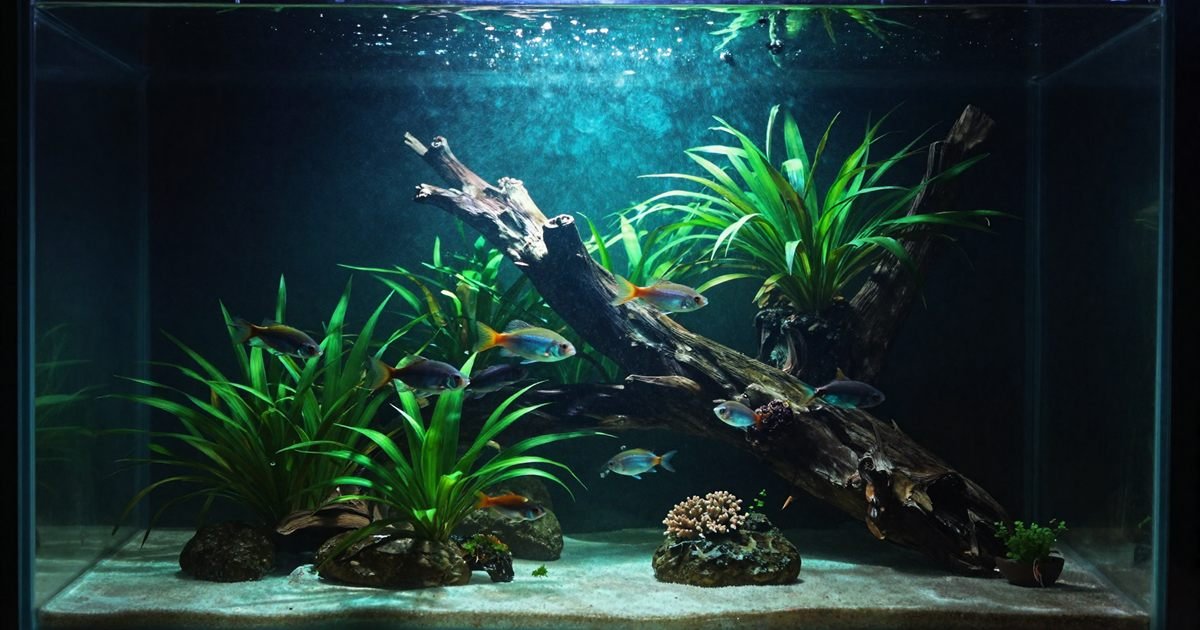
Quick answer: Early ammonia-spike signs are easy to miss: fish hovering or gasping near the surface, clamped fins, red or inflamed gills, flashing against decor, sudden lethargy or hiding, and loss of appetite. These behavioral changes usually show up days before a fish looks critically ill. Confirm with a liquid drop test kit, then respond fast with a 25 to 30 percent water change and a dechlorinator that detoxifies ammonia, such as Seachem Prime or Amquel.
Why Ammonia Kills Quietly at First
Most beginners picture a sick fish as one that is visibly gasping, floating sideways, or covered in spots. But ammonia rarely announces itself that dramatically — at least not straight away. By the time your fish looks critically ill, ammonia may have been damaging its gills, liver, and nervous system for several days already.
Understanding the early, subtle signs is the difference between a quick fix and a tank full of fish dying. This is your early-warning guide.
Key insight most pages skip: Ammonia exists in two forms in your tank — ionised ammonium (NH₄⁺), which is relatively harmless, and un-ionised ammonia (NH₃), which is the toxic form. Your standard water test kit measures both together as “total ammonia.” Here is the critical detail: the ratio between the two shifts dramatically with pH and temperature. A reading of 0.5 ppm at pH 7.0 is manageable. That same 0.5 ppm reading at pH 8.0 contains roughly five times more toxic NH₃. If you do a water change with harder, higher-pH tap water, you can accidentally convert a “safe” ammonia level into a dangerous one within the hour — without adding a single drop of extra ammonia.
The Subtle Early Symptoms to Watch For
Train yourself to notice behavioural changes before physical ones. Your fish will tell you something is wrong long before it looks sick.
1. Hovering Near the Surface
This is often misread as the fish being friendly or hungry. In reality, ammonia irritates the gill membranes and reduces the gill’s ability to absorb oxygen. The fish moves toward the surface where oxygen exchange is highest — not because it wants attention, but because it is struggling to breathe. If your fish starts lingering at the surface between feedings, treat it as a red flag and test your water immediately.
2. Clamped Fins
Healthy fish hold their fins open and relaxed. Clamped fins — where the dorsal, tail, or pectoral fins are held tightly against the body — are one of the earliest physical signs of chemical stress. It is easy to dismiss as “just how the fish is sitting,” but consistently clamped fins almost always signal that something in the water is wrong.
3. Rubbing or Flashing
If your fish repeatedly rubs its body or gills against décor, gravel, or the glass, it is reacting to gill irritation. Ammonia burns the delicate gill tissue directly. This behaviour — called flashing — often starts two to three days before the fish shows any other obvious symptoms and is one of the earliest reliable indicators of ammonia stress.
4. Hiding More Than Usual
A fish that suddenly retreats and stops exploring is conserving energy. Chemical stress triggers a low-level survival response. If your normally active fish has gone quiet and withdrawn for no obvious reason — no new tankmates, no change in lighting — check your water before assuming it is “just settling in.”
5. Reduced Appetite
Refusing food for one day can be normal. Refusing food for two or more consecutive days, combined with any of the above signs, is a strong signal. Ammonia stress suppresses appetite and slows digestion. Uneaten food then rots and adds more ammonia to the water — a vicious cycle that accelerates quickly.
How to Confirm an Ammonia Spike Fast
Do not guess. Use a liquid drop test kit rather than test strips — strips are notoriously inaccurate for ammonia and can give false “safe” readings. A reliable liquid water test kit takes about five minutes and gives you results you can actually act on.
Test at the same time of day when possible. Ammonia levels can fluctuate slightly over a 24-hour period in a cycling or recovering tank. Morning readings before lights on are often the most stable baseline.
Any reading above 0 ppm in an established tank warrants action. Even 0.25 ppm is not “a little high” — it is a sign your biological filter is not keeping up, and it will rise further if you do not intervene.
How to Fix an Ammonia Spike Safely
- Do an immediate partial water change — 25 to 30 percent. This physically removes ammonia from the water. Do not do a massive change all at once; a sudden large volume change stresses fish further and, as explained above, a sharp pH shift from tap water can temporarily worsen ammonia toxicity. Match the temperature of your replacement water as closely as possible.
- Check your aeration. Low oxygen makes ammonia stress dramatically worse. Make sure your filter outlet or air stone is creating surface movement. A fish experiencing ammonia stress and low oxygen simultaneously has almost no chance of recovery without intervention. If you suspect gasping is happening, increasing surface agitation is your fastest first step.
- Remove uneaten food and clean visible waste. Do not vacuum the entire substrate aggressively — that can disturb your beneficial bacteria colony. Target only visible debris with a gentle siphon pass.
- Do not overfeed. Skip one or two feedings entirely. Uneaten food is a direct ammonia source, and a stressed fish will not eat anyway.
- Retest after 24 hours. If ammonia is still above 0 ppm, repeat a 25 percent water change. Keep testing daily until you have two consecutive zero readings.
- Do not add chemical ammonia neutralisers as a substitute for water changes. Products like these detoxify ammonia temporarily but do not remove it. They can mask the problem on a test kit while stress continues in the water. Use them only as a short-term bridge — not a solution.
What Happens If You Do Nothing
An unchecked ammonia spike does not plateau — it climbs. Gill damage becomes permanent. The fish loses the ability to regulate its own blood chemistry. By the time you see classic fish dying symptoms like loss of balance, pale colouration, or erratic swimming, internal organ damage is often already done.
If you have found this page because your fish are already showing severe symptoms, go directly to the aquarium rescue section for urgent next steps.
Prevention Is Simpler Than Recovery
The single most effective habit you can build is to test your water on a regular schedule — not just when something looks wrong. Weekly testing catches an ammonia spike while it is still a small problem. Add it to your survival checklist and make it non-negotiable.
Nothing on this page is veterinary advice. If you are unsure about your fish’s health, consult an aquatic veterinarian.
Stop Guessing When Your Fish Are Struggling
The Aquarium Rescue Blueprint gives you the exact step-by-step system — emergency protocols, the symptom-to-solution table, and six rescue flowcharts — so you always know what to do next.
Watch: This Invisible Problem Is Destroying Fish Tanks Everywhere
Frequently asked questions
What are the early warning signs of an ammonia spike?
Watch behavior before physical symptoms. The earliest signs are fish hovering near the surface to breathe, clamped fins held tight against the body, flashing or rubbing against decor and gravel, hiding more than usual, and refusing food for two or more days. Red or inflamed gills and gasping come later, once the gills are already damaged.
What causes a sudden ammonia spike?
Overfeeding is the most common cause, since uneaten food rots and releases ammonia. Overstocking, a dead fish, and decaying plants do the same. A new tank that has not finished cycling has no established biological filter to convert ammonia, and washing your filter media in tap water or replacing too much of it at once can kill that bacteria. A pH or temperature rise also makes existing ammonia more toxic without adding any.
What ammonia level is dangerous?
Anything above 0 ppm in an established tank is a problem. Safe is 0 ppm, period. Toxicity also depends on pH and temperature: standard test kits read total ammonia, but the toxic form (NH3) increases sharply as pH and temperature rise. The same 0.5 ppm reading is roughly five times more toxic at pH 8.0 than at pH 7.0, so a higher-pH tank is in danger at lower numbers.
How do I lower ammonia fast?
Do an immediate partial water change of 25 to 30 percent to physically dilute the ammonia. Add a dechlorinator that detoxifies ammonia, such as Seachem Prime or Amquel, which binds it into a less harmful form your filter can still process. Stop feeding for a day or two, remove any uneaten food or dead fish, and retest. Repeat water changes until the reading returns to 0 ppm.
Is 0.25 ppm ammonia harmful?
Yes. 0.25 ppm is not “a little high,” it is a sign your biological filter is not keeping up, and it will climb further if you do nothing. It causes low-level gill irritation and stress even at that level, and it becomes more dangerous as pH and temperature rise. Treat any reading above 0 ppm as a reason to act with a water change and dechlorinator.
How do I prevent ammonia spikes?
Never overfeed: give only what your fish finish in a couple of minutes and remove leftovers. Do not overstock, and add new fish gradually so the filter bacteria can catch up. Fully cycle a new tank before adding fish, and never clean filter media in tap water or replace it all at once, since that wipes out the bacteria doing the work. Test your water regularly so you catch a problem before the fish do.
Author and editorial note
Written and maintained by Benjamin Thoden, founder of DBC Aquatics. This plant guide is reviewed for low-tech practicality: correct placement, light level, substrate or rhizome needs, melt risk, algae pressure, and what a beginner can maintain consistently. See our editorial standards for how guides are created, reviewed, and updated.
Related Rescue Guides
Aquarium Rescue Hub
Aquarium Rescue Hub Fix a Failing Fish Tank Without Guessing Fish dying, gasping, flashing, hiding, or…
Fish Symptoms Checker
Aquarium Rescue · Symptom Checker Not sure what's wrong? Tap the symptom you're seeing and get…
Toxic Water & Ammonia Spikes
Rescue Pathway · Toxic Water Toxic Water & Ammonia Spikes Ammonia and nitrite are invisible and…
Leave a Reply