Cory Catfish Lying On Its Side? What To Check First
Seeing a cory catfish lying on its side can make your stomach drop. Corys can rest motionless on the bottom, but side-lying with rapid breathing, rolling, or trouble staying upright is genuine distress.
One minute it is happily digging through the substrate, and the next it is rolled over, barely moving, or breathing like something is wrong.
Before you assume it is dying, and before you reach for medication, there are a few things I always check first.
The good news is that many cory emergencies are caused by problems you can still correct if you act in the right order, and one of the most common causes surprises almost everyone because it usually is not the fish. It is the tank.
Quick Answer
If a cory catfish is lying on its side, start by checking the tank, not by adding medication.
Cory cats are bottom fish, so resting on the bottom is normal. Lying on the side, breathing hard, rolling, losing balance, or separating from the group is not normal.
Check this first:
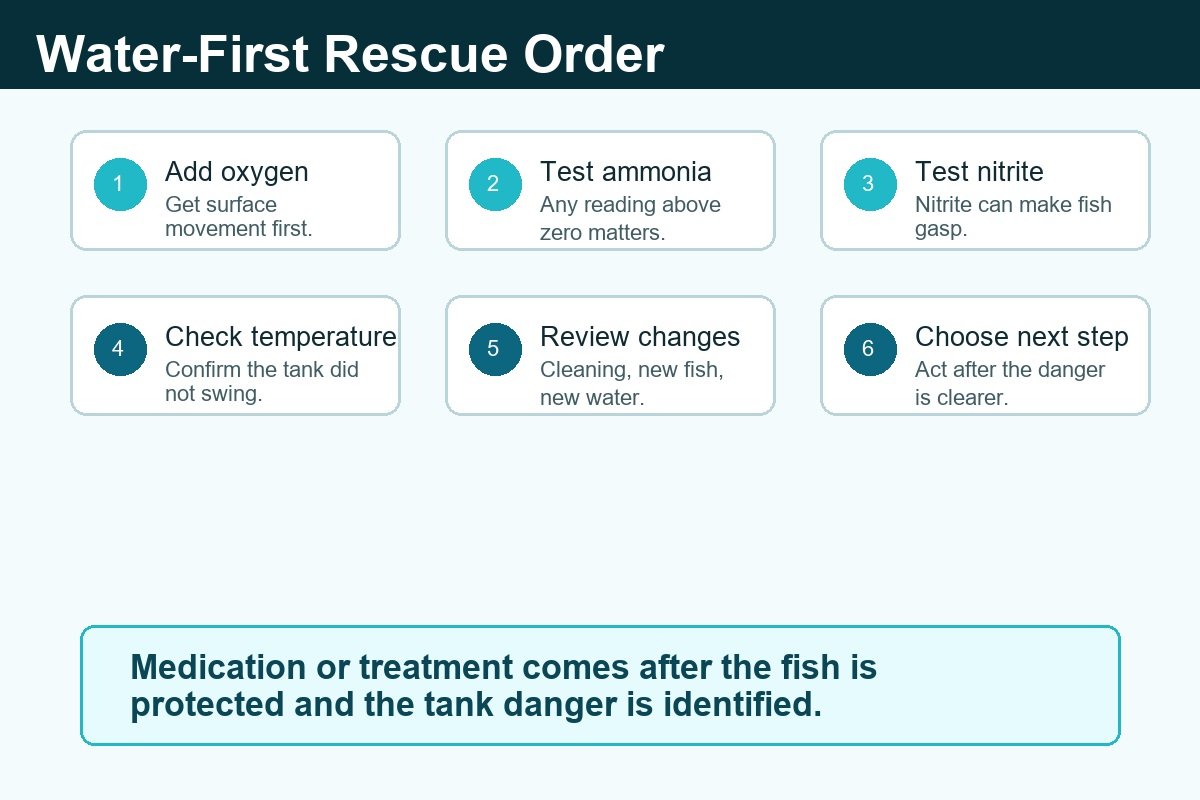
- Add oxygen and surface movement.
- Test ammonia and nitrite.
- Check temperature.
- Look for sharp substrate, trapped waste, or recent cleaning.
- Compare the sick cory to the rest of the group.
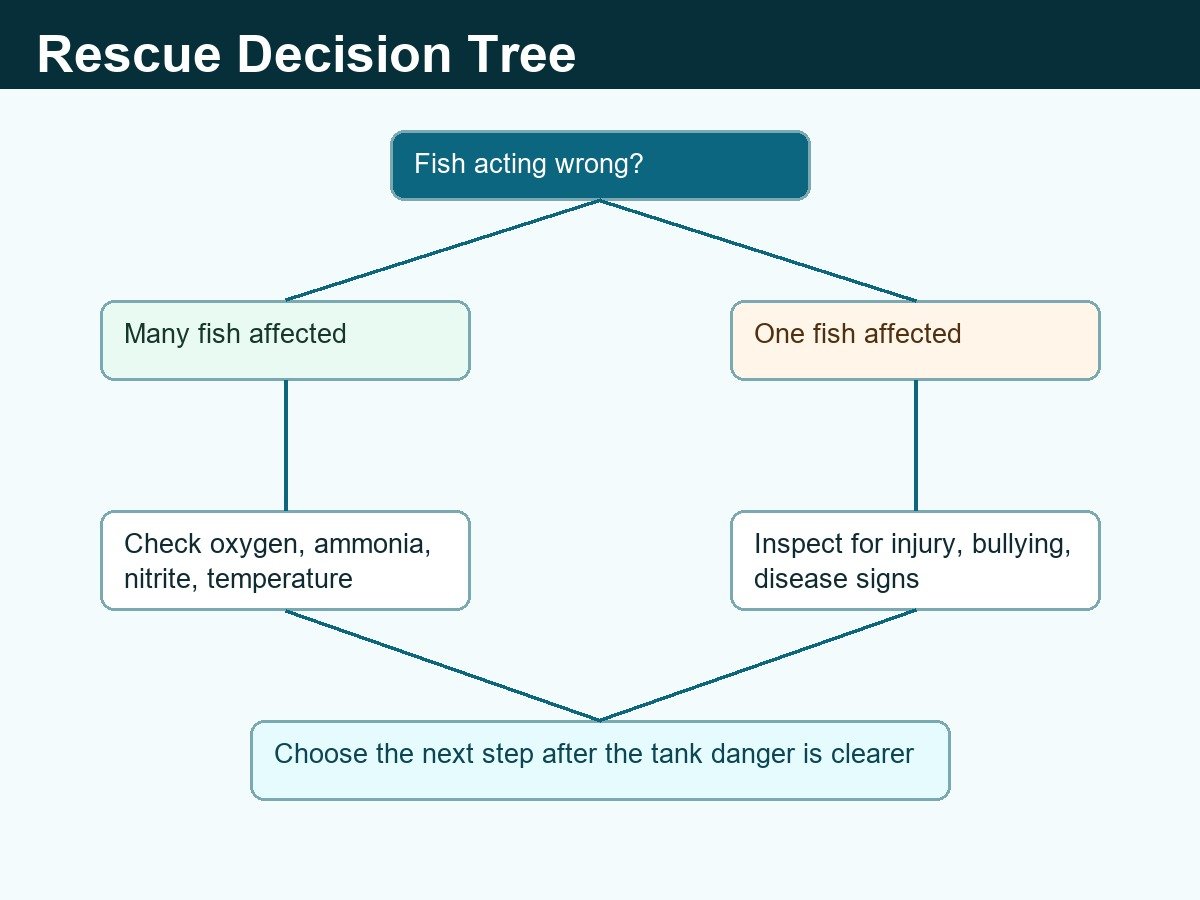
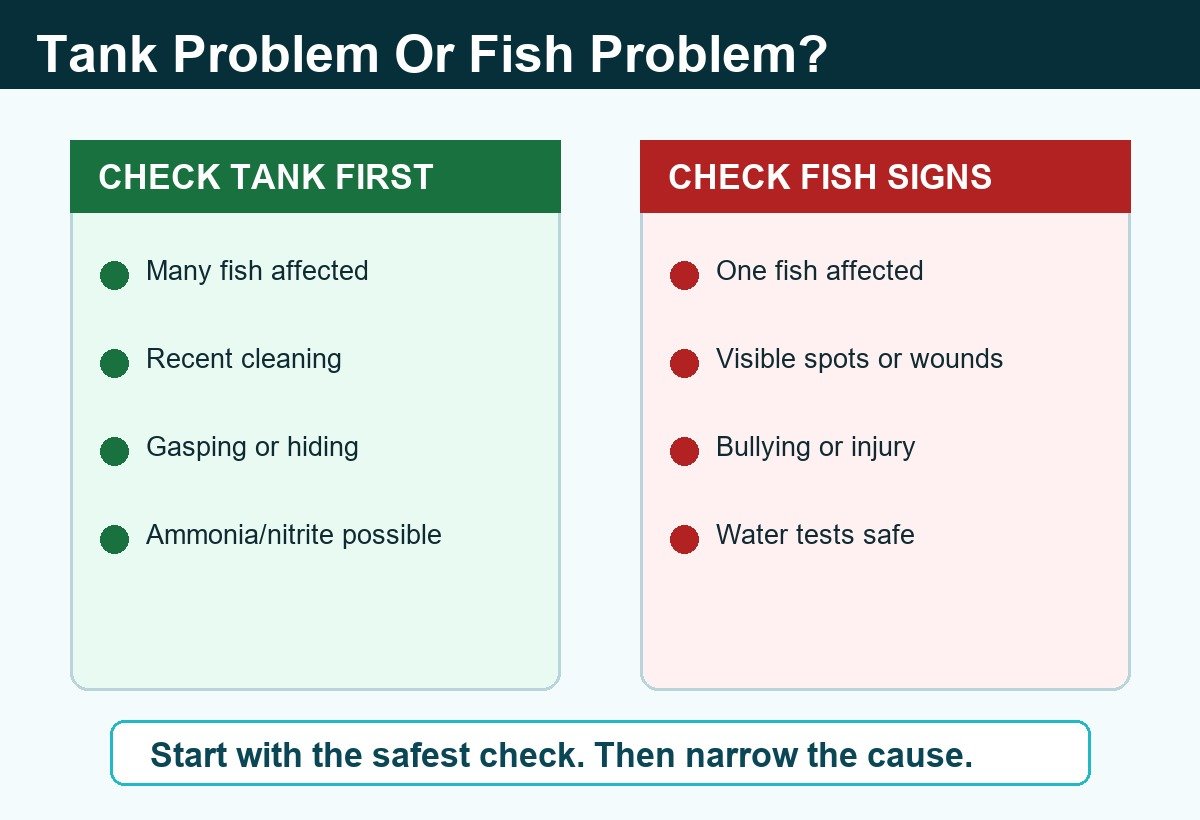
If more than one fish is acting wrong, treat it like a tank-wide water problem until tests prove otherwise.
> THE DBC RULE > > Test the water. > > Protect the fish. > > Then choose treatment.
Most aquarium emergencies get worse because people treat symptoms before they know what changed in the tank. The test kit tells you whether you are dealing with unsafe water, low oxygen, stress, injury, or a disease problem that actually needs treatment.
Normal Resting Vs Emergency
| What You See | Usually Normal | Concerning |
|---|---|---|
| Cory rests upright on bottom | Normal | Watch only |
| Cory sits still but schools later | Often normal | Watch water and behavior |
| Cory lies on side | Not normal | Test water now |
| Cory rolls or cannot stay upright | Not normal | Water test plus injury/disease check |
| Cory breathes hard | Not normal | Add oxygen and test ammonia/nitrite |
| Several corys are weak | Tank-wide issue likely | Treat as urgent |
Why Cory Catfish Often Show Trouble First
Cory catfish spend nearly all their lives on the substrate.
That is where uneaten food, fish waste, dead plant material, and low-flow pockets tend to collect. If the tank has trapped waste, low oxygen near the bottom, ammonia, nitrite, or a recent cleaning mistake, corys may show stress before many midwater fish do.
That is why a cory lying on its side is not just a “cory problem.” It can be the tank warning you that something near the bottom is off.
First-Hour Rescue Order
1. Add Oxygen
Cory catfish often suffer when oxygen is low, especially in warm tanks, overstocked tanks, or tanks with weak flow.
Add surface movement now. Use an air stone if you have one.
2. Test Ammonia And Nitrite
Ammonia and nitrite should be 0 ppm.
Bottom fish sit where waste collects, so corys can show stress when uneaten food, dirty substrate, or a weak cycle is hurting the tank.
If ammonia or nitrite is above zero:
- stop feeding temporarily
- keep oxygen high
- do a controlled partial water change
- use conditioned, temperature-matched water
- protect the filter bacteria
A Real Rescue Example
I have seen people assume their cory was dying from disease, only to find the tank had an ammonia spike after the filter was cleaned too aggressively.
The fish was weak, breathing hard, and lying wrong on the bottom. Medication would have felt like you were helping, but it would not have fixed the real problem.
Once oxygen was increased, ammonia was brought down carefully, and the filter bacteria were protected instead of replaced, the fish had a real chance to recover without random medication.
That is the lesson: test before treating.
3. Check Substrate And Waste
Corys spend their lives on the bottom.
Look for:
- sharp gravel
- trapped waste
- rotting food
- dead plant matter
- black or foul-smelling pockets
- recent deep gravel cleaning
Do not tear the tank apart during the emergency. Remove obvious waste and stabilize water first.
4. Check Recent Changes
Ask what changed in the last 48 hours:
- new corys added
- medication added
- water change
- filter cleaning
- substrate stirred
- new sand or gravel
- new decoration
- temperature swing
- extra feeding
If the cory went downhill after a tank change, water quality and stress come before disease guesses.
Tank-Wide Or One Fish?
This decision matters.
| Pattern | What It Suggests | Next Step |
|---|---|---|
| One cory lying on side, other fish normal | Individual injury, weakness, disease, or bullying possible | Still test water, then inspect fish |
| Several corys weak | Tank-wide water or oxygen problem likely | Add oxygen, test ammonia/nitrite |
| Corys and midwater fish gasping | Oxygen, ammonia, nitrite, heat, chlorine | Treat as urgent tank problem |
| New corys failing one by one | Acclimation stress, disease, weak stock, or tank mismatch | Test water and quarantine logic |
Visual Checks To Make While You Read
Do not only read the symptoms. Look at the tank.
- Healthy cory resting: upright on the bottom, able to move normally when disturbed.
- Emergency side-lying: rolled, weak, breathing hard, or unable to stay upright.
- Bottom danger zone: trapped food, mulm, dead plant matter, or waste pockets around the substrate.
- Oxygen clue: weak surface movement, warm water, gasping fish, or fish crowding near flow.
- Last 48 hours: filter cleaning, water change, new fish, stirred substrate, medication, or extra feeding.
Those visual clues help you decide whether this is one struggling fish or the whole aquarium asking for help.
Disease Comes After Water Checks
Medication may be needed if you see:
- fuzzy patches
- wounds
- severe fin damage
- red sores
- parasites
- swelling
- repeated rolling after water tests are safe
But if ammonia or nitrite is above zero, medication is not the first fix. Get the water safe first.
The Biggest Mistakes
These are the moves that make cory emergencies harder to read:
- Medicate before testing water.
- Deep-clean the filter and substrate at the same time.
- Chase pH during the emergency.
- Keep feeding normally if ammonia or nitrite is present.
- Assume bottom sitting is always normal.
- Ignore the rest of the fish.
FAQ
Is it normal for cory catfish to lie on their side?
No. Corys rest on the bottom, but they should usually rest upright. Lying on the side, rolling, or breathing hard means you should test the water and check for stress.
Why is my cory catfish breathing fast?
Fast breathing can come from low oxygen, ammonia, nitrite, heat, stress, injury, or disease. Add oxygen and test ammonia and nitrite first.
Should I medicate a cory lying on its side?
Not before testing water. Corys can be sensitive, and medication will not fix ammonia, nitrite, low oxygen, or a damaged cycle.
Can dirty substrate hurt cory catfish?
Yes. Trapped food and waste can contribute to poor water quality near the bottom. Remove obvious waste, but do not do a chaotic deep clean during an emergency.
Bottom Line
Most people think a cory lying on its side means disease.
In my experience, many rescue stories start somewhere much simpler: with the water.
That is why I reach for a test kit before I reach for a medication bottle.
Your cory does not care whether the problem is called ammonia, low oxygen, stress, or disease. It only cares that it can breathe and recover.
That is why every rescue starts the same way: test the water, protect the fish, then decide what comes next.
Internal Rescue Path
Use the next DBC guide that matches what you find:
- If ammonia or nitrite is above zero, start with the ammonia spike emergency guide.
- If breathing hard or gasping continues after water checks are safe, use the fish gasping rescue guide.
- If symptoms are unclear, use the DBC Fish Symptoms Checker.
- If this feels like a tank-wide problem, go to the Aquarium Rescue Hub.
Next Step After The Emergency
If your tank keeps having repeat emergencies, the Aquarium Rescue Blueprint gives you the bigger recovery plan after the fish are stable.
Rescue Checklist
Use the Aquarium Survival Checklist to work through the first checks without guessing.
Leave a Reply