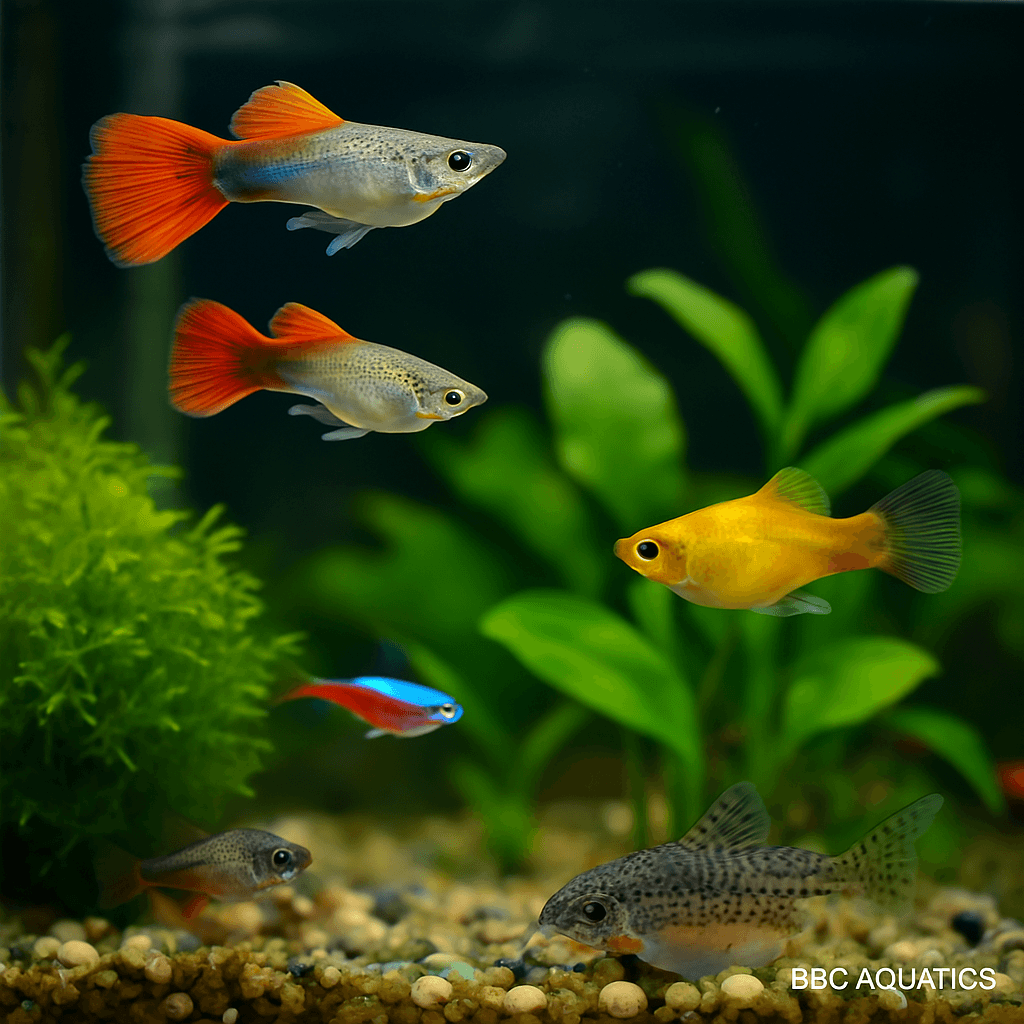
Quick answer: To breed fish at home, start with an easy livebearer like guppies or platies, a stable cycled tank, and plenty of cover for the fry. Condition the adults on good food, protect the babies from being eaten, and feed them tiny, frequent meals. Egg-laying species are harder and need specific water and spawning triggers.
Breeding fish is one of the most rewarding parts of the aquarium hobby. Watching your fish thrive, reproduce, and care for their young is a deeply satisfying experience. However, it can also be frustrating and confusing if you don’t understand the conditions needed for success. Not all fish breed easily, and even when they do, raising the fry (baby fish) to adulthood takes preparation and patience. This guide is your crash course on getting started with home aquarium fish breeding the right way.
Watch: Breeding Guppies – Beginner Breeding Tips
Table of Contents
- Livebearers vs. Egg Layers: What’s Easier?
- Basic Breeding Tank Setup
- Top 5 Fish to Breed as a Beginner
- Bonus: What About Shrimp Breeding?
- Raising Fry: The First 2 Weeks
- Common Mistakes & What Doesn’t Work
- Advanced Tips as You Gain Experience
- Recommended Gear & Resources
Livebearers vs. Egg Layers: What’s Easier?
Livebearers such as guppies, platies, mollies, and swordtails give birth to live, free-swimming fry. They breed prolifically under normal aquarium conditions and are highly recommended for first-time breeders. The main downside? They often eat their own fry if the babies aren’t separated or given hiding spots.
Egg layers include species like tetras, corydoras, barbs, and many types of cichlids. These fish spawn by scattering or placing eggs around the tank. Depending on the species, the parents may guard the eggs, ignore them, or even eat them. Egg layers typically need specific environmental cues such as cooler water changes, low lighting, or spawning mops to trigger breeding.
Recommendation: Start with livebearers to build confidence, observe the breeding process, and practice fry care. Then move on to egg scatterers or substrate spawners for more challenge.
Basic Breeding Tank Setup
Creating the right breeding environment is key to success. A dedicated breeding tank helps control conditions, prevent fry loss, and protect adults from stress.
- Tank Size: 10 to 20 gallons is ideal for most breeding pairs or small groups
- Heater: Maintain stable water temperature between 76–80°F (24–27°C)
- Filtration: Use a sponge filter to provide biological filtration with minimal current (safe for fry)
- Lighting: Moderate to low; adjustable lighting works best for triggering spawning or resting fry
- Substrate: Bare-bottom tanks are easier to clean, but fine gravel or sand can be used for egg scatterers
- Plants & Hiding Places: Java moss, hornwort, spawning mops, or PVC caves give fry protection and encourage breeding
- Breeding Box/Divider: Useful for livebearers or separating aggressive males
Top 5 Fish to Breed as a Beginner
- Guppies: Fast breeders, colorful, livebearers. Males court females constantly. Gestation is ~28 days. Fry need hiding space to avoid predation.
- Platies: Hardy and peaceful livebearers that come in many colors. Similar care and gestation to guppies, slightly larger fry.
- Corydoras Catfish: Peaceful egg layers. Will spawn after cool water changes and higher protein diets. Lay sticky eggs on glass or plants.
- Kribensis (Pelvicachromis pulcher): Dwarf cichlids that form pairs. Easy to breed in tanks with caves. Parents guard eggs and fry.
- Cherry Barbs: Egg scatterers that need soft, acidic water and plant cover. Males turn brilliant red when ready to spawn.
Start with species that match your tank size and experience. Livebearers are great for 10-gallon tanks, while corys and kribs do better in 20+ gallon setups.
Bonus: What About Shrimp Breeding?
Neocaridina shrimp like Cherry Shrimp are some of the easiest invertebrates to breed. Once mature, females develop a saddle (eggs under their belly) and release fully formed mini-shrimp into the tank every 30 days.
- No separation needed — adults rarely eat their young
- Feed high-quality shrimp pellets and blanched vegetables
- Stable parameters: pH 6.5–7.5, temp 72–78°F, zero ammonia or nitrite
- Use sponge filters and dense moss like Java Moss for hiding
Raising Fry: The First 2 Weeks
The first two weeks are the most fragile stage in fry development. Survival depends on food quality, water stability, and protection from predators (including their own parents).
- Feeding: Start with live baby brine shrimp, microworms, or powdered fry food 3–4 times daily in small amounts
- Water Changes: 10–20% daily with dechlorinated water to keep nitrates low
- Filtration: Use a sponge filter with fine pores to avoid fry being sucked in
- Lighting: Dim lighting helps reduce stress and improves feeding response
- Observation: Look for signs of active swimming and full bellies
Common Mistakes & What Doesn’t Work
Many beginners make simple mistakes that sabotage breeding efforts. Here are some things to avoid:
- Relying on community tanks: Most fry get eaten or outcompeted for food
- Using strong filters: Suction pulls fry into the intake
- Neglecting water quality: Ammonia spikes kill eggs and fry
- Feeding flakes only: Fry need micro-sized nutrition
- Breeding too early: Wait until fish are fully mature and conditioned
Advanced Tips as You Gain Experience
- Condition breeding pairs with frozen/live foods like daphnia or bloodworms
- Research sexing and pairing behavior for each species
- Use spawning mops or leaf litter to replicate natural environments
- Monitor pH, hardness, and temperature for optimal spawn triggers
- Record spawn dates, fry hatch rates, and water changes to refine your setup
Recommended Gear & Resources
- Sponge filters (fine mesh)
- Java moss or spawning mops
- Breeding boxes or net hatcheries
- Liquid test kits (API Freshwater Master Kit)
- Baby brine shrimp hatchery
- Digital thermometer and heater
Final Thoughts
Breeding fish is part science, part art. Start simple, stay observant, and don’t be discouraged if the first few attempts fail. Each attempt teaches you something new about your fish, your tank, and your role as a caretaker. With the right knowledge and setup, you can turn your aquarium into a thriving nursery full of life.
🎥 Want more? Subscribe to DBC Aquatics on YouTube for hands-on breeding tutorials, tank builds, and gear reviews made for real hobbyists.
Keep reading
Frequently asked questions
What is the easiest fish to breed for beginners?
Guppies and platies are the easiest. They’re livebearers, so they give birth to free-swimming fry instead of laying eggs, and they breed on their own under normal aquarium conditions with no special triggers. The only real problem is that the adults eat the fry, so you need hiding spots or a way to separate the babies. Mollies and swordtails are nearly as easy if you want other livebearer options.
Do I need a separate breeding tank?
Not always, but it helps. A dedicated 10 to 20 gallon breeding tank lets you control conditions, keep fry safe, and reduce stress on the adults. For livebearers you can get away with a heavily planted main tank plus a breeding box or divider to protect the babies. For egg layers and any species where the parents are aggressive or eat their eggs, a separate tank makes a big difference in how many fry survive.
How do I trigger fish to spawn?
First condition the adults by feeding them high-quality food, including live or frozen foods like brine shrimp or bloodworms, for a week or two. Livebearers usually need no extra trigger and will breed on their own. Egg layers need specific cues depending on the species: corydoras often spawn after a cool water change, cherry barbs need soft acidic water and plant cover, and many egg scatterers respond to slightly cooler water, dim lighting, or spawning mops.
How do I keep the fry from being eaten?
The adults, and sometimes other tank mates, will eat fry given the chance. Give the babies dense cover with plants like Java moss or hornwort, or use a breeding box or divider to physically separate them. The most reliable method is moving the fry or the pregnant female into their own tank. With cichlids like kribensis the parents actually guard their fry, so you can leave them in place.
What do I feed baby fish?
Fry need tiny, frequent meals because their mouths are very small. Livebearer fry like guppies and platies are big enough to eat crushed flake food or powdered fry food right away. Smaller egg-layer fry often need baby brine shrimp or commercial liquid and powder fry foods. Feed small amounts several times a day and do regular water changes, since heavy feeding fouls the water fast in a small tank.
Why won’t my fish breed?
The most common reasons are unstable or wrong water conditions, adults that aren’t conditioned on good food, missing spawning triggers, or simply not having a true male and female pair. Some egg layers need specific water chemistry, temperature swings, or spawning surfaces before they’ll lay. Stress from an overcrowded tank, aggressive tank mates, or poor water quality will also shut breeding down, so fix the basics before expecting results.
Author and editorial note
Written and maintained by Benjamin Thoden, founder of DBC Aquatics. This shrimp guide is reviewed through DBC Aquatics’ stability-first lens: cycle maturity, mineral consistency, molt safety, copper risk, grazing surfaces, and slow acclimation matter more than quick fixes. See our editorial standards for how guides are created, reviewed, and updated.
Leave a Reply