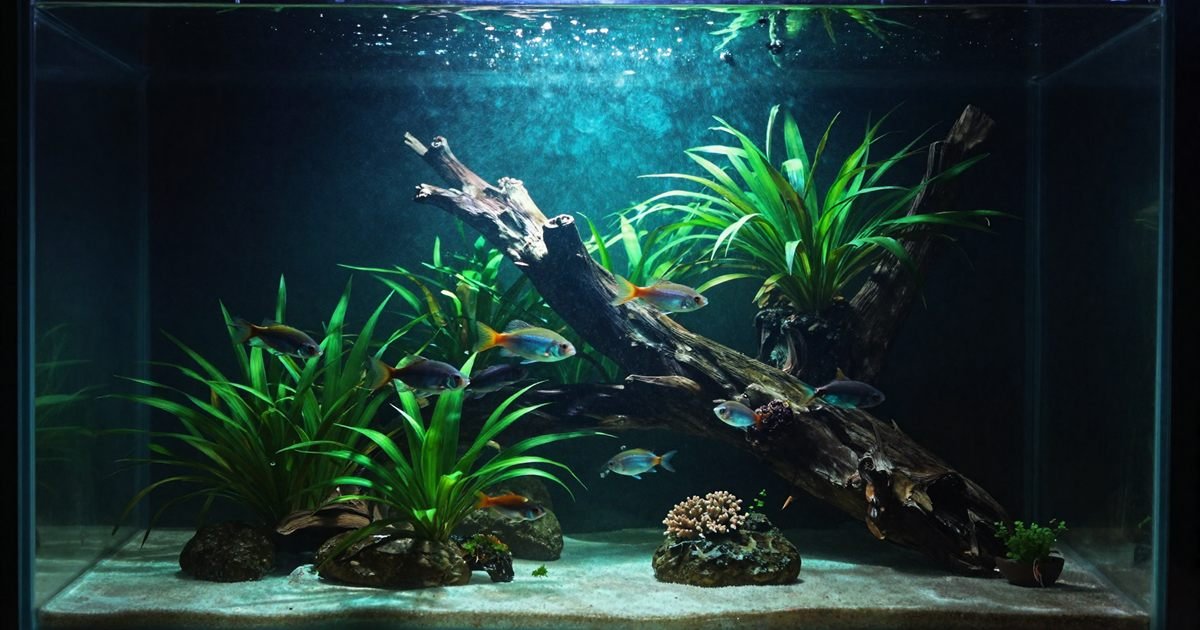
Quick answer: If your fish gasp at the surface but ammonia and nitrite read zero, the problem is almost always low dissolved oxygen, not poison. Warm water, no surface movement, and overstocking strip oxygen out fast. Add an air stone or aim a filter at the surface and the gasping usually eases within minutes.
The Crisis Beginners Misread Every Time
You test your water. Ammonia is zero. Nitrite is zero. pH looks fine. So why is your fish hanging at the surface, mouth pumping? Most beginners assume a water-quality problem and reach for a bottle of something. But there is a strong chance the real problem is dissolved oxygen — and no test kit in the average starter kit even measures it.
Oxygen stress is one of the most common and most misdiagnosed emergencies in beginner aquariums. A fish can experience oxygen stress even when ammonia and nitrite test zero, the water looks crystal clear, and the filter is running. Understanding why that happens — the actual mechanism — is what this article is about.
Key insight: Dissolved oxygen (DO) and water quality are not the same thing. A chemically clean tank can suffocate fish just as effectively as a toxic one. Most beginner test kits measure nitrogen compounds, not oxygen — so the problem stays invisible until fish start showing distress.
How Fish Actually Get Their Oxygen
Fish do not breathe the oxygen that is chemically bonded inside water molecules (H₂O). They extract dissolved oxygen gas — O₂ molecules that have physically entered the water from the atmosphere, mainly at the water’s surface. The key word is surface. Gas exchange happens at the air-water interface. Everything that disrupts that interface, or reduces how much O₂ can dissolve in the first place, is a potential suffocation risk.
The Four Hidden Causes of Low Oxygen
1. Warm Water Holds Less Oxygen Than Cold
This is basic chemistry that most beginners never encounter. Cold water is denser and holds more dissolved gas. As temperature rises, oxygen solubility drops. At 24°C (75°F), water holds roughly 8.4 mg/L of oxygen at saturation. At 30°C (86°F), that ceiling drops to around 7.5 mg/L — and fish metabolism speeds up at the same time, meaning they are consuming more oxygen from a smaller supply.
This is why summer heatwaves kill fish in tanks that seemed perfectly healthy in winter. If your tank runs warm — as many tropical tanks do — you are already starting with less oxygen headroom than you might assume. A cheap aquarium thermometer and awareness of room temperature during hot months can be the difference between a thriving tank and a disaster.
2. Surface Film Blocks Gas Exchange
A thin oily or protein film on the water surface is extremely common in home aquariums. It forms from fish food residue, fish waste proteins, and even the oils that transfer from your hands when you reach into the tank. It looks harmless — often barely visible — but it acts like a lid on your tank.
Gas exchange happens at the surface. A film physically reduces the area where oxygen can enter the water and where CO₂ can escape. In a calm, still tank with a surface film, oxygen levels can drop significantly within hours, especially overnight. The fix is surface agitation: aim your filter return or add an air stone so the surface is constantly breaking and renewing. If you notice a persistent film, a small surface skimmer or simply adjusting the filter outlet angle to ripple the surface will make a meaningful difference.
3. Overstocking Multiplies Oxygen Demand
Every fish, every snail, every shrimp, and every bacterium in your filter is consuming dissolved oxygen around the clock. In a moderately stocked tank with good surface movement, supply keeps up with demand. But overstock that same tank and demand spikes while supply stays the same.
The danger zone is often not obvious during the day. Fish seem fine at feeding time. But oxygen is being consumed continuously, and by late evening — before the next morning’s light — levels can dip low enough to cause visible stress. If your fish seem more lethargic in the morning than in the afternoon, low overnight oxygen is a real suspect. This is your early warning sign; do not wait until fish are gasping at the surface.
4. Plants Consume Oxygen at Night
Aquarium plants are sold as oxygen producers — and during the day, under adequate light, they are. Photosynthesis produces oxygen as a byproduct. But photosynthesis stops the moment the lights go off. Plants then switch to respiration, the same metabolic process fish use, and they consume oxygen all night long.
In a heavily planted tank with many large plants and low surface movement, nighttime oxygen consumption can be significant. This surprises many beginners who added plants specifically to help their fish. The plants are not the problem — insufficient surface agitation and gas exchange is. Keeping your filter or air stone running through the night is non-negotiable in any planted tank.
How to Fix Low Dissolved Oxygen
- Increase surface agitation immediately. Adjust your filter outlet to break the surface, or add an air stone connected to a small air pump. This is the fastest and most reliable fix.
- Do a controlled partial water change. Fresh, cooler, well-oxygenated tap water (properly dechlorinated) raises DO quickly and safely. A 20–25% change is usually sufficient as an emergency measure.
- Lower the water temperature if possible. During a heatwave, floating a sealed bag of ice cubes briefly can help. Drop temperature gradually — no more than 2–3°C in a few hours — to avoid cold shock.
- Reduce feeding temporarily. Uneaten food and increased waste accelerate bacterial oxygen consumption. Skip one or two feedings during a low-oxygen event.
- Never seal the tank surface. Lids with no ventilation gap significantly reduce gas exchange. Ensure your hood or cover has open space above the water.
When to Be Concerned
If fish are gasping at the surface, clustered near the filter outlet, or showing rapid gill movement, treat it as an emergency. Surface agitation and a partial water change are your first steps. If symptoms persist after improving aeration, test your water for ammonia — sometimes both problems exist at once. For a broader approach to fish in crisis, the aquarium rescue section covers combined emergencies in detail.
If you are setting up a new tank, the start here guide walks through oxygenation and stocking together, so you build good habits from the beginning. A printed survival checklist kept near your tank is also a fast reference when something looks wrong at 11pm and you need clear steps immediately.
Not veterinary advice. If fish show persistent symptoms after correcting oxygen and water quality, consult an aquatic veterinarian or experienced fish health specialist.
Stop Guessing When Your Fish Are Struggling
The Aquarium Rescue Blueprint gives you the exact step-by-step system — emergency protocols, the symptom-to-solution table, and six rescue flowcharts — so you always know what to do next.
Watch: Your Fish Are Running Out of Oxygen Right Now
Frequently asked questions
Why is my fish gasping when ammonia reads zero?
A zero ammonia reading only tells you the water is chemically clean, not that there is enough oxygen in it. Standard beginner test kits measure nitrogen compounds like ammonia and nitrite, not dissolved oxygen, so an oxygen shortage stays invisible until fish start gasping at the surface. When tests are clean but fish hang at the top with mouths pumping, low dissolved oxygen is the most likely cause.
What causes low dissolved oxygen in an aquarium?
Four things drive it down: warm water holds less oxygen, a surface film blocks gas exchange, overstocking multiplies oxygen demand, and a still surface with no agitation slows how fast oxygen enters the water. These often stack together. A warm, overstocked tank with a calm surface and an oily film can run short on oxygen even though every water test reads fine.
Does warm water lower oxygen?
Yes. Oxygen solubility drops as temperature rises. At 75F (24C) water holds roughly 8.4 mg/L of oxygen at saturation, but at 86F (30C) the ceiling falls to around 7.5 mg/L. At the same time, warmer water speeds up fish metabolism, so they consume more oxygen from a smaller supply. This is why summer heatwaves kill fish in tanks that looked healthy all winter.
How do I add oxygen to the tank fast?
Increase surface agitation, since gas exchange happens at the air-water interface. Aim your filter return up at the surface so it ripples and breaks, or drop in an air stone connected to an air pump. Both renew the surface and pull oxygen in within minutes. If the tank is warm, a fan blowing across the surface or a small water change with cooler water also helps while you address the underlying cause.
Can too much CO2 cause gasping?
Yes. Gas exchange at the surface works in both directions: oxygen comes in and carbon dioxide goes out. A surface film or a still, calm surface traps CO2 in the water along with keeping oxygen out. High CO2 makes it harder for fish to offload it from their blood, which produces the same surface gasping you see with low oxygen. The fix is the same, more surface agitation to vent the CO2 and bring oxygen in.
Is surface gasping always an oxygen problem?
Not always, but it is the most common cause when water tests are clean. Gasping can also come from ammonia or nitrite poisoning, gill damage, parasites, or pH and temperature shock. Rule out poisoning first by testing ammonia and nitrite. If both read zero and the fish are still at the surface, oxygen or trapped CO2 is the likely culprit, and adding surface movement is the fastest safe first step.
Author and editorial note
Written and maintained by Benjamin Thoden, founder of DBC Aquatics. This shrimp guide is reviewed through DBC Aquatics’ stability-first lens: cycle maturity, mineral consistency, molt safety, copper risk, grazing surfaces, and slow acclimation matter more than quick fixes. See our editorial standards for how guides are created, reviewed, and updated.
Still gasping? If you added an air stone and the fish are still at the surface, read fish still gasping after adding oxygen to compare ammonia, nitrite, heat, and filter issues.
Related Rescue Guides
Aquarium Rescue Hub
Aquarium Rescue Hub Fix a Failing Fish Tank Without Guessing Fish dying, gasping, flashing, hiding, or…
Fish Symptoms Checker
Aquarium Rescue · Symptom Checker Not sure what's wrong? Tap the symptom you're seeing and get…
Why Are My Fish Gasping at the Surface?
Rescue Pathway · Fish Gasping Fish gulping at the top almost always means one thing: they…

Leave a Reply