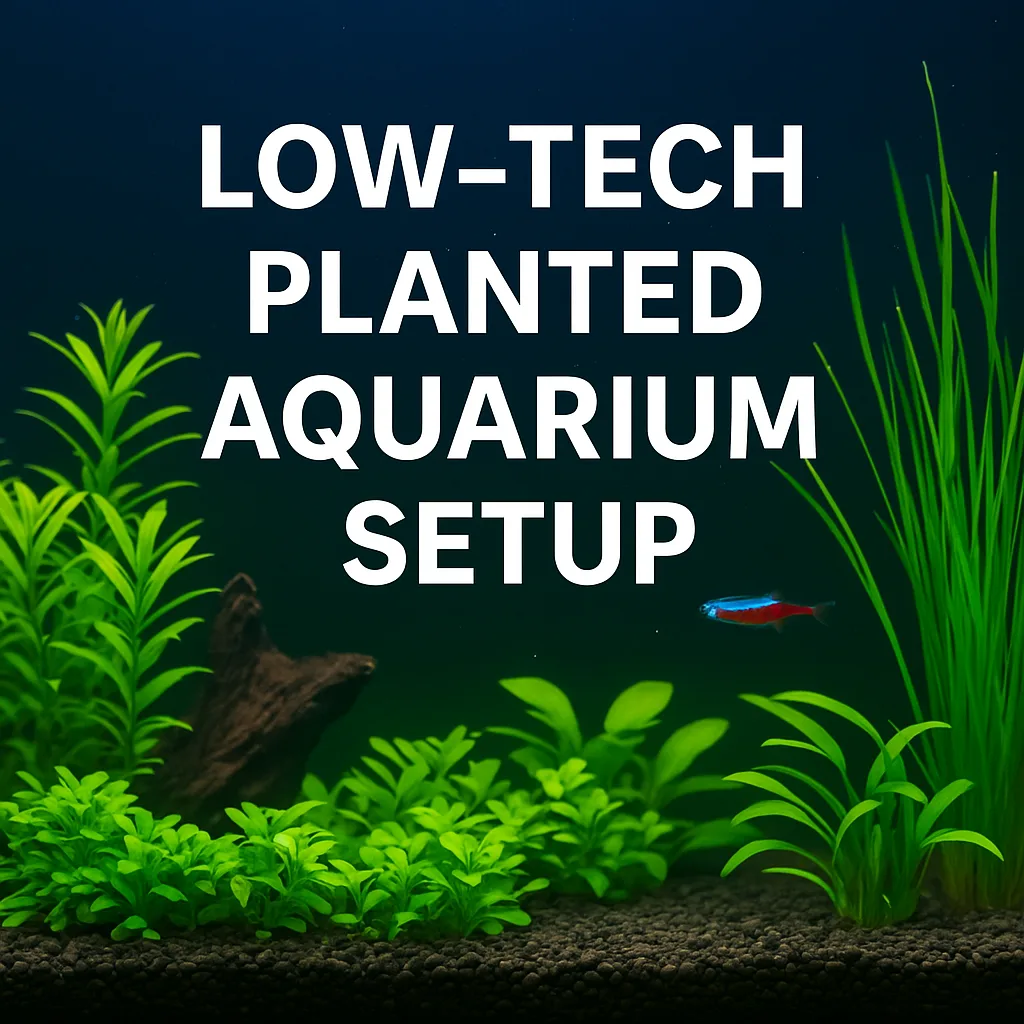
Quick answer: A low-tech planted tank skips pressurized CO2 and high-intensity light, leaning on hardy slow-growing plants, a nutrient-rich substrate or root tabs, and patience. It can look just as good as a high-tech setup, it just fills in slower and asks for far less maintenance. Pick forgiving plants like Anubias, Java fern, and Cryptocoryne, run the light 6 to 8 hours a day, and let the tank mature.
Low-Tech Planted Aquarium Setup: A Complete Guide for Beginners
If you’re dreaming of a lush, green underwater world without breaking the bank or diving into CO₂ systems, then a low-tech planted aquarium might be exactly what you’re looking for. This guide walks you through everything you need to set up and maintain a thriving planted tank with minimal equipment and simple care routines. Whether you’re new to the hobby or want a relaxing, self-sustaining ecosystem, low-tech tanks offer a perfect balance of beauty and simplicity.
What is a Low-Tech Planted Tank?
“Low-tech” simply means no pressurized CO₂ injection and usually lower lighting intensity. These setups rely on slow-growing, hardy aquatic plants, basic lighting, and occasional liquid fertilizers. While they grow slower than high-tech aquascapes, they’re more forgiving, cost less, and require far less maintenance.
Choosing the Right Tank Size and Shape
Tank size matters for stability. While you can do a low-tech setup in anything from 5 to 55+ gallons, beginners often find 10–29 gallon tanks the easiest to manage. Long tanks provide more horizontal space for planting and better surface gas exchange than tall ones.
- 5–10 gallons: Good for small plants and shrimp, but limited space for mistakes
- 20–29 gallons: Great balance between maintenance and aquascaping room
- 40+ gallons: Ideal for communities and large scapes, but cost and care scale up
Equipment Checklist (Keep it Simple)
- Filter: Sponge filter or gentle hang-on-back filter (HOB)
- Light: Full-spectrum LED light rated for planted tanks
- Heater: Only needed for tropical tanks (74–78°F)
- Substrate: Nutrient-rich or inert (see below)
- Fertilizers: Optional, but useful (liquid ferts like Easy Green)
- Aquascaping tools: Scissors, tweezers, and a planting fork
Substrate Options: What Plants Need to Thrive
Your substrate plays a big role in how well your plants grow. Here are the most common choices:
- Nutrient-rich substrate: Like Fluval Stratum, Eco-Complete, or UNS Controsoil. Best for root feeders like Amazon Swords and Cryptocoryne.
- Inert substrate + root tabs: Regular gravel or sand can work if paired with root tabs for nutrients.
- Cap method: Use a bottom layer of dirt or aquasoil capped with sand or gravel for DIY success.
Best Low-Tech Aquarium Plants (Beginner-Friendly)
Stick to hardy, slow-growing species that don’t require CO₂. Many of these also grow in low light and attach to hardscape instead of being planted in the substrate.
- Anubias: Attach to rocks or wood; low light and durable
- Java Fern: Hardy and slow-growing; attach to hardscape
- Cryptocoryne: Root-feeding plant with lots of species variety
- Hornwort: Fast-growing floater or stem; reduces nitrates
- Water Sprite: Can be planted or floated; excellent nutrient sponge
- Vallisneria: Great for background; propagates by runners
- Java Moss: Versatile, easy to attach, great for shrimp tanks
Lighting: Less is More
Low-tech tanks typically use lower-intensity lights (PAR 20–40 at the substrate). You don’t need powerful LEDs or fancy timers. Aim for 6–8 hours per day on a timer to avoid algae.
- Budget options: NICREW ClassicLED, Hygger lights, Aqueon Planted Clip-On
- Upgrade path: Fluval Plant 3.0 or Chihiros for custom settings
Fertilization: Do You Need It?
If you’re using nutrient-rich substrate and hardy plants, you can often skip fertilizers. But for better color and growth, a weekly dose of all-in-one liquid fertilizer (like Easy Green, Thrive, or NilocG) can make a big difference.
- Root tabs: Supplement root feeders planted in inert substrate
- Liquid fertilizer: For water column feeders and floaters
- Frequency: Once per week is enough for most low-tech setups
Stocking Ideas for Low-Tech Planted Tanks
Low-tech tanks make excellent homes for peaceful community fish, shrimp, and nano species. The plants provide shelter, reduce aggression, and improve water quality. Here are some popular options:
- Neon tetras, ember tetras, harlequin rasboras
- Endler’s livebearers, guppies, mollies
- Cherry shrimp, Amano shrimp
- Corydoras catfish, kuhli loaches
- Betta fish (solo in planted nano tanks)
Maintenance Routine
- Weekly: 20–30% water change, remove algae, dose ferts
- Biweekly: Light trimming and plant pruning
- Monthly: Clean filter sponge in tank water
- As needed: Replace root tabs, remove dead leaves
Natural Algae Control: Let Nature Help
With low light and slow growth, algae can still sneak in. Keep it in check by:
- Limiting light to 6–8 hours
- Not overfeeding fish
- Adding algae eaters like Nerite snails, Amano shrimp, or Otocinclus
Aquascaping Tips for Low-Tech Tanks
You don’t need a full Dutch-style layout to enjoy aquascaping. Start with a simple layout using these techniques:
- Use a focal point like driftwood or a large stone
- Plant tallest species in the back and shorter ones in front
- Leave open space for swimming and easy maintenance
- Try the “Golden Ratio” (roughly 1:1.6) when placing decor
Summary: The Low-Tech Planted Tank at a Glance
| Category | Recommendation |
|---|---|
| Lighting | Low-intensity LED, 6–8 hours/day |
| Substrate | Nutrient-rich or inert + root tabs |
| Plants | Anubias, Java Fern, Crypts, Hornwort |
| Filtration | Sponge or gentle HOB filter |
| Fertilizer | Optional; weekly liquid dose |
| Water Changes | 20–30% weekly |
What to Read Next
🎥 Subscribe to DBC Aquatics on YouTube for low-tech tank builds, aquascaping walkthroughs, and beginner plant tutorials every week.
Frequently asked questions
What is a low-tech planted tank?
Low-tech means no pressurized CO2 injection and usually lower lighting intensity. These tanks rely on slow-growing, hardy aquatic plants, basic full-spectrum LED lighting, and occasional liquid fertilizer. They grow slower than high-tech aquascapes but cost less, forgive mistakes, and need far less maintenance.
Can a low-tech tank look as good as a high-tech one?
Yes. The main difference is speed, not the ceiling on how good it looks. Low-tech tanks fill in over months instead of weeks, but a well-planted scape with healthy Anubias, Cryptocoryne, Vallisneria, and moss reaches the same lush result. You trade fast growth and constant trimming for a calmer, cheaper setup.
What plants and lighting work for low-tech?
Stick to hardy, slow-growing species that do not need CO2: Anubias and Java fern attached to rock or wood, Cryptocoryne and Vallisneria in the substrate, plus Hornwort, Water Sprite, and Java moss. Use a full-spectrum LED rated for planted tanks at PAR 20 to 40 at the substrate. Budget lights like NICREW ClassicLED or Hygger are plenty; run them 6 to 8 hours a day on a timer.
Do I still need fertilizer without CO2?
Often you can skip it. If you start with a nutrient-rich substrate like Fluval Stratum or Eco-Complete and stock hardy plants, the tank can run without dosing. For better color and growth, a weekly dose of an all-in-one liquid fertilizer like Easy Green, Thrive, or NilocG helps. Add root tabs for root feeders planted in inert gravel or sand.
How do I keep algae down in a low-tech tank?
The biggest lever is light. Run the light only 6 to 8 hours a day on a timer and keep it at lower intensity so plants outcompete algae. Avoid overdosing fertilizer, since excess nutrients with no plant demand feeds algae instead. Fast nutrient sponges like Hornwort and Water Sprite also pull nitrates out of the water.
How long does a low-tech tank take to fill in?
Expect months, not weeks. Without CO2 and high light, growth is slow by design, so a new scape usually takes two to six months to look filled in, depending on the species and tank size. Runner plants like Vallisneria and floaters like Hornwort spread faster, while Anubias and Java fern are the slowest. Patience is the main cost of going low-tech.
Author and editorial note
Written and maintained by Benjamin Thoden, founder of DBC Aquatics. This shrimp guide is reviewed through DBC Aquatics’ stability-first lens: cycle maturity, mineral consistency, molt safety, copper risk, grazing surfaces, and slow acclimation matter more than quick fixes. See our editorial standards for how guides are created, reviewed, and updated.
Leave a Reply