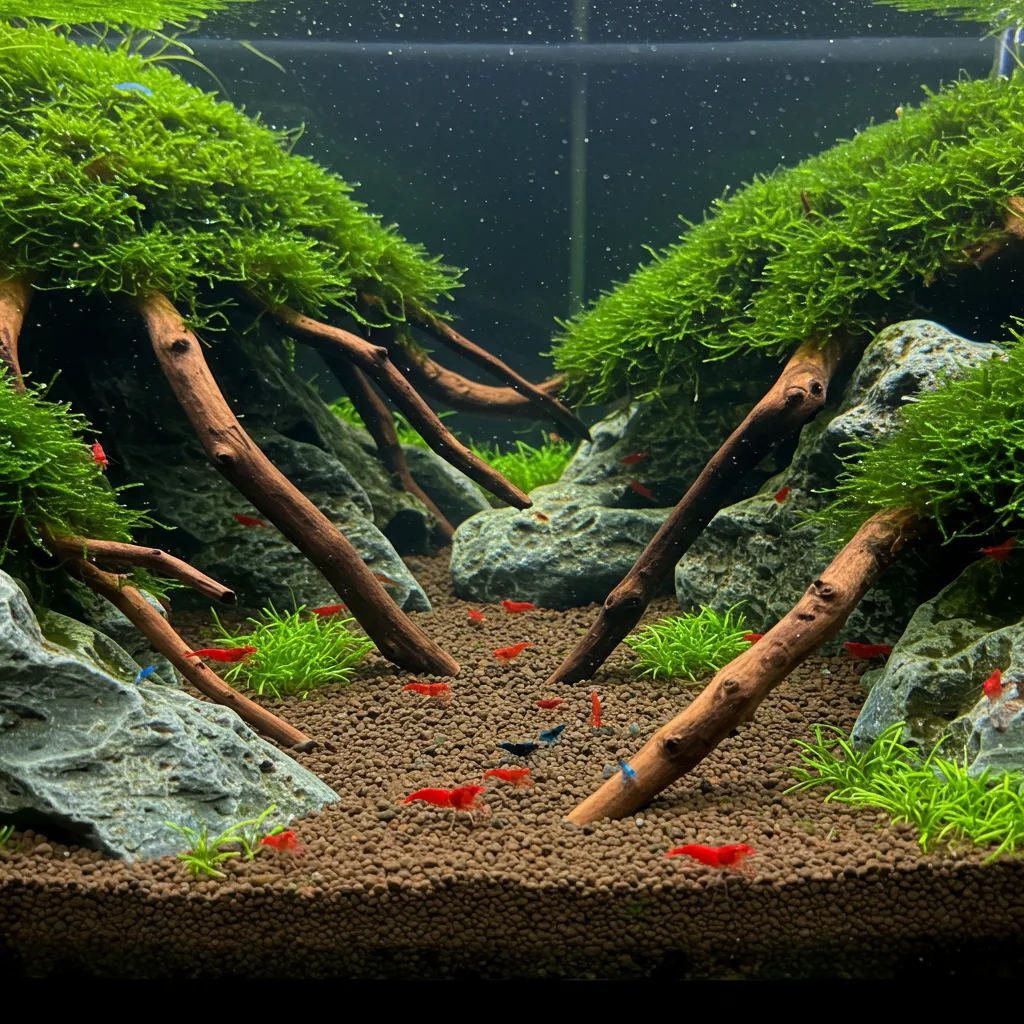
Quick answer: Caridina shrimp like Crystal Reds and Taiwan Bees want soft, acidic water with near-zero KH (0-1 dKH) and a pH around 5.8-6.4, held stable by an active buffering substrate. Neocaridina like Cherries and Blue Dreams want some carbonate buffer (2-4 dKH) and a near-neutral pH of 6.6-7.6, and do fine on inert gravel. KH is the carbonate buffer that stops pH from swinging, so you set KH first and let it lock pH in place.
If you’re keeping shrimp—especially Caridina—understanding KH, pH, and buffering is the difference between stable water and total disaster. These three factors work together to control how stable your tank’s acidity stays over time.
Table of Contents
- What Is KH (Carbonate Hardness)?
- How KH Affects pH
- Why Caridina Shrimp Need Low KH
- How Active Substrates Buffer pH
- What Causes pH Crashes (and How to Prevent Them)
- Safe Ranges for pH and KH (Caridina vs. Neocaridina)
What Is KH (Carbonate Hardness)?
KH (carbonate hardness) is the measure of dissolved carbonates and bicarbonates in your water. These act as a buffer, keeping your pH from swinging too far in either direction.
- High KH = high buffering capacity → pH stays stable but harder to adjust
- Low KH = low buffering → pH changes more easily
KH is measured in degrees (dKH) or ppm (1 dKH ≈ 17.9 ppm).
How KH Affects pH
KH directly stabilizes pH. The more KH you have, the more resistant your water is to changes in acidity. But that’s not always good in a shrimp tank.
- High KH (5–8+): pH will stay around 7.6–8.0 and resist acidic buffering
- Low KH (0–2): pH can drop to 6.5 or lower, ideal for softwater shrimp
Warning: If you try to lower pH without adjusting KH, the change won’t stick—or worse, crash suddenly.
Why Caridina Shrimp Need Low KH
Caridina shrimp (like Crystal Reds, Taiwan Bees) come from softwater environments with nearly zero KH. They don’t tolerate carbonate-based buffering or alkaline pH levels well.
- Target KH: 0–1 dKH
- Target pH: 5.8–6.4
Low KH allows active substrate to naturally lower and maintain pH where Caridina thrive. High KH will cancel out that effect and raise pH dangerously for them.
How Active Substrates Buffer pH
Active substrates (like ADA Amazonia, SL-Aqua, Brightwell) are designed to lower and stabilize pH by absorbing KH. This buffering effect only works in **low-KH environments**.
- They pull carbonates out of water, dropping pH into the 5.8–6.4 range
- They wear out over time (~12–18 months)
- Adding KH back into the system defeats the substrate’s purpose
Pro Tip: Always use RO water with remineralized GH+ (no KH) to preserve substrate function.
What Causes pH Crashes (and How to Prevent Them)
- Overfeeding = waste = acid-producing bacteria = pH drop
- Depleted buffering (KH near 0) = no resistance to change
- No water changes = TDS rise = system instability
- Expired active substrate = no buffering left
Prevention tips:
- Use only RO + GH+ remineralized water (0 KH)
- Monitor pH weekly with a digital tester
- Replace active substrate every 12–18 months
- Do regular small water changes to reset organic load
Safe Ranges for pH and KH (Caridina vs. Neocaridina)
| Caridina (Crystal, Bee) | Neocaridina (Cherry, Blue Dream) | |
|---|---|---|
| KH | 0–1 dKH | 2–4 dKH |
| pH | 5.8–6.4 (buffered) | 6.6–7.6 (more flexible) |
| Substrate Type | Active buffering | Inert or gravel is fine |
Final Thoughts
Understanding how KH and pH interact is critical if you’re breeding shrimp—especially Caridina. Use RO water, eliminate KH, and let your substrate do the work. Regular testing and stable dosing = long-term shrimp success.
Still unsure about your water chemistry? Drop your TDS, GH, KH, and pH readings in the comments, and I’ll help you troubleshoot your setup.
Keep reading
Frequently asked questions
What KH and pH do Caridina vs Neocaridina shrimp need?
Caridina (Crystal, Bee, Taiwan Bee) need 0-1 dKH and a pH of 5.8-6.4. Neocaridina (Cherry, Blue Dream) want 2-4 dKH and a pH of 6.6-7.6. The two groups are not interchangeable on water chemistry, which is why they are usually kept in separate tanks.
Why does an active or buffering substrate matter for shrimp?
Active substrates like ADA Amazonia, SL-Aqua, and Brightwell pull carbonates out of the water and pull pH down into the 5.8-6.4 range that Caridina need. That buffering only works in a low-KH tank, so it suits Caridina but not Neocaridina. For Neocaridina, inert substrate or plain gravel is fine because you actually want some KH left in the water.
Why is my shrimp tank KH zero?
If you run RO water remineralized with a GH+ only product, there is no carbonate added, so KH reads zero by design. An active substrate also absorbs carbonates and drives KH toward zero on its own. For a Caridina tank that is the goal, but it means there is no buffer holding pH, so you have to stay on top of testing and water changes.
How do I keep pH stable in a shrimp tank?
Stable pH comes from controlling KH, not from chasing pH directly. For Caridina, run RO water remineralized with GH+ only (0 KH) over a fresh active substrate and let the substrate hold pH around 5.8-6.4. Test pH weekly with a digital meter and do small regular water changes so organic acids do not build up and drag pH down.
What happens if KH is too high for Caridina?
High KH (5-8 dKH) cancels out the active substrate and locks pH up around 7.6-8.0, which is too alkaline for Caridina. The substrate cannot pull pH into the 5.8-6.4 range when carbonates keep replacing what it removes. Adding KH back into a Caridina system defeats the whole point of using buffering soil and stresses the shrimp.
How does buffering soil affect pH over time?
Active soil works by absorbing carbonates and holding pH in the 5.8-6.4 band, but that capacity is finite and wears out in roughly 12-18 months. As it depletes, it buffers less and pH gets harder to hold steady, especially if KH is sitting near zero with no backup buffer. Plan to replace active substrate every 12-18 months, and never reintroduce KH expecting it to extend the soil’s life.
Related shrimp & Caridina guides
Author and editorial note
Written and maintained by Benjamin Thoden, founder of DBC Aquatics. This shrimp guide is reviewed through DBC Aquatics’ stability-first lens: cycle maturity, mineral consistency, molt safety, copper risk, grazing surfaces, and slow acclimation matter more than quick fixes. See our editorial standards for how guides are created, reviewed, and updated.
Before you change shrimp minerals
If you are adjusting minerals for Caridina, start with the full RO remineralizing guide. It shows the bucket method, target TDS range, and what to check when shrimp act stressed after a water change.
- How to remineralize RO water for Caridina – the step-by-step bucket method
- Why pH rises in a shrimp tank – find the hidden source of KH or buffer loss
Leave a Reply