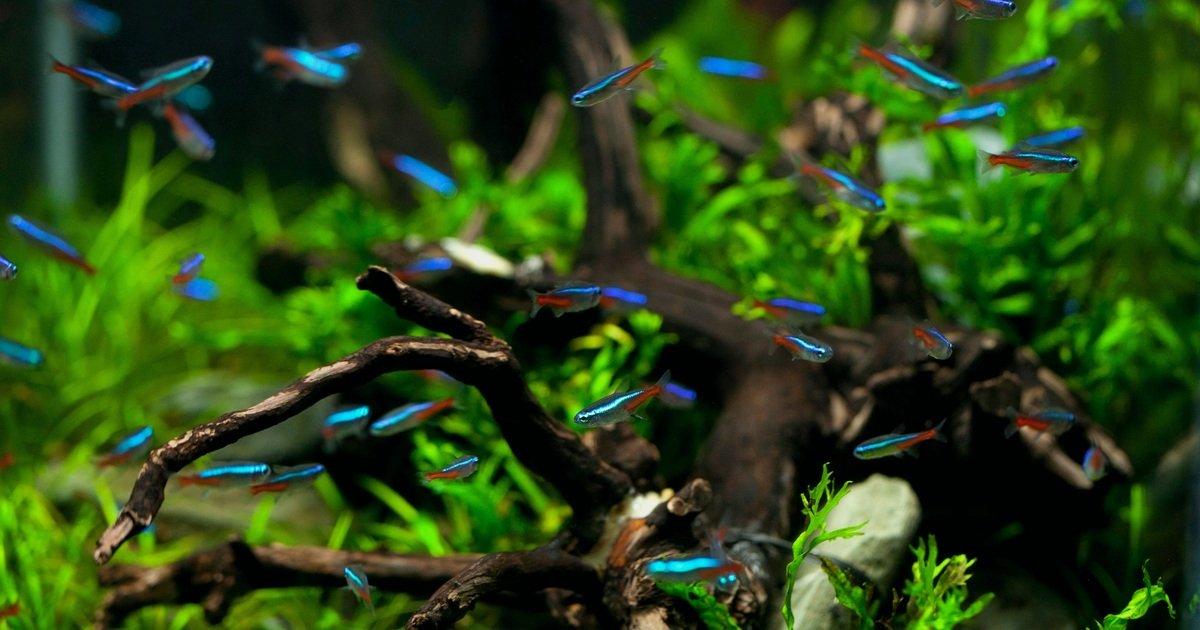
A fishkeeper emailed me because six tetras were alive when they went to bed.
The next morning, four were dead.
The water looked clear. The filter was running. Nothing looked obviously broken.
That is the scary part with small schooling fish. Sometimes the aquarium looks normal while the fish are already struggling.
If you woke up and found tetras dead overnight, I would treat the tank like an emergency until the water proves otherwise.
That does not mean every tetra is doomed.
But it does mean you should stop guessing for a minute and check the things that can kill small schooling fish fast: oxygen, ammonia, nitrite, temperature, chlorine, recent water changes, filter cleaning, and new fish stress.
Tetras are small fish. When something shifts in the tank, they may show trouble before larger or tougher fish do.
DBC Aquatics helps fishkeepers work through aquarium emergencies by checking visible symptoms, water quality, oxygen, recent changes, and safe rescue steps before jumping to medication.
Quick Answer
Tetras dying overnight usually points to a tank-wide problem until proven otherwise.
Start here:
- Remove dead fish.
- Add oxygen and surface movement.
- Test ammonia and nitrite.
- Check temperature.
- Confirm all new water was conditioned.
- Stop feeding temporarily.
- Write down what changed in the last 48 hours.
Do not start with medication unless the water checks are safe and you see clear disease signs.
Clear water does not prove safe aquarium water.
Use the first checklist visual below like an emergency order, not a perfect diagnosis. The goal is to protect the fish that are still alive before you chase every possible cause.
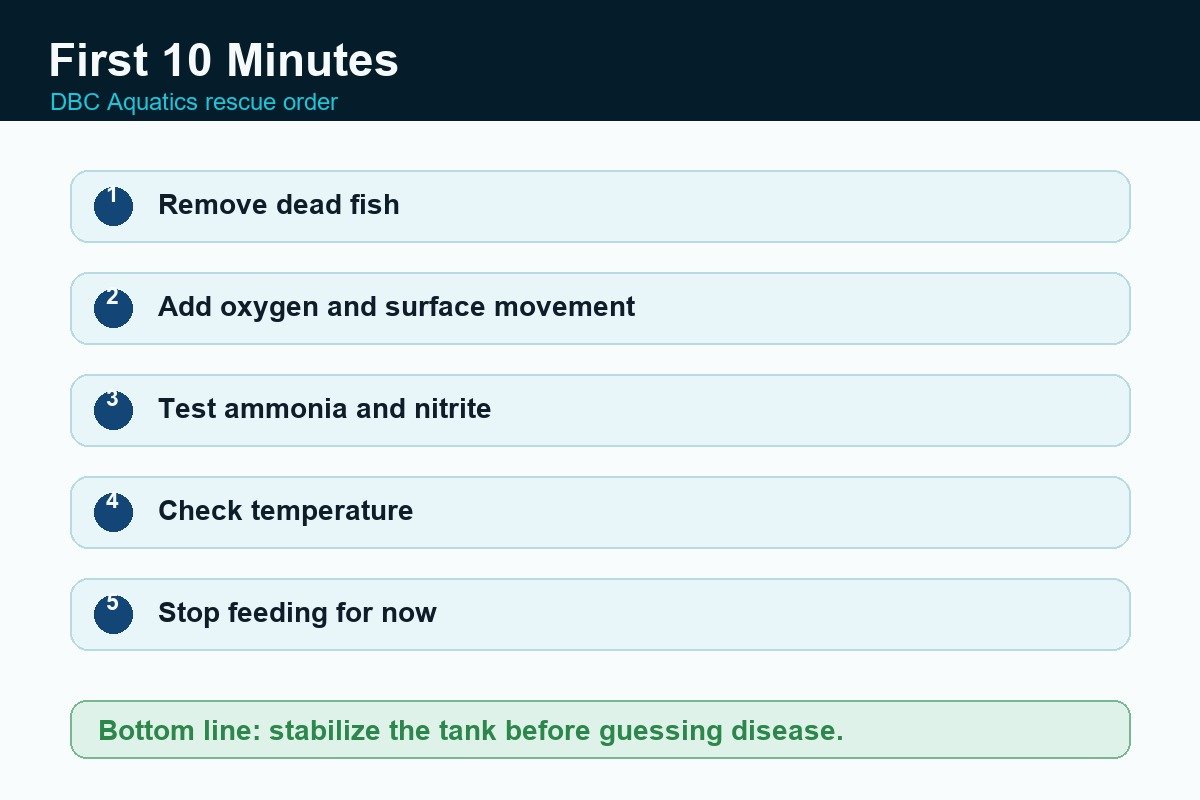
First 10 Minutes
These are the steps I would take before trying to diagnose every possible disease.
1. Remove Dead Fish
Remove any dead tetras as soon as you notice them.
A dead fish can add waste back into the tank, and if disease is involved, you do not want other fish picking at the body.
2. Add Oxygen
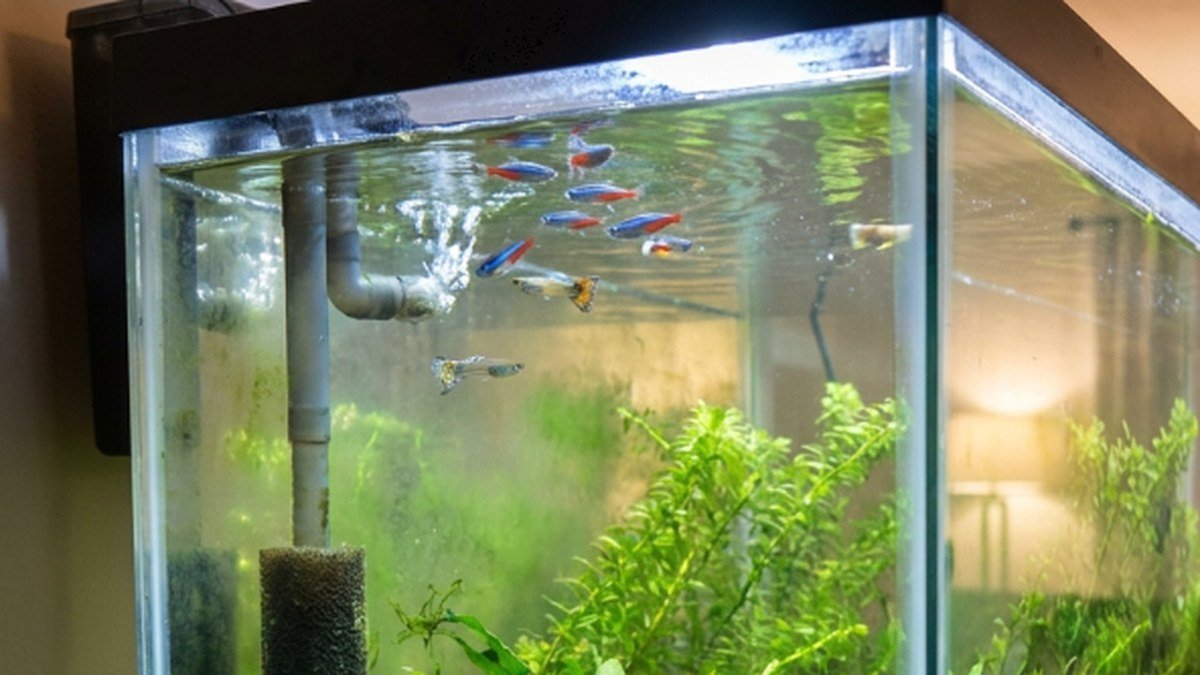
Increase surface movement right away.
Point the filter return toward the surface. Add an air stone if you have one. Open the lid if the tank is warm and safe to do so.
Low oxygen can get worse overnight. Plants, bacteria, fish, warm water, overfeeding, and low surface movement can all push the tank in the wrong direction while the lights are off.
You do not need to blast the fish around the aquarium.
You just want steady surface movement and better gas exchange.
The visual below shows the kind of surface movement I mean. You are looking for ripples and steady exchange at the top of the tank, not a violent current that pins small tetras in one corner.
3. Test Ammonia And Nitrite
Ammonia and nitrite should be 0 ppm.
If either one is above zero, treat the tank like a water-quality emergency.
| Test Result | What It May Mean | First Move |
|---|---|---|
| Ammonia above 0 ppm | Waste or bacteria balance is hurting the fish | Add oxygen and prepare a safe partial water change |
| Nitrite above 0 ppm | Fish may struggle to use oxygen normally | Add oxygen and lower nitrite safely |
| Both are 0 ppm | Look at oxygen, temperature, chlorine, new fish stress, and disease signs | Keep observing and check recent changes |
If ammonia is showing, use the ammonia spike emergency guide next.
If fish are gasping, use the fish gasping rescue guide after you get oxygen moving.
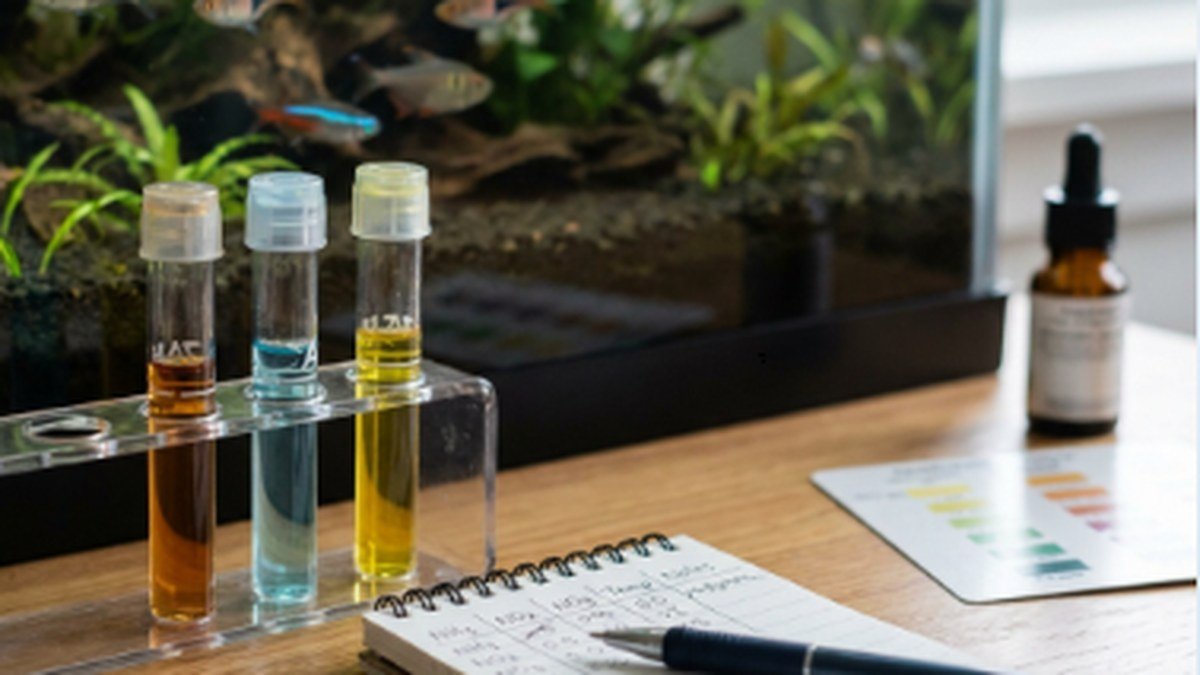
When you look at the test kit visual, pay attention to the idea more than the brand: tetras dying overnight is not a “wait and see” moment for ammonia and nitrite. Those two numbers decide whether this is a water-quality rescue.
4. Check Temperature
Look at the thermometer, not just the heater setting.
Ask:
- Did the heater fail?
- Did the heater stick on?
- Did the room get colder overnight?
- Did the water change add water that was much warmer or colder?
- Did the lid trap heat?
Tetras do not handle sudden swings well.
Correct temperature slowly. Fast corrections can become a second shock.
5. Stop Feeding For Now
Do not feed while you are trying to stabilize the tank.
Food becomes more waste. More waste can become more ammonia.
Skipping food for a short emergency window is usually safer than adding more load to a stressed aquarium.
What The Pattern Suggests
The pattern matters.
Do not just ask, “Why did a tetra die?”
Ask, “Which fish died, when did they die, and what did they look like before it happened?”
| Pattern | Most Likely Direction | First Move |
|---|---|---|
| Several tetras dead overnight | Tank-wide oxygen, toxin, or temperature problem | Add oxygen, test ammonia/nitrite, check temperature |
| Only new tetras died | Shipping stress, acclimation stress, disease, or parameter mismatch | Test tank and inspect remaining new fish |
| Tetras gasping before death | Low oxygen, ammonia, nitrite, heat, or gill irritation | Add oxygen and test water |
| Deaths after water change | Chlorine, temperature shock, pH/TDS swing, or stirred-up waste | Confirm conditioner and temperature |
| Deaths after filter cleaning | Bacteria loss, ammonia, nitrite, or weak flow | Test toxins and protect filter media |
| One tetra separated from school for days | Disease, bullying, weakness, or chronic stress | Inspect symptoms after water checks |
| Pale color, curved body, lumps, erratic swimming | Possible disease, including neon tetra disease | Isolate if needed and avoid treating the whole tank blindly |
This table is not a diagnosis by itself.
It is a way to stop guessing and move in the right direction.
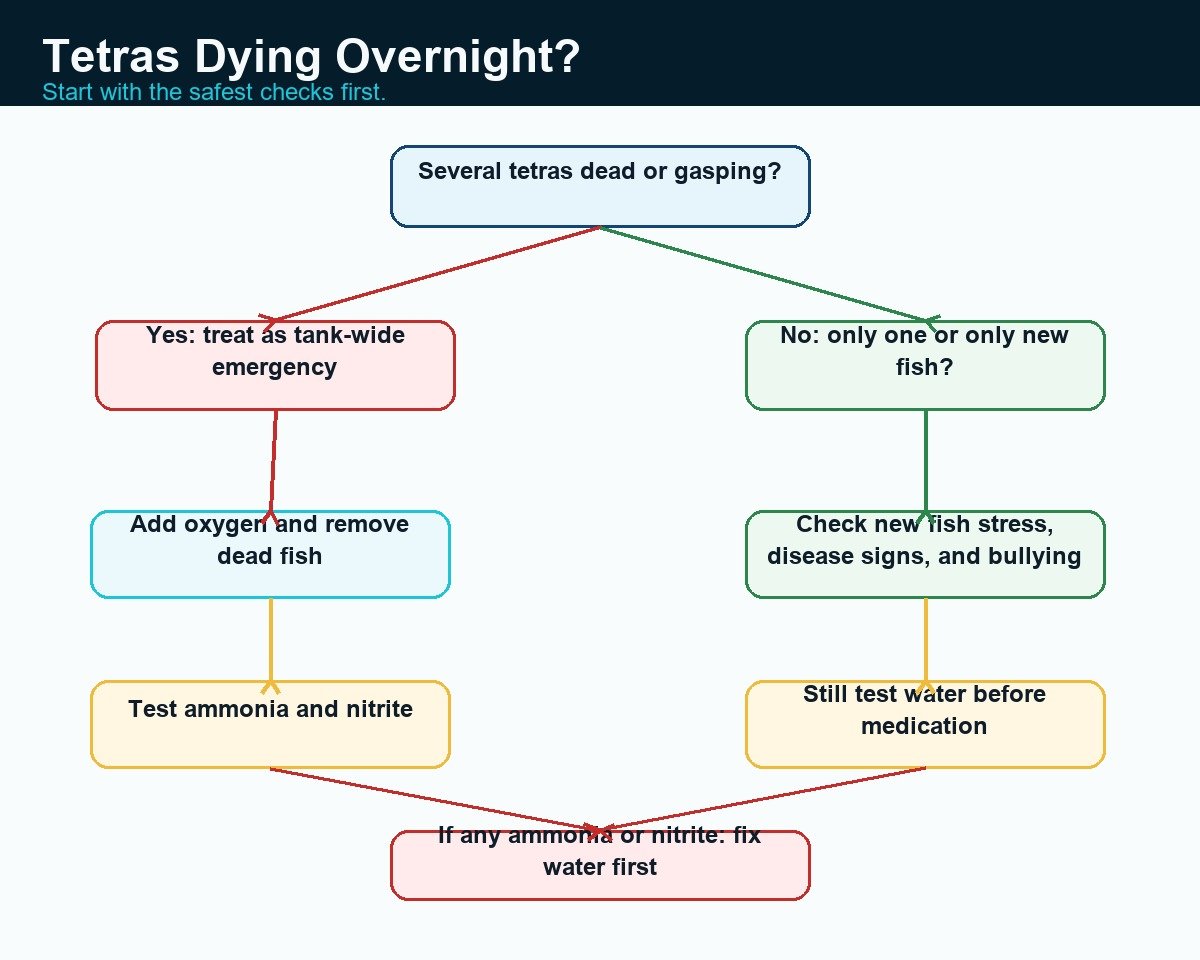
The decision tree below is there for the moment when your brain wants to jump to disease, medication, or a full tank reset. Follow the branches slowly: several fish dead overnight usually means you check the tank first, then symptoms.
What Changed In The Last 48 Hours?
Most overnight fish losses have a clue hiding in the last two days.
Write down:
- new fish added
- water change
- filter cleaning
- filter cartridge replaced
- missed water conditioner
- heater adjusted
- power outage
- heavy feeding
- dead fish found late
- plant trimming
- gravel stirred up
- medication added
- new decor, rock, wood, or substrate
I have seen people blame “neon tetra disease” because the fish were tetras, but the real clue was a filter cartridge replaced the day before.
The tank looked cleaner.
The bacteria protection was weaker.
The fish paid for it first.
If you want to save the tank numbers and recent changes, use DBC Aquarium Tools so the next step is based on the actual tank, not memory.
Common Water Problems That Kill Tetras Fast
Low Oxygen
Low oxygen often shows up as fish hanging near the surface, breathing fast, gathering near filter flow, or acting weak at night and early morning.
Tetras may stop schooling normally.
You may see one fish near the surface, then several.
Add oxygen first because it is one of the safest emergency moves.
Then test the water.
Ammonia
Ammonia can irritate and damage fish gills.
You may see fast breathing, red or irritated gills, clamped fins, bottom-sitting, gasping, lethargy, or sudden death.
Ammonia often follows overfeeding, dead fish, new tanks, filter bacteria damage, or stocking too much too fast.
DBC rule: test ammonia before medication when fish die suddenly.
Nitrite
Nitrite is different from nitrate.
Nitrite can make fish look oxygen-starved because it interferes with oxygen use in the body.
That is why fish may gasp even when there is some oxygen in the water.
If nitrite is above zero, increase oxygen and lower nitrite safely.
Chlorine Or Chloramine
If this happened right after a water change, confirm the new water was treated with conditioner.
Untreated tap water can hurt fish quickly.
If you are not sure conditioner was used, dose conditioner according to the product label for the aquarium volume.
Keep the correction controlled.
Temperature Shock
Tetras can be sensitive to fast changes.
A large water change with water that is much colder or warmer can stress or kill fish, especially if the tank already had another problem.
Match temperature closely during future water changes.
If Only New Tetras Died
If only the new tetras died overnight, the cause may be related to the new fish.
Possibilities include:
- shipping stress
- weak store stock
- poor acclimation
- different water parameters
- ammonia in the transport bag
- disease brought in with the group
- new fish being less able to handle a tank that was already unstable
Still test your tank.
New fish often fail first when the aquarium has ammonia, nitrite, low oxygen, or temperature instability.
If the remaining fish are acting normal and the water tests are safe, quarantine and source quality become more important questions.
Disease Is Possible, But Do Not Start There
Disease can kill tetras.
But sudden overnight deaths in multiple fish should still start with water, oxygen, temperature, and recent changes.
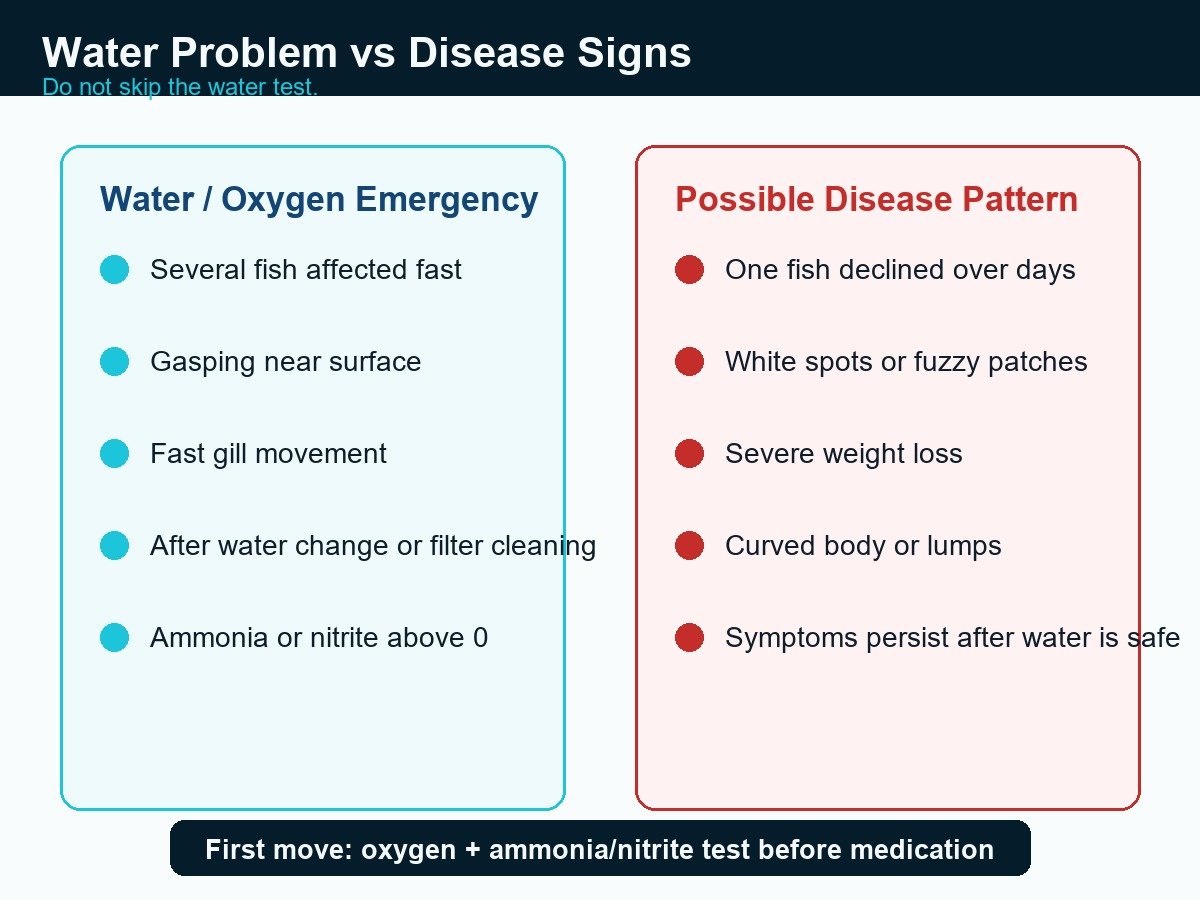
The comparison graphic below is the difference I want you to see: water problems often hit several fish fast, while disease clues usually build through visible symptoms, isolation, weight loss, spots, or behavior changes over time.
Disease becomes more likely when you see signs like:
- white spots
- fuzzy patches
- fin rot
- severe weight loss over days
- one fish leaving the school repeatedly
- curved body
- pale stripe or fading color
- lumps or cyst-like areas
- erratic swimming that gets worse over time
Neon tetra disease is one possibility people worry about with neon tetras, but it is usually not the first assumption for a whole-tank overnight crash.
If disease signs are present, use the DBC Fish Symptoms Checker after oxygen and water checks.
That keeps you from treating a water emergency like a mystery illness.
What Not To Do
Avoid these moves in the first emergency window:
- Do not add more fish to replace the losses.
- Do not feed heavily.
- Do not deep-clean the filter.
- Do not replace all filter media.
- Do not add random medication before testing water.
- Do not do a full tank reset unless there is a clear contamination issue.
- Do not assume the strongest fish are proof the tank is safe.
The goal is stability.
Make one useful change at a time and watch what happens.
When To Use The Checklist
If you feel like you are staring at the tank and forgetting what to check next, use the Aquarium Survival Checklist.
It gives you the rescue order in one place:
- oxygen
- temperature
- ammonia
- nitrite
- recent changes
- filter flow
- water conditioner
That is the same logic DBC uses across fish rescue articles: check the tank before chasing symptoms.
How To Prevent This From Happening Again
Once the tank is stable, prevention is mostly about consistency.
| Risk | Safer Habit |
|---|---|
| Oxygen drops overnight | Keep reliable surface movement |
| Ammonia or nitrite spikes | Test after new fish, filter cleaning, or heavy feeding |
| Water-change shock | Match temperature and condition all new water |
| Filter bacteria loss | Rinse media gently in old tank water when needed |
| New fish losses | Quarantine when possible and buy from healthy tanks |
| Hidden dead fish | Count schooling fish during feeding |
| Overfeeding | Feed lightly and remove uneaten food |
If you recently cleaned the tank or filter before the deaths, read fish dying after cleaning the tank or filter next.
If you need the broader rescue path, start at the Aquarium Rescue Hub.
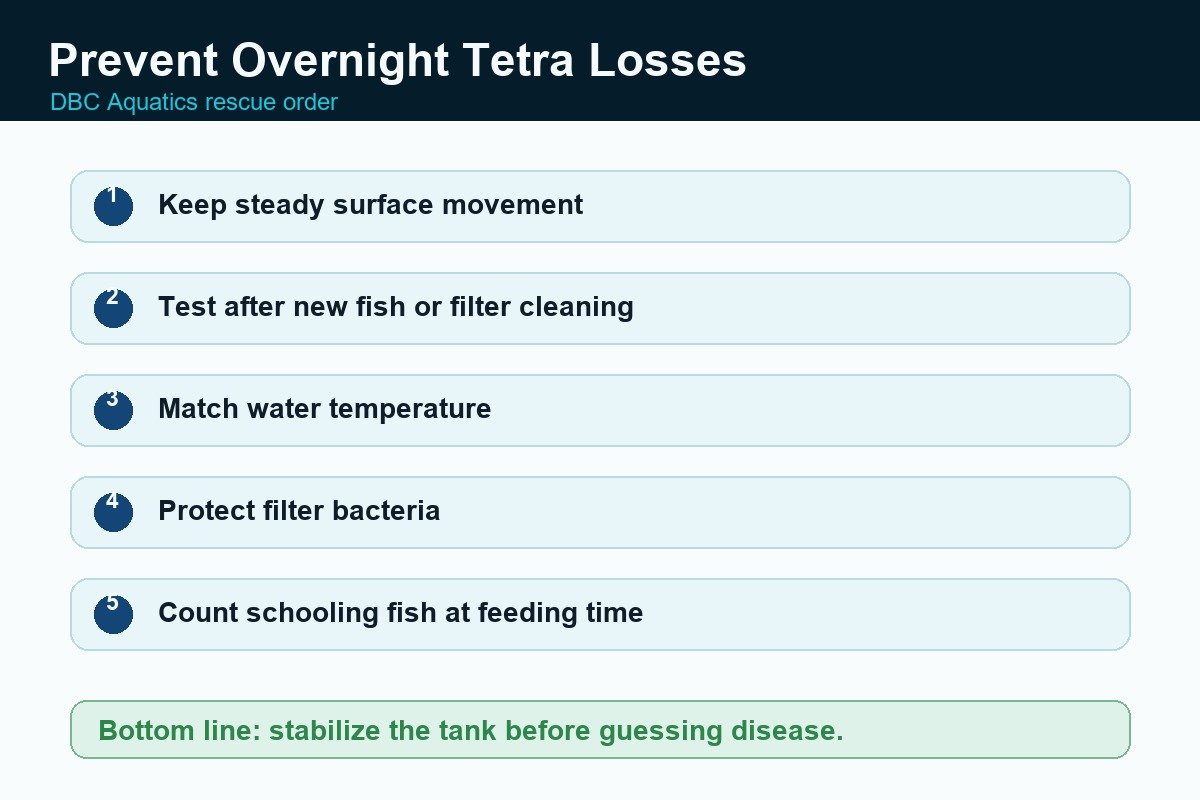
Use the prevention checklist below after the emergency is under control. It is not there to make you feel like you failed. It is there so the next water change, filter cleaning, or new-fish day does not turn into another overnight loss.
Bottom Line
If tetras are dying overnight, do not start by guessing disease.
Start by protecting the fish that are still alive.
Add oxygen. Remove dead fish. Test ammonia and nitrite. Check temperature. Confirm conditioner. Review what changed in the last 48 hours.
Most rescue stories start with the water test, not the medication bottle.
Most people think losing several tetras overnight means the aquarium is ruined.
Most of the time, it is not.
If you act quickly and work through the rescue order, many tanks recover completely. The important thing is not to panic-clean the tank, dump in random medication, or change five things at once.
If your tank keeps bouncing from one emergency to the next, the Aquarium Rescue Blueprint gives you the full step-by-step recovery path after you get through the immediate emergency.
FAQ
Why are my tetras dying overnight?
Tetras dying overnight usually means something changed in the tank or a hidden water problem became urgent. Check oxygen, ammonia, nitrite, temperature, conditioner, recent water changes, filter cleaning, new fish, and disease signs.
Why did my neon tetras die overnight?
Neon tetras may die overnight from low oxygen, ammonia, nitrite, temperature shock, chlorine exposure, shipping stress, acclimation stress, or disease. Test the tank first before assuming neon tetra disease.
Can low oxygen kill tetras overnight?
Yes. Oxygen can drop overnight, especially in warm, overstocked, overfed, low-flow, or heavily planted tanks. Add surface movement and test ammonia and nitrite.
Should I medicate the tank if tetras died overnight?
Not first. Sudden deaths are often water, oxygen, temperature, or recent-change problems. Medication makes more sense after ammonia, nitrite, temperature, and oxygen have been checked.
Why did only my new tetras die?
New tetras may be stressed from shipping, acclimation, disease, weak store stock, or different water parameters. Test your tank anyway because new fish often fail first in unstable water.
Can nitrite make tetras gasp?
Yes. Nitrite can interfere with oxygen use in fish, so tetras may gasp or gather near surface flow. Add oxygen and lower nitrite safely if your test shows any nitrite.
What should I write down after tetras die overnight?
Write down tank size, temperature, ammonia, nitrite, nitrate, how much water was changed, whether conditioner was used, whether the filter was cleaned, new fish added, food amount, and the first symptom you noticed.
Leave a Reply