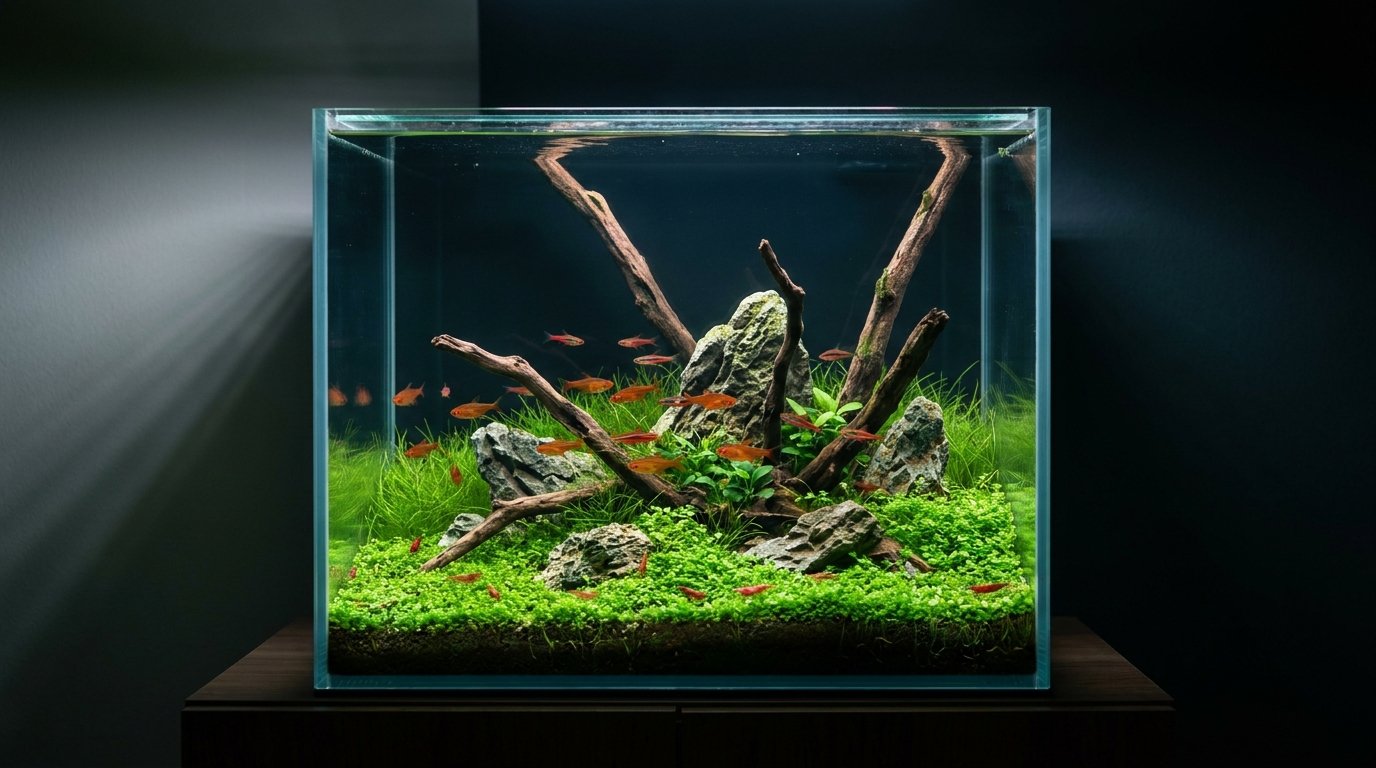
Quick answer: A 5-gallon holds one small centerpiece (a betta) or a shrimp colony — not both. A 10-gallon fits one peaceful nano school of 6-8 plus shrimp or a few otos. A 20-gallon is the first size where you can run a real community: a centerpiece fish, a school, a bottom group, and inverts. Cycle the tank first, stock slowly, and judge by bioload — not the old inch-per-gallon rule.
I run a freshwater rescue, which means I see the wreckage of bad small tank stocking almost every week. A tank that was sold as a “betta starter kit” with a goldfish crammed in it. A 5-gallon with a pleco that’s already outgrown the glass. Most of it traces back to one bad rule and one bad habit: people stock by inches, and they stock all at once.
This is the guide I wish people read before they bought livestock. It covers what actually limits how many fish a tank can hold, exactly what to put in a 5, 10, or 20 gallon, the order to add it, and the fish to keep out entirely. If you only take one thing away: a small tank is less forgiving, not more. Less water means faster swings in ammonia, temperature, and pH, so your margin for error is thin.
Forget the inch-per-gallon rule
The “one inch of fish per gallon” rule is the most repeated piece of bad advice in this hobby. It treats a fish like a length of rope. But a 3-inch goldfish is not the same as three 1-inch neon tetras. The goldfish eats more, poops far more, and needs vastly more oxygen and swimming room. By the inch rule they’re identical. In reality the goldfish would foul a 10-gallon in days while the neons cruise along fine.
What actually decides how many fish you can keep is a handful of real factors. Learn these and you’ll never need a rule of thumb again.
- Bioload — how much waste the animals produce. This is the big one. A fat, high-protein eater like a goldfish or a cichlid throws off enormous ammonia. Shrimp and nano fish throw off almost nothing. Bioload, not body length, is the real currency.
- Filtration and beneficial bacteria. Your filter isn’t there to polish water clarity. Its job is to host the bacteria colony that converts ammonia to nitrite to nitrate. More surface for that colony means more waste your system can process. A sponge filter in a planted nano punches well above its size here.
- Live plants eating nitrogen. A heavily planted tank consumes ammonia and nitrate directly. Stem plants, floating plants, and fast growers like pothos roots act as a second filter. A jungle of plants genuinely raises your safe stocking ceiling.
- Surface area for gas exchange. Fish breathe oxygen that enters at the water’s surface. A tall, narrow tank with a small opening holds less breathable water than a long, shallow one of the same volume. Surface area caps how many breathing animals the tank supports, regardless of gallons.
- Swimming space and behavior. Numbers aren’t the only limit. A single fish that needs territory, or a schooling species kept in a tank too short to let it swim, will be stressed even if the water tests perfect. Tiger barbs in a 10-gallon will shred each other’s fins from boredom.
- How aggressively you do water changes. A keeper doing 30% twice a week can push stocking harder than someone who changes water once a month. Your maintenance habits are part of the equation. Be honest about yours.
Put simply: a lightly fed shrimp colony and a single greedy fish can have the same body length and wildly different impact on the tank. Stock for waste and behavior, not inches. When you’re ready to pick exact species, my list of the best freshwater fish for small tanks breaks down each one’s adult size and temperament.
Small tank stocking by size
Here are the plans I actually recommend. Pick one option per tank — these are not a shopping list to combine. Each comes with a quick note on why it works.
How many fish in a 5 gallon tank
A 5-gallon is a single-feature tank. You get one centerpiece animal or one invert colony, not a community. The water volume is too small to buffer the waste of more than that.
- 10-20 Cherry Shrimp (Neocaridina). My favorite 5-gallon stocking. Almost no bioload, constant activity, and they breed into a self-sustaining colony. The best way to fill a nano tank with life without overloading it.
- 1 Betta — not with shrimp. A betta will hunt and eat dwarf shrimp, so it’s one or the other. A single male in a heated, planted 5-gallon is genuinely happy and makes a great centerpiece.
- 5-6 male Endler’s Livebearers. Tiny, colorful, and active. Keep them all-male to avoid an explosion of fry that overloads the tank. They work because their adult size and waste output stay small.
- 1-2 Nerite or Mystery snails. Good cleanup crew in any of the above. Nerites won’t breed in freshwater, so no population problem.
- Floating plants or a moss wall. Not livestock, but they soak up waste and give shrimp and bettas cover. Worth adding to every nano.
How many fish in a 10 gallon tank
Ten gallons is where nano tank stocking gets fun. You can run one small school and still keep inverts. The extra volume buffers swings better than a 5, but it’s still a nano — don’t treat it like a community tank.
- 20-30 shrimp (Caridina or Neocaridina). A bigger colony than a 5 supports. Keep Caridina (like crystal shrimp) only if you can hold stable soft, acidic water — they’re fussier than cherries.
- 6-8 Ember Tetras or Chili Rasboras. True nano fish that stay under an inch. Kept in a group of six or more they color up and school instead of hiding. This is the classic 10-gallon school.
- 1 Honey Gourami plus a shrimp colony. A peaceful centerpiece that won’t bother adult shrimp much. One gourami, not a pair, unless you know what you’re doing with their territory.
- 1-2 Otocinclus — only in an algae-mature tank. Otos starve in a new, clean tank. Add them after a few months once there’s a biofilm and algae for them to graze. New-tank otos almost always die.
- 6-8 Pygmy Cory (Corydoras pygmaeus). A true dwarf cory that schools in open water. A 10-gallon bottom group that doesn’t outgrow the tank, unlike the common cories people wrongly buy.
What fish can live in a 20 gallon tank
Twenty gallons is the first size where a real, layered community works. You can stock the top, middle, and bottom and add a centerpiece with some personality. This is the size I steer most beginners toward once they’re past the nano stage.
- 50+ shrimp in mixed colonies. A 20-gallon can carry a serious shrimp population alongside fish, especially if it’s planted.
- 10-12 nano schooling fish. A full school of tetras or rasboras has room to actually move here, which is when their behavior gets interesting.
- One Bolivian Ram or a pair of Apistogramma. A proper centerpiece. Bolivian rams are hardier and more forgiving than the common German blue ram, which is why I recommend them first.
- Full community example: 1 Bolivian Ram, 6-10 ember or rummynose tetras, 6 pygmy cories, plus Amano or cherry shrimp. Top, middle, bottom, and cleanup all covered in one peaceful tank.
- Planted, with hardscape and sponge filters. Plants and wood give the ram territory and the shrimp cover. Sponge filtration keeps flow gentle and fry safe.
| Tank size | Realistic fish capacity | Best centerpiece | Good inverts | Difficulty |
|---|---|---|---|---|
| 5 gallon | 1 betta OR 5-6 Endlers (one feature only) | Betta | Cherry shrimp, nerite snail | Easy if you pick one thing |
| 10 gallon | 6-8 nano school + inverts | Honey gourami | Shrimp colony, otos (mature tank) | Beginner-friendly |
| 20 gallon | Small community: school + bottom group + centerpiece | Bolivian ram or Apisto pair | Amano + cherry shrimp | Best for first community |
Stocking order: what to add and when
The order you add livestock matters as much as what you choose. Dumping everything in on day one is the fastest way to crash a small tank. Here’s the sequence I use.
- Cycle the tank fully first. No exceptions. You want your filter colonizing bacteria that read 0 ammonia, 0 nitrite, and some nitrate before a single animal goes in. A fishless cycle takes a few weeks. Skipping it is how beginners kill their first fish.
- Add the hardiest livestock or inverts first. Snails or a starter group of shrimp let you confirm the system is stable on living animals with low stakes and low bioload.
- Let it stabilize 2-3 weeks, testing as you go. Watch for any ammonia or nitrite spike as the bioload climbs. If numbers stay at zero, the tank is keeping up and you can add more.
- Add your schooling fish as the full group. Add all six or eight at once, not two at a time. A partial school stresses, and trickling them in drags the cycle through repeated mini-spikes.
- Add the centerpiece fish last. The betta, gourami, or ram goes in after everything else is settled. Adding the most territorial animal last keeps it from claiming the whole tank before the others arrive.
The whole point is to add slowly and never all at once. Each addition is a bump in bioload your bacteria need a few days to catch up to. New to the cycling part? Start with my walkthrough on how to cycle a tank.
Fish to avoid in small tanks
Half of small tank disasters come from buying a fish that gets big or gets mean. Pet stores sell these as cute juveniles and never mention the adult size. Keep all of these out of anything under 20 gallons.
- Common pleco. Hits 18-24 inches and produces a mountain of waste. A common pleco in a 10 gallon is animal cruelty, full stop.
- Goldfish. Cold-water, huge waste output, and they grow to 8+ inches. A goldfish bowl is a slow death. They need a pond or a large tank, not a nano.
- Angelfish. Tall-bodied and territorial; they need height and space a small tank can’t give. They’ll also eat your nano fish as they grow.
- Oscars. A foot-long, intelligent, messy cichlid. People buy them at two inches. A 20-gallon is a holding cell, not a home.
- Bala sharks. Sold tiny, reach a foot, and need a school in a big tank. Pure heartbreak in a nano.
- Tiger barbs. Notorious fin-nippers. In a small tank with no room to spread out, they’ll torment everything, especially anything with long fins like a betta.
- Common or oversized cories. Bronze and albino cories want a group and reach 2.5-3 inches each. Six of them belong in a 20+ gallon. For nanos, use pygmy cories instead.
- Anything sold “small” that grows big. Iridescent sharks, rainbow sharks, clown loaches, silver dollars. If you don’t know the adult size, look it up before you buy, not after.
Signs you’re overstocked
A small tank tells you when it’s overloaded. Learn to read the signs before you lose animals.
- Fish gasping at the surface. They’re starved for oxygen, usually because there are too many animals for the surface area, or ammonia is burning their gills. Check water flow and test immediately.
- Persistent ammonia or nitrite. Any reading above zero on an established tank means your bioload has outrun your bacteria. This is the clearest overstocking signal there is.
- Algae you can’t beat. Constant nutrient overload from too much waste and food feeds algae no matter how much you scrub. The fix is upstream: fewer fish, less food.
- Stunted or sickly growth. Fish that stay small, lose color, or sicken easily are often crowded and stressed, not just unlucky.
- New aggression. Crowding turns peaceful fish territorial. Sudden chasing and fin damage can mean there’s not enough space to go around.
What to do about it: cut feeding back hard, do a couple of extra water changes that week to buy time, and then rehome the surplus. Adding a bigger filter helps with waste, but it won’t fix a tank that simply has too many or too-large fish in it. The real fix is fewer animals.
Gear that keeps a small tank stable
You don’t need much for a nano, but two pieces of gear earn their place. These keep the water stable, which is the whole game in a small tank.
Buy first Liquid Water Test Kit
A small tank swings fast. A liquid test kit catches ammonia and nitrite before they kill anything — strips are not accurate enough for nano work.
Check price Affiliate linkShrimp-safe Sponge Filter + Air Pump
Gentle flow, huge surface for beneficial bacteria, and no slots to suck up shrimp or fry. The right filter for almost any nano tank.
Check price Affiliate link
Nano tank stocking tips that keep fish alive
- Cycle fully before any livestock. Worth repeating because it’s the single biggest mistake. Zero ammonia, zero nitrite first.
- Test weekly. Ammonia, nitrite, and nitrate, plus TDS if you keep shrimp. A small tank can go from fine to deadly between water changes, and testing is your early warning.
- Do 10-20% water changes weekly. Consistent small changes beat occasional big ones. They keep nitrate down and replace trace minerals.
- Feed lightly. Shrimp and nano fish need very little. Overfeeding is the root of most ammonia spikes and algae problems. A pinch they finish in a minute or two is plenty.
- Peaceful species only. No fin-nippers, no fish that outgrows the tank, nothing aggressive. In a small volume there’s nowhere for a bullied fish to escape.
Small tank stocking FAQ
How many fish can I keep in a 5 gallon tank?
Think one small feature, not a group. A 5-gallon comfortably holds a single betta, or a colony of 10-20 cherry shrimp, or about 5-6 male Endler’s livebearers. It is too small for a community or for any fish that grows past an inch or two. Add a nerite snail for cleanup and you’re at capacity.
How many fish in a 10 gallon tank?
A 10-gallon fits one nano school of 6-8 small fish like ember tetras or chili rasboras, plus a shrimp colony or a couple of otocinclus once the tank is mature. You can run one peaceful centerpiece such as a honey gourami instead of a school. Stick to true nano species and stock the school as a full group, not a few at a time.
What fish can live in a 20 gallon tank?
Twenty gallons is the first size that supports a real community. A good mix is one centerpiece like a Bolivian ram, a school of 8-10 tetras or rasboras, a bottom group of 6 pygmy cories, and some shrimp. Keep everything peaceful and nano to mid-sized — a 20-gallon is still too small for goldfish, angelfish, or anything that reaches six inches.
Can I keep a betta with shrimp?
It’s risky. Bettas are hunters and will often eat dwarf shrimp like cherries, especially babies. Some calm bettas ignore a well-established, heavily planted colony, but you should treat any shrimp in a betta tank as expendable. If you actually want a shrimp colony to thrive, give them a tank with no betta.
What’s the smallest tank that can hold fish?
For a single small fish like a betta, 5 gallons is the realistic floor, and bigger is easier to keep stable. Anything under 5 gallons swings too fast in temperature and water chemistry for most fish to be healthy. Below 5 gallons, stick to a shrimp or snail colony rather than fish.
Do I need a heater and filter for a nano tank?
Almost always yes. Tropical fish and shrimp need a stable temperature, and a small tank loses heat fast, so a small adjustable heater is worth it. A filter — ideally a gentle sponge filter — houses the beneficial bacteria that keep ammonia at zero. A coldwater shrimp-only tank in a warm room is the rare case you can skip the heater.
Keep reading
- Best freshwater fish for small tanks — species profiles with adult sizes
- How to cycle a tank
- Shrimp care hub
- Beginner plant guide
- Tank setup checklist
Have a tank size I didn’t cover? Drop it in the comments and I’ll give you a custom stocking plan.
Author and editorial note
Written and maintained by Benjamin Thoden, founder of DBC Aquatics. This shrimp guide is reviewed through DBC Aquatics’ stability-first lens: cycle maturity, mineral consistency, molt safety, copper risk, grazing surfaces, and slow acclimation matter more than quick fixes. See our editorial standards for how guides are created, reviewed, and updated.
Related Rescue Guides
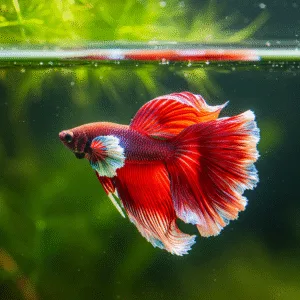
Betta Fish Care Guide: Tank Setup, Diet, Behavior & Compatibility
Quick answer: A betta needs a heated, filtered tank of at least 5 gallons, not a…
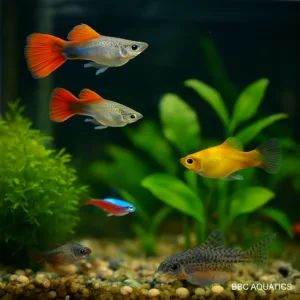
Beginner’s Guide to Breeding Fish in a Home Aquarium (What Works & What Fails)
Quick answer: To breed fish at home, start with an easy livebearer like guppies or platies,…
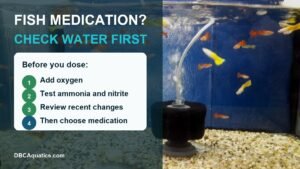
Fish Medication Guide: What To Use After You Check Water First
Fish medication can help with parasites, ich, fungus, fin rot, and bacterial infections, but test water,…
Leave a Reply