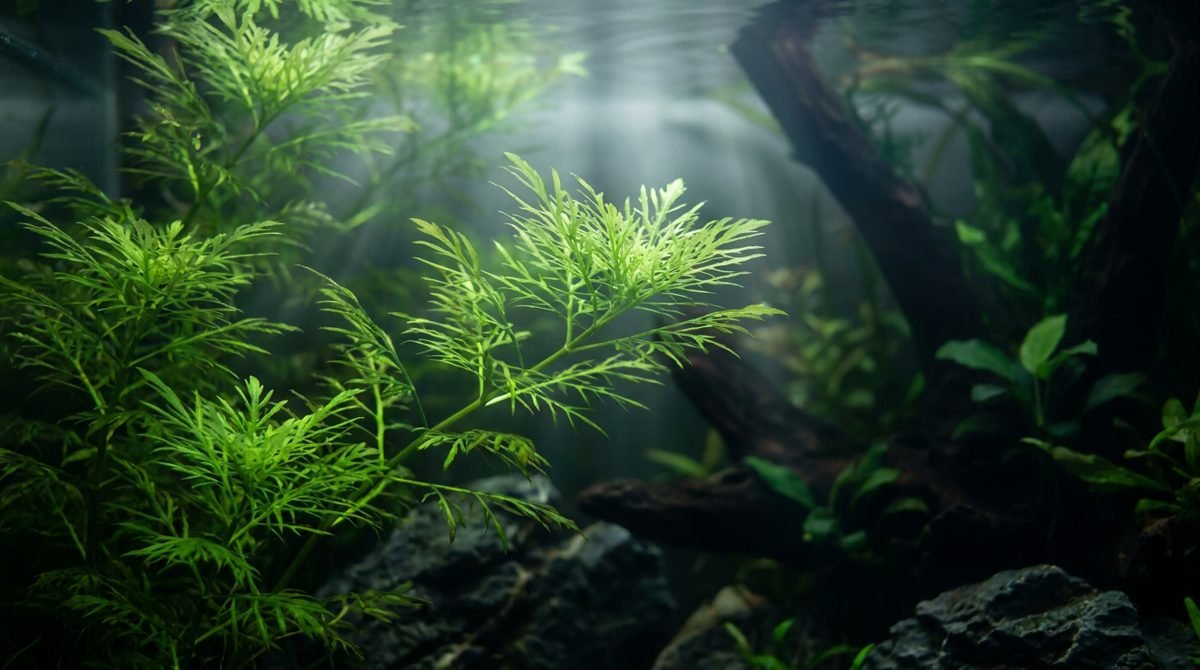
Quick answer: Water wisteria (Hygrophila difformis) is a fast, very adaptable stem plant that’s hard to kill. It does fine in low to moderate light, needs no CO2 (though it grows faster and fuller with it), and you can plant it in substrate or just let it float. It’s one of the best nutrient sponges I know for outcompeting algae, and it propagates from cuttings in seconds. Great beginner background or midground plant.
Water wisteria is one of the first plants I hand to anyone who tells me they “can’t keep plants alive.” I’ve watched it grow in tanks with cheap clip-on lights, no fertilizer, and a gravel substrate that was never meant for plants — and it still put out new leaves every week. It’s the kind of plant that makes a new hobbyist feel like they suddenly have a green thumb, and there’s nothing wrong with that. Half of keeping plants is just picking ones that want to grow, and this one really, really wants to grow.
Watch: Water Wisteria Wonders – Transform Your Tank!
I keep it in a couple of my tanks specifically because it works for me, not just because it looks good. It pulls nitrate and ammonia out of the water column fast enough that it noticeably starves out the algae I used to fight. So this guide is written from tanks I actually run — what the plant does, how to plant or float it, how to make more of it for free, and how to read the warning signs when the leaves change shape on you.
What water wisteria is (lacy vs round leaves)
Water wisteria is a stem plant from the family Acanthaceae, native to marshy and seasonally flooded parts of South and Southeast Asia. That “seasonally flooded” part matters, because it explains the plant’s split personality. Like a lot of marsh plants, it grows two completely different-looking sets of leaves depending on whether it’s underwater or up in the air.
Grown submersed — fully underwater, which is how most of us keep it — it produces the classic look people buy it for: finely cut, lacy, fern-like leaves that fan out and catch the light. Grown emersed — out of the water, the way it’s often farmed at nurseries — it makes rounder, broader, flatter leaves with simple toothed edges that look almost nothing like the lacy form.
This is the single most common source of confusion with this plant. People buy a beautifully lacy stem online, plant it, and panic a few weeks later when the new growth comes in round. Nothing is wrong. That round growth usually just means the plant arrived in its emersed form and is converting to its submersed form, or that something about the tank is pushing it back toward simpler leaves. I’ll come back to that in the problems section, because it’s worth understanding.
Water wisteria care at a glance
| Requirement | Water wisteria needs |
|---|---|
| Difficulty | Easy — a true beginner plant |
| Lighting | Low to moderate (more light = fuller, more compact growth) |
| CO2 | Not needed; grows faster and fuller with it |
| Temperature | About 70–82°F |
| pH | About 6.5–7.5 |
| Placement | Background or midground; planted or floating |
| Substrate | Anything from plain gravel to aquasoil; root tabs help in inert substrate |
| Growth rate | Fast — expect regular trimming |
| Propagation | Cuttings and side shoots |
| Best feature | Heavy nutrient uptake that helps starve out algae |
The short version: if your water sits anywhere in the normal tropical community range, you already have conditions water wisteria is happy in. It’s forgiving on hardness and pH, and it doesn’t sulk over small swings the way pickier plants do.
How to plant or float it
You’ve got two good options, and they’re both legitimate — this isn’t a plant that only works one way.
Planted in substrate. This is how I run it as a background plant. Strip the leaves off the bottom inch or so of each stem, then push that bare stem into the substrate up to the first set of remaining leaves. Space stems a little apart instead of cramming them in a tight bundle — they grow fast and a crowded clump shades itself out at the bottom. In plain gravel or sand, slip a root tab near the base every month or two; in nutrient-rich aquasoil you can skip that. Fair warning: water wisteria has a habit of floating a stem back up before it roots, so plant a touch deeper than feels necessary, or pin loose stems with a plant weight until the roots grab.
Floating. Just drop a stem on the surface and walk away. Floated, it grows even faster because it’s closer to the light and gas exchange is easier, and it’ll trail roots down into the water column. I float it on purpose in tanks where I want maximum nutrient export or a shaded spot for fry to hide in. The trade-off is it shades whatever’s growing below it, so keep an eye on your lower plants. Floating water wisteria is also a great temporary move for a new tank fighting an algae bloom — let it float and gorge on the excess nutrients, then plant it properly once things settle.
Light is the main lever for how it looks. Under low light it stretches tall and a bit sparse, reaching for the surface, which is fine for a tall background. Under moderate light it stays shorter, bushier, and more compact, with denser lacy foliage. If you want that full, lush look, more light gets you there — see my notes on lighting for planted aquariums for matching output to tank depth.
How to propagate water wisteria from cuttings
This is where the plant pays you back. Propagation is almost embarrassingly easy, and it’s the same motion as trimming, so you make more plants every time you tidy up.
Here’s exactly what I do. Take a sharp pair of scissors and cut a healthy top section about three to five inches long, ideally just above a node (the little joint where leaves attach). Strip the leaves from the bottom inch of that cutting. Then either push it into the substrate as its own new plant, or let it float until it grows roots and plant it later. That’s the whole process. The cut top becomes a new plant, and the stem you cut from will branch out new side shoots from the nodes below the cut, so you end up with bushier original plants too.
Those side shoots are the other free source of plants. Let the parent stem grow out a few lateral branches, then snip those off at the base once they’ve got their own leaves and roots, and plant them. Within a couple of months one starter stem can fill a background. This is exactly the runaway growth that makes it such a good fast-growing aquarium plant for soaking up nutrients — and why you’ll be giving cuttings away to friends before long.
Common problems and fixes
Water wisteria is tough, but it’s also expressive — it tells you when something’s off by changing how it grows. Here’s how to read it.
Round leaves instead of lacy. Two causes. The most common is that your plant came in its emersed (above-water) form and is simply converting to submersed growth — give it a few weeks and the new leaves should come in lacy. The other cause is that the tank isn’t giving it enough to make the more demanding lacy leaves, usually low light or low nutrients. If the round growth persists past the adjustment period, bump up the light a little and make sure it’s getting nitrogen and iron. Lacy leaves are the plant’s “I have plenty” form; round leaves are its “I’m getting by” form.
Melting leaves. Melt — leaves going translucent, mushy, and falling apart — is almost always transition shock. New plant, new tank, or a big swing in conditions, and the old emersed-grown leaves can’t hack the new environment so they dissolve. Don’t rip the plant out. The stem and roots are usually fine and will push new, properly adapted growth. Trim off the truly rotted bits so they don’t foul the water, keep your parameters steady, and wait. It almost always recovers.
Leggy, stretched-out growth. Tall bare stems with leaves only near the top means the plant is reaching for more light. Either raise your light intensity or shorten the photoperiod confusion by giving it a brighter fixture, then trim the leggy tops and replant them lower to reset a bushier shape.
Holes in the leaves. Pinholes and ragged gaps usually point to a nutrient deficiency — often potassium — in a fast grower that’s outrunning your dosing. A fast plant burns through fertilizer quickly, so a plant this hungry can deplete the water column. Add a comprehensive liquid fertilizer (and root tabs if you’re in inert substrate) and the new leaves should come in clean. Old damaged leaves won’t heal, so trim the worst ones.
Is water wisteria right for your tank
It’s right for you if you want a fast, forgiving plant that fills space, helps fight algae, and gives you free cuttings to spread around. It’s a near-perfect first stem plant, an excellent background or midground filler, and a genuine tool for pulling excess nutrients out of an over-fed or newly cycled tank. If you keep a low-tech community tank and want something green that just works, this is the one I’d start you on.
It’s a worse fit if you want a tidy, slow, set-and-forget aquascape. The same speed that makes it forgiving also means you’ll be trimming it regularly, and it can shade out smaller plants if you let it run. And if your tank is heavily stocked with serious plant-eaters — big goldfish, some cichlids — they may treat the soft lacy leaves as a salad bar. For most community keepers, though, the upside far outweighs the trimming chore.
If you’re still building out your tank, browse the rest of my plant library, and if this is your first planted tank, start with my beginner’s guide to aquarium plants — water wisteria pairs well with almost everything in there.
FAQ
Does water wisteria need CO2?
No. Water wisteria grows perfectly well with no added CO2, which is a big reason it’s such a popular low-tech plant. Injected CO2 will make it grow faster, denser, and fuller, but it’s a bonus, not a requirement. Low to moderate light and a little fertilizer are all it really asks for.
Why are my water wisteria leaves round instead of lacy?
Usually because the plant arrived in its emersed (grown-above-water) form and is converting to its submersed form, which should bring back the lacy leaves within a few weeks. If round growth sticks around longer, it’s a sign of too little light or nutrients — the lacy leaves are the plant’s “well-fed” form. Add a bit more light and fertilizer.
How fast does water wisteria grow?
Fast — fast enough that you’ll be trimming it regularly. Under decent light it can put out new growth every week and reach the surface from a midground planting surprisingly quickly. That speed is exactly why it’s so good at outcompeting algae for nutrients, and why it gives you endless cuttings.
Can water wisteria float?
Yes, and it does great floating. Floated on the surface it grows even faster because it’s closer to the light, and it trails roots down into the water column. Floating is a popular way to use it as a nutrient sponge in a new tank or to give fry a place to hide. Just be aware it’ll shade plants growing beneath it.
How do I propagate water wisteria?
Cut a healthy top section three to five inches long, ideally just above a node, strip the leaves off the bottom inch, and either plant that cutting in the substrate or let it float until it roots. You can also snip off the side shoots the parent stem sends out. It’s the same motion as trimming, so you make new plants every time you tidy up.
Why is my water wisteria melting or getting holes?
Melting — mushy, translucent leaves — is almost always transition shock from a new tank or changed conditions; the stem usually survives and pushes new growth, so don’t pull it. Holes and ragged leaves point to a nutrient deficiency, often potassium, because this fast grower burns through fertilizer quickly. Trim the damaged leaves and dose a complete fertilizer.
Educational guidance, not veterinary advice.
Author and editorial note
Written and maintained by Benjamin Thoden, founder of DBC Aquatics. This plant guide is reviewed for low-tech practicality: correct placement, light level, substrate or rhizome needs, melt risk, algae pressure, and what a beginner can maintain consistently. See our editorial standards for how guides are created, reviewed, and updated.
Leave a Reply