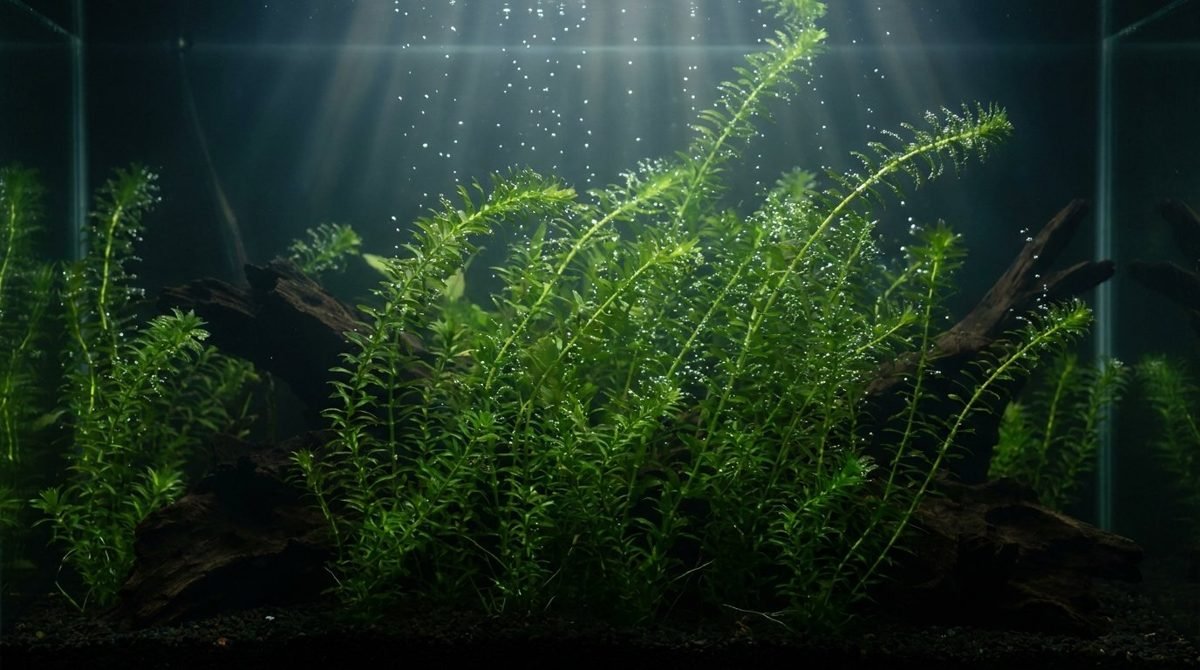
Quick answer: Anacharis (Egeria densa, often sold as elodea) is a fast, hardy oxygenator you can plant in substrate or just let float. It needs no CO2, runs on low to moderate light, and tolerates cool water down into the low 60s — so it works in ponds and unheated tanks. It’s one of the best plants going for soaking up nutrients and out-competing algae. One catch: it’s invasive and banned or regulated in some states and countries, so check your local rules and never dump it outside.
Anacharis was the first stem plant I ever kept alive, and I’ve never stopped keeping it since. It’s the plant I hand to anyone who tells me they’ve killed everything green they’ve ever put in a tank. You can do almost everything wrong with it and it still grows — usually faster than you expected. That toughness is exactly why I reach for it when a rescue tank comes in choked with algae and I need something to start eating up the excess nutrients fast.
Watch: Aquarium’s Secret Weapon? Meet Anacharis!
It’s also one of the most confusingly named plants in the hobby, sold under three or four names depending on the shop. So before I get into how to grow it, let me sort out what you’re actually buying.
What anacharis is (and the elodea/egeria name confusion)
The plant most stores label “anacharis” is Egeria densa. You’ll also see it sold as “elodea,” and that’s where people get tangled up. Anacharis, elodea, and egeria all get used for the same bunch of green stems, but they aren’t strictly the same species. True Elodea canadensis is a close cousin with smaller, more crowded leaves; Egeria densa has longer, lusher whorls of leaves and is the one usually in the bunched-stem section at the fish store. For care purposes it barely matters — they want the same things — but it’s worth knowing so you’re not chasing a problem that doesn’t exist when one shop’s “elodea” looks a little different from another’s “anacharis.”
The name that does matter is hydrilla. Hydrilla verticillata looks a lot like anacharis at a glance and is a seriously aggressive invasive weed in much of the world. It’s been smuggled into shipments before, mislabeled as anacharis. If your “anacharis” has noticeably toothed, rough leaf edges you can feel with a fingernail and little tubers at the roots, get it identified before you put it anywhere near a natural waterway. When in doubt, treat any of these plants as if they could escape and cause harm.
Anacharis care at a glance
| Requirement | Anacharis needs |
|---|---|
| Difficulty | Very easy — beginner-proof |
| Lighting | Low to moderate; more light makes it denser and less leggy |
| CO2 | None needed |
| Temperature | About 60–82°F; tolerates cool water, good for ponds and unheated tanks |
| pH | Around 6.0–7.5 |
| Placement | Planted in substrate or left floating |
| Growth rate | Very fast |
| Fertilizer | Optional; a basic liquid all-in-one helps in lean tanks |
| Best used for | Oxygenating, soaking up nitrate, out-competing algae |
| Handling note | Stems are brittle — handle gently |
How to plant or float anacharis
Here’s what I love about this plant: you genuinely get to pick. You can root it or float it, and it grows fine either way.
If you want to plant it, strip the leaves off the bottom inch of each stem so you have a bare section to bury, then push that into the substrate about an inch deep. Plant the stems an inch or two apart rather than jamming a whole bunch into one hole — crammed stems shade each other out and the bottoms rot. A couple of plant weights or a planting tweezer help here, because the stems are buoyant and want to float free before they’ve grown roots. Give it a week or two and you’ll see fine white roots anchoring it down.
If you’d rather float it, just drop it on the surface and leave it. Floating anacharis grows faster, because it sits right under the light, and it’s the better choice when your real goal is pulling nutrients out of the water or giving fry and shrimp somewhere to hide. I float it in quarantine and grow-out tanks constantly for exactly that reason. The only downside is it’ll shade the plants below it, so don’t float a thick mat over carpeting plants you’re trying to grow.
Either way, the rabbit hole most beginners fall into is rough handling. The stems are brittle and snap easily, so unwrap the bunch slowly, cut the little rubber band or lead weight off rather than yanking it, and don’t be alarmed if a few stems break — every broken piece is just a new plant. More on that next.
How to propagate and trim it
Propagating anacharis is almost too simple. It grows from cuttings, so every time you trim it you’re making more plants. Cut a healthy top a few inches long, strip the lowest leaves, and either plant that cutting in the substrate or let it float. It’ll keep growing from the cut tip with no special treatment. This is how a single $4 bunch becomes a tank full of green in a couple of months.
For trimming, my approach is to cut the tops and replant them, then pull or discard the older, leggier bottoms over time. That keeps the patch full and young instead of a tangle of bare lower stems with green only at the very top. Because it grows so fast, expect to trim every week or two in a well-lit tank — this is not a plant you set up and forget. Toss your trimmings in the household trash, not the toilet, sink, or a local pond. I’ll come back to why that matters.
Common problems and fixes
Leggy growth — long bare stems with leaves only at the top. This is almost always too little light. Anacharis stretches toward whatever light it can find, and in a dim tank it goes tall and sparse. The fix is more light, or floating it so it sits closer to the surface. More light makes it grow denser and bushier, not just taller.
Melting — stems going clear, mushy, or shedding leaves soon after you buy them. A bunch of melt right after planting is usually the plant adjusting from however it was grown at the farm (often emersed, out of water) to your tank. Don’t panic and don’t throw it out. Trim off the mush, keep the firm green tops, and they’ll usually take off. Sudden temperature swings and big shifts in water chemistry can trigger melt too, so acclimate it like you would a fish.
Brittle stems breaking when you handle them. That’s just how anacharis is built — the stems are fragile by nature. Handle it gently, support the stems rather than pulling on them, and accept that some breakage is normal. Every broken stem is a free cutting, so it’s rarely an actual loss.
Low-light leaf drop — lower leaves yellowing and falling off. When light is too weak, the plant abandons its lower leaves to feed the growing tip, leaving bare stems below. Raise the light level or float the plant, and trim and replant the healthy tops so the patch stays full from top to bottom.
Is anacharis right for your tank
For most freshwater tanks, yes. It’s hard to kill, it doesn’t need CO2 or fancy lighting, and it pulls double duty as an oxygenator and a nutrient sponge — which is why it’s one of my go-to fixes for a tank fighting algae. It’s excellent in low-tech setups, unheated tanks, goldfish tanks (though goldfish will happily eat it), and outdoor ponds in season. If you want a plant that does real work cleaning up the water while you learn, this is the one.
Now the warning I take seriously: anacharis is invasive, and it’s banned or regulated in some US states and several countries. Egeria densa and its relatives have escaped into wild waterways, clogged lakes, and crowded out native plants in plenty of places. That means two things. First, check your local rules before you buy — in some regions you legally can’t keep or sell it. Second, never release it into the wild. Don’t dump trimmings or old tank water into a storm drain, ditch, creek, or pond. When you’re done with a batch, dry it out and throw it in the household trash. One careless bucket is all it takes to start a problem that costs a community years and a fortune to fight.
If anacharis turns out to be restricted where you live, you’ve got plenty of equally easy options — start with my easy aquarium plants that need no CO2 and go from there.
FAQ
Does anacharis need CO2 or special light?
No on both counts. Anacharis grows fine with no added CO2 and on low to moderate light, which is a big part of why it’s such a good beginner plant. Extra light won’t hurt — it just makes the plant grow denser and less leggy rather than tall and bare.
Can anacharis grow floating?
Yes, and it often grows better that way. Floating anacharis sits right under the light, so it grows faster and pulls more nutrients out of the water. Floating is the better choice when your goal is oxygenation, algae control, or giving fry and shrimp cover. The only tradeoff is that a thick floating mat shades the plants underneath it.
Is anacharis the same as elodea?
More or less, but not exactly. The plant sold as anacharis is usually Egeria densa, while true elodea is Elodea canadensis — a close relative with smaller, tighter leaves. Both names get used loosely for the same bunched green stems, and the care is identical. The lookalike to actually worry about is hydrilla, an aggressive invasive that’s sometimes mislabeled as anacharis.
Why is my anacharis melting or going leggy?
Melting right after you buy it is usually the plant adjusting to your tank from how it was grown at the farm — trim the mush, keep the firm green tops, and it’ll recover. Leggy growth, with long bare stems and leaves only at the top, is almost always too little light. Add light or float the plant so it sits nearer the surface, and it’ll grow denser.
Can anacharis live in cold or unheated water?
Yes. Anacharis tolerates cool water down into the low 60s and handles roughly 60 to 82°F overall, which is why it’s a staple in ponds and unheated indoor tanks. It’s one of the few easy plants that does well without a heater, as long as the water doesn’t freeze.
Is anacharis illegal or invasive anywhere?
Yes. Anacharis is invasive and is banned or regulated in some US states and several countries because it has escaped into wild waterways and crowded out native plants. Always check your local rules before buying, and never release it into the wild — dry out old trimmings and throw them in the household trash rather than dumping them in any drain, ditch, or pond.
Keep reading: browse the full plant library, see more easy aquarium plants with no CO2, line up other fast-growing aquarium plants, or check out my picks for low-light aquarium plants.
Educational guidance, not veterinary advice.
Author and editorial note
Written and maintained by Benjamin Thoden, founder of DBC Aquatics. This shrimp guide is reviewed through DBC Aquatics’ stability-first lens: cycle maturity, mineral consistency, molt safety, copper risk, grazing surfaces, and slow acclimation matter more than quick fixes. See our editorial standards for how guides are created, reviewed, and updated.
Leave a Reply