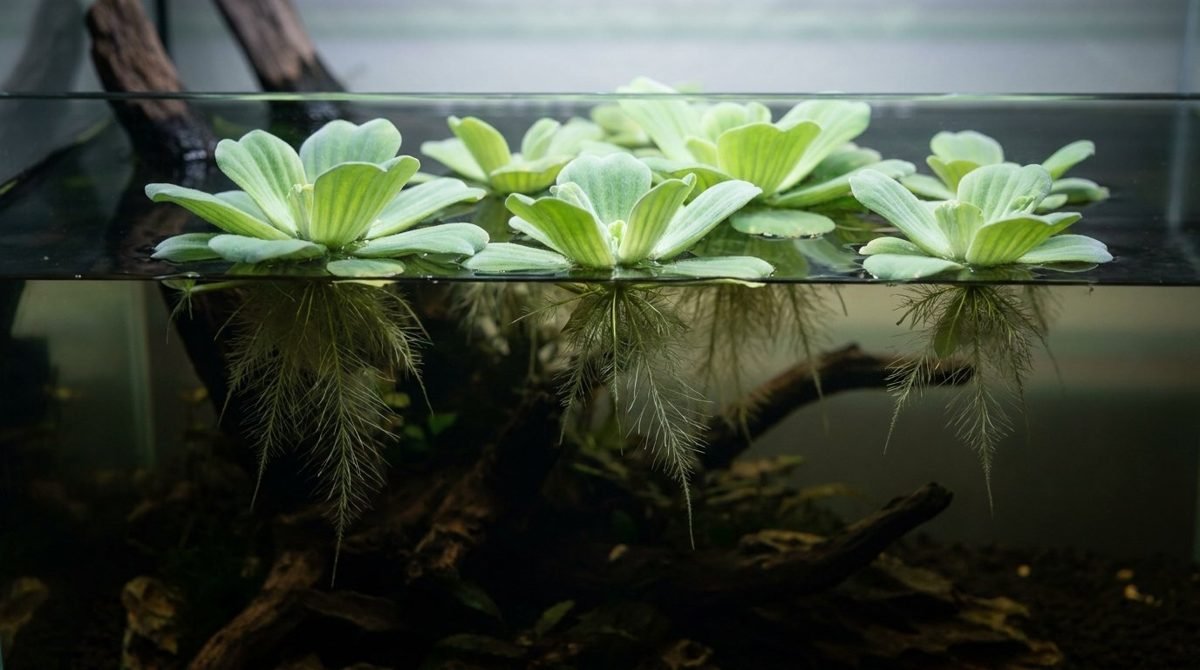
Quick answer: Dwarf water lettuce is an easy, warm-water floating plant that runs on no CO2 and basic care. Give it bright overhead light, keep the water surface calm so its fuzzy leaves stay dry, and it will reward you with fast growth and heavy nutrient export — it pulls nitrate and ammonia out of the water while shading the tank and giving fry and shrimp cover. The two things to know going in: it multiplies fast and needs regular thinning, and it’s regulated or outright banned in several US states, so check your local laws and never release it into the wild.
I almost skipped dwarf water lettuce because the regular kind got too big for my tanks — full-size water lettuce throws leaves the size of my palm. The dwarf form solved that, keeping the same velvety rosettes and long feathery roots at a scale that fits a home aquarium. I’ve used it for years to knock down nitrates in over-fed grow-out tanks and give shrimp somewhere to hide. It’s one of the easiest floaters there is — as long as you respect the one rule that trips up every new keeper, which I’ll get to.
Watch: Meet Dwarf Water Lettuce
What dwarf water lettuce is
Dwarf water lettuce is a small floating form of Pistia stratiotes. It grows as a rosette — a cabbage-like cluster of soft, ribbed leaves on the surface, with a tangle of fine feathery roots hanging straight down. The leaves have a velvety, fuzzy texture from tiny water-repelling hairs, and that fuzz is central to how you care for the plant.
It floats freely — you don’t plant it, you lay it on the surface. The roots aren’t anchoring anything; they’re feeding, pulling nutrients straight out of the water column. A healthy rosette stays compact and bright green and sends out runners with baby plants on the ends, which is how a couple of starter rosettes become a full surface mat in a month or two.
It’s a low-tech plant through and through — no CO2, no special substrate, nothing fancy. If you want more options in that same easy lane, I keep a running list on my easy aquarium plants with no CO2 guide.
Dwarf water lettuce care at a glance
| Requirement | Dwarf water lettuce needs |
|---|---|
| Difficulty | Easy — beginner-friendly floater |
| Lighting | Bright overhead light |
| CO2 | Not required |
| Temperature | About 70–85°F (warm-loving) |
| pH | About 6.5–7.5 |
| Placement | Floating only |
| Surface flow | Calm — no splash or spray on the leaves |
| Growth rate | Fast |
| Propagation | Daughter plants on runners |
| Best for | Nutrient export, fry/shrimp cover, shading |
| Legal note | Invasive — banned/regulated in some US states |
The light line is the one I’d underline. Floaters sit right at the top of the tank, so they want strong light coming down from above. A basic overhead LED is fine, but it needs to be bright — this isn’t a plant for a dim, shaded corner. If your light is weak, the rosettes shrink. For plants that handle low light better, see my low-light aquarium plants roundup; water lettuce isn’t really one of them.
Why you must keep the leaves dry
This is the rule that makes or breaks dwarf water lettuce, and it’s the mistake I see most often. Those velvety leaves are built to stay above the water and stay dry. The moment water sits on top of them — from filter splash, an air stone breaking the surface, a spray bar pointed up, or condensation dripping off a tight glass lid — the leaves rot. They go translucent, then brown and mushy, and the rot spreads through the rosette.
So the whole game is keeping the surface calm. I aim my filter output along the surface or slightly down, never up, and I kill any air stone churning the top. If I run a glass lid, I leave a gap so condensation can escape instead of dripping back onto the leaves — honestly water lettuce does best in an open-top tank where the leaves can dry between waterings. Strong agitation also piles the free-floating rosettes against the glass, where they bruise and rot.
If you’ve been fighting melt and can’t figure out why, look at your surface first. Nine times out of ten it’s flow or condensation soaking the tops of the leaves, not light or nutrients.
How to thin and propagate it
You won’t have to work to propagate this plant — your job is the opposite, keeping it from taking over. A growing rosette sends out short runners, and a daughter plant forms on the end of each: a tiny rosette with its own roots. Once it has a few leaves, snap the runner connecting it to the parent and you’ve got a new independent plant. Float the babies and they grow out on their own.
The thinning is the real maintenance. Left alone, dwarf water lettuce will carpet the entire surface, blocking light to everything below and shading itself, at which point the inner rosettes die back. I scoop out a handful by hand every week or two and keep roughly half to two-thirds of the surface open. It comes out in big floating rafts, so it’s a thirty-second job.
One point on disposal, which I’ll expand on below: because this plant is invasive, never toss trimmings into a ditch, pond, or storm drain. Bag them for the trash, or compost them somewhere they can’t wash into a waterway.
Common problems and fixes
Dwarf water lettuce only has a handful of failure modes, and each one points at a specific cause.
Melting or rotting leaves. Mushy, translucent, browning leaves almost always mean water is sitting on the leaf tops — surface splash, spray, an air stone, or condensation dripping off the lid. Calm the surface, redirect filter flow so it doesn’t hit the leaves, and open up the lid so it isn’t raining back down on the plant. Pull out any rosettes that have already turned to mush so they don’t foul the water, and the survivors will recover and spread.
Yellowing leaves. Pale or yellowing rosettes usually mean a nutrient gap — most often iron or general nitrogen — since this is a fast, heavy feeder that can outrun a lean tank. In a lightly stocked or new tank, a basic liquid all-in-one fertilizer dosed to the water clears it up fast. Floaters feed from the water, so liquid ferts matter more than anything you add to the substrate.
Tiny, stunted rosettes. When the plants stay small and refuse to grow out into full rosettes, the cause is almost always cold water or weak light. Below the low 70s this plant sulks, and dim light shrinks it the same way. Get the temperature up into its warm range and make sure the light overhead is genuinely bright, and the rosettes will size up and start throwing runners.
Is dwarf water lettuce right for your tank?
For a warm, open-top, low-tech tank, it’s a great pick — but there are two things that decide it for you.
What it’s great at. As a fast floater it’s a serious nutrient exporter, pulling nitrate and ammonia out of the water — exactly what you want in an over-fed or freshly cycled tank fighting algae. The shade it throws calms skittish fish, and the curtain of feathery roots gives baby fish and shrimp dense cover to hide and graze in. For a shrimp tank or fry grow-out, it’s hard to beat.
The warning that matters most. Pistia stratiotes is considered invasive, and it’s banned or regulated in several US states and regions — it clogs natural waterways when it escapes, so a number of states prohibit selling, owning, or transporting it. Before you buy it, check your state and local laws. And whatever you do, never release it or your trimmings into the wild — no ponds, ditches, or storm drains. Bag the trimmings and trash them. If it’s legal where you are and you can keep it contained, it’s an excellent plant; if it’s restricted, skip it, because there are plenty of legal floaters that do a similar job.
If you’re still building out a first low-tech setup, my aquarium plants for beginners guide walks through pairing a floater like this with the rest of the tank, and you can browse other species in my plant library.
FAQ
Does dwarf water lettuce need CO2 or fertilizer?
No CO2 — it’s a low-tech floater that pulls CO2 from the air at the surface, which is part of why it grows so fast. Fertilizer isn’t strictly required either, but because it’s a heavy, fast feeder, a basic liquid all-in-one fertilizer keeps the leaves green and the growth strong, especially in a lightly stocked or newly set-up tank. Since it feeds from the water, liquid ferts matter far more than anything you add to the substrate.
Why is my dwarf water lettuce melting or rotting?
Almost always because water is sitting on top of the leaves. The fuzzy leaves are meant to stay dry, so filter splash, spray bars pointed up, air stones breaking the surface, or condensation dripping off a tight lid will rot them — they go translucent, then brown and mushy. Calm the surface, redirect your flow so it doesn’t hit the plant, leave a gap in the lid, and remove any rosettes that have already turned to mush. The survivors bounce back quickly.
Why are the leaves turning yellow or staying small?
Yellowing usually means a nutrient gap — most often iron or nitrogen — since this plant is a fast, hungry feeder; a basic liquid fertilizer fixes it. Rosettes that stay tiny and won’t grow out are usually telling you the water is too cold or the light is too weak. Get the temperature up into its warm range, around 70–85°F, and make sure the overhead light is genuinely bright, and the rosettes will size up and start sending out runners.
How do I stop it covering the whole surface?
Thin it regularly — that’s the main maintenance with this plant. It multiplies fast by sending out daughter plants on runners, and left alone it will carpet the entire surface, block light to everything below, and start shading and killing its own inner rosettes. I scoop out a handful by hand every week or two and keep roughly half to two-thirds of the surface open. Because it’s invasive, bag the trimmings and trash them rather than dumping them outside.
Is dwarf water lettuce illegal or invasive anywhere?
Yes. Pistia stratiotes is considered invasive and is banned or regulated in several US states and regions because it clogs natural waterways when it escapes. Some states prohibit selling, owning, or transporting it entirely. Always check your state and local laws before buying it, and never release it or its trimmings into the wild — no ponds, ditches, or storm drains. If it’s restricted where you live, choose a legal floating plant instead.
Is dwarf water lettuce good for fry and shrimp?
It’s one of the better floaters for both. The long, feathery roots hanging below the rosettes give baby fish and shrimp dense cover to hide in, and those roots collect the film of microorganisms that fry and shrimplets graze on, so the plant feeds them as well as shelters them. The shade it throws also calms skittish fish. For a shrimp tank or a fry grow-out, it’s a strong pick — just keep it legal and contained.
Keep reading:
Educational guidance, not veterinary advice.
Author and editorial note
Written and maintained by Benjamin Thoden, founder of DBC Aquatics. This shrimp guide is reviewed through DBC Aquatics’ stability-first lens: cycle maturity, mineral consistency, molt safety, copper risk, grazing surfaces, and slow acclimation matter more than quick fixes. See our editorial standards for how guides are created, reviewed, and updated.
Leave a Reply