If your aquarium loses power, the goal is not to panic or chase every problem at once. The goal is to protect the fish from the things that can turn dangerous fastest while the filter, air pump, heater, or circulation are offline.
The fish do not automatically die just because the filter stopped. Risk depends on stocking level, tank size, water temperature, fish species, how long the outage lasts, and whether the tank still has oxygen at the surface. But once circulation and aeration stop, oxygen becomes the first concern because fish and filter bacteria both depend on it.
Start calm. Protect oxygen. Reduce waste. Keep the filter media alive. Manage temperature slowly. When power comes back, inspect the equipment before trusting the tank again.
Quick Answer
During an aquarium power outage, protect oxygen first. Add safe surface movement or battery aeration if you can, stop feeding during a prolonged outage, keep filter media wet and oxygenated where practical, avoid deep-cleaning or replacing biological media, manage temperature gradually, and inspect the filter, heater, cords, and water level before restarting everything.
Do not assume there is one universal survival time. A lightly stocked, cool, mature tank may handle an outage differently than a warm, heavily stocked tank. Watch the fish and protect the life-support functions in the right order.
First-Hour Rescue Order
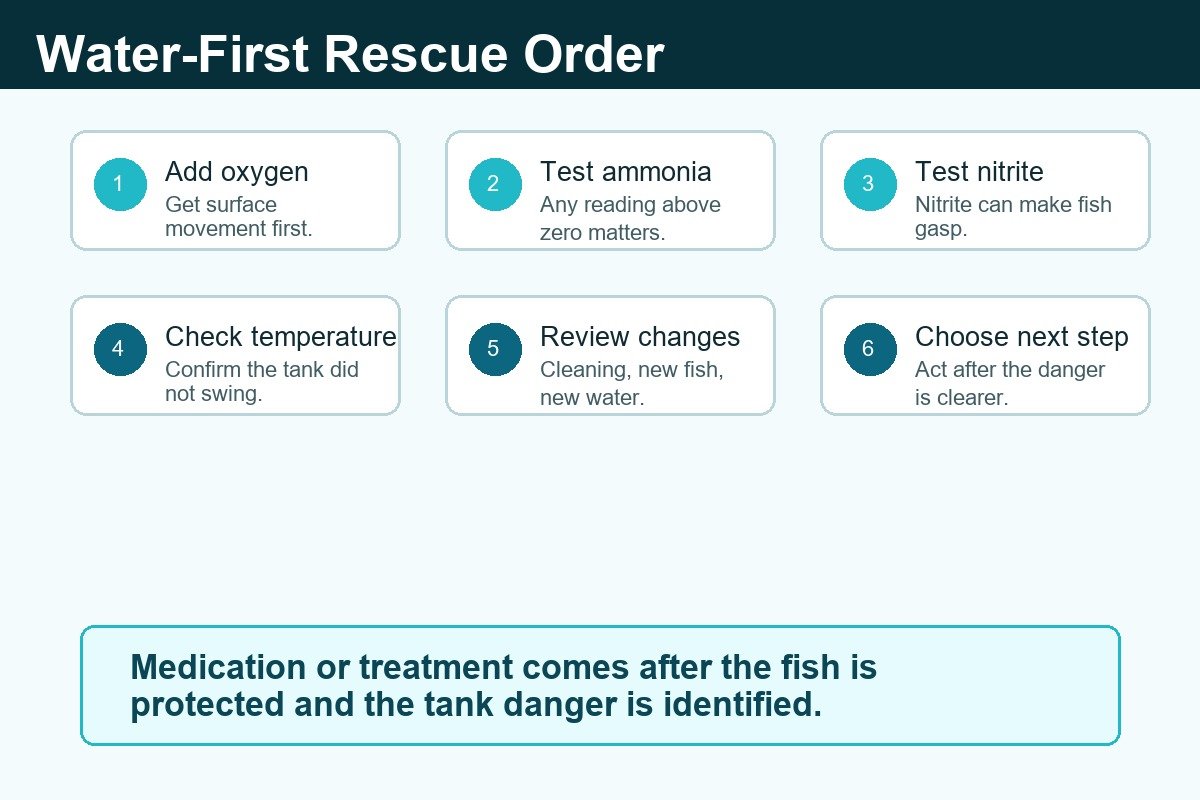
- Look at fish breathing first. Fish hanging at the surface, crowding flow, gasping, or acting weak need oxygen support before diagnosis.
- Add safe surface movement if possible. Use a battery air pump, USB air pump on a safe power bank, or carefully create surface agitation without splashing water near electrical equipment.
- Stop feeding while power is out. Food creates more waste, and more waste can become ammonia once filtration and oxygen are reduced.
- Keep biological media wet. Do not rinse the filter media under tap water, replace it, or let it dry out. If practical and safe, keep it in tank water with access to oxygen.
- Check temperature trend. Temperature risk depends on species, room temperature, outage length, and water volume. Do not chase perfect temperature with unsafe shortcuts.
- Protect electrical safety. Keep hands dry around plugs, use drip loops, avoid overloaded cords, and do not run household power equipment near aquarium water without proper safety setup.
- When power returns, inspect before trusting the filter. Confirm the filter primes correctly, flow is normal, the heater did not stick on, and no dirty stagnant water is being blasted back into the tank.
THE DBC RULE: Oxygen first. Waste lower. Biofilter protected. Restart safely.
What Matters Most While The Filter Is Off
A filter usually does more than trap debris. It moves water, helps gas exchange at the surface, and houses beneficial bacteria that process ammonia and nitrite. When power stops, those jobs are interrupted.
| Risk | Why It Matters | Safe First Move |
|---|---|---|
| Low oxygen | Fish and filter bacteria both need oxygen | Increase surface movement or aeration if you can do it safely |
| Rising waste | Food and fish waste can become ammonia | Stop feeding during a prolonged outage and remove obvious debris if safe |
| Biofilter stress | Filter bacteria can suffer if media dries or sits stagnant too long | Keep media wet; keep it oxygenated where practical; do not rinse or replace it |
| Temperature drift | Warm-water, cold-water, and marine animals tolerate different ranges | Track the thermometer and change temperature slowly, not suddenly |
| Unsafe restart | Filters may not prime; heaters or cords may be unsafe | Inspect equipment before walking away |
Oxygen Comes First
When the filter and air pump are off, surface movement can drop. That matters because oxygen enters the aquarium mostly where water meets air.
If fish are breathing hard, hanging at the top, or crowding the area where flow normally happens, treat oxygen as the first problem to support. A battery air pump is ideal if you already have one. A USB air pump can help if the power bank and cord placement are safe and dry. If you do not have backup aeration, focus on keeping the tank calm and avoiding anything that increases oxygen demand.
Do not stir the tank aggressively, dump in chemicals, or start a major cleaning session just because the power is out. Big changes can make the tank less stable when the fish already need calm water.
Use the fish gasping rescue guide if breathing remains the obvious symptom after basic oxygen support.
Stop Feeding Until The Tank Is Stable
Most fish can safely skip a short feeding window. During a power outage, feeding normally can create the exact problem you are trying to avoid: more waste in a tank with less circulation and reduced filtration.
If the outage is brief and everything restarts normally, resume carefully. If the outage is prolonged, fish are breathing hard, the tank is heavily stocked, or water tests are not safe after power returns, keep food light until ammonia and nitrite are controlled.
This is not about starving the fish. It is about not adding waste when the tank’s cleanup system is weakened.
Protect The Filter Bacteria
Do not rinse the biological media. Do not throw it away because the filter stopped. Do not deep-clean the filter during the outage unless there is a specific blockage or safety issue.
Beneficial bacteria live on filter media, sponge, ceramic rings, gravel, decor, and other surfaces. They need oxygenated water. During an outage, the safe goal is to keep the media wet and avoid killing bacteria with tap water, drying, heat, soap, or unnecessary replacement.
If your filter media can sit in tank water and stay oxygenated safely, that is usually better than letting it dry out. If the filter has been stagnant for a long time, inspect it before restart. Some filters can hold dirty, low-oxygen water. When power returns, confirm the filter is primed, the impeller is moving, and flow looks normal.
If you suspect the biofilter was damaged, use the Filter Bacteria Crash guide and test ammonia and nitrite.
Manage Temperature Without Unsafe Shortcuts
Temperature is important, but it is not the same emergency in every tank.
A tropical tank in a cold room, a goldfish tank in a mild room, and a reef tank in summer heat do not have the same risk. Tank volume matters too: small tanks swing faster than large tanks.
Safe temperature moves are usually boring:
- Keep the lid on if you need to slow heat loss, but do not block all gas exchange if oxygen is already the problem.
- Keep the aquarium away from cold drafts or direct sun when practical.
- Float sealed bags or bottles only if you can prevent leaks and sudden swings.
- Do not pour hot water directly into the tank.
- Do not place unsafe heaters, extension cords, generators, or power stations near aquarium water.
If the main issue is a heater failure or temperature drop, use the aquarium heater failure guide after oxygen and electrical safety are handled.
Tank-Wide Or One Fish?
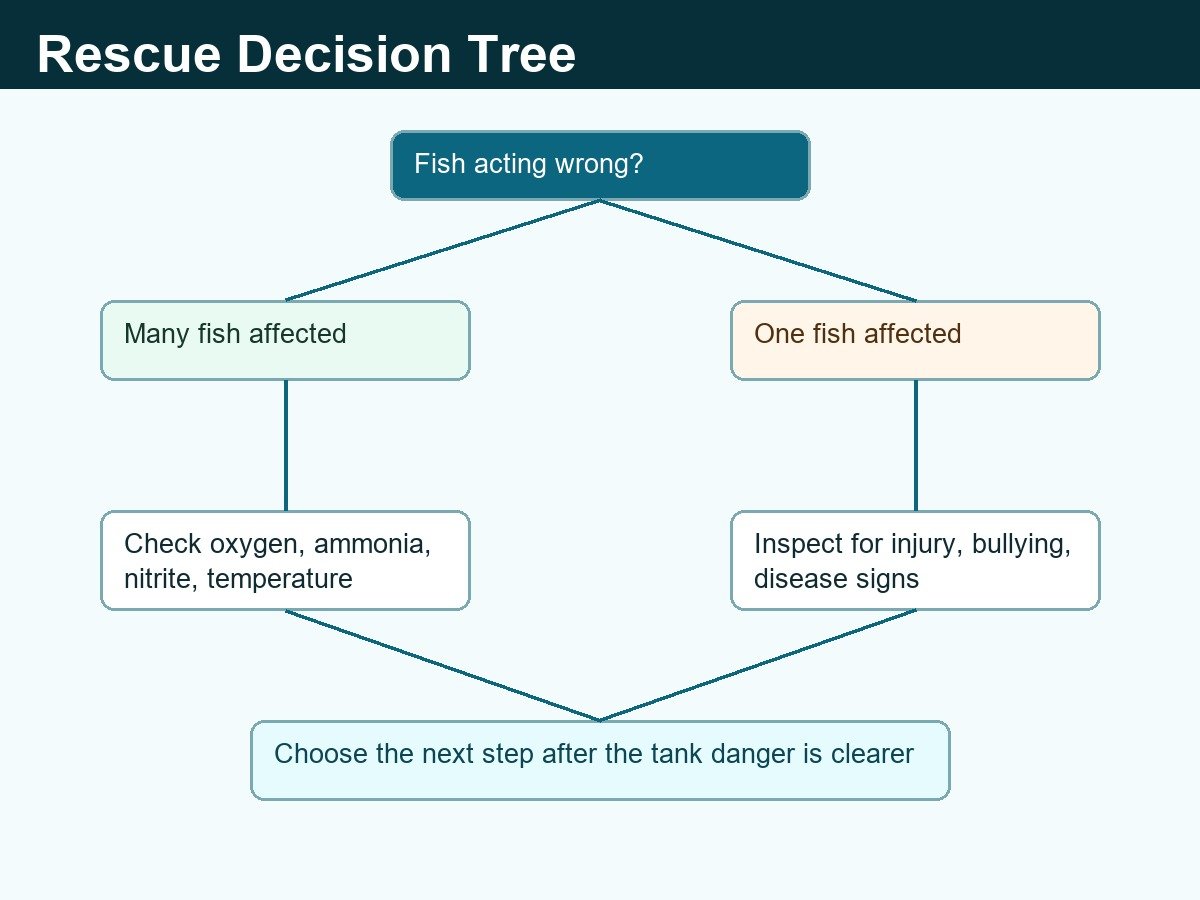
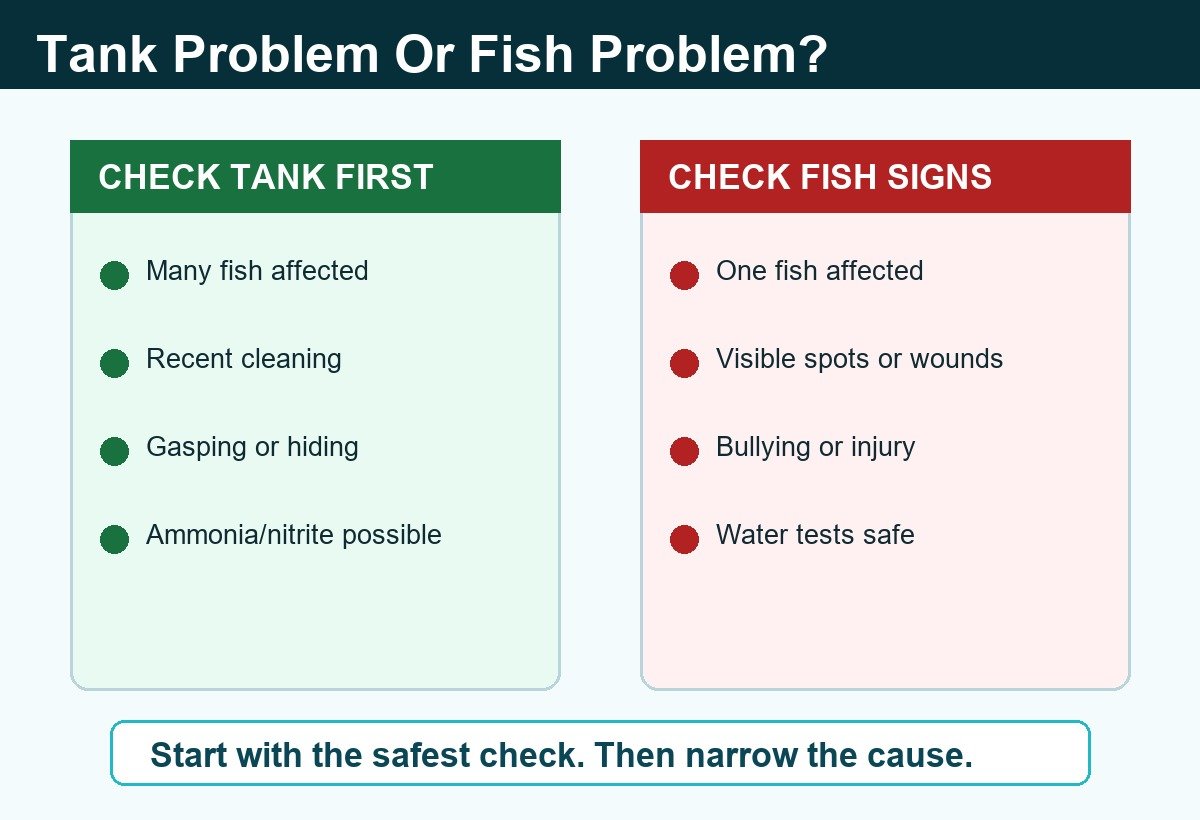
Use the pattern to decide where to look next. It does not prove the answer, but it prevents the wrong first move.
| What You See | What It Usually Points Toward | What To Do Next |
|---|---|---|
| Many fish breathing hard after the power goes out | Oxygen, circulation, temperature, ammonia, or nitrite | Add safe oxygen support and test water when possible |
| One fish struggling while others act normal | Injury, bullying, age, stress, or disease may be involved | Still check water first, then inspect the individual fish |
| Fish look okay but the outage is continuing | Risk may be building even before symptoms show | Keep feeding off, preserve filter media, track temperature |
| Fish worsen after power returns | Restart problem, stirred debris, ammonia/nitrite, heater issue | Inspect equipment and test ammonia/nitrite |
| Filter sounds wrong or flow is weak | Not primed, clogged, airlocked, impeller issue | Turn it off if unsafe, inspect, then restart correctly |
What To Do When Power Returns
Power restoration is not the finish line. It is a second safety check.
Before you walk away, confirm:
- The filter is actually moving water.
- The heater indicator and thermometer make sense.
- Cords, plugs, and outlets are dry and safe.
- The water level is high enough for the filter to run correctly.
- No filter media dried out, got rinsed, or was replaced unnecessarily.
- Fish breathing improves instead of getting worse.
- Ammonia and nitrite are tested if the outage was long, fish acted stressed, or the filter sat stagnant.
If ammonia or nitrite is above zero, do not ignore it because the water looks clear. Use the ammonia spike emergency guide and make one measured correction at a time.
What Not To Do During A Power Outage
Avoid the moves that make an outage worse:
- Do not assume fish automatically die when the filter stops.
- Do not feed normally through a prolonged outage just to keep the routine.
- Do not replace biological filter media because the filter was off.
- Do not rinse filter media in tap water during a panic.
- Do not pour hot or cold water directly into the aquarium.
- Do not plug wet equipment back in without inspection.
- Do not run generators, power stations, extension cords, or chargers near aquarium water without proper electrical safety.
- Do not treat with medication unless water and oxygen problems have been checked first and symptoms truly point to disease.
Freshwater, Saltwater, And Heavily Stocked Tanks
Freshwater and saltwater tanks share the same emergency order: oxygen, waste, temperature, biofilter, safe restart. The risk level can differ.
Saltwater tanks and heavily stocked systems often have less margin when circulation stops because oxygen demand and stability needs can be higher. Warm tanks also hold less oxygen than cooler water. Small tanks can change temperature faster than large tanks.
That still does not create a universal clock. It means you should watch breathing, keep oxygen moving where possible, avoid feeding, and test when power returns.
Build A Simple Outage Kit Later
Do this after the fish are stable, not before the rescue work.
Useful preparation can include a battery air pump, spare batteries, USB air pump, safe power bank, thermometer, water conditioner, test kit, towels, and a written restart checklist. These tools help only when they support the rescue order. They do not replace watching the fish, protecting the biofilter, or testing ammonia and nitrite.
If you use backup power, match it to the equipment load and runtime. Keep all power equipment dry and away from aquarium water. For generators and larger power stations, follow household electrical and ventilation safety guidance first.
Save The Rescue Order
If you are dealing with the outage right now, use the Aquarium Survival Checklist so you do not skip oxygen, temperature, filter flow, ammonia, nitrite, conditioner, or recent changes under stress.
If you want a place to keep your emergency notes and next steps, use the Aquarium Command Center after the immediate oxygen and equipment checks are handled.
Use the Checklist and Command Center first. The Aquarium Rescue Blueprint is for building repeatable rescue judgment after the immediate outage problem is under control.
Related DBC Rescue Guides
Use the next guide that matches what you find:
- Fish still gasping or hanging near the top: Fish Gasping Rescue Guide
- Ammonia or nitrite above zero: Ammonia Spike Emergency Guide
- Filter media may have been harmed: Filter Bacteria Crash Guide
- Temperature is the main issue: Aquarium Heater Failed Overnight
- You are not sure what symptom path fits: DBC Fish Symptoms Checker
- You need the full emergency map: Aquarium Rescue Hub
FAQ
How long can fish survive without a filter during a power outage?
There is no safe universal time. Risk depends on fish load, tank size, temperature, species, oxygen demand, water quality, and outage duration. Watch breathing, reduce waste, support oxygen, preserve filter media, and test ammonia and nitrite when power returns.
Should I feed my fish during a power outage?
Usually no during a prolonged outage. Skipping food temporarily lowers waste while filtration and circulation are weakened. Resume lightly only after oxygen, filter flow, temperature, ammonia, and nitrite are stable.
Should I clean the filter after the power comes back?
Inspect the filter first. Confirm it primes, flows normally, and is safe. Do not deep-clean or replace biological media unless there is a specific problem. If media was stagnant or dried, test ammonia and nitrite and use the filter bacteria crash path.
Is oxygen more important than heat?
Oxygen is usually the first visible concern when aeration and circulation stop, especially if fish are gasping. Temperature still matters, but the risk depends on species, room temperature, outage length, and tank volume. Protect oxygen and track temperature instead of making sudden unsafe changes.
Can I use a generator or power station for my aquarium?
Only if it can be used safely. Keep equipment dry, avoid overloaded cords, use proper household electrical safety, and follow ventilation rules for generators. Do not place power equipment where water can spill or splash onto it.
Bottom Line
An aquarium power outage is a rescue-order problem, not a guessing game. Fish do not automatically die when the filter stops, but oxygen, waste, biofilter health, temperature, and restart safety can become real risks. Protect oxygen first, stop adding waste, keep filter media wet and safe, avoid unsafe electrical moves, and inspect the system before trusting it again.
Leave a Reply