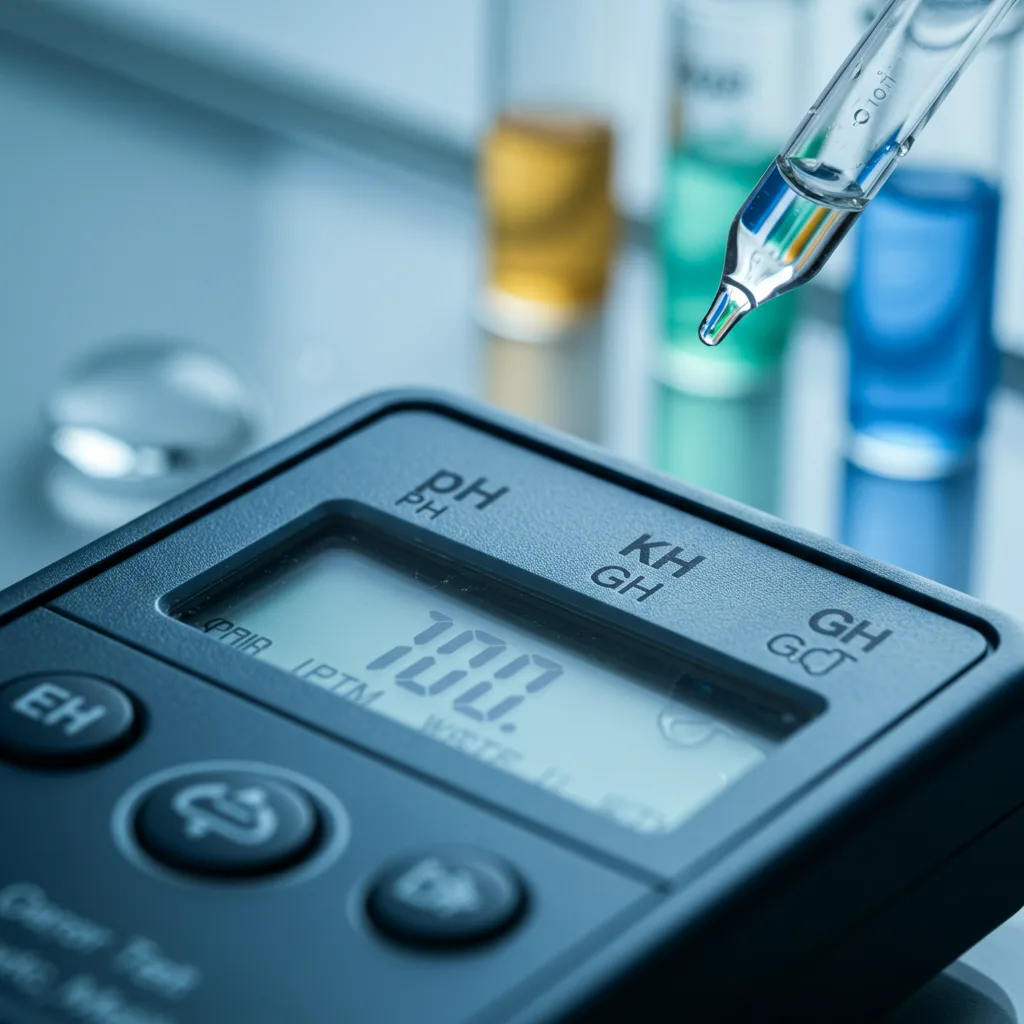
Quick answer: pH measures how acidic or alkaline your water is on a 0-14 scale, while KH and GH measure two different kinds of hardness. KH (carbonate hardness) is your water’s buffering capacity, the minerals that resist pH swings, so low KH lets pH crash. GH (general hardness) is the total dissolved calcium and magnesium, which drives osmoregulation in fish and shell or molting health in inverts.
Why pH, KH, and GH Matter in Aquariums
If you’ve ever had fish die mysteriously after a water change or plants suddenly melt — unstable water hardness might be the cause. pH, KH, and GH are deeply connected, and understanding them helps you build a stable, thriving tank.
This guide breaks down what each parameter means, how to test for it, and how to adjust it without harming your ecosystem.
What Is pH?
pH measures how acidic or alkaline your water is — on a scale from 0 to 14.
- pH 7.0: Neutral
- pH < 7.0: Acidic (soft water)
- pH > 7.0: Alkaline (hard water)
Most freshwater tropical fish thrive in a pH between 6.5 and 7.8. However, stability is more important than hitting a specific number.
What Is KH (Carbonate Hardness)?
KH is your water’s buffering capacity — it resists changes in pH. Low KH means your pH can swing rapidly, stressing or killing fish. High KH means your pH stays more stable.
- Low KH: < 3 dKH — fragile, easy to crash
- Moderate KH: 4–8 dKH — ideal for most community tanks
- High KH: 10+ dKH — common in African cichlid or tap water tanks
If your tank suffers from mysterious pH drops, it’s likely a buffering problem — not a pH problem.
What Is GH (General Hardness)?
GH measures the amount of dissolved minerals — mostly calcium and magnesium — in your water. It affects osmoregulation (how fish and inverts manage internal water balance), molting in shrimp, and plant growth.
- Low GH: < 4 dGH — soft water; good for tetras, discus, shrimp
- Moderate GH: 4–8 dGH — ideal for most planted tanks
- High GH: 10+ dGH — better for livebearers and cichlids
How to Test pH, KH, and GH
You’ll need a liquid test kit that includes KH and GH drops (API or JBL are popular options).
- pH: Test weekly, especially after water changes
- KH: Test monthly or when pH fluctuates
- GH: Test monthly or when breeding inverts or specific fish
Test your tap water, too — this tells you your baseline before adjustments.
How to Adjust KH and GH Safely
- To increase KH: Add crushed coral, aragonite sand, or baking soda (¼ tsp per 10 gal)
- To decrease KH: Use RO/DI water or mix with distilled water
- To increase GH: Add Seachem Equilibrium, Wonder Shell, or mineralized root tabs
- To decrease GH: Use RO water or specialized resins (not common)
Always adjust slowly — test in between each change and avoid large shifts in a single day.
What Fish Prefer Soft vs. Hard Water?
- Soft water fish: Discus, tetras, dwarf cichlids, ram cichlids, freshwater shrimp
- Hard water fish: Guppies, mollies, platies, African cichlids, snails
Final Thoughts
pH, KH, and GH can sound intimidating — but they’re just different ways of measuring stability and mineral content. Keep them within your fish’s comfort zone, and you’ll avoid mysterious deaths, algae blooms, and pH crashes.
Not sure where to start? Head over to our Water Testing Guide or troubleshoot your tank in our Water Quality Fix Guide.
Frequently asked questions
What KH and GH range should I target for community fish versus shrimp?
For a general community tank, aim for KH around 4-8 dKH and GH around 4-8 dGH. That buffers pH well and suits most tetras, rasboras, and livebearers. Shrimp split by type: neocaridina (cherry) want GH 6-8 and KH 2-5, while caridina (crystal, bee) want softer water around GH 4-6 and KH 0-2.
How do I raise or lower my water hardness?
To raise KH, add crushed coral, aragonite sand, or baking soda at about 1/4 tsp per 10 gallons. To raise GH, use a remineralizer like Seachem Equilibrium or a Wonder Shell. To lower either, mix in RO or distilled water to dilute your tap. Adjust slowly and test between changes, since fast swings stress fish more than the wrong number does.
Why does my pH keep dropping?
A pH that keeps sliding down is almost always a low KH problem, not a pH problem. When KH falls below about 3 dKH, the water loses its buffer and acids from fish waste and CO2 push pH down fast. Test your KH; if it’s under 3-4 dKH, raise it with crushed coral or a small amount of baking soda to stabilize the pH.
Are soft-water or hard-water fish easier to keep?
Hard-water fish are generally more forgiving for beginners. Guppies, mollies, platies, and most snails do well in GH 10+ and the stable, well-buffered pH that hard tap water provides. Soft-water species like discus, wild tetras, and dwarf cichlids want GH under 4 dGH and low KH, which means tighter control and often RO water, so they are less forgiving of mistakes.
How do I test hardness?
Use a liquid drop kit that includes separate KH and GH reagents, such as API or JBL. You count drops until the color changes, and each drop equals roughly 1 degree (dKH or dGH). Test pH weekly, especially after water changes, and test KH and GH monthly or whenever pH starts moving. Always test your tap water too so you know your starting baseline.
Does a water softener pillow help with hardness?
A water softener pillow lowers GH by swapping calcium and magnesium for sodium, so it is not a clean way to soften water and the effect fades as the resin saturates. It also does little for KH, so it won’t fix pH instability. For real, controlled soft water, RO or distilled water cut with tap is far more reliable than a pillow.
Author and editorial note
Written and maintained by Benjamin Thoden, founder of DBC Aquatics. This shrimp guide is reviewed through DBC Aquatics’ stability-first lens: cycle maturity, mineral consistency, molt safety, copper risk, grazing surfaces, and slow acclimation matter more than quick fixes. See our editorial standards for how guides are created, reviewed, and updated.
Leave a Reply