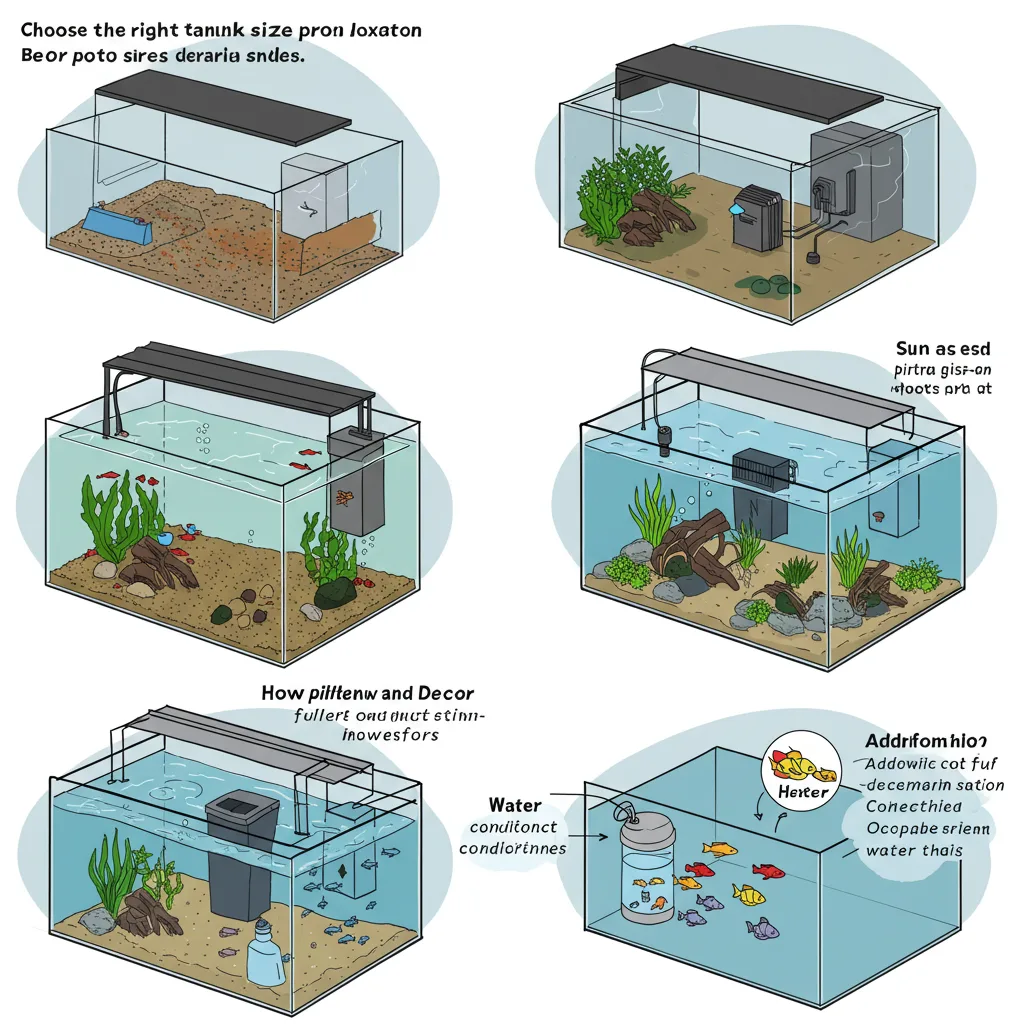
Quick answer: Set up in order: place the tank on a level surface, rinse and add 1-2 inches of substrate, install (but don’t power) the heater and filter, fill with dechlorinated water, then add hardscape. Turn on the heater and filter and let it run, then cycle the tank for 2-4 weeks until ammonia and nitrite read 0 and nitrates are rising. Only then add fish, a few at a time.
Start Smart: Why a Proper Setup Matters
Starting a new aquarium is exciting, but rushing the setup is the #1 cause of dead fish, algae explosions, and frustration. A well-planned tank gives your fish a stable, stress-free environment right from the start.
This beginner-friendly guide walks you through everything you need — from choosing a tank to cycling, stocking, and first maintenance.
Step 1: Choose the Right Size and Type of Tank
- Tank size: Start with at least 20 gallons — more water = more stability
- Shape: Standard rectangles are easiest to filter and heat
- Freshwater or saltwater? Start with freshwater — simpler and budget-friendly
Avoid tiny tanks (<5 gal) as your first setup — they’re harder to maintain and limit your fish choices.
Step 2: Gather the Essential Equipment
- Tank + lid or hood
- Filter (hang-on-back, sponge, or canister)
- Heater (rated for your tank size)
- Thermometer (digital or stick-on)
- Substrate (gravel, sand, or planted soil)
- Dechlorinator (like Seachem Prime)
- Test kit (liquid — API Freshwater Master Kit)
- Aquarium-safe decorations, rocks, or driftwood
- Optional: Live plants — see our Plant Library
Step 3: Set Up the Tank and Equipment
- Place the tank on a level, sturdy surface away from direct sunlight
- Rinse substrate (no soap!) and add to tank (1–2 inches depth)
- Install heater and filter (but don’t plug in yet)
- Fill tank slowly with dechlorinated water
- Decorate with rocks, plants, and hardscape
Now you’re ready to turn on the heater and filter. Let it run for 24 hours before moving on to cycling.
Step 4: Cycle the Tank (Establish the Nitrogen Cycle)
Cycling builds beneficial bacteria that break down fish waste. Learn the full Nitrogen Cycle, but here’s the short version:
- Fishless cycle: Add bottled ammonia or fish food — test daily
- Fish-in cycle: Use hardy fish like zebra danios — test daily, use Prime
- Add bottled bacteria: (e.g., FritzZyme, Stability) to jumpstart the cycle
Cycle time: 2–4 weeks. Your tank is ready when ammonia = 0, nitrite = 0, and nitrates are rising.
Step 5: Add Your First Fish
- Stock slowly — no more than 3–4 small fish at a time
- Float sealed fish bags in tank for 20 mins
- Add fish + water gradually over 30–60 mins
- Turn off aquarium light for a few hours after introduction
Choose hardy beginner species: guppies, platies, corydoras, zebra danios, or neon tetras. Avoid goldfish — they need huge tanks and produce heavy waste.
Step 6: Begin Basic Maintenance
- Weekly: 25–30% water change, test water, wipe glass
- Monthly: Rinse filter media in tank water, prune plants
- Daily: Feed fish small amounts, observe behavior, check temp
Download our full Aquarium Maintenance Checklist for a printable schedule.
Final Tips for First-Time Aquarists
- Don’t overfeed — it ruins water quality fast
- Don’t add too many fish at once — increases ammonia
- Be patient — stability takes time
- Always test water before reacting to cloudy water or algae
Need help solving common problems? Explore our guides on ammonia & nitrate control and disease prevention.
Frequently asked questions
How long before I can add fish to a new tank?
Plan on 2-4 weeks. The tank needs to cycle first so beneficial bacteria can build up and process fish waste. The tank is ready when your test kit shows ammonia at 0, nitrite at 0, and nitrates rising. Adding fish before that exposes them to toxic ammonia spikes.
Do I need to cycle the tank first?
Yes. Cycling establishes the bacteria that break down fish waste, and skipping it is the most common reason new fish die. You can do a fishless cycle with bottled ammonia or fish food, or a fish-in cycle with hardy fish like zebra danios while dosing Seachem Prime. Bottled bacteria like FritzZyme or Stability speeds it up but does not replace testing daily.
What equipment does a beginner tank need?
At minimum: a tank of at least 20 gallons with a lid, a filter (hang-on-back, sponge, or canister), a heater rated for your tank size, a thermometer, substrate, and a dechlorinator. You also need a liquid test kit like the API Freshwater Master Kit to monitor the cycle. Decorations, rocks, or driftwood are optional but help fish feel secure.
Can I use tap water in my aquarium?
Yes, but you must treat it with a dechlorinator like Seachem Prime first. Tap water contains chlorine or chloramine that kills the beneficial bacteria in your filter and harms fish. Add the dechlorinator as you fill the tank, following the dose on the bottle for your water volume.
How many fish should I start with?
Add no more than 3-4 small fish at a time, even after the tank is cycled. Adding too many at once overloads the bacteria and causes an ammonia spike. Stick to hardy beginner species like guppies, platies, corydoras, zebra danios, or neon tetras, and avoid goldfish since they need large tanks and produce heavy waste.
Why is my new tank cloudy?
Cloudy water in a new tank is usually a bacterial bloom, which is a normal part of the cycle as bacteria populations establish. It typically clears on its own within a few days to a couple of weeks. Test your water before reacting; if ammonia and nitrite are still present, just keep cycling rather than treating the cloudiness directly.
Author and editorial note
Written and maintained by Benjamin Thoden, founder of DBC Aquatics. This plant guide is reviewed for low-tech practicality: correct placement, light level, substrate or rhizome needs, melt risk, algae pressure, and what a beginner can maintain consistently. See our editorial standards for how guides are created, reviewed, and updated.
Leave a Reply