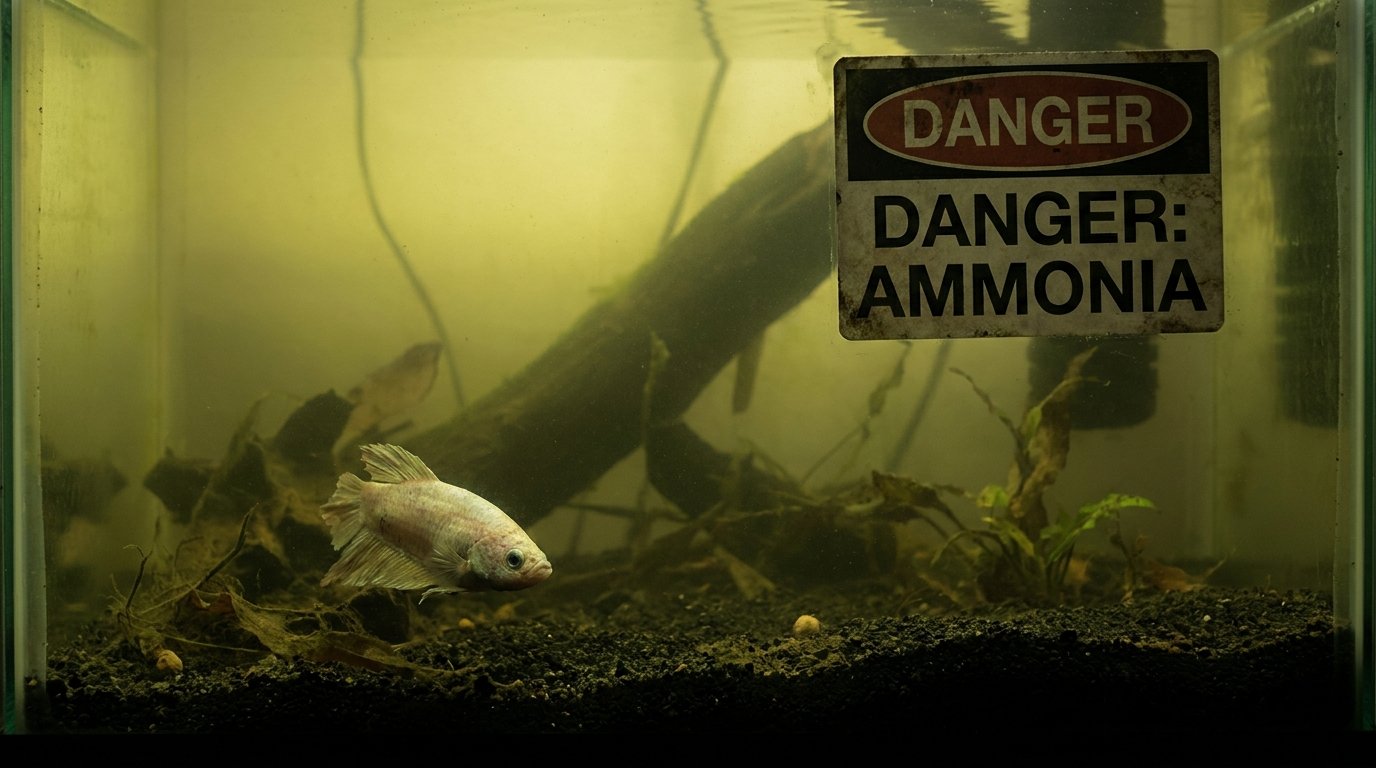
A fish hiding and not eating is easy to overreact to. You look in the tank, the food hits the water, and one fish stays tucked behind the filter or under a plant like something is wrong.
Sometimes it is normal stress. Sometimes it is the first warning that water quality, bullying, oxygen, or disease is starting to catch up with the fish.
If a fish is hiding and not eating, test ammonia, nitrite, nitrate, pH, and temperature first. Then check for bullying, heavy breathing, clamped fins, white spots, swelling, torn fins, or faded color. Do not medicate just because the fish skipped a meal. Find out whether this is stress, water quality, or a real disease sign.
Here’s what I would check first
Do not chase the fish around the tank. That only adds stress. Watch from a distance for a few minutes and look for patterns.
- Is the fish breathing fast? Fast breathing moves oxygen and toxins higher on the list.
- Are fins clamped? Clamped fins usually mean stress, water quality, temperature, or illness.
- Is another fish chasing it? Bullying often happens when the owner is not standing close to the tank.
- Did anything change recently? New fish, water change, filter cleaning, medication, new decor, or temperature swing.
- Are other fish acting normal? If everyone is off, think tank problem first. If one fish is off, think stress, bullying, injury, or disease.
Symptoms that matter
Hiding by itself is vague. Hiding plus another symptom is where the diagnosis starts.
| Behavior | Likely direction | What to check first |
|---|---|---|
| Hiding but breathing normally | Stress, new tank, bullying, or normal shy behavior | Tankmates, light level, hiding places, recent changes |
| Hiding and breathing fast | Oxygen, ammonia, nitrite, gill irritation, disease | Aeration, ammonia, nitrite, temperature |
| Hiding with clamped fins | Stress, water issue, temperature, early illness | Ammonia, nitrite, temperature, bullying |
| Hiding with torn fins | Bullying, fin nipping, injury, fin rot | Tankmates, fin edges, water quality |
| Hiding with white spots or fuzzy patches | Possible disease | Quarantine plan and medication match |
Likely causes
1. Poor water quality
The hidden problem is often ammonia or nitrite. Fish may hide because their gills are irritated or because they feel weak. If more than one fish is hiding, breathing hard, or ignoring food, test water before doing anything else.
2. Bullying or stress from tankmates
A bullied fish may eat less because it is afraid to come out. Watch the tank from across the room. You may see chasing, guarding, fin nipping, or one fish controlling the best hiding spot.
3. New fish adjustment
New fish often hide. Shipping, netting, bagging, bright lights, and new water all stack stress. Give the fish cover, dim the lights, and do not keep poking around the tank.
4. Temperature trouble
A cold or overheated tank can slow appetite fast. A stuck heater or cold room can make fish hide, clamp fins, or sit near the bottom.
5. Early disease
Disease is possible, but do not jump there first. Look for extra signs: white spots, fuzzy growth, ulcers, swelling, pineconing, worms, flashing, frayed fins, or rapid breathing.
What to test
- Ammonia: 0 ppm.
- Nitrite: 0 ppm.
- Nitrate: ideally under 20-40 ppm.
- pH: check for sudden swings.
- Temperature: verify with a thermometer, not the heater dial.
- Oxygen clues: surface gasping, weak flow, warm water, or fish near filter output.
Immediate fix
Start with the safest moves.
- Dim the lights for the day.
- Stop feeding for a few hours, then offer a tiny amount later.
- Test ammonia and nitrite.
- Add gentle aeration if breathing looks fast or fish are near the surface.
- If water tests show toxins, do a temperature-matched water change with conditioner.
- If one fish is being bullied, add cover or separate the aggressor if needed.
Long-term fix
The long-term fix depends on the cause. Do not solve every hiding fish the same way.
- If water quality is the issue, fix the cycle, feeding, stocking, and maintenance routine.
- If bullying is the issue, adjust stocking, layout, line-of-sight breaks, or remove the problem fish.
- If the fish is new, give it cover and a quiet adjustment period.
- If disease signs appear, move toward quarantine and symptom-matched medication.
Common mistakes
- Chasing the fish to see it better: This makes stress worse.
- Adding medication too early: Hiding is not a diagnosis.
- Feeding more to tempt it: Extra food can rot and create ammonia.
- Ignoring bullying: A stressed fish may look sick because it never gets peace.
- Assuming clear water is safe: Clear water can still have ammonia, nitrite, low oxygen, or temperature problems.
Author and editorial note
This DBC Aquatics guide is written by Benjamin Thoden for beginner fishkeepers who need calm, practical troubleshooting. The goal is to help you stabilize the tank first, check the basics, and avoid guessing with chemicals or medication. You can read how DBC Aquatics creates and updates advice in our editorial standards.
DBC practical tip: If one fish is hiding, I watch tankmates first. If several fish are hiding or breathing hard, I test water first. That split saves a lot of guessing.
Use the next symptom to narrow it down
Hiding and not eating is a clue, not a diagnosis. Watch breathing, fins, bullying, flashing, and whether one fish or the whole tank is affected.
- Aquarium Rescue Hub – start here if the tank has more than one warning sign.
- Fish Symptoms Checker – compare hiding, clamped fins, flashing, gasping, and bottom sitting.
- Clamped fins in fish – use this if the fish is withdrawn and holding fins tight.
- Fish flashing and scratching – use this if hiding comes with rubbing on objects.
- Fish medication guide – choose treatment only when symptoms fit.
Frequently asked questions
Why is my fish hiding and not eating?
A fish that hides and refuses food may be stressed, bullied, exposed to poor water quality, adjusting to a new tank, dealing with temperature problems, or starting to get sick. Test water first, then look for bullying and visible disease signs.
How long can fish go without eating?
Many healthy adult aquarium fish can go a few days without food, but refusing food with hiding, heavy breathing, clamped fins, or faded color means you should check the tank right away.
Should I medicate a fish that is hiding?
Not unless symptoms point to a disease. Hiding alone is not enough to choose medication. Check ammonia, nitrite, temperature, oxygen, tankmates, and visible signs first.
Can new fish hide and not eat?
Yes. New fish often hide for a day or two. Keep lights low, avoid chasing them, offer small food, and make sure water parameters are safe.
Keep diagnosing before you medicate
If the first fix does not settle the tank, do not start throwing products at it. Work sideways through the closest symptoms and look for the pattern. Water, oxygen, temperature, bullying, and recent maintenance explain more emergencies than most medications do.
- Aquarium Rescue Hub – start over if more than one symptom is happening
- Fish acting weird after a water change – common after maintenance or large water changes
- Fish lying on the bottom – urgent checks for oxygen, ammonia, temperature, and injury
- Red gills in aquarium fish – gill irritation, ammonia, nitrite, or chlorine exposure
- Fish medication guide – use after water and oxygen checks
Leave a Reply