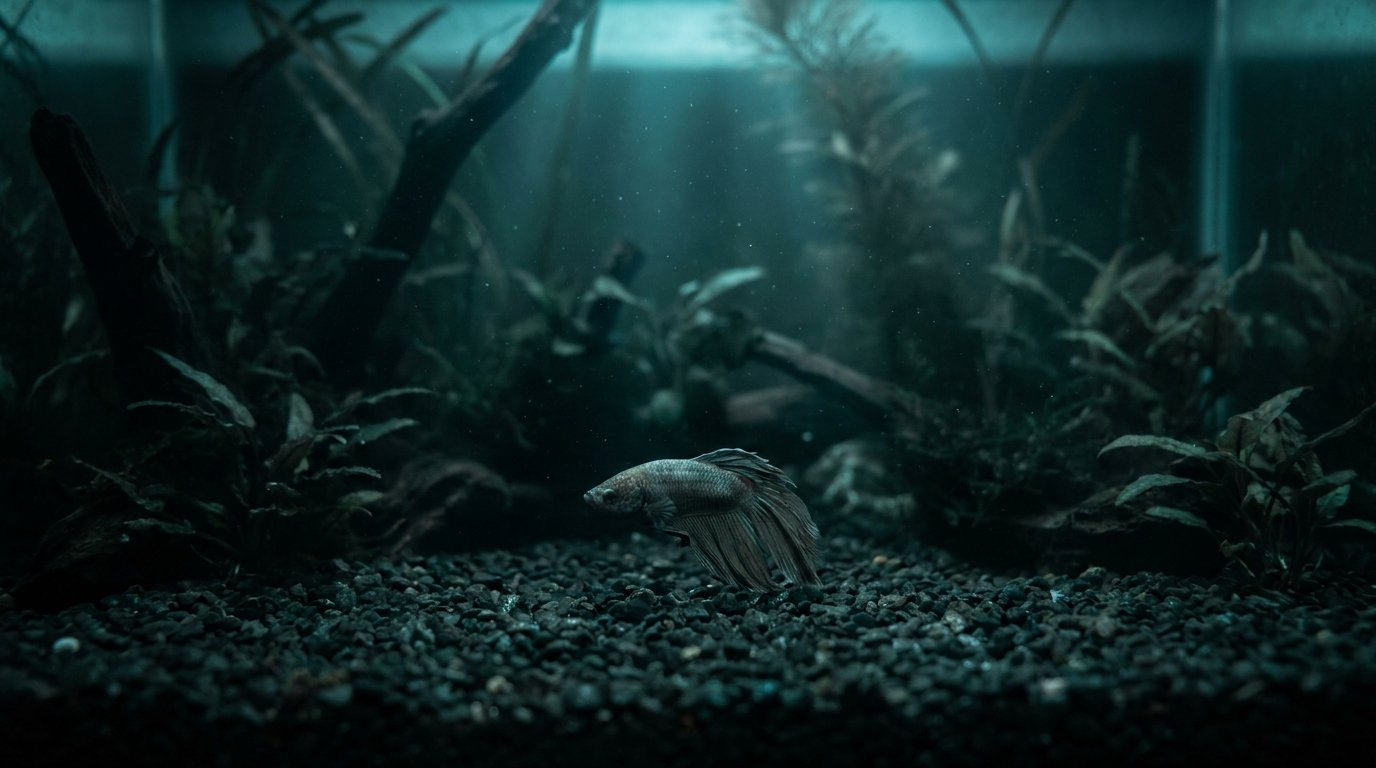
Quick answer: Clamped fins — fins held tight against the body — are a general distress signal, usually caused by water quality (ammonia, nitrite, or wrong temperature), not a specific disease. Test the water and check the heater first; medicating before fixing the water wastes time and can crash your filter’s beneficial bacteria.
You walked past the tank and your fish looked off — fins pressed flat against its body like a closed umbrella, instead of fanned out and flowing. That is clamped fins, and if your stomach dropped, take a breath. It is one of the most common and most survivable warning signs in the hobby, and you found it early.
Here is the one thing not to do first: do not reach for medication. Clamped fins is not a disease — it is a signal — and the single most common cause is water quality, not a bug you can dose away. Pouring in meds before you test the water can poison your biofilter and make a fixable problem worse. Stabilise first. Diagnose second. Treat last.
What clamped fins actually look like
Healthy fish hold their fins open and relaxed — the dorsal stands up, the tail and pectorals fan out, and the fish “flutters” gently as it swims. A clamped fish does the opposite: the dorsal fin lies folded down along the back, the tail looks pinched and narrow, and the pectoral fins are held tight to the flanks. The fish often looks smaller and stiffer than usual.
Clamping rarely arrives alone. Watch for the companions: hovering near the surface or sulking on the bottom, faster or laboured gill movement, loss of appetite, darker or washed-out colour, or “flashing” (scraping against decor). Those extra clues are exactly how you tell a water problem from a parasite — so observe before you act. If your fish is also gulping at the surface, read fish gasping at the surface alongside this guide.
The hidden danger most owners miss
Clamped fins is the fish equivalent of “I feel awful.” It is a non-specific distress signal that appears before a specific disease becomes visible — and that timing is exactly why it gets misread. Owners see clamping, assume “disease,” and dose an anti-parasite or antibiotic. But most of the time the real cause is invisible: ammonia, nitrite, the wrong temperature, or a pH swing. Medicating a water-quality problem does nothing for the fish and a lot of harm to the tank.
Ammonia toxicity is a moving target: at pH 7.0 and 25°C only about 0.6% of total ammonia is the toxic un-ionised form (NH3), but at pH 8.0 that jumps to roughly 5.4% — nearly ten times more poison from the same test reading. A “0.5 ppm” result can be harmless or lethal depending on your pH and temperature.
That is the trap. Many anti-parasite and antibiotic treatments are toxic to the nitrifying bacteria in your filter. Dose blindly, kill the biofilter, and you trigger an ammonia spike on top of whatever was already stressing the fish — turning a clamped fin into a dead fish. Diagnose first, and you almost never have to take that risk.
Clamped Fins: Symptom-to-Solution
| What you see | Most likely cause | What to test | Immediate action | Long-term fix |
|---|---|---|---|---|
| Whole tank clamped after recent setup, new fish, or heavy feeding | Ammonia or nitrite spike (cycle crash) | Ammonia, nitrite, nitrate, pH, temp | 25–50% water change, dechlorinated, matched temp; stop feeding | Finish cycling; feed less; never overstock |
| Clamped, sluggish, sitting on the bottom, water feels cool | Too cold / heater failure | Thermometer (don’t trust the dial) | Raise temp slowly, ~1°C per hour, toward species range | Reliable heater + separate thermometer |
| One fish clamped, white spots like salt grains, flashing/scraping | Ich or other parasite | Visual check; confirm water is clean first | Quarantine if possible; raise temp gradually; treat per label | Quarantine all new fish 2–4 weeks |
| Clamped and gasping at the surface or at the filter outlet | Gill damage or low oxygen | Ammonia/nitrite (gill irritants), temp | Add aeration/surface agitation; water change | Fix toxin source; increase surface flow |
| Clamping started right after a water change | pH/temp swing or chlorine/chloramine | pH before vs after; temp of new water | Dose dechlorinator; match temp; smaller, slower changes | Always treat tap water; change ≤30% at once |
| Clamped with ragged, fraying, or receding fin edges | Fin rot from chronic poor water | Ammonia, nitrite, nitrate (look for high nitrate) | Improve water quality first; clean substrate | Consistent maintenance; treat infection only if it spreads |
Water quality is the prime suspect — start there. Ammonia and nitrite both attack the gills, which is why a stressed fish clamps down and breathes harder. Nitrite is especially sneaky: it crosses the gills and binds to haemoglobin, forming methemoglobinemia (“brown blood disease”) so the blood can no longer carry oxygen. The fish is effectively suffocating in clean-looking water. This is why clamped fins so often appears in a tank that is fewer than 6–8 weeks old and not yet fully cycled — the biofilter hasn’t grown enough to keep up. Test with a liquid kit, not strips, and read your numbers against the ammonia and nitrite poisoning guide.
Temperature is the second great misdiagnosed cause. Fish are ectotherms, so their immune system runs on water heat. Push a tropical species below its range — say, a betta or guppy under about 23°C — and immune function slows dramatically; the fish becomes lethargic, clamps its fins to conserve energy, and grows far more vulnerable to the very parasites people then try to treat. A failed or under-sized heater quietly creates “disease” symptoms that are really just cold stress. Always confirm with a real glass thermometer, because heater dials lie. Browse reliable gear in the aquarium tools roundup.
Only after water and temperature are ruled out should you think parasite or infection. The tell is distribution and detail: water-quality clamping usually hits several or all fish at once and correlates with a recent change, feeding, or new tank, while disease clamping tends to hit one fish first and comes with visible signs — white spots, a grey haze of excess slime, ulcers, or persistent flashing. If only your most delicate fish is affected and the rest look fine, infection moves up the list. Not sure which pattern you have? Run the fish symptoms checker to narrow it down, and if you’re losing fish fast, jump to why your fish keep dying.
What to do in the first 10 minutes
Work in this order. Do not skip ahead to treatment.
- Observe and count. Is it one fish or several? Note any extra symptoms — spots, flashing, gasping, colour change. One fish points to disease; the whole tank points to water or temperature.
- Test the water. Ammonia, nitrite, nitrate, and pH with a liquid kit. Anything above 0 ppm ammonia or nitrite is your answer.
- Check the temperature with a real thermometer and compare it to your species’ range. Cold water alone can cause clamping.
- If toxins are present, do a partial water change — 25–50% with dechlorinated, temperature-matched water. This is the safest, fastest intervention and it never hurts.
- Stop feeding for 24–48 hours if ammonia or nitrite is elevated. Less food means less waste while the filter recovers.
- Only then consider treatment — and only if the water is clean, temperature is correct, and you see clear signs of a specific disease.
Most clamped fins relax within hours to a couple of days once the underlying stressor is gone. If you want the full structured protocol, the Aquarium Rescue Blueprint walks you through stabilising step by step.
What NOT to do
- Don’t dose medication before testing. Clamped fins is most often a water problem, and many meds kill your biofilter — adding an ammonia spike to your fish’s troubles.
- Don’t do a giant 100% water change in a panic. A massive swing in temperature, pH, or chemistry shocks the fish further. Keep changes to 25–50% and match the temperature.
- Don’t crank the heater fast to “fight disease.” Sudden temperature jumps are stressful and can crash oxygen levels. Adjust gradually — about 1°C per hour at most.
- Don’t add new fish, food, or “tonic” additives while the tank is unstable. Every extra variable makes diagnosis harder and the water worse.
Fish clamped fins: the quick decision tree
If you searched fish clamped fins, here is the practical split I use. One fish with clamped fins can be stress, bullying, cold water, or early disease. Several fish with clamped fins usually means the tank itself is bothering them, so water quality and oxygen come first.
| What you see | Likely cause | What to check first |
|---|---|---|
| One fish has clamped fins | Bullying, injury, stress, cold water, early illness | Watch tankmates, check temperature, inspect the fish |
| Several fish have clamped fins | Ammonia, nitrite, low oxygen, temperature, pH swing | Test water and add aeration |
| Clamped fins after a water change | Chlorine, temperature shock, pH swing, stirred waste | Check conditioner, temperature, ammonia, nitrite |
| Betta has clamped fins | Cold water, ammonia, stress, flow, illness | Verify 78-80F, test water, reduce stress |
| Clamped fins with gasping | Oxygen or gill irritation is urgent | Add aeration and test toxins now |
Benjamin’s practical rule for clamped fins
Do not treat clamped fins like a diagnosis. Treat it like a dashboard warning light. The light tells you something is wrong, but it does not tell you whether the problem is ammonia, temperature, stress, bullying, parasites, or infection.
Here is what I would check first: ammonia, nitrite, temperature, surface movement, and what changed in the last 48 hours. If those are clean and only one fish is affected, then I start looking harder at bullying, injury, and disease signs.
Related rescue checks
More clamped fins questions
Can fish recover from clamped fins?
Yes, fish can recover from clamped fins when the cause is found early. Recovery is most likely when ammonia and nitrite are 0 ppm, temperature is stable, oxygen is strong, and disease or bullying is handled quickly.
How do you treat fish with clamped fins?
Treat clamped fins by testing water first, fixing ammonia or nitrite, checking temperature, improving oxygen, and looking for bullying or disease signs. Medication is only the right treatment when symptoms point to infection, parasites, or fin damage.
Why does my betta have clamped fins?
Betta clamped fins often come from cold water, ammonia, nitrite, stress, poor water quality, strong flow, or illness. Check the heater, temperature, water tests, and whether the betta is breathing normally before choosing medication.
Clamped Fins FAQ
Are clamped fins always a sign of disease?
No. Clamped fins is a non-specific distress signal, not a diagnosis. The most common cause is poor water quality — ammonia, nitrite, a pH swing, or the wrong temperature — not a parasite or infection. Test your water before assuming disease.
How do I tell water-quality clamping from a parasite?
Look at distribution and detail. Water-quality problems usually affect several or all fish at once and follow a recent change, heavy feeding, or a new tank. Parasites often hit one fish first and add visible signs like white spots, excess slime, or flashing against decor.
Should I medicate clamped fins right away?
No. Medicate last, not first. Many treatments are toxic to the nitrifying bacteria in your filter, so dosing a water-quality problem can crash your cycle and cause an ammonia spike — making things worse. Treat only after clean water and correct temperature are confirmed.
Can cold water cause clamped fins?
Yes. Fish are cold-blooded, so a temperature below their species range slows the immune system and makes fish lethargic and clamped. A tropical fish under about 23°C is a classic case. Check with a real thermometer, since heater dials are often wrong.
How fast will clamped fins recover?
Once the underlying stressor is removed, most fish relax their fins within a few hours to a couple of days. If clamping persists after the water tests clean and temperature is correct, then look more carefully for a specific disease.
My ammonia reads 0.5 ppm — is that dangerous?
It depends on pH and temperature. The same total ammonia reading is far more toxic at higher pH and warmer water, because more of it becomes the harmful un-ionised form. At pH 8.0 it can be nearly ten times more poisonous than at pH 7.0, so any detectable ammonia warrants a water change.
Recommended gear
Liquid Water Test Kit
Clamped fins usually trace back to water quality. Confirm ammonia, nitrite, and pH before you reach for any medication.
Check price Affiliate linkContinue Your Diagnosis
- Fish Symptoms Checker — find the cause fast
- Aquarium Rescue Hub
- Ammonia & Nitrite Poisoning
- Aquarium Rescue Blueprint — the exact rescue system
Educational guidance, not veterinary advice.
Author and editorial note
Written and maintained by Benjamin Thoden, founder of DBC Aquatics. This maintenance guide is reviewed around repeatable home checks: water tests, temperature, filter bacteria, oxygen, feeding, debris, and routines a beginner can actually keep. See our editorial standards for how guides are created, reviewed, and updated.
Related Rescue Guides
Fish Flashing: Why Your Fish Is Scratching and What to Do First
Fish flashing is the earliest sign of gill or skin irritation. Learn why clear water still…
How Overfeeding Quietly Kills Aquarium Fish
Overfeeding rarely kills fish at the dinner table. It kills days later through ammonia spikes, overnight…
Fish Gasping but Water Tests Fine? The Hidden Oxygen Problem
Oxygen problems are the most misdiagnosed crisis in beginner tanks. Learn the four hidden causes and…
Leave a Reply