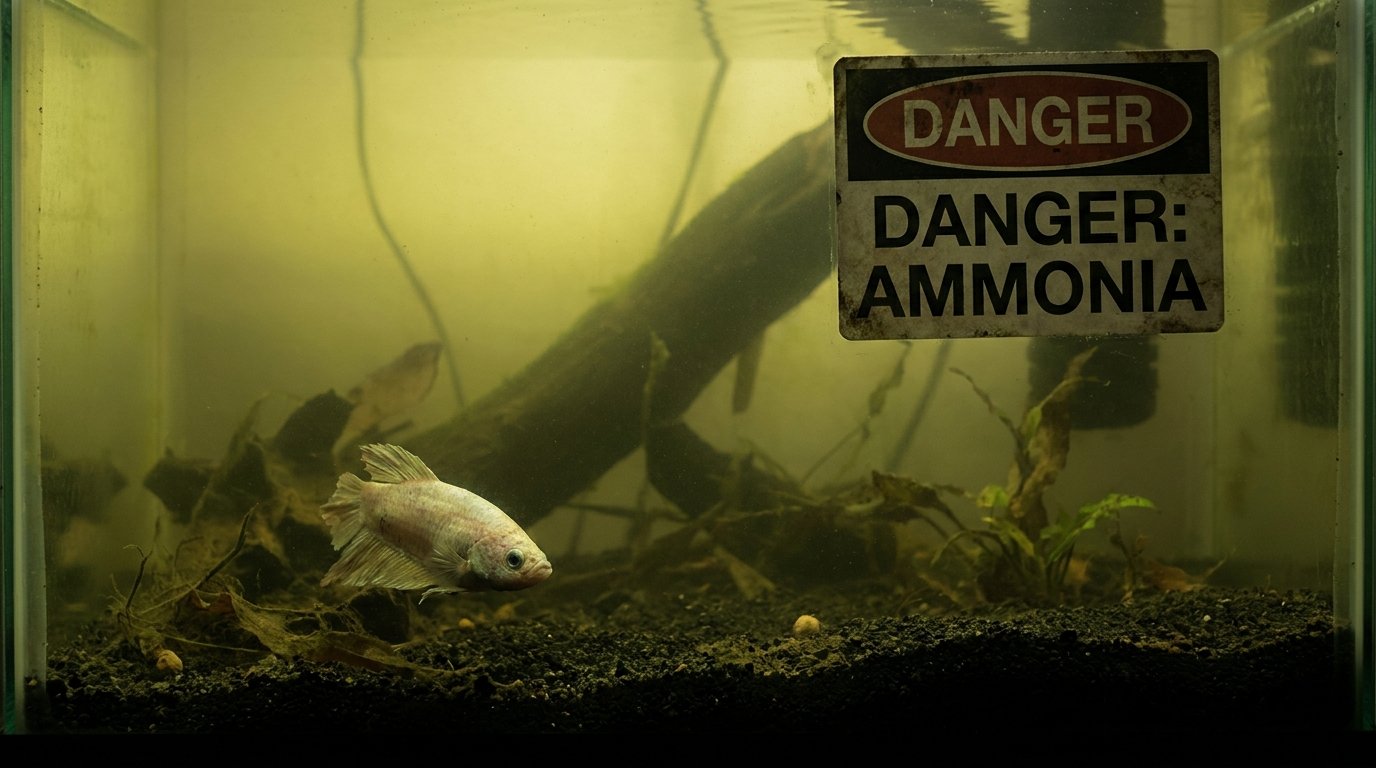
Red gills in aquarium fish are a warning sign you should take seriously, but they do not automatically mean “add medicine.”
The gills are where fish meet the water. If something in the tank is burning, irritating, or starving those gills of oxygen, they often show it before the rest of the body does.
Quick answer: Red gills are most often a water-quality or gill-irritation warning. Check ammonia, nitrite, chlorine/chloramine, oxygen, pH, and temperature first. Add aeration right away if breathing is fast. Medication only makes sense after water is safe and the symptoms point toward parasites, infection, or another disease problem.
If ammonia shows up on the test, follow Ammonia Spike Emergency: What To Do In The First 30 Minutes before treating for disease.
Here’s what I would check first
Start with the things that hurt gills fastest. You are trying to answer one question: is the water damaging the fish, or is this a disease/injury problem?
- Ammonia: Any reading above 0 ppm can irritate and burn gills.
- Nitrite: Nitrite blocks oxygen transport and can make fish breathe hard.
- Dechlorinator: Untreated tap water can irritate gills fast.
- Oxygen: Check for gasping, weak surface movement, warm water, or fish sitting near filter output.
- Recent changes: Water change, new fish, filter cleaning, medication, pH adjustment, or new decor.
- Other symptoms: Flashing, excess mucus, white spots, swollen gills, weight loss, or rapid breathing.
Symptoms and likely causes
| What you see | Most likely direction | What to do first |
|---|---|---|
| Red gills after a water change | Chlorine/chloramine, temperature shock, pH swing | Confirm conditioner, test water, add aeration |
| Red gills with gasping | Ammonia, nitrite, low oxygen, gill irritation | Add aeration and test ammonia/nitrite now |
| Red gills in a new tank | Ammonia or nitrite from an unfinished cycle | Test toxins and follow toxic-water rescue steps |
| Red gills with flashing | Water irritation, chlorine, parasites, gill flukes | Test water first, then inspect for parasite clues |
| Only one fish has red gills | Injury, individual stress, infection, parasite load | Inspect fish and watch tankmates |
Likely causes
1. Ammonia burn
The hidden problem is often ammonia. In a new tank, overfed tank, recently cleaned filter, or overcrowded setup, ammonia can rise before the owner realizes anything is wrong. Red gills, gasping, lethargy, and clamped fins all fit.
2. Nitrite poisoning
Nitrite is dangerous because it interferes with oxygen transport. Fish can look like they are suffocating even when the water has movement. Red or irritated gills with heavy breathing should make you test nitrite immediately.
3. Chlorine or chloramine exposure
If red gills show up right after a water change, check whether conditioner was used and dosed for the full volume of new water. Tap water can look perfect and still hurt gills.
4. Low oxygen
Low oxygen can inflame the whole situation. Warm water, cloudy water, overstocking, weak surface movement, or a clogged filter can make fish breathe harder and stress the gills.
5. Gill parasites or infection
If water tests are clean and fish keep flashing, breathing hard, producing mucus, losing weight, or worsening over several days, parasites like gill flukes or a secondary infection become more possible.
What to test
- Ammonia: 0 ppm.
- Nitrite: 0 ppm.
- Nitrate: ideally under 20-40 ppm.
- pH: look for sudden changes after water changes.
- Temperature: warm water holds less oxygen.
- Tap water routine: conditioner, dose, and whether the bottle treats chlorine and chloramine.
Immediate fix
- Add aeration or increase surface movement.
- Stop feeding for the day.
- Test ammonia and nitrite.
- If ammonia or nitrite is present, do a temperature-matched partial water change with conditioner.
- If you may have skipped conditioner, dose dechlorinator for the tank volume.
- Do not add medication until the water is safe enough for fish to handle treatment.
Long-term fix
- Stabilize the nitrogen cycle so ammonia and nitrite stay at 0 ppm.
- Feed less if food is hitting the bottom uneaten.
- Avoid replacing or scrubbing all filter media at once.
- Keep surface movement strong enough for oxygen exchange.
- Quarantine new fish when possible so parasite problems do not enter the main tank.
Common mistakes
- Medicating before testing: If ammonia is burning the gills, medication is the wrong first move.
- Assuming red gills always mean parasites: Water quality is more common in beginner tanks.
- Doing a giant water change with mismatched water: A safer partial change is better than stacking shock on top of gill irritation.
- Forgetting chlorine/chloramine: Conditioner is not optional with tap water.
- Ignoring oxygen: Gill symptoms and oxygen problems often travel together.
Author and editorial note
This DBC Aquatics rescue guide is written by Benjamin Thoden for fishkeepers who need calm, practical troubleshooting before they start guessing with chemicals. Read our editorial standards to see how DBC Aquatics organizes advice around symptoms, water testing, and safer first steps.
DBC practical tip: With red gills, I check ammonia, nitrite, and conditioner before I even think about medication. If the water is irritating the gills, treating parasites first wastes time and adds stress.
Where to go next if red gills are not the only symptom
If red gills show up with gasping, flashing, clamped fins, or strange behavior after maintenance, use the closest rescue guide next instead of guessing at medication.
- Aquarium Rescue Hub – start here when more than one symptom is happening.
- Toxic water and ammonia spikes – use this when ammonia, nitrite, or chlorine may be irritating the gills.
- Ammonia spike emergency steps – what to do in the first 30 minutes.
- Fish gasping after a water change – check oxygen, chlorine, temperature, and disturbed waste.
- Fish flashing and scratching – compare irritation, parasites, and water-quality problems.
- Fish medication guide – use medication only after water and oxygen problems are ruled out.
Frequently asked questions
What do red gills mean in aquarium fish?
Red gills can point to ammonia or nitrite irritation, chlorine exposure, low oxygen, gill flukes, infection, or stress. Start with water tests and oxygen before choosing medication.
Are red gills always ammonia burn?
No. Ammonia burn is common, especially in new or unstable tanks, but red gills can also come from nitrite, chlorine, gill parasites, low oxygen, or physical irritation.
What should I do first if my fish has red gills?
Add aeration, test ammonia and nitrite, check temperature, confirm dechlorinator was used, and look at whether multiple fish are affected. If toxins are present, do a safe partial water change.
Should I medicate red gills?
Only if water and oxygen are stable and symptoms point to parasites or infection, such as flashing, excess mucus, rapid breathing, weight loss, or several fish worsening despite clean water.
Keep diagnosing before you medicate
If the first fix does not settle the tank, do not start throwing products at it. Work sideways through the closest symptoms and look for the pattern. Water, oxygen, temperature, bullying, and recent maintenance explain more emergencies than most medications do.
- Aquarium Rescue Hub – start over if more than one symptom is happening
- Fish acting weird after a water change – common after maintenance or large water changes
- Fish hiding and not eating – stress, bullying, water quality, or early disease
- Fish lying on the bottom – urgent checks for oxygen, ammonia, temperature, and injury
- Fish medication guide – use after water and oxygen checks
Need Ben to look at your tank?
If you are stuck, send me your tank size, symptoms, water test numbers, photos, and a short video. I offer a $29 starter rescue checkup for one aquarium problem.
Leave a Reply