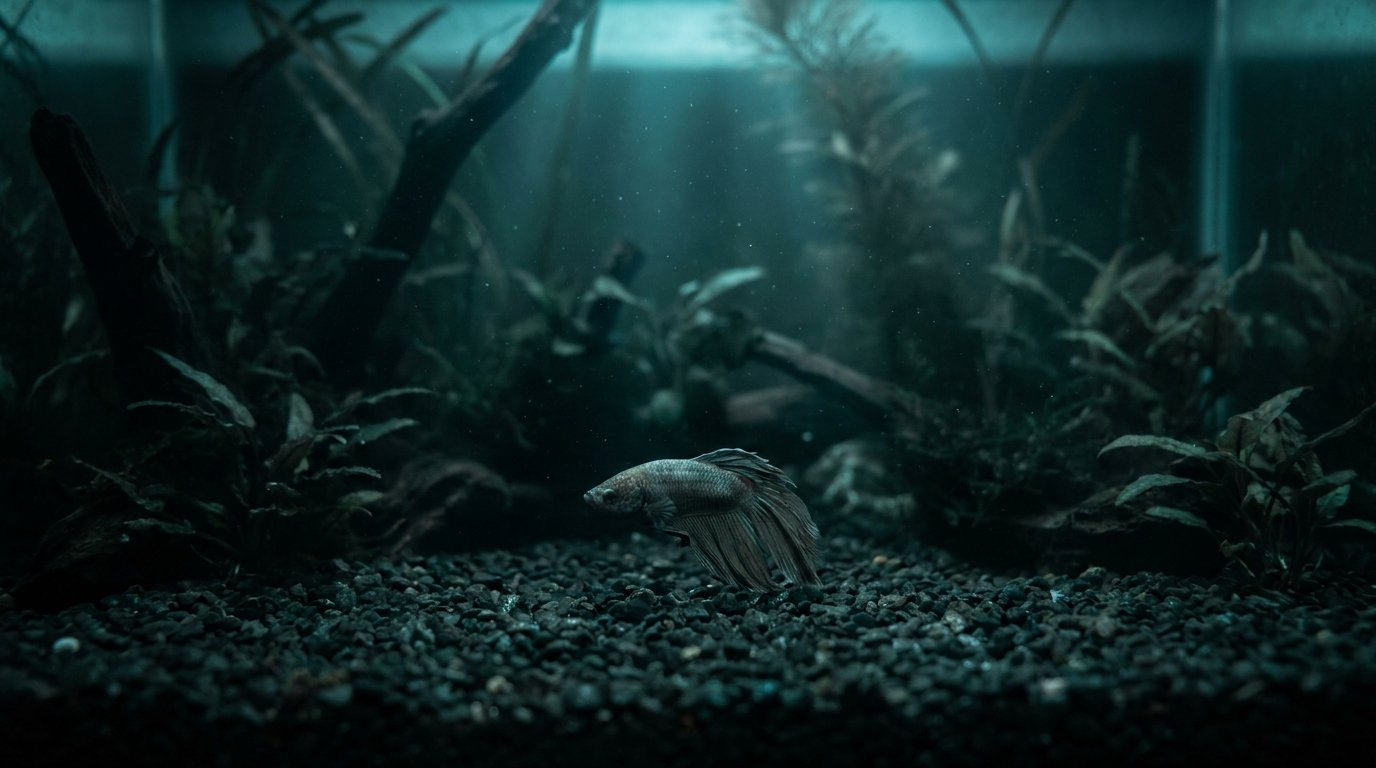
A fish lying on the bottom of the tank is one of those symptoms that can mean almost nothing or something very serious. That is what makes it so stressful.
Sometimes the fish is just resting. Sometimes it is cold, bullied, constipated, poisoned by ammonia, struggling for oxygen, or too weak to swim normally.
Quick answer: If your fish is lying on the bottom, check breathing first, then test ammonia, nitrite, nitrate, pH, and temperature. If several fish are on the bottom or breathing hard, treat it like a tank problem and add aeration right away. If only one fish is doing it, check for bullying, injury, constipation, or disease signs before adding medication.
If ammonia is above 0 ppm, use Ammonia Spike Emergency: What To Do In The First 30 Minutes as your next step. Several weak fish usually means the tank needs rescue before the individual fish needs medication.
Here’s what I would check first
Don’t panic yet. Watch the fish for a minute before you reach into the tank. The breathing pattern tells you more than the position.
- Breathing: Is it breathing fast, slow, or normally?
- Other fish: Are they active, or are several fish also acting weak?
- Temperature: Is the tank colder or hotter than usual?
- Water tests: Is ammonia or nitrite above 0 ppm?
- Body signs: Look for clamped fins, swelling, pineconing, red gills, torn fins, white spots, or fuzzy patches.
- Tankmate behavior: Is another fish chasing, nipping, or guarding food?
Symptoms that tell you how urgent it is
| What you see | Likely direction | First move |
|---|---|---|
| Bottom sitting but breathing normally | Resting, stress, new fish, mild bullying, or species behavior | Watch quietly, check tankmates, test water |
| Bottom sitting with fast breathing | Ammonia, nitrite, oxygen shortage, gill irritation, or shock | Add aeration and test immediately |
| Fish lying sideways or rolling | Severe weakness, swim bladder trouble, shock, toxin exposure | Test water, reduce stress, consider hospital tank |
| Bottom sitting after a water change | Temperature shock, chlorine, pH swing, stirred waste | Check temperature, conditioner, ammonia, nitrite |
| Only one fish hiding on bottom | Bullying, injury, constipation, early disease | Watch tankmates and inspect body signs |
Likely causes
1. Ammonia or nitrite stress
The hidden problem is often toxic water. Fish may sink to the bottom because their gills are irritated and they are too stressed to swim normally. If more than one fish is weak, clamped, gasping, or bottom sitting, test ammonia and nitrite first.
2. Low oxygen
Low oxygen does not always look like obvious gasping. Some fish get weak and sit low, especially if the tank is warm, overstocked, cloudy, or has weak surface movement.
3. Temperature shock
A cold tank slows fish down. A hot tank lowers oxygen. Either one can make fish sit on the bottom and ignore food. Always check the thermometer, not just the heater dial.
4. Bullying or exhaustion
A bullied fish may stay low and hidden because every trip into the open gets it chased. This happens a lot with livebearers, bettas, cichlids, and community tanks that look peaceful until feeding time.
5. Constipation or swim bladder stress
If the fish is bloated, floating oddly, sinking, or struggling to stay level, digestion or swim bladder stress may be involved. Do not feed more to “see if it eats.” Give the tank a break and watch the body shape.
6. Disease or injury
Disease becomes more likely when bottom sitting comes with white spots, fuzzy growth, ulcers, red patches, fin rot, swelling, pineconing, worms, or rapid decline.
What to test
- Ammonia: should be 0 ppm.
- Nitrite: should be 0 ppm.
- Nitrate: ideally under 20-40 ppm for most beginner tanks.
- pH: look for a sudden change, not a perfect number.
- Temperature: verify with a thermometer.
- Oxygen clues: weak surface movement, warm water, cloudy water, or fish near the filter output.
Immediate fix
- Stop feeding for the day.
- Add gentle aeration or increase surface movement.
- Test ammonia and nitrite.
- If ammonia or nitrite is present, do a temperature-matched partial water change with conditioner.
- Dim the lights and reduce activity around the tank.
- If one fish is being bullied, add cover or separate the aggressor.
Long-term fix
The long-term fix depends on whether this was a tank-wide problem or a single-fish problem.
- If water quality caused it, fix feeding, stocking, cycling, and maintenance.
- If oxygen caused it, improve surface agitation and avoid overstocking.
- If bullying caused it, rearrange cover, adjust stocking, or separate the bully.
- If disease signs appear, use a quarantine/hospital tank and match medication to the symptom.
Common mistakes
- Assuming the fish is just tired: Bottom sitting with fast breathing is not normal resting.
- Dumping medication first: Medication does not fix ammonia, nitrite, temperature, or oxygen.
- Feeding to “perk it up”: Extra food can make water quality worse.
- Ignoring species behavior: Corydoras and plecos rest low by nature; tetras and guppies usually should not sit on the bottom for long.
- Doing a huge panic water change: If you do change water, match temperature and condition it first.
Author and editorial note
This DBC Aquatics rescue guide is written by Benjamin Thoden for fishkeepers who need calm, practical troubleshooting before they start guessing with chemicals. Read our editorial standards to see how DBC Aquatics organizes advice around symptoms, water testing, and safer first steps.
DBC practical tip: If several fish are on the bottom, I treat it like water or oxygen until proven otherwise. If one fish is on the bottom, I look for bullying, injury, bloating, or disease signs.
Use the closest symptom next
A fish on the bottom can be resting, stressed, bullied, constipated, poisoned by water, or running out of oxygen. The next page depends on what else you see.
- Aquarium Rescue Hub – start here if several symptoms are happening at once.
- Toxic water and ammonia spikes – use this when several fish are affected or test numbers are unsafe.
- Fish gasping after a water change – use this if bottom sitting comes with heavy breathing or surface gasping.
- Fish acting weird after a water change – use this if the behavior started right after maintenance.
- Fish medication guide – compare treatment options only after water and oxygen checks.
Frequently asked questions
Why is my fish lying on the bottom of the tank?
A fish lying on the bottom may be stressed, sleeping, cold, bullied, exposed to ammonia or nitrite, low on oxygen, constipated, injured, or sick. Check breathing, water tests, temperature, and whether other fish are acting normal.
Is a fish on the bottom always dying?
No. Some fish rest on the bottom normally, especially corydoras, plecos, loaches, bettas, and some tired livebearers. It becomes urgent when the fish is breathing hard, clamped, rolling, not eating, pale, or unable to swim.
Should I do a water change if my fish is on the bottom?
Do a partial water change if ammonia or nitrite is present, the tank smells bad, or several fish are acting off. Match temperature and use conditioner. Do not do a huge panic change without testing.
Should I medicate a fish lying on the bottom?
Not until symptoms point to a disease. Bottom sitting alone is not enough to pick medication. Test water and temperature first, then look for white spots, swelling, fin rot, ulcers, worms, or rapid breathing.
Keep diagnosing before you medicate
If the first fix does not settle the tank, do not start throwing products at it. Work sideways through the closest symptoms and look for the pattern. Water, oxygen, temperature, bullying, and recent maintenance explain more emergencies than most medications do.
- Aquarium Rescue Hub – start over if more than one symptom is happening
- Fish acting weird after a water change – common after maintenance or large water changes
- Fish hiding and not eating – stress, bullying, water quality, or early disease
- Red gills in aquarium fish – gill irritation, ammonia, nitrite, or chlorine exposure
- Fish medication guide – use after water and oxygen checks
Rescue kit
Keep the emergency basics ready
When fish lie on the bottom, having a rescue kit stops the scramble. I want oxygen, water tests, a thermometer, and dechlorinator close before I even think about medication. See the Aquarium Rescue Kit.
Leave a Reply