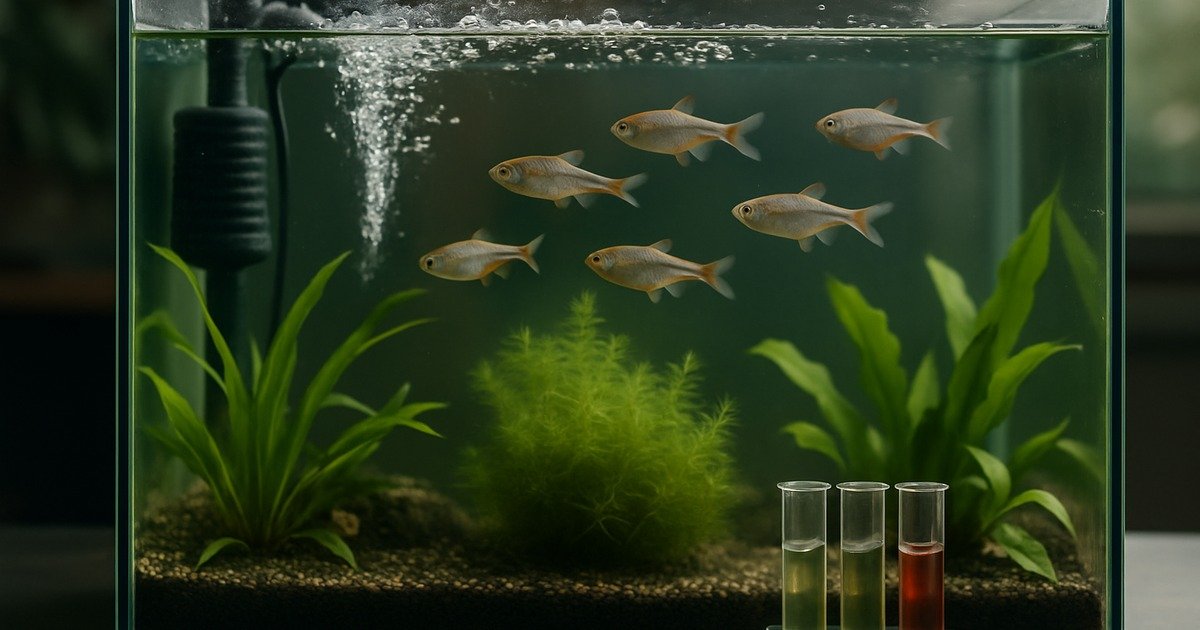
Water Quality Rescue Hub
Fish gasping?
Fish dying?
The water looks clear, but something feels wrong?
Start here before you reach for medication.
If your fish are struggling, every minute feels important. The good news is that most aquarium emergencies become much easier to solve when you work through them in the right order.
Most aquarium emergencies begin with water quality, oxygen, filter bacteria, or a recent change that quietly pushed the tank out of balance. The fastest rescue usually starts with the safest checks.
Not guesses.
Not panic.
Not five products at once.
This page is the front door to DBC Aquatics’ Water Quality Rescue system. Use it to stabilize the fish, choose the right rescue path, and know which full guide to read next.
One of the biggest mistakes I have seen is a fishkeeper assuming their fish were dying from disease when the real problem was ammonia after an aggressive filter cleaning. The medication never helped because the water was the real emergency.
Quick Answer
If your fish are in trouble and you do not know why, start with the same rescue order every time:
- Increase oxygen and surface movement.
- Stop feeding temporarily.
- Test ammonia.
- Test nitrite.
- Check temperature.
- Protect filter bacteria.
- Review what changed in the last 48 hours.
- Choose the correct rescue guide below.
Medication comes later unless you already know water, oxygen, temperature, and filter stability are safe.
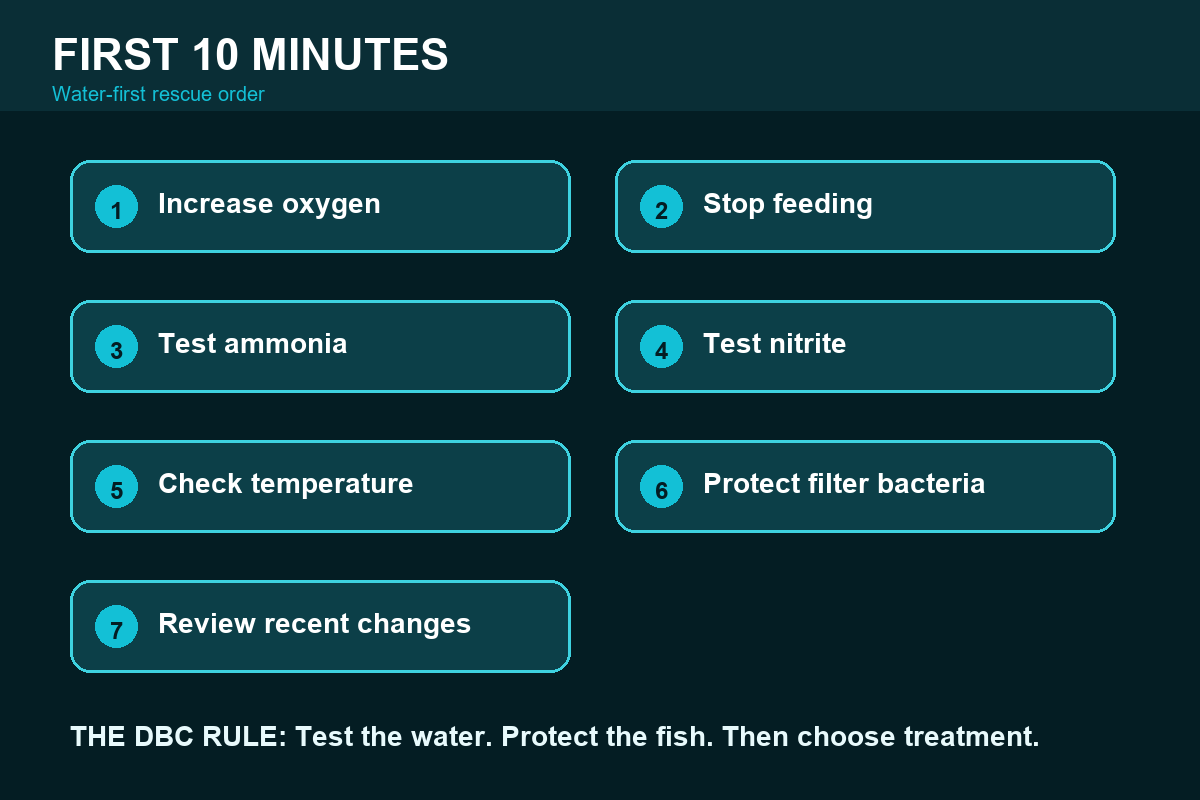
THE DBC RULE
Test the water.
Protect the fish.
Then choose treatment.
Your fish does not care whether the problem is called ammonia, nitrite, low oxygen, filter bacteria damage, cloudy water, or disease. It only cares whether you solve the right problem in the right order.
That is why DBC starts with water first.
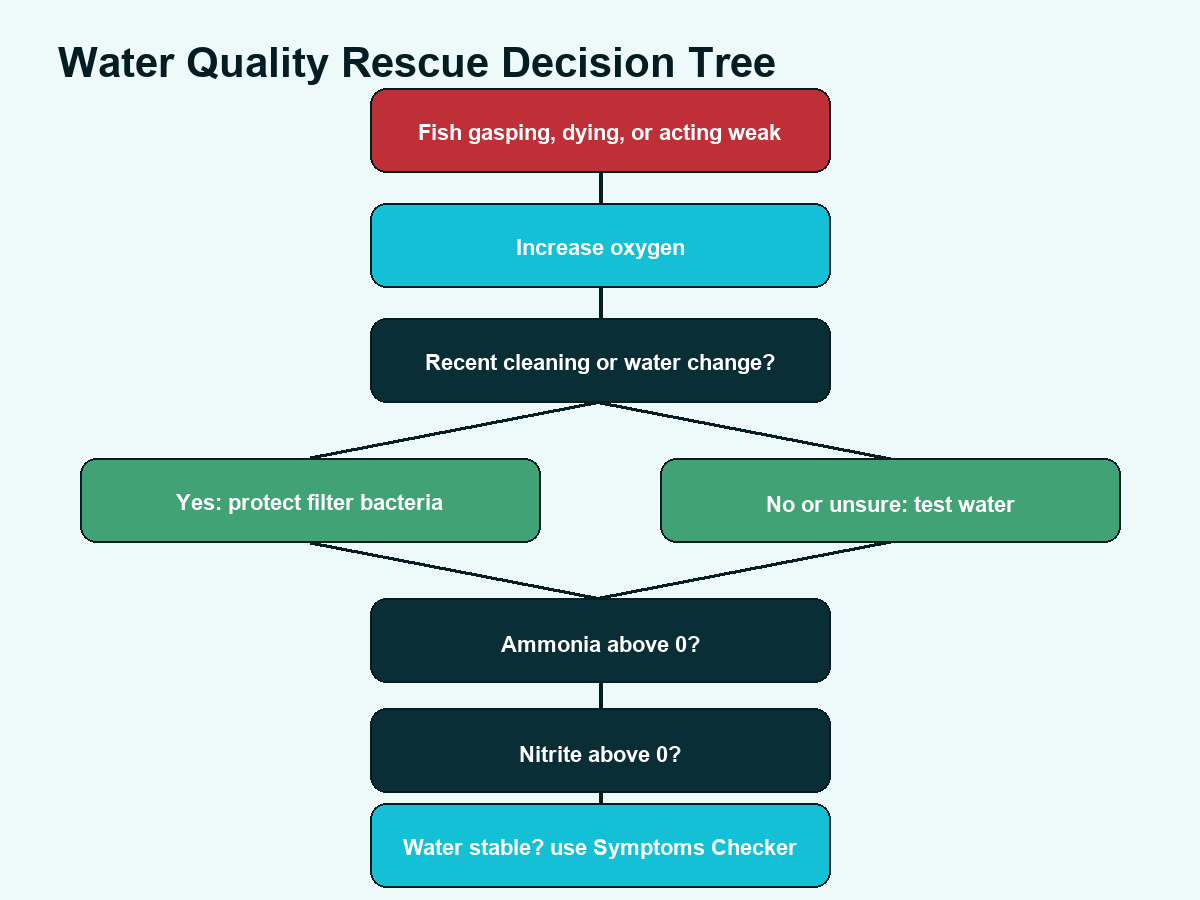
Emergency Decision Tree
Use this as your first map.
Fish are gasping, dying, hiding, or acting weak
        |
        v
Increase oxygen and surface movement
        |
        v
Did this happen after cleaning, filter work, or a water change?
        |                         |
       YES                        NO / NOT SURE
        |                         |
        v                         v
Read Fish Dying After Cleaning    Test ammonia and nitrite
        |                         |
        v                         v
Check filter bacteria             Ammonia above 0?
        |                         |
        v                         v
Protect filter media              Use ammonia rescue path
                                  |
                                  v
                              Nitrite above 0?
                                  |
                                  v
                              Use nitrite rescue path
                                  |
                                  v
                              Oxygen still low?
                                  |
                                  v
                              Use low oxygen path
                                  |
                                  v
                              Water stable but symptoms remain?
                                  |
                                  v
                              Use Symptoms Checker or Medication Guide
If you are overwhelmed, do not try to solve the entire tank at once. Work the first 10 minutes below.
First 10 Minutes
1. Increase Oxygen
Aim the filter output toward the surface. Add an air stone if you have one. Make sure the filter is moving water.
This is safe in almost every emergency because it helps the fish breathe while you test.
Full guide: Fish Gasping At The Top? Low Oxygen, Ammonia, And What To Do First
2. Stop Feeding Temporarily
Food adds waste. Waste can become ammonia. During a water-quality emergency, skipping food for a short period is usually safer than feeding because the fish look weak.
3. Test Ammonia
Ammonia should be 0 ppm.
If ammonia is above zero, treat the tank like a water emergency. Add oxygen, stop feeding, prepare a controlled partial water change with dechlorinated water, and protect the filter bacteria.
Full guide: Ammonia spike emergency guide
4. Test Nitrite
Nitrite should also be 0 ppm.
Nitrite can make fish struggle to use oxygen properly. Fish may gasp even when oxygen is being added.
Read the full DBC nitrite rescue guide: Nitrite Poisoning In Fish? What To Do First. Start there if nitrite is above 0 ppm, and keep following the water-first rescue order above.
5. Check Temperature
Warm water holds less oxygen. A hot room, heater issue, covered tank, weak filter flow, or overstocked aquarium can push fish toward the surface.
Do not shock the tank with ice. Increase oxygen first and make temperature corrections slowly.
6. Protect Filter Bacteria
Do not deep-clean the filter during the emergency.
Your filter is not just a dirt trap. It holds bacteria that help process waste. If you rinse media under untreated tap water, replace too much at once, or scrub everything clean while fish are already stressed, ammonia and nitrite can climb.
Full guides:
- Fish Dying After Cleaning The Tank Or Filter? What To Do Now
- How To Clean Aquarium Filters
- Aquarium Nitrogen Cycle Guide
7. Review Recent Changes
Ask what changed in the last 48 hours:
- Did you clean the filter?
- Did you replace filter media?
- Did you do a large water change?
- Did you add new fish?
- Did someone overfeed?
- Did the room get hot?
- Did the power go out?
- Did a fish die where you cannot see it?
- Did you add medication?
- Did you forget conditioner?
Recent changes often explain sudden fish problems better than guessing at disease.
Did This Start After A Water Change?
When several fish change behavior soon after a refill, investigate the shared water before assuming one fish has a disease.
| What You Notice | Check First | Best Rescue Path |
|---|---|---|
| Fish gasp within minutes | Conditioner, temperature, surface movement | Emergency Aquarium Water Change guide |
| Fish worsen after the filter was cleaned too | Ammonia, nitrite, filter flow, media handling | Filter Bacteria Crash guide |
| Water looks clear but fish breathe hard | Oxygen, ammonia, nitrite, chlorine risk | Fish Gasping guide |
| One fish struggles while the others act normally | Water first, then injury or disease signs | Fish Symptoms Checker |
Add oxygen while you investigate. Confirm that replacement water was conditioned and temperature-matched. Test ammonia and nitrite before adding medication.
The Biggest Mistakes I See
These are the moves that make water-quality emergencies harder:
| Mistake | Why It Can Backfire | Safer Move |
|---|---|---|
| Deep-cleaning the filter during an emergency | Can remove bacteria the tank needs | Restore flow gently and protect media |
| Medicating first | Can treat the wrong problem | Test water before dosing |
| Feeding because fish look weak | Adds waste during instability | Pause feeding until water is stable |
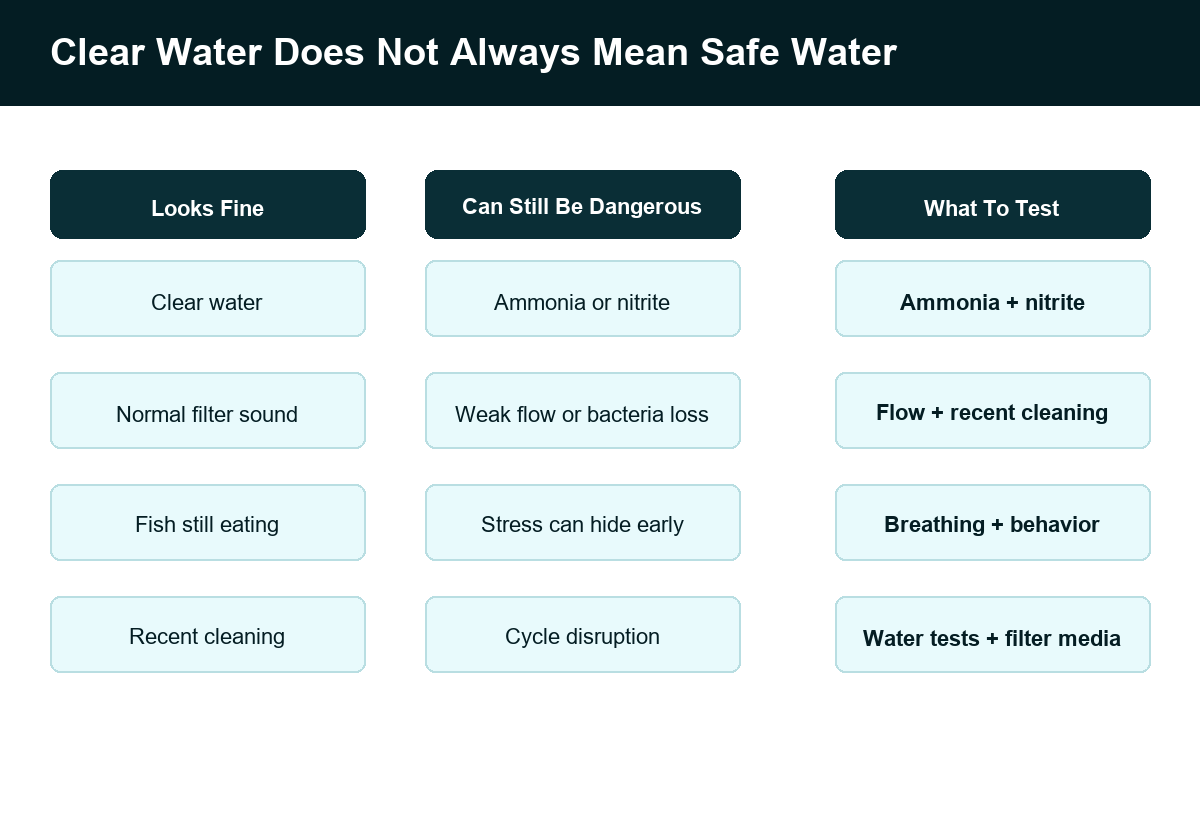
| Assuming clear water means safe water | Ammonia and nitrite can be invisible | Test ammonia and nitrite |
| Changing five things at once | Makes cause and recovery hard to read | Stabilize, test, then act in order |
Rescue Paths
Use these cards to choose the guide that matches what you are seeing.
Fish Gasping
Fast breathing? Surface gasping? Fish crowding the filter return?
Start here: Fish Gasping At The Top? Low Oxygen, Ammonia, And What To Do First
First safe action: add oxygen and surface movement, then test ammonia and nitrite.
Low Oxygen
Fish at the surface? Weak flow? Warm tank? Fish gathering near bubbles?
Start here: Fish Gasping At The Top? Low Oxygen, Ammonia, And What To Do First
First safe action: increase surface movement and check temperature, filter flow, overfeeding, dead fish, plant die-off, and stocking level.
Ammonia
Ammonia above 0 ppm? Red gills? Clamped fins? Sudden weakness?
Emergency guide: Ammonia spike emergency guide
First safe action: add oxygen, stop feeding, test ammonia, and prepare a controlled water change if ammonia is above 0 ppm.
Nitrite
Nitrite above 0 ppm? Fish gasping even after oxygen improves? Fish acting weak in clear water?
Read the full DBC nitrite rescue guide: Nitrite Poisoning In Fish? What To Do First. Start there if nitrite is above 0 ppm, and keep following the water-first rescue order above.
First safe action: add oxygen and confirm nitrite with a test kit.
Cloudy Water
Cloudy water after feeding, cleaning, new setup, or filter trouble?
Start here: Cloudy Water, Bad Smell, Or Gasping Fish? What To Do First
First safe action: do not deep-clean everything. Test ammonia and nitrite first.
Filter Cleaning
Fish got worse after cleaning the tank or filter?
Start here: Fish Dying After Cleaning The Tank Or Filter? What To Do Now
Related guide: How To Clean Aquarium Filters
First safe action: stop cleaning, add oxygen, keep the filter running, and test ammonia/nitrite.
Emergency Water Change
Ammonia or nitrite is present? Something toxic may have entered the tank?
Read the full DBC emergency water change guide: Emergency Water Change? How Much To Change And What To Check First. Start there when ammonia, nitrite, contamination, or a recent maintenance mistake makes a controlled water change part of the rescue.
Watch the complete rescue order: Fish Dying? Do This Before You Change More Water.
First safe action: use dechlorinated water, match temperature closely, and make controlled changes based on test results.
Filter Bacteria
New filter media? Scrubbed media? Replaced cartridges? Tank suddenly unstable?
Start with the dedicated rescue guide: Filter Bacteria Crash? What To Do If You Cleaned Too Much
Related guides:
First safe action: protect established media, keep the filter running, and clean for flow rather than spotless media.
Medication Comes Later
Ich, fungus, fin rot, parasites, bacterial infection, or internal disease may still matter.
Use after water checks: Fish Medication Guide: What To Use After You Check Water First
First safe action: test water and oxygen before dosing.
What Improvement Should Look Like
After the first rescue steps, watch for:
- Fish leaving the surface.
- Breathing slowing down.
- Fish spreading out instead of crowding one area.
- Less hiding or panic swimming.
- Filter flow staying steady.
- Ammonia and nitrite moving back toward 0 ppm.
If fish do not improve, keep oxygen high and move into the most likely rescue path above.
Where To Go Next
Use the path that matches what you see:
- Visible symptoms but you do not know what they mean: Fish Symptoms Checker
- You need a broader rescue map: Aquarium Rescue Hub
- You want the printable first-step guide: Aquarium Survival Checklist
- You want the full rescue system: Aquarium Rescue Blueprint
The Blueprint is not the first step when fish are actively gasping.
The first step is oxygen, water testing, and stability.
Once the immediate emergency is under control, the Blueprint becomes the next logical way to understand why the tank became unstable and how to prevent the same problem again.
FAQ
Can clear aquarium water still be dangerous?
Yes. Clear water can still have ammonia, nitrite, low oxygen, chlorine stress, or temperature problems. Clear water only tells you what the tank looks like. It does not replace testing.
Should I medicate fish that are gasping?
Not first. Add oxygen, test ammonia and nitrite, check temperature, and review recent changes before medication. Gasping often starts as a water or oxygen problem.
What should I test first in an aquarium emergency?
Start with ammonia and nitrite. If fish are gasping, also improve oxygen immediately.
Should I clean the filter if fish are dying?
Not deeply. If flow is blocked, gently clear the clog and rinse media only in old tank water. Do not replace all media or rinse biological media under untreated tap water during an emergency.
When should I do an emergency water change?
If ammonia or nitrite is above 0 ppm, a controlled partial water change is often part of the rescue. Use conditioner, match temperature, and avoid chaotic full resets unless you are dealing with a severe toxin emergency and understand the risk.
Why are my fish gasping after a water change?
Several fish gasping after a water change can point to chlorine or chloramine exposure, a temperature swing, low oxygen, ammonia, nitrite, or disturbed waste. Add oxygen, confirm conditioner and temperature, then test ammonia and nitrite. Use the Emergency Aquarium Water Change guide for the controlled correction path.
Bottom Line
When fish are in trouble, start with water.
Not because disease never happens.
Disease does happen.
But oxygen, ammonia, nitrite, temperature, chlorine, and filter bacteria problems can look like disease while quietly getting worse.
That is why every DBC rescue starts the same way:
Test the water.
Protect the fish.
Then choose treatment.
Every rescue guide on DBC Aquatics begins with this same philosophy because the safest rescue is the one that solves the real problem, not just the symptoms.
Leave a Reply