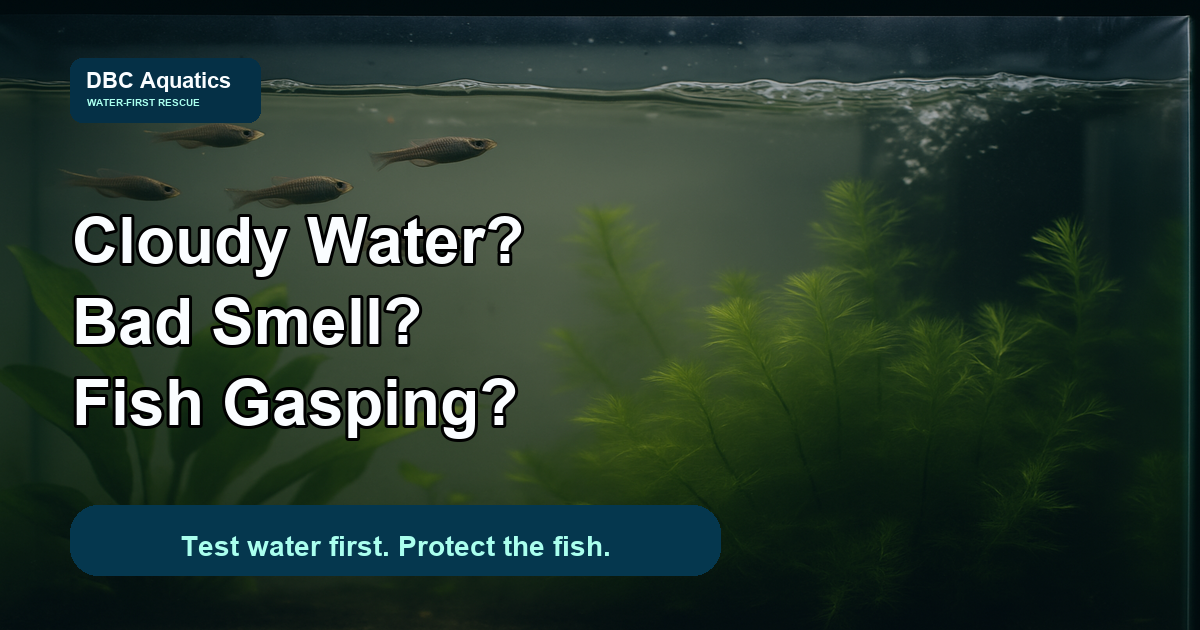
Cloudy Water, Bad Smell, Or Gasping Fish? What To Do First
Cloudy aquarium water can make your stomach drop because it feels like something invisible is happening inside the tank.
The water may look milky. The tank may smell wrong. The fish may be hanging near the surface, breathing faster, or acting different than they did yesterday.
Before you tear apart the filter, add medication, or change everything at once, slow down and work through the rescue order. Most cloudy-water scares become much easier to solve when you protect the fish first and diagnose the water before guessing.
Quick Answer
If your aquarium is cloudy and your fish are acting stressed, treat it as a water-quality warning until testing proves otherwise.
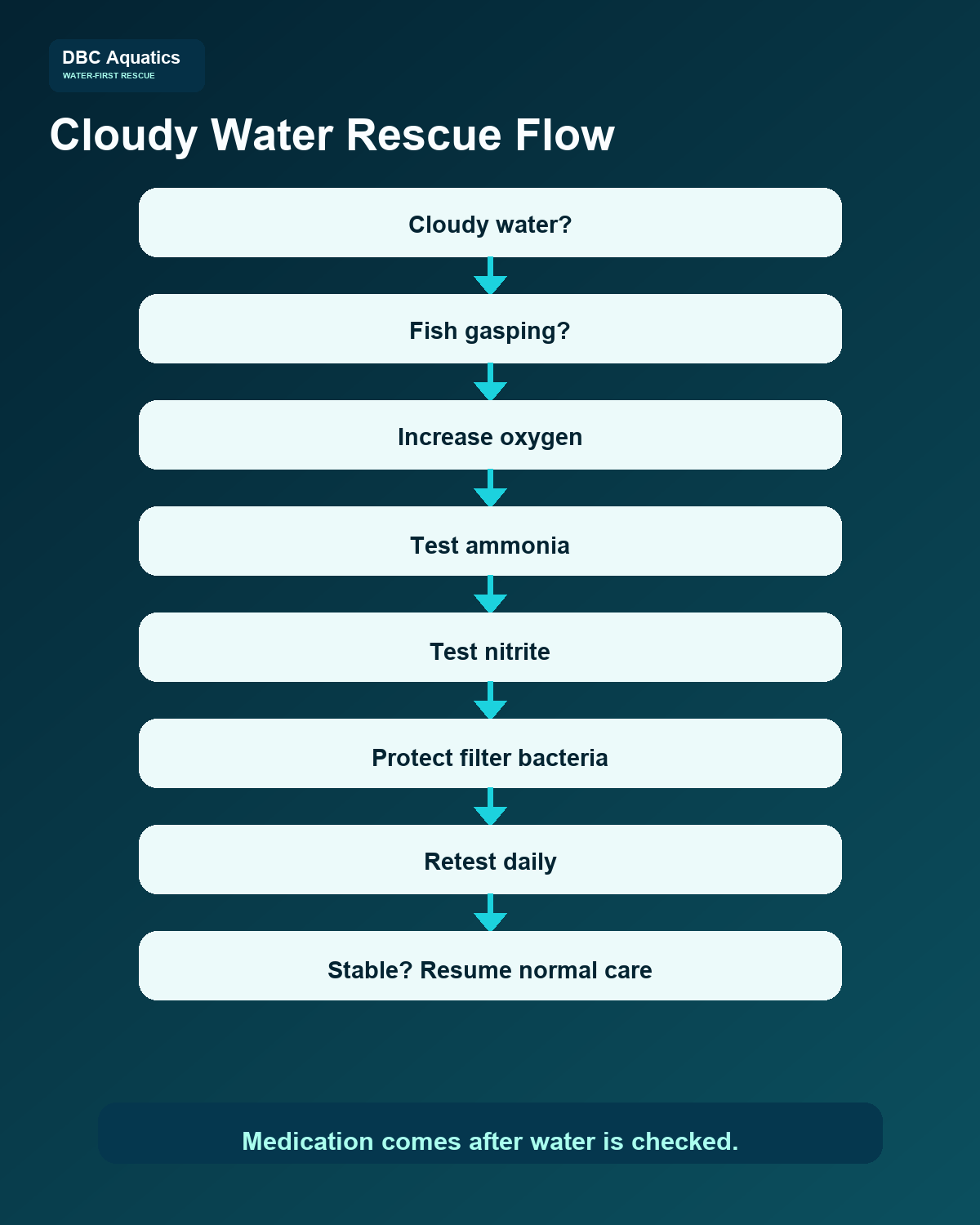
Start here:
- Increase oxygen and surface movement.
- Stop feeding for now.
- Test ammonia.
- Test nitrite.
- Check temperature.
- Confirm the filter is flowing normally.
- Review what changed in the last 24 to 72 hours.
If fish are gasping at the surface, go straight to the Fish Gasping At The Top rescue guide after increasing oxygen.
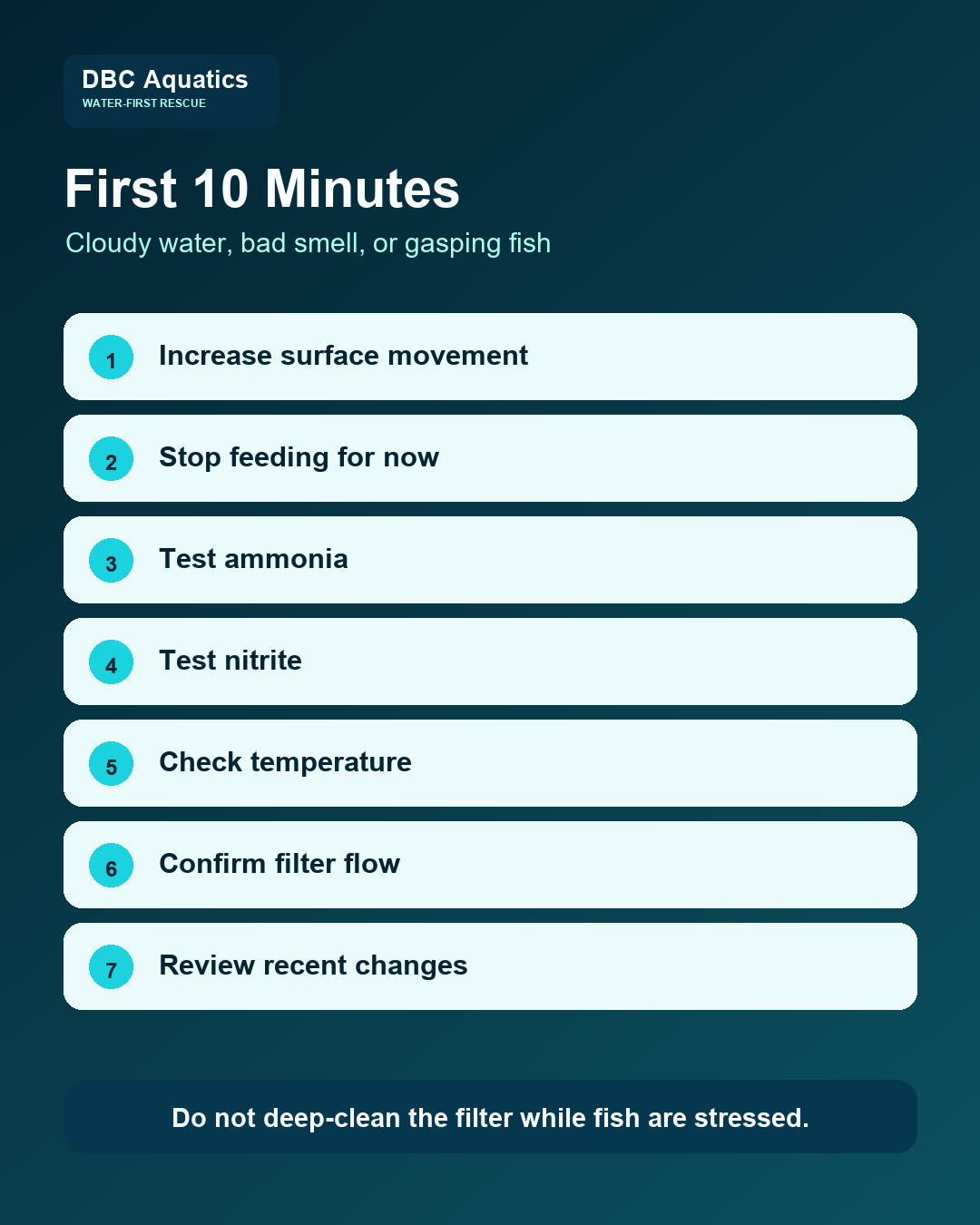
THE DBC RULE
Test the water.
Protect the fish.
Then choose treatment.
Cloudy water is not a diagnosis by itself. It is a clue. The goal is not to make the water look clear as fast as possible. The goal is to find out whether the tank is dealing with low oxygen, ammonia, nitrite, filter bacteria damage, overfeeding, or decaying waste.
Your fish do not care whether the problem looks like cloudy water, bad smell, or a dirty filter. They care whether they can breathe and whether the water is safe.
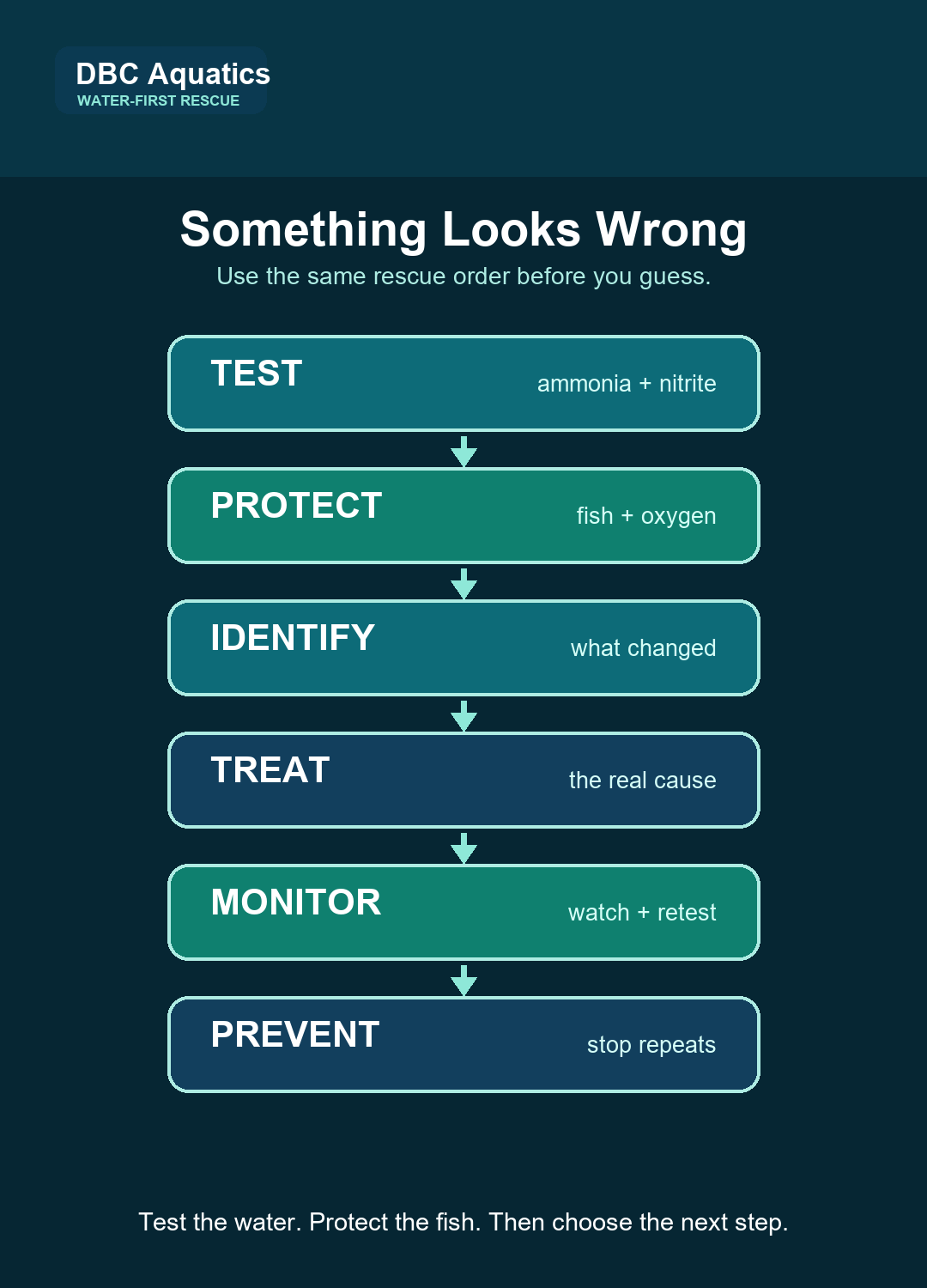
First 10 Minutes
| Step | What To Do | Why It Matters |
|---|---|---|
| 1 | Increase surface movement | Helps fish breathe while you diagnose. |
| 2 | Stop feeding | Reduces new waste while the tank stabilizes. |
| 3 | Test ammonia | Ammonia can rise before the water looks dangerous. |
| 4 | Test nitrite | Nitrite affects how fish use oxygen. |
| 5 | Check temperature | Warm water holds less oxygen. |
| 6 | Check filter flow | Poor flow can reduce oxygen and bacteria performance. |
| 7 | Review recent changes | Cleaning, new fish, overfeeding, or dead plant matter can trigger the problem. |
Keep this rescue order handy. Download the free Aquarium Survival Checklist so you always know what to check when fish show signs of stress.
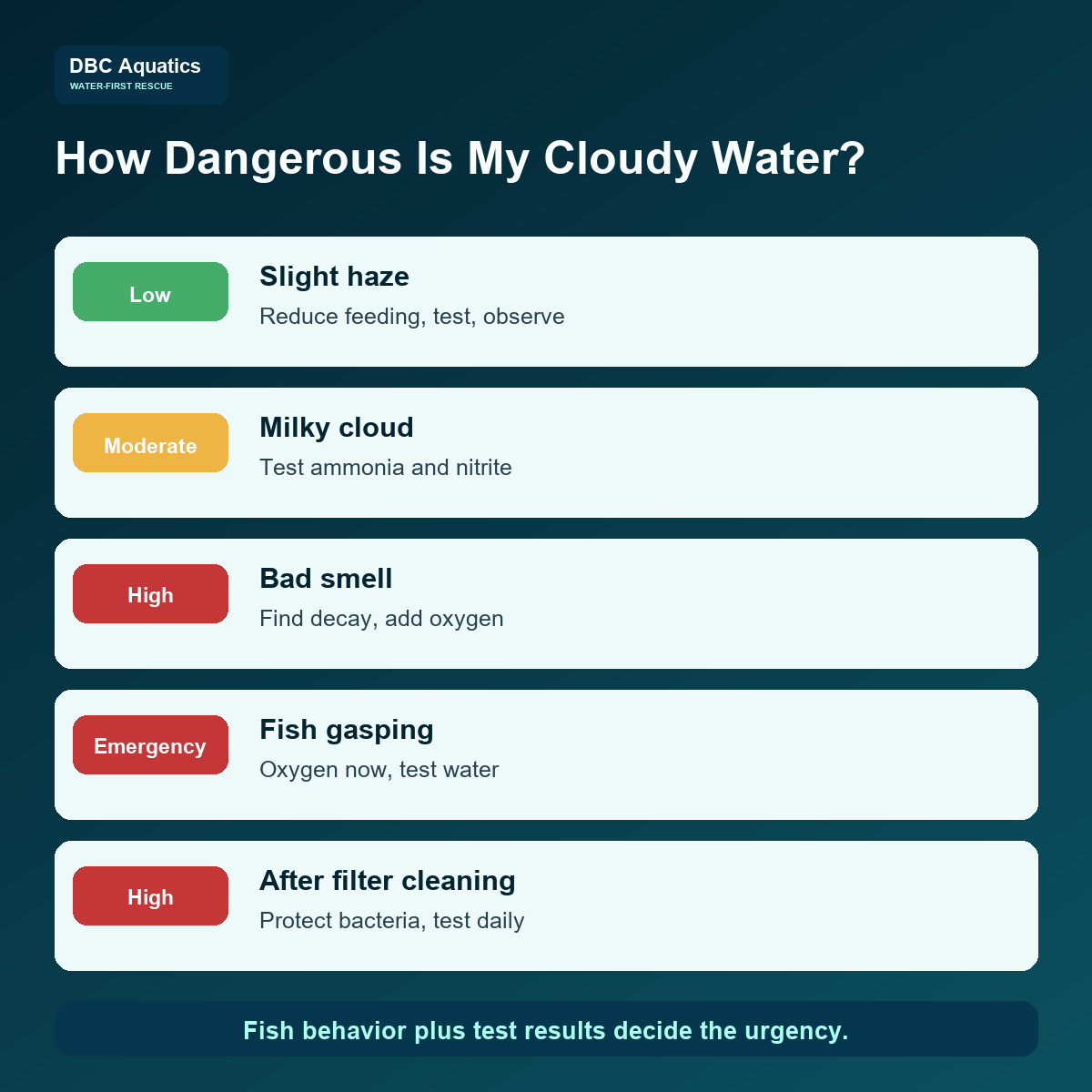
How Dangerous Is My Cloudy Water?
| What You See | Risk Level | First Action |
|---|---|---|
| Slight haze, fish acting normal | Low | Reduce feeding, test water, observe. |
| Milky cloud after new setup | Moderate | Test ammonia/nitrite, protect filter bacteria, avoid overcleaning. |
| Cloudy water plus bad smell | High | Test immediately, look for decaying waste, increase oxygen. |
| Cloudy water plus fish gasping | Emergency | Increase oxygen now, test ammonia and nitrite, follow the rescue order. |
| Cloudy water after deep filter cleaning | High | Protect remaining bacteria, test daily, avoid replacing more media. |
Clear water does not always mean safe water, and cloudy water does not always mean disaster. The fish behavior and test results decide how urgent the rescue is.
Cloudy Water Decision Tree
Start with the fish, not the cloud.
- Fish gasping or breathing fast?
Increase oxygen first, then test ammonia and nitrite.
- Bad smell?
Look for decaying food, dead plant matter, dead fish, or hidden waste, then test the water.
- Recent filter cleaning or water change?
Protect the filter bacteria, keep water moving, and test daily.
- New tank, new fish, or extra feeding?
Reduce feeding, test ammonia and nitrite, and watch for cycling problems.
- None of those fit?
Monitor the fish, retest the water, and avoid changing five things at once.
For the full cluster path, start at the Water Quality Rescue Hub.
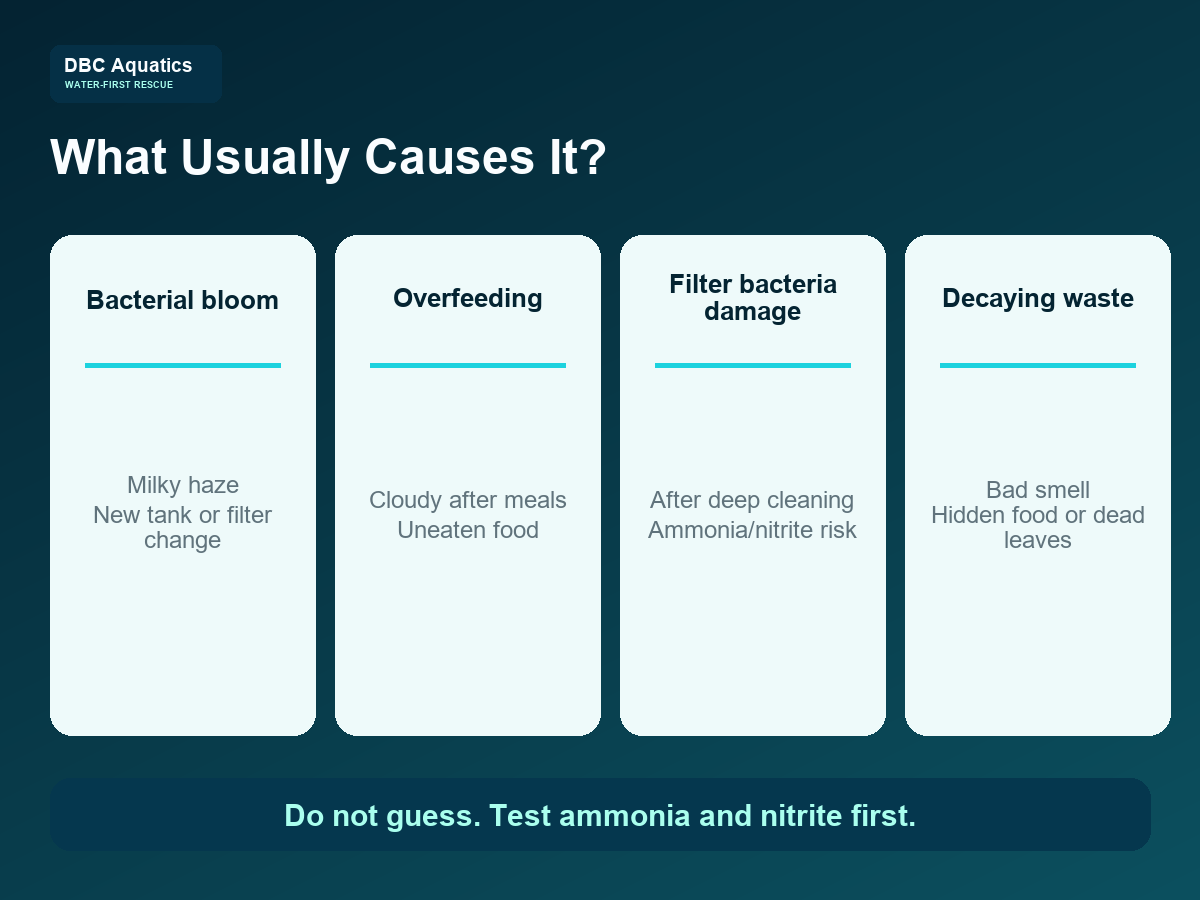
What Usually Causes Cloudy Aquarium Water?
| Cause | Common Clue | What To Check First |
|---|---|---|
| Bacterial bloom | Milky haze, often in newer tanks | Ammonia, nitrite, feeding level, filter bacteria. |
| Overfeeding | Cloudiness after heavy feeding | Uneaten food, ammonia, smell. |
| Filter bacteria disruption | Cloudiness after cleaning or cartridge replacement | Ammonia, nitrite, filter flow. |
| Decaying material | Bad smell, debris, dead leaves, hidden food | Gravel, decorations, plants, dead livestock. |
| Low oxygen | Fish at surface, fast breathing | Surface movement, temperature, filter flow. |
| Ammonia or nitrite spike | Fish gasping, clamped fins, stress | Water test results. |
If ammonia is above 0 ppm, use the ammonia emergency guide. If nitrite is above 0 ppm, use the nitrite poisoning rescue guide.
Why Oxygen Comes First
Increasing oxygen does not remove ammonia, nitrite, or cloudy water from the aquarium.
It buys time.
Fish under water-quality stress often breathe harder because their gills are irritated, oxygen is low, or nitrite is making it harder for their blood to carry oxygen normally. Stronger surface movement gives them the best chance while you correct the underlying water problem.
That is why DBC starts with oxygen support before medication.
If The Tank Smells Bad
A bad smell is a stronger warning sign than cloudy water alone.
Check for:
- Uneaten food trapped behind decor.
- Dead plant leaves.
- Dead fish, shrimp, snails, or fry.
- Clogged filter intake.
- Rotting filter debris.
- Substrate pockets full of waste.
Remove obvious decaying material, but do not deep-clean the entire tank at once. The goal is to remove the source of waste while protecting the bacteria that keep ammonia and nitrite under control.
If This Happened After Cleaning
One of the biggest mistakes I have seen is a fishkeeper trying to fix cloudy water by replacing every filter cartridge and scrubbing the filter until it looks brand new.
The intention is good.
The result can be dangerous.
If too much beneficial bacteria is removed at once, the tank can lose part of the biological filter it needs most. Then ammonia or nitrite may rise after the cleaning, even though the tank looks cleaner.
If fish started acting worse after maintenance, read Fish Dying After Cleaning The Tank Or Filter? What To Do Now and the aquarium filter cleaning guide.
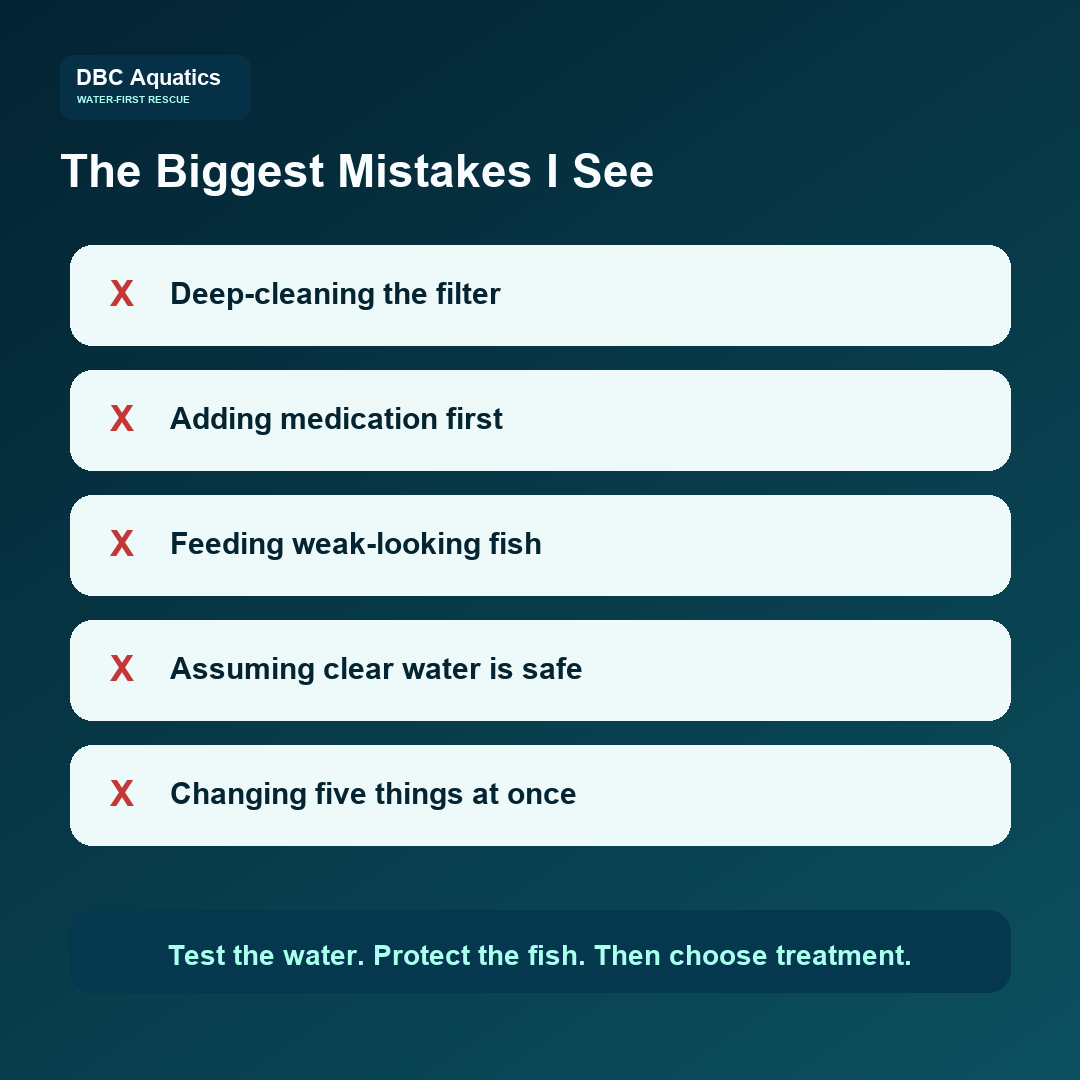
The Biggest Mistakes I See
| Mistake | Why It Can Backfire |
|---|---|
| Deep-cleaning the filter | Can remove bacteria the tank needs to recover. |
| Adding medication first | Medication does not fix ammonia, nitrite, oxygen, or decaying waste. |
| Feeding because fish look weak | More food creates more waste. |
| Assuming clear water means safe water | Ammonia and nitrite can be invisible. |
| Changing five things at once | Makes it harder to identify what helped or hurt. |
| Ignoring the smell | Bad smells often mean decaying organic material. |
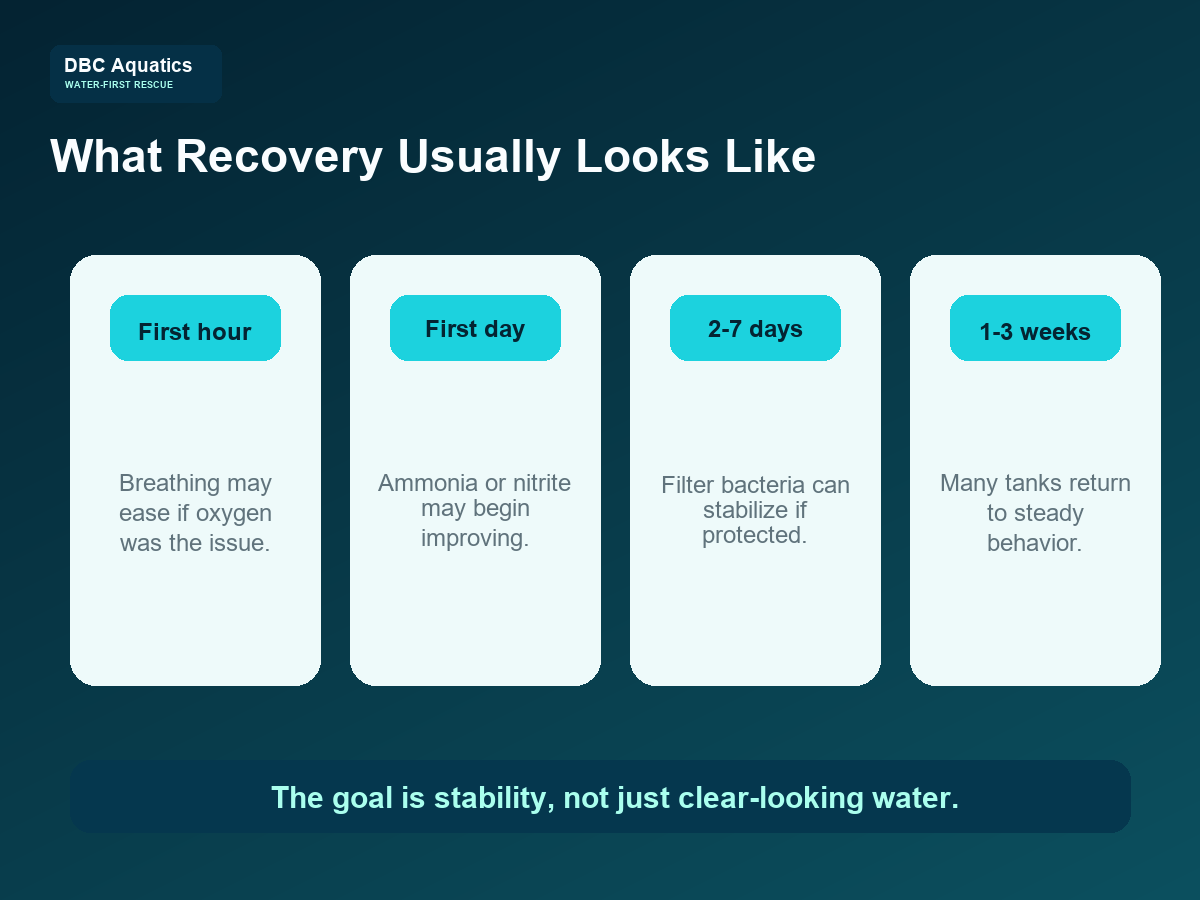
What Recovery Usually Looks Like
| Timeframe | What You May See |
|---|---|
| First hour | Fish may breathe easier if oxygen was the limiting problem. |
| First day | Ammonia or nitrite may begin improving with correct water changes and reduced feeding. |
| Two to seven days | Filter bacteria may stabilize if media and flow are protected. |
| One to three weeks | Tanks often return to steady behavior if the underlying cause is fixed. |
Most cloudy-water problems do not kill fish immediately. The greater risk is when the problem goes unnoticed or the fishkeeper accidentally damages the filter bacteria while trying to fix the appearance of the water.
What Not To Chase
When the water looks cloudy, it is easy to chase the thing you can see.
Do not chase:
- Crystal-clear water.
- Perfect pH.
- Medication.
- Filter replacement.
Chase:
- Stable oxygen.
- Zero ammonia.
- Zero nitrite.
- Healthy bacteria.
The goal is not a tank that looks perfect for five minutes. The goal is water that fish can safely live in after the panic is over.
If The Rescue Is Not Working
If cloudy water, smell, or fish stress continues despite water changes:
- Confirm your dechlorinator is being dosed correctly.
- Verify the test kit is not expired.
- Check filter flow and intake blockage.
- Look for hidden decaying material.
- Reduce feeding further.
- Check whether the aquarium is overstocked.
- Test tap water for ammonia or nitrite if results seem strange.
- Review the aquarium nitrogen cycle guide.
If symptoms are confusing, use the DBC Symptoms Checker to route the problem.
When Medication Makes Sense
Medication can help when there is a real disease problem.
But cloudy water, smell, and gasping usually require water diagnosis first. If the water is unsafe, medication may distract from the rescue and add more stress.
If water tests are stable and you see disease signs like spots, sores, fungus, flashing, or rapid decline, use the fish medication guide after the water-first checks.
The Next Step If This Keeps Happening
If cloudy water, gasping, ammonia, nitrite, or filter crashes keep repeating, the problem is usually not one bad day. It is a stability problem.
The Aquarium Rescue Blueprint is the deeper system for learning how to stabilize the tank instead of reacting to emergencies over and over.
FAQs
Is cloudy aquarium water always dangerous?
No. Some cloudy water is mild, especially in new aquariums. It becomes urgent when fish are gasping, ammonia or nitrite is above 0 ppm, the tank smells bad, or the problem appears after aggressive cleaning.
Should I change all the water if the tank is cloudy?
Usually no. Large emergency water changes can be appropriate in some cases, but changing everything at once can stress fish and disrupt the system. Test first, then use controlled water changes based on the actual problem.
Should I replace the filter cartridge?
Do not replace all filter media during a cloudy-water emergency unless it is physically unsafe or falling apart. The filter media may contain bacteria the tank needs to process ammonia and nitrite.
Does an air stone fix cloudy water?
No. An air stone or stronger surface movement helps fish breathe while you diagnose and correct the cause. It does not remove ammonia, nitrite, or decaying waste by itself.
Why did my water turn cloudy after cleaning?
Cleaning can stir up waste, reduce filter bacteria, alter flow, or expose an existing water-quality issue. If fish look worse after cleaning, test ammonia and nitrite and protect the filter bacteria.
Bottom Line
Cloudy water is not the enemy by itself.
Cloudy water makes people panic because they can see it. The real danger is often the water chemistry they cannot see.
The real question is whether the tank is losing oxygen, building ammonia or nitrite, hiding decaying waste, or recovering from filter bacteria damage.
Every rescue guide on DBC Aquatics begins with the same philosophy because the safest rescue is the one that solves the real problem, not just the symptom: test the water, protect the fish, then choose what comes next.
Leave a Reply